apollo
logo
0
Select Delivery Location
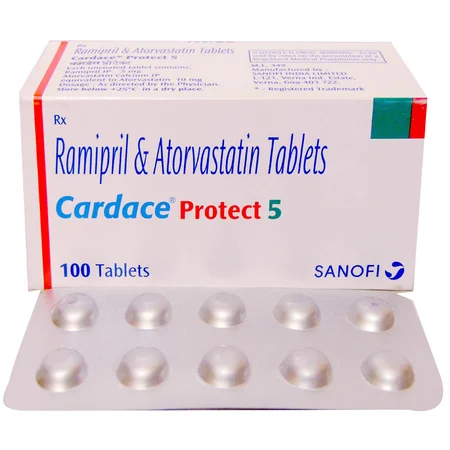
Cardace Protect 5 Tablet is used to treat high blood pressure (hypertension) and reduce the risk of having a heart attack, stroke, or heart failure. Besides this, it also lowers the raised level of bad cholesterol (especially for those at high risk of heart disease). It contains Atorvastatin and Ramipril, which, relaxes blood vessels in the body, reducing the burden on the heart to pump more blood. Also, it lowers bad cholesterol (also known as LDL or low-density lipoproteins) and triglycerides (TG). It raises good cholesterol levels (also known as high-density lipoproteins or HDL). Thus, it lowers high blood pressure and reduces the risk of heart attack, stroke, and heart-related chest pain. It may cause common side effects such as increased bleeding tendency, constipation, headache, muscle pain, weakness, headaches, decreased blood pressure, dizziness, muscle pain, increased blood glucose level, and cough in some cases. Before taking this medicine, you should tell your doctor if you are allergic to any of its components or if you are pregnant/breastfeeding, and about all the medications you are taking and pre-existing medical conditions.
Read more
Written By Veda Maddala , M Pharmacy
Reviewed By Dr Aneela Siddabathuni , MPharma., PhD
OffersOffers & Discounts

Get Free delivery (₹99) with circle icon

Join Circle
coupon
Get Extra 18% Off with Coupons
coupon
coupon
coupon
Extra 10% Off with Bank Offers
Side effects of Cardace Protect 5 Tablet
Managing Low Blood Pressure Triggered by Medication: Expert Advice:
  • If you experience low blood pressure symptoms like dizziness, lightheadedness, or fainting while taking medication, seek immediate medical attention.
  • Make lifestyle modifications and adjust your medication regimen under medical guidance to manage low blood pressure.
  • As your doctor advises, regularly check your blood pressure at home. Record your readings to detect any changes and share them with your doctor.
  • Fluid intake plays a vital role in managing blood pressure by maintaining blood volume, regulating blood pressure, and supporting blood vessel function. Drinking enough fluids helps prevent dehydration, maintain electrolyte balance, and regulate fluid balance.
  • Take regular breaks to sit or lie down if you need to stand for long periods.
  • When lying down, elevate your head with extra pillows to help improve blood flow.
  • Avoid heavy exercise or strenuous activities that can worsen low blood pressure.
  • Wear compression socks as your doctor advises to enhance blood flow, reduce oedema, and control blood pressure.
  • If symptoms persist or worsen, or if you have concerns about your condition, seek medical attention for personalized guidance and care.
Here are the precise steps to cope with diarrhoea caused by medication usage:
  • Inform Your Doctor: Notify your doctor immediately about your diarrhoea symptoms. This allows them to adjust your medication or provide guidance on managing side effects.
  • Stay Hydrated: Drink plenty of fluids to replace lost water and electrolytes. Choose water, clear broth, and electrolyte-rich drinks. Avoid carbonated or caffeinated beverages to effectively rehydrate your body.
  • Follow a Bland Diet: Eat easy-to-digest foods to help firm up your stool and settle your stomach. Try incorporating bananas, rice, applesauce, toast, plain crackers, and boiled vegetables into your diet.
  • Avoid Trigger Foods: Steer clear of foods that can worsen diarrhoea, such as spicy, fatty, or greasy foods, high-fibre foods, and dairy products (especially if you're lactose intolerant).
  • Practice Good Hygiene: Maintain good hygiene to prevent the spread of infection. To stay healthy, wash your hands frequently, clean and disinfect surfaces regularly, and avoid exchanging personal belongings with others.
  • Take Anti-Diarrheal Medications: If your doctor advises, anti-diarrheal medications such as loperamide might help manage diarrhoea symptoms. Always follow your doctor's directions.
  • Keep track of your diarrhoea symptoms. If they don't get better or worse or are accompanied by severe stomach pain, blood, or dehydration signs (like extreme thirst or dark urine), seek medical help.
  • Abnormal liver function requires immediate medical attention. Your doctor may recommend lifestyle modifications along with needed medication.
  • Avoid intake of alcohol as it has a direct impact on liver functioning.
  • Prevent medications like paracetamol, over-the-counter painkillers or those mentioned by your doctor, as they may have issues getting metabolised in your body.
  • If you have overweight issues, losing weight can be a good thing to manage abnormal liver function.
  • Cut down the number of fatty foods that are taken daily.
Here are the steps to manage Joint Pain caused by medication usage:
  • Please inform your doctor about joint pain symptoms, as they may adjust your medication regimen or prescribe additional medications to manage symptoms.
  • Your doctor may prescribe common pain relievers if necessary to treat joint discomfort.
  • Maintaining a healthy lifestyle is key to relieving joint discomfort. Regular exercise, such as low-impact sports like walking, cycling, or swimming, should be combined with a well-balanced diet. Aim for 7-8 hours of sleep per night to assist your body in repairing and rebuilding tissue.
  • Applying heat or cold packs to the affected joint can help reduce pain and inflammation.
  • Please track when joint pain occurs and any factors that may trigger it, and share this information with your doctor to help manage symptoms.
  • If your joint pain is severe or prolonged, consult a doctor to rule out any underlying disorders that may require treatment.
Here are the steps to manage the medication-triggered Cough:
  • Tell your doctor about the cough symptoms you're experiencing, which may be triggered by your medication.
  • Your doctor may adjust your treatment plan by changing your medication, adding new medications, or providing guidance on managing your cough symptoms.
  • Practice good hygiene, including frequent handwashing, avoiding close contact with others, and avoiding sharing utensils or personal items.
  • Stay hydrated by drinking plenty of fluids, such as water, tea, or soup, to help thin out mucus and soothe your throat.
  • Get plenty of rest and engage in stress-reducing activities to help your body recover. If your cough persists or worsens, consult your doctor for further guidance.

Have a query?

Drug-Drug Interactions

verifiedApollotooltip

Drug-Drug Interaction: Cardace Protect 5 Tablet interacts with Cardace Protect 5 Tablet , so it should be used with caution with an antibiotic (clarithromycin), anti-HIV drugs (ritonavir, lopinavir, darunavir, atazanavir, indinavir) and antifungal (itraconazole), blood thinners (warfarin, heparin), anti-arthritis drug (colchicine), heart-related medicine (digoxin), and immune system affecting drug (cyclosporine).

Drug-Food Interaction: Alcoholic beverages and grapefruit or its juice intake should be avoided with Cardace Protect 5 Tablet as it may interact with Cardace Protect 5 Tablet to produce unpleasant side effects. 

Drug-Disease Interaction: Cardace Protect 5 Tablet should not be given to the patients with active liver disease, active bleeding issues (like peptic ulcer, brain haemorrhage), muscle problems or musculoskeletal problems (myopathy, rhabdomyolysis), asthma, purpura (blood leakage under the skin), patients with nil urine output (anuria), cardiogenic shock (when the heart fails to pump required blood to the body),  low blood pressure (hypotension), coronary heart disease, heart failure, high serum potassium (hyperkalemia), patients with nil urine output (anuria). 

Critical

Drug-Drug Interactions

Login/Sign Up

Critical
How does the drug interact with Cardace Protect 5 Tablet:
Taking Telaprevir with of Ramipril and Atorvastatin can increase the blood levels of Telmisartan and Rosuvastatin.

How to manage the interaction:
Co-administration of Ramipril and Atorvastatin with Telaprevir can possibly result in an interaction, but it can be taken if a doctor has advised it. However, if you experience symptoms such as fever, chills, joint pain or swelling, unusual bleeding or bruising, a skin rash or itching, loss of hunger, nausea, vomiting, or yellowing of the skin or the whites of your eyes, consult a doctor. Do not stop using any medications without talking to a doctor.
How does the drug interact with Cardace Protect 5 Tablet:
Taking Posaconazole with of Ramipril and Atorvastatin can increase the blood levels of Telmisartan and Rosuvastatin.

How to manage the interaction:
Co-administration of Ramipril and Atorvastatin with Posaconazole can possibly result in an interaction, but it can be taken if a doctor has advised it. However, if you experience symptoms such as fever, chills, joint pain or swelling, unusual bleeding or bruising, a skin rash or itching, loss of hunger, nausea, vomiting, or yellowing of the skin or the whites of your eyes, consult a doctor. Do not stop using any medications without talking to a doctor.
Critical
How does the drug interact with Cardace Protect 5 Tablet:
Taking Mibefradil with Ramipril and Atorvastatin can increase the risk of side effects.

How to manage the interaction:
Co-administration of Mibefradil with Ramipril and Atorvastatin can possibly result in an interaction, but it can be taken if a doctor has advised it. However, if you experience symptoms such as fever, chills, muscle pains or swelling, consult a doctor. Do not stop using any medications without talking to a doctor.
How does the drug interact with Cardace Protect 5 Tablet:
Co-administration of Aliskiren with Ramipril and Atorvastatin can increase the risk of kidney problems and other side effects.

How to manage the interaction:
Taking Ramipril and Atorvastatin with Aliskiren can possibly lead to an interaction, it can be taken if a doctor advices it. However, if you experience any symptoms like nausea, vomiting, weakness, confusion, tingling sensation in hands or feet, heaviness in legs, or slow or rapid heartrate. Do not discontinue any medications without consulting a doctor.
Severe
How does the drug interact with Cardace Protect 5 Tablet:
Taking Tipranavir with of Ramipril and Atorvastatin can increase the blood levels of Ramipril and Atorvastatin.

How to manage the interaction:
Co-administration of Ramipril and Atorvastatin with Tipranavir can possibly result in an interaction, but it can be taken if a doctor has advised it. However, if you experience symptoms such as fever, chills, joint pain or swelling, unusual bleeding or bruising, a skin rash or itching, loss of hunger, nausea, vomiting, or yellowing of the skin or the whites of your eyes, consult a doctor. Do not stop using any medications without talking to a doctor.
How does the drug interact with Cardace Protect 5 Tablet:
Taking Fenofibrate with of Ramipril and Atorvastatin can increase the risk of liver problems and other side effects.

How to manage the interaction:
Co-administration of Ramipril and Atorvastatin with Fenofibrate can possibly result in an interaction, but it can be taken if a doctor has advised it. However, if you experience symptoms such as fever, chills, joint pain or swelling, unusual bleeding or bruising, a skin rash or itching, loss of hunger, nausea, vomiting, or yellowing of the skin or the whites of your eyes, consult a doctor. Do not stop using any medications without talking to a doctor.
How does the drug interact with Cardace Protect 5 Tablet:
Taking Clarithromycin with of Ramipril and Atorvastatin can increase the blood levels of Ramipril and Atorvastatin.

How to manage the interaction:
Co-administration of Ramipril and Atorvastatin with Clarithromycin can possibly result in an interaction, but it can be taken if a doctor has advised it. However, if you experience symptoms such as fever, chills, joint pain or swelling, unusual bleeding or bruising, a skin rash or itching, loss of hunger, nausea, vomiting, or yellowing of the skin or the whites of your eyes, consult a doctor. Do not stop using any medications without talking to a doctor.
Severe
How does the drug interact with Cardace Protect 5 Tablet:
Taking Conivaptan with of Ramipril and Atorvastatin can increase the blood levels of Ramipril and Atorvastatin.

How to manage the interaction:
Co-administration of Ramipril and Atorvastatin with Conivaptan can possibly result in an interaction, but it can be taken if a doctor has advised it. However, if you experience symptoms such as fever, chills, joint pain or swelling, unusual bleeding or bruising, a skin rash or itching, loss of hunger, nausea, vomiting, or yellowing of the skin or the whites of your eyes, consult a doctor. Do not stop using any medications without talking to a doctor.
How does the drug interact with Cardace Protect 5 Tablet:
Taking Lenalidomide with Ramipril and Atorvastatin can increase the risk of side effects.

How to manage the interaction:
Co-administration of Lenalidomide with Ramipril and Atorvastatin can possibly result in an interaction, but it can be taken if a doctor has advised it. However, if you experience symptoms such as fever, chills, muscle pains or swelling, consult a doctor. Do not stop using any medications without talking to a doctor.
Severe
How does the drug interact with Cardace Protect 5 Tablet:
Taking Fosamprenavir with of Ramipril and Atorvastatin can increase the blood levels of Ramipril and Atorvastatin.

How to manage the interaction:
Co-administration of Ramipril and Atorvastatin with Fosamprenavir can possibly result in an interaction, but it can be taken if a doctor has advised it. However, if you experience symptoms such as fever, chills, joint pain or swelling, unusual bleeding or bruising, a skin rash or itching, loss of hunger, nausea, vomiting, or yellowing of the skin or the whites of your eyes, consult a doctor. Do not stop using any medications without talking to a doctor.

Drug-Food Interactions

verifiedApollotooltip
ATORVASTATIN-10MG+RAMIPRIL-5MGPotassium rich foods, Grapefruit and Grapefruit Juice
Moderate

Drug-Food Interactions

Login/Sign Up

ATORVASTATIN-10MG+RAMIPRIL-5MGPotassium rich foods, Grapefruit and Grapefruit Juice
Moderate
Common Foods to Avoid:
Lentils, Orange Juice, Oranges, Raisins, Potatoes, Salmon Dried, Spinach, Tomatoes, Sweet Potatoes, Coconut Water, Beans, Beetroot, Broccoli, Bananas, Apricots, Avocado, Yogurt, Grapefruit, Grapefruit Juice

How to manage the interaction:
Taking potassium rich food, grapefruit and grape juice while on the treatment with Ramipril and Atorvastatin can increase the levels of potassium salt in blood and other side effects like nausea, vomiting, weakness, confusion, tingling in hands or feet, feeling of heaviness in the legs, confusion, or slow or rapid heartbeat. Avoid or limit taking potassium rich food, grapefruit and grape juice while on the treatment with Ramipril and Atorvastatin.

All Substitutes & Brand Comparisons

Disclaimer

While we strive to provide complete, accurate, and expert-reviewed content on our 'Platform', we make no warranties or representations and disclaim all responsibility and liability for the completeness, accuracy, or reliability of the aforementioned content. The content on our platform is for informative purposes only, and may not cover all clinical/non-clinical aspects. Reliance on any information and subsequent action or inaction is solely at the user's risk, and we do not assume any responsibility for the same. The content on the Platform should not be considered or used as a substitute for professional and qualified medical advice. Please consult your doctor for any query pertaining to medicines, tests and/or diseases, as we support, and do not replace the doctor-patient relationship.

Author Details

Doctor imageWe provide you with authentic, trustworthy and relevant information

whatsapp Floating Button

Recommended for a 30-day course: 3 Strips

Buy Now
Add 3 Strips