apollo
logo
0
Select Delivery Location
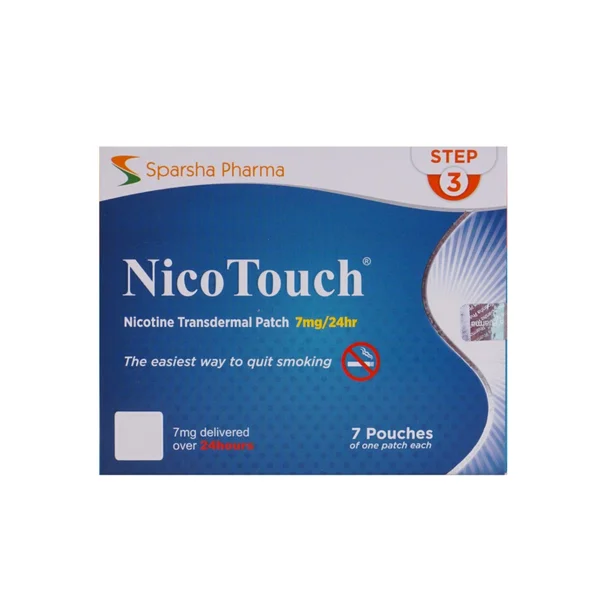
Nicotouch 7 mg/24 Hr Nicotine Transdermal Patch belongs to the nicotine replacement therapy (NRT) mainly used in reducing the craving for smoking and tobacco use. It contains nicotine which acts as a smoking cessation aid. It helps quit smoking and tobacco use by slowly adjusting your body to have less craving to use nicotine. This medicine is not recommended for use in children below 18 years of age. For usage, apply Nicotouch 7 mg/24 Hr Nicotine Transdermal Patch on a clean, dry and non-hairy area of the skin, such as the shoulder, chest or hip. Then, gently press for 10 to 20 seconds and check that the patch remains in place.
Read more
Written By Veda Maddala , M Pharmacy
Reviewed By Dr Aneela Siddabathuni , MPharma., PhD
OffersOffers & Discounts

Get Free delivery (₹99) with circle icon

Join Circle
coupon
Get 18% Off with Coupons
coupon
coupon
coupon
Extra 10% Off with Bank Offers

Have a query?

Side effects of Nicotouch 7 mg/24 Hr Nicotine Transdermal Patch
Here are the steps to manage the medication-triggered Cough:
  • Tell your doctor about the cough symptoms you're experiencing, which may be triggered by your medication.
  • Your doctor may adjust your treatment plan by changing your medication, adding new medications, or providing guidance on managing your cough symptoms.
  • Practice good hygiene, including frequent handwashing, avoiding close contact with others, and avoiding sharing utensils or personal items.
  • Stay hydrated by drinking plenty of fluids, such as water, tea, or soup, to help thin out mucus and soothe your throat.
  • Get plenty of rest and engage in stress-reducing activities to help your body recover. If your cough persists or worsens, consult your doctor for further guidance.
  • Apply a cold compress to the affected area for 10 to 20 minutes at a time.
  • You can take pain relievers like paracetamol or ibuprofen.
  • In case of injections, switch the injection site with each dose to reduce irritation at a single location.
  • If itching is severe, topical antihistamine cream can be used for relief.
Here are the precise steps to cope with diarrhoea caused by medication usage:
  • Inform Your Doctor: Notify your doctor immediately about your diarrhoea symptoms. This allows them to adjust your medication or provide guidance on managing side effects.
  • Stay Hydrated: Drink plenty of fluids to replace lost water and electrolytes. Choose water, clear broth, and electrolyte-rich drinks. Avoid carbonated or caffeinated beverages to effectively rehydrate your body.
  • Follow a Bland Diet: Eat easy-to-digest foods to help firm up your stool and settle your stomach. Try incorporating bananas, rice, applesauce, toast, plain crackers, and boiled vegetables into your diet.
  • Avoid Trigger Foods: Steer clear of foods that can worsen diarrhoea, such as spicy, fatty, or greasy foods, high-fibre foods, and dairy products (especially if you're lactose intolerant).
  • Practice Good Hygiene: Maintain good hygiene to prevent the spread of infection. To stay healthy, wash your hands frequently, clean and disinfect surfaces regularly, and avoid exchanging personal belongings with others.
  • Take Anti-Diarrheal Medications: If your doctor advises, anti-diarrheal medications such as loperamide might help manage diarrhoea symptoms. Always follow your doctor's directions.
  • Keep track of your diarrhoea symptoms. If they don't get better or worse or are accompanied by severe stomach pain, blood, or dehydration signs (like extreme thirst or dark urine), seek medical help.
Here are the step-by-step strategies to manage the side effects of "indigestion" caused by medication usage:
  • Take medications with food (if recommended): It can help prevent stomach distress and indigestion.
  • Eat smaller, more frequent meals: Divide daily food intake into smaller, more frequent meals to ease digestion.
  • Avoid trigger foods: Identify and avoid foods that trigger indigestion, such as spicy, fatty, or acidic foods.
  • Stay upright after eating: Sit or stand upright for at least 1-2 hours after eating to prevent stomach acid from flowing into the oesophagus.
  • Avoid carbonated drinks: Avoid drinking carbonated beverages, such as soda or beer, which can worsen indigestion.
  • Manage stress: To alleviate indigestion, engage in stress-reducing activities like deep breathing exercises or meditation.
  • Consult a doctor if needed: If indigestion worsens or persists, consult a healthcare professional to adjust the medication regimen or explore alternative treatments.
  • Drink water or other clear fluids.
  • To prevent worsening of pain, limit intake of tea, coffee, or alcohol.
  • Include bland foods like rice, toast, crackers, and rice in your diet.
  • Avoid lying down immediately after eating as it may cause indigestion or heartburn.
  • Avoid acidic and spicy food as it may cause indigestion.
Here are the 7 steps to manage Dizziness caused by medication:
  • Inform your doctor about dizziness symptoms. They may adjust your medication regimen or prescribe additional medications to manage symptoms.
  • Follow your doctor's instructions for taking medication, and take it at the same time every day to minimize dizziness.
  • When standing up, do so slowly and carefully to avoid sudden dizziness.
  • Avoid making sudden movements, such as turning or bending quickly, which can exacerbate dizziness.
  • Drink plenty of water throughout the day to stay hydrated and help alleviate dizziness symptoms.
  • If you're feeling dizzy, sit or lie down and rest until the dizziness passes.
  • Track when dizziness occurs and any factors that may trigger it, and share this information with your doctor to help manage symptoms.
Dealing with Medication-Induced Headache:
  • Hydrate your body: Drink enough water to prevent dehydration and headaches.
  • Calm Your Mind: Deep breathing and meditation can help you relax and relieve stress.
  • Rest and Recharge: Sleep for 7-8 hours to reduce headache triggers.
  • Take rest: lie down in a quiet, dark environment.
  • Cold or warm compresses can help reduce tension.
  • Stay Upright: Maintain good posture to keep symptoms from getting worse.
  • To treat headaches naturally, try acupuncture or massage therapy.
  • Over-the-counter pain relievers include acetaminophen and ibuprofen.
  • Prescription Assistance: Speak with your doctor about more substantial drug alternatives.
  • Severe Headaches: Seek emergency medical assistance for sudden, severe headaches.
  • Frequent Headaches: If you get reoccurring headaches, consult your doctor.
  • Headaches with Symptoms: Seek medical attention if your headaches include fever, disorientation, or weakness.

Drug-Drug Interactions

verifiedApollotooltip
NicotineDihydroergotamine
Severe

Drug-Drug Interactions

Login/Sign Up

How does the drug interact with Nicotouch 7 mg/24 Hr Nicotouch 7 mg/24 Hr Nicotine Transdermal Patch Transdermal Patch:
Coadministration of Nicotouch 7 mg/24 Hr Nicotine Transdermal Patch and Hydroxyprogesterone may reduce the blood levels and effects of Nicotouch 7 mg/24 Hr Nicotine Transdermal Patch.

How to manage the interaction:
Using Nicotouch 7 mg/24 Hr Nicotine Transdermal Patch and Hydroxyprogesterone together can lead to an interaction, they can be taken if advised by your doctor. Consult your doctor if your symptoms do not improve or worsen. Do not stop using any medications without a doctor's advice.
NicotineDihydroergotamine
Severe
How does the drug interact with Nicotouch 7 mg/24 Hr Nicotouch 7 mg/24 Hr Nicotine Transdermal Patch Transdermal Patch:
Co-administration of Nicotouch 7 mg/24 Hr Nicotine Transdermal Patch and Dihydroergotamine can increase the effects of dihydroergotamine and increase the risk of high blood pressure.

How to manage the interaction:
Co-administration of Nicotouch 7 mg/24 Hr Nicotine Transdermal Patch and Dihydroergotamine can lead to an interaction, it can be taken if advised by your doctor. However, if you experience any symptoms like coldness, paleness, discoloration, numbness, tingling, or pain in your hands or feet; muscle pain or weakness; severe or worsening headache; blurred vision; severe abdominal pain; chest pain; or shortness of breath, contact your doctor immediately. Do not discontinue any medications without first consulting your doctor.
NicotineMethysergide
Severe
How does the drug interact with Nicotouch 7 mg/24 Hr Nicotouch 7 mg/24 Hr Nicotine Transdermal Patch Transdermal Patch:
Co-administration of Nicotouch 7 mg/24 Hr Nicotine Transdermal Patch and Methysergide can increase the effects of dihydroergotamine and increase the risk or severity of high blood pressure.

How to manage the interaction:
Co-administration of Nicotouch 7 mg/24 Hr Nicotine Transdermal Patch and Methysergide can lead to an interaction, it can be taken if advised by your doctor. However, if you experience any symptoms like coldness, paleness, discoloration, numbness, tingling, or pain in your hands or feet; muscle pain or weakness; severe or worsening headache; blurred vision; severe abdominal pain; chest pain; or shortness of breath, contact your doctor immediately. Do not discontinue any medications without first consulting your doctor.
How does the drug interact with Nicotouch 7 mg/24 Hr Nicotouch 7 mg/24 Hr Nicotine Transdermal Patch Transdermal Patch:
Combining Nicotouch 7 mg/24 Hr Nicotine Transdermal Patch with Famotidine may reduce the clearance of Nicotouch 7 mg/24 Hr Nicotine Transdermal Patch.

How to manage the interaction:
Although taking Famotidine and Nicotouch 7 mg/24 Hr Nicotine Transdermal Patch together can cause an interaction, it can be taken if your doctor has suggested it. Do not stop using any medications without a doctor's advice.
How does the drug interact with Nicotouch 7 mg/24 Hr Nicotouch 7 mg/24 Hr Nicotine Transdermal Patch Transdermal Patch:
The combined use of Nicotouch 7 mg/24 Hr Nicotine Transdermal Patch and Fenofibrate can increase the blood levels and effects of Nicotouch 7 mg/24 Hr Nicotine Transdermal Patch. This can increase the risk or severity of side effects.

How to manage the interaction:
Co-administration of Nicotouch 7 mg/24 Hr Nicotine Transdermal Patch and Fenofibrate can lead to an interaction, it can be taken if advised by a doctor. If you experience any symptoms like irritation and burning sensation in the mouth and throat, increased salivation, nausea, abdominal pain, vomiting and diarrhea, contact a doctor immediately. Do not discontinue any medications without consulting the doctor.

Drug-Food Interactions

verifiedApollotooltip
No Drug - Food interactions found in our database. Some may be unknown. Consult your doctor for what to avoid during medication.

Drug-Food Interactions

Login/Sign Up

Disclaimer

While we strive to provide complete, accurate, and expert-reviewed content on our 'Platform', we make no warranties or representations and disclaim all responsibility and liability for the completeness, accuracy, or reliability of the aforementioned content. The content on our platform is for informative purposes only, and may not cover all clinical/non-clinical aspects. Reliance on any information and subsequent action or inaction is solely at the user's risk, and we do not assume any responsibility for the same. The content on the Platform should not be considered or used as a substitute for professional and qualified medical advice. Please consult your doctor for any query pertaining to medicines, tests and/or diseases, as we support, and do not replace the doctor-patient relationship.

Author Details

Doctor imageWe provide you with authentic, trustworthy and relevant information

whatsapp Floating Button
Buy Now
Add to Cart