
0
Welcome User
Login/Sign Up

Login/Sign Up
₹141.5
(Inclusive of all Taxes)
Get Free delivery (₹99) with
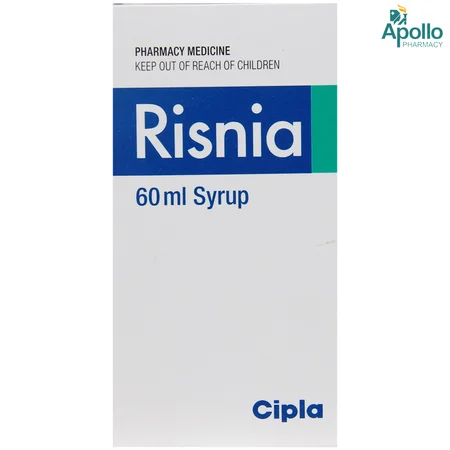
Risnia Syrup is used to treat schizophrenia in adults and adolescents aged 13-17 years. It is also used alone or in combination with other medicines to treat mania or mixed episodes (mania and depression) associated with Bipolar I disorder in adults, and alone in children and adolescents aged 10-17 years.
It is also used to treat irritability associated with autistic disorder in children and adolescents aged 5 to 16 years.
Risnia Syrup contains 'Risperidone' that works by blocking the effects of chemical messengers in the brain (i.e. dopamine and serotonin). Thus, it helps in improving mood, behaviour and thoughts. Risnia Syrup elevates the symptoms of the disease and prevents them from coming back.
Take Risnia Syrup as prescribed by the doctor. In some cases, you may experience certain common side effects, such as sleepiness, vomiting, constipation, abdominal pain, nausea, dizziness, dry mouth, and fatigue. Most of these side effects do not require medical attention and will resolve gradually over time. However, consult your doctor if these side effects persist or worsen.
Consult your doctor if you are pregnant or planning for pregnancy. Avoid breastfeeding while on treatment with Risnia Syrup. Risnia Syrup may cause dizziness, so do not drive or operate machinery unless you are alert. Avoid consuming alcohol along with Risnia Syrup as it could lead to increased dizziness.
Risnia Syrup is used in the treatment of Schizophrenia, Bipolar disorder, Behavioural problems in autistic children. The detailed uses of Risnia Syrup are as follows:
Unsafe
Avoid consumption of alcohol while taking Risnia Syrup as it may cause increased drowsiness. Risnia Syrup may also increase the effects of alcohol.
Caution
Please consult your doctor if you are pregnant or planning a pregnancy. Newborns of mothers who used Risnia Syrup during the last three months of their pregnancy may experience symptoms such as agitation, sleepiness, sleepiness, trouble feeding, trembling, and/or muscle weakness. If your baby exhibits any of these symptoms, please consult your doctor.
Consult your doctor
Please inform your doctor if you are a breastfeeding mother; your doctor will prescribe only if the benefits outweigh the risks.
Unsafe
Risnia Syrup may cause tiredness, dizziness and vision problems. Do not drive or operate machinery if you experience these symptoms.
Caution
Dose adjustment may be needed in patients with liver impairment. Please consult your doctor if you have a liver impairment or any concerns regarding this.
Caution
Dose adjustment may be needed in patients with kidney impairment. Please consult your doctor if you have kidney impairment or any concerns regarding this.
Caution
Risnia Syrup should be given to children only if prescribed by the doctor. The safety and effectiveness of Risnia Syrup in children below 13 years with schizophrenia, below 10 years with bipolar disorder, and below 5 years with autistic disorder have not been established.
Caution
Risnia Syrup should be used with caution in patients with cardiovascular disease.
Caution
Risnia Syrup should not be used by elderly patients with dementia, as there is an increased risk of stroke. In elderly patients, Risnia Syrup should be used with caution and only in doses advised by a doctor. If you or your caregiver notice a sudden change in your mental state or slurred speech, even for a short period of time, or sudden weakness or numbness of your arms, legs, or face, especially on one side, contact your doctor immediately, as these may be signs of a stroke.
Have a query?
Drug-Drug Interactions: Risnia Syrup may interact with antimicrobial drug (rifampicin), anticonvulsants (phenytoin, carbamazepine, phenobarbital), diuretics (furosemide, chlorothiazide), antihistamines, benzodiazepines, and pain reducing medicines (opiates).
Drug-Food Interactions: Avoid alcohol consumption whilst on treatment with Risnia Syrup.
Drug-Disease Interactions: Inform your doctor if you have dementia (memory loss), CNS depression, liver disease, seizures, low blood pressure, diabetes, lipid alterations, parkinsonism, acute alcohol intoxication, neuroleptic malignant syndrome (occurs due to reaction with anti-psychotic drugs), Tardive dyskinesia (repetitive, involuntary movements), irregular heartbeat (with QT interval prolongation), kidney impairment/disease, blood abnormalities, Priapism (prolonged erection of the penis), and hyperprolactinemia (higher levels of prolactin in the blood).
Login/Sign Up
Login/Sign Up
Alteus Biogenics Pvt Ltd
₹133.5
(₹2.23/ 1ml)
Risnia Syrup is used to treat schizophrenia in adults and adolescents aged 13-17 years. It is also used alone or in combination with other medicines to treat mania or mixed episodes (mania and depression) associated with Bipolar I disorder in adults, and alone in children and adolescents aged 10-17 years. It is also used to treat irritability associated with autistic disorder in children and adolescents aged 5 to 16 years.
Risnia Syrup works by balancing the chemical messengers called neurotransmitter and blocking the effect of dopamine and serotonin located in the brain, thereby helps in improving mood, behaviour and thoughts.
Risnia Syrup may cause an increase in blood glucose (sugar) levels. So, regular monitoring of blood sugar levels is advised while taking Risnia Syrup. Diabetes patients should consult a doctor before taking Risnia Syrup.
Limiting caffeine intake, avoiding smoking and mouthwashes containing alcohol, drinking water regularly, and chewing sugar-free gum/candy might help in stimulating saliva and thereby prevents drying of the mouth.
Taking Risnia Syrup along with blood pressure-lowering medicines may cause low blood pressure. Therefore, consult your doctor if you are taking anti-hypertensives (drugs used to treat high blood pressure).
Risnia Syrup may cause weight gain. Therefore, avoid excessive eating and follow a healthy diet. Consult your doctor if you have any concerns.
Disclaimer


