
Valprid CR 500 Tablet 10's


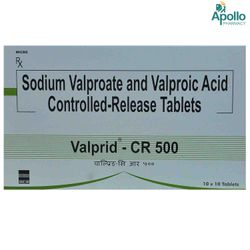


₹99.5
 ₹15.0Cashback (15%)
(Inclusive of all Taxes)
₹69 with coupons & bank offers*
 Offers & Discounts
Get Free delivery (₹99) with


Delivery Information
More about the Product
Composition :
Manufacturer/Marketer :
Consume Type :
Expires on or after :
Return Policy :


About Valprid CR 500 Tablet
Valprid CR 500 Tablet is a prescription medicine primarily used to treat and control different types of seizures in people with epilepsy. It is also prescribed to manage manic episodes associated with bipolar disorder and to prevent migraine headaches from starting. It helps stabilise overactive electrical activity in the brain to keep these conditions under control.
For this medicine to work effectively, you must take it consistently at the same times every day. You can take Valprid CR 500 Tablet with or without food, but taking it with a meal can help prevent an upset stomach. Making positive lifestyle changes, such as maintaining a consistent sleep schedule and managing stress, can further support the success of your treatment.
While taking Valprid CR 500 Tablet , some people may experience mild side effects like drowsiness or temporary hair thinning. However, you must monitor your body closely and contact your doctor immediately if you notice signs of serious complications, such as severe upper stomach pain, persistent vomiting, or yellowing of your eyes or skin.
Do not take this if you have active liver disease, a personal or family history of severe liver problems, or genetic mitochondrial disorders. Before starting treatment, tell your doctor if you have kidney problems, a history of depression or suicidal thoughts, or a urea cycle disorder. It is highly important to discuss these conditions to ensure the medicine is safe for you.
This medicine can interact with other substances; for instance, drinking alcohol while taking Valprid CR 500 Tablet can lead to extreme drowsiness and increase the strain on your liver. If you are pregnant, planning to become pregnant, breastfeeding, or are an elderly individual, you must consult your healthcare provider before taking this medication. Valprid CR 500 Tablet can cause serious birth defects and developmental disorders in an unborn baby and should generally be avoided during pregnancy unless no suitable alternative treatment is available. Women who can become pregnant should use effective contraception and discuss pregnancy planning with their doctor before starting or continuing treatment.
Uses of Valprid CR 500 Tablet
Valprid CR 500 Tablet is used to manage neurological and psychiatric conditions by helping stabilise electrical activity in the brain. It is commonly prescribed for the following conditions:
- Epilepsy and Seizures: Valprid CR 500 Tablet helps control and prevent various types of seizures by calming hyperactive nerve signals in the brain.
- Bipolar Disorder (Manic Episodes): Valprid CR 500 Tablet helps stabilise mood swings, reducing periods of extreme high energy, excitement, or irritability.
- Migraine Prevention: Valprid CR 500 Tablet reduces the frequency and severity of migraine attacks, though it is not used to treat a migraine headache that has already started.
Key Benefits
By helping stabilise brain activity, Valprid CR 500 Tablet provides several important benefits that improve long-term symptom control and quality of life, including:
- Reduces Seizure Frequency: Helps prevent seizures, allowing better day-to-day functioning and reducing the risk of seizure-related injuries.
- Supports Mood Stability: Helps control manic episodes and promotes more stable moods in people with bipolar disorder.
- Prevents Migraine Attacks: Reduces the number and severity of migraine episodes, helping minimise disruption to daily activities.
- Promotes Better Quality of Life: Improved control of seizures, mood swings, or migraines helps support a more consistent and independent lifestyle.
- Provides Long-Term Symptom Control: When taken regularly as prescribed, it helps maintain stable brain function and reduces the likelihood of symptom recurrence.
- Convenient Dual-Component Therapy: Combines sodium valproate and valproic acid to provide effective and sustained therapeutic levels for ongoing management of eligible conditions.
- Take medications with food (if recommended): It can help prevent stomach distress and indigestion.
- Eat smaller, more frequent meals: Divide daily food intake into smaller, more frequent meals to ease digestion.
- Avoid trigger foods: Identify and avoid foods that trigger indigestion, such as spicy, fatty, or acidic foods.
- Stay upright after eating: Sit or stand upright for at least 1-2 hours after eating to prevent stomach acid from flowing into the oesophagus.
- Avoid carbonated drinks: Avoid drinking carbonated beverages, such as soda or beer, which can worsen indigestion.
- Manage stress: To alleviate indigestion, engage in stress-reducing activities like deep breathing exercises or meditation.
- Consult a doctor if needed: If indigestion worsens or persists, consult a healthcare professional to adjust the medication regimen or explore alternative treatments.
- Inform your doctor about the nausea and discuss possible alternatives to the medication or adjustments to the dosage.
- Divide your daily food intake into smaller, more frequent meals to reduce nausea.
- Opt for bland, easily digestible foods like crackers, toast, plain rice, bananas, and applesauce.
- Avoid certain foods that can trigger nausea, such as fatty, greasy, spicy, and smelly foods.
- Drink plenty of fluids, such as water, clear broth, or electrolyte-rich beverages like coconut water or sports drinks.
- Use ginger (tea, ale, or candies) to help relieve nausea.
- Get adequate rest and also avoid strenuous activities that can worsen nausea.
- Talk to your doctor about taking anti-nausea medication if your nausea is severe.
- Record when your nausea occurs, what triggers it, and what provides relief to help you identify patterns and manage your symptoms more effectively.
- Preventing Vomiting (Before it Happens)
- Take medication exactly as prescribed by your doctor. This can help minimize side effects, including vomiting.
- Having a small meal before taking your medication can help reduce nausea and vomiting.
- Talk to your doctor about taking anti-nausea medication along with your prescribed medication.
- Managing Vomiting (If it Happens)
- Try taking ginger in the form of tea, ale, or candy to help alleviate nausea and vomiting.
- What to Do if Vomiting Persists
- Consult your doctor if vomiting continues or worsens, consult the doctor for guidance on adjusting your medication or additional treatment.
- Inform Your Doctor: Notify your doctor immediately about your diarrhoea symptoms. This allows them to adjust your medication or provide guidance on managing side effects.
- Stay Hydrated: Drink plenty of fluids to replace lost water and electrolytes. Choose water, clear broth, and electrolyte-rich drinks. Avoid carbonated or caffeinated beverages to effectively rehydrate your body.
- Follow a Bland Diet: Eat easy-to-digest foods to help firm up your stool and settle your stomach. Try incorporating bananas, rice, applesauce, toast, plain crackers, and boiled vegetables into your diet.
- Avoid Trigger Foods: Steer clear of foods that can worsen diarrhoea, such as spicy, fatty, or greasy foods, high-fibre foods, and dairy products (especially if you're lactose intolerant).
- Practice Good Hygiene: Maintain good hygiene to prevent the spread of infection. To stay healthy, wash your hands frequently, clean and disinfect surfaces regularly, and avoid exchanging personal belongings with others.
- Take Anti-Diarrheal Medications: If your doctor advises, anti-diarrheal medications such as loperamide might help manage diarrhoea symptoms. Always follow your doctor's directions.
- Keep track of your diarrhoea symptoms. If they don't get better or worse or are accompanied by severe stomach pain, blood, or dehydration signs (like extreme thirst or dark urine), seek medical help.
- Inform your doctor about dizziness symptoms. They may adjust your medication regimen or prescribe additional medications to manage symptoms.
- Follow your doctor's instructions for taking medication, and take it at the same time every day to minimize dizziness.
- When standing up, do so slowly and carefully to avoid sudden dizziness.
- Avoid making sudden movements, such as turning or bending quickly, which can exacerbate dizziness.
- Drink plenty of water throughout the day to stay hydrated and help alleviate dizziness symptoms.
- If you're feeling dizzy, sit or lie down and rest until the dizziness passes.
- Track when dizziness occurs and any factors that may trigger it, and share this information with your doctor to help manage symptoms.
- Apply a hot/cold pack to the affected area.
- Doing gentle exercises can help cope with pain by stretching muscles.
- Get enough sleep. It helps enhance mood and lower pain sensitivity.
- Avoid alcohol, smoking and tobacco as they can increase pain.
- Follow a well-balanced meal.
- Meditation and massages may also help with pain.
Directions for Use
- Take Valprid CR 500 Tablet with food to avoid stomach upset or as advised by a doctor.
- Follow your doctor's instructions on the dosage and timing of this medication to ensure safety.
- Swallow the medicine as a whole with a glass of water.
- Do not crush, break, or chew it.
How Valprid CR 500 Tablet Works

Alcohol
Unsafe
Avoid consumption of alcohol while taking Valprid CR 500 Tablet as it may increase the risk of seizures.

Pregnancy
Unsafe
Valprid CR 500 Tablet belongs to pregnancy category D. Avoid taking Valprid CR 500 Tablet if you are pregnant unless prescribed by a doctor, as it could lead to serious birth defects.

Breast Feeding
Consult your doctor
Valprid CR 500 Tablet may pass into breastmilk. Consult your doctor before taking Valprid CR 500 Tablet if you are breastfeeding.

Driving
Unsafe
Valprid CR 500 Tablet causes dizziness, sleepiness and drowsiness. Do not drive or operate machinery unless you are alert.

Liver
Unsafe
Valprid CR 500 Tablet should not be used if you have liver problems or your family has a history of liver problems. Please consult your doctor if you have any concerns regarding this.

Kidney
Consult your doctor
Dose adjustment may be needed in patients with kidney impairment. Please consult your doctor if you have kidney impairment or any concerns regarding this.

Children
Caution
Valprid CR 500 Tablet can be given to children if prescribed by the doctor. The dose will be adjusted by the doctor depending upon the child's body weight.

Heart
Consult your doctor
Please inform your doctor if you have any pre-existing heart problems

Geriatrics
Caution
Valprid CR 500 Tablet should be given with caution in elderly patients due to an increased risk of side effects. Seek medical advice before using Valprid CR 500 Tablet .
What if I have taken an overdose of Valprid CR 500 Tablet
Diet & Lifestyle Advise
- Avoid alcohol: Drinking alcohol while taking this medicine can cause severe drowsiness and significantly increases the risk of liver damage.
- Track your symptoms: Keep a daily diary of your seizures, mood changes, or migraine episodes to share with your doctor at your next visit.
- Prioritize sleep: Lack of sleep can trigger seizures and migraines. Aim for 7 to 9 hours of quality sleep every night.
- Eat consistent meals: Taking your medicine with food can protect your stomach lining and reduce nausea.


Have a query?
How Soon It Starts Working
- The time required for Valprid CR 500 Tablet to start to work: The time required for Valprid CR 500 Tablet to show its action is not clinically established.
- The time for which the effects of Valprid CR 500 Tablet last: The duration of action for Valprid CR 500 Tablet is not clinically established.
What if you forget to take Valprid CR 500 Tablet
Storage
- Store Valprid CR 500 Tablet at room temperature, between 15°C and 30°C, in a dry place away from direct heat, moisture, and light.
- Do not store this medicine in the bathroom.
Drug Warnings
- Do not stop taking Valprid CR 500 Tablet suddenly, as doing so can trigger continuous, life-threatening seizures.
- If you are of childbearing age, use highly effective birth control, as this medicine can cause severe birth defects in an unborn baby.
- Avoid driving, riding a bike, or operating heavy machinery until you are certain that this medicine does not make you dizzy or sleepy.
- Carry a medical ID card or wear a medical alert bracelet to let emergency responders know you are taking this medication.
- Regular blood tests may be required to monitor your liver function, complete blood count (including platelet levels), and, when appropriate, the level of medicine in your body. Your doctor may also check your blood ammonia level if you develop unexplained drowsiness, vomiting, or confusion during treatment.
Important Warning: This medicine carries a risk of severe liver damage, particularly in children younger than 2 years of age and those taking multiple seizure medicines. Contact your doctor immediately if you develop persistent vomiting, unusual sleepiness, severe stomach pain, or yellowing of the skin or eyes.
Drug-Drug Interactions


Drug-Drug Interaction Summary:
Valprid CR 500 Tablet can interact with certain medicines, affecting how they work or increasing the risk of side effects. Inform your doctor about all prescription, over-the-counter, and herbal medicines you are taking, including:
- Aspirin: May increase the level of Valprid CR 500 Tablet in your blood, raising the risk of side effects.
- Other seizure medicines: Medications like carbamazepine, phenytoin, or phenobarbital can alter how Valprid CR 500 Tablet is processed, or vice versa.
- Lamotrigine: Valprid CR 500 Tablet can significantly increase lamotrigine levels, raising the risk of serious skin reactions and other side effects. Your doctor may prescribe a lower lamotrigine dose and monitor you closely.
- Carbapenem antibiotics (such as meropenem or imipenem): These antibiotics can rapidly reduce valproate levels in your blood, increasing the risk of breakthrough seizures. Alternative antibiotics may be recommended whenever possible.
- Blood thinners: Taking this medicine with blood thinners can increase your risk of bleeding or bruising.
Drug-Drug Interactions
Login/Sign Up
Drug-Food Interactions
Drug-Food Interaction Summary:
Certain foods and beverages may increase the side effects of Valprid CR 500 Tablet . Keep the following in mind during treatment:
- Alcohol: Greatly increases the sedating effects of Valprid CR 500 Tablet , leading to dangerous drowsiness, and increases the risk of liver damage.
Drug-Food Interactions
Login/Sign Up


FAQs
Disclaimer
Author Details


Reference
- MedlinePlus. A682412 Patient Information Monograph. Bethesda, MD: U.S. National Library of Medicine (NLM); 2025. [Accessed on 02 Jun. 2026]Check here
- Drugs.com Clinical Review Team. Valproic Acid,Valproate Sodium Drug Interactions Reference. Auckland, NZ: Drugs.com; 2026. [Accessed on 02 Jun. 2026]Check here
- Masum Rahman, Hoang Nguyen. Valproic Acid. NIH National Library of Medicine. National Centre for Biotechnology Information. StatPearls [Internet]. [Revised in October 2021] [Assessed 29th April 2025]Check here
- E Perucca, R Grimaldi, G Gatti, S Pirracchio, F Crema, G M Frigo. NIH National Library of Medicine. National Centre for Biotechnology Information. PMC PubMed Central. June 1984. [Assessed 29th April 2025]Check here
- Sanofi-Aventis. Electronic Medicine Compendium (EMC). [Revised in January 2022] [Assessed 29th April 2025]Check here
- Sodium Valproate and Valproic Acid [Package Information]. 2022. [Accessed on 17 Jan. 2026]Check here
- Nlh 0678 001. [Accessed on 02 Jun. 2026]Check here
Country of origin
Manufacturer/Marketer address
Therapeutic Class
Habit Forming

