apollo
logo
0
Select Delivery Location

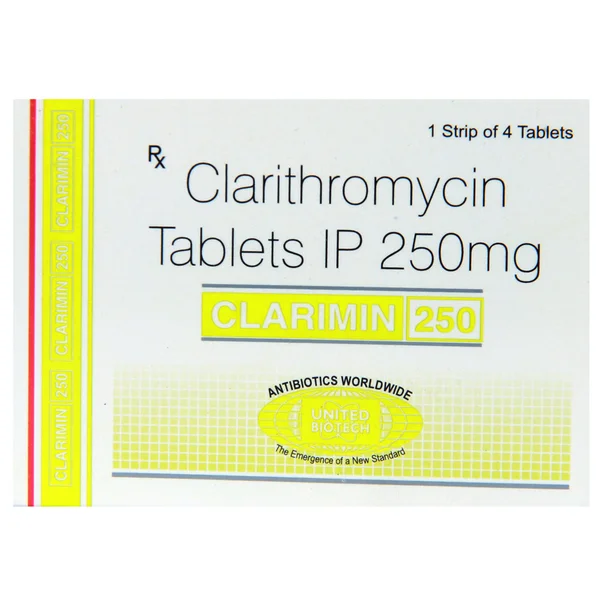
Clarimin 250 mg Tablet is used to treat bacterial infections. It contains Clarithromycin, which inhibits the growth of bacteria. It may cause some common side effects, such as nausea, diarrhoea, vomiting, loss of appetite, bloating, indigestion, headaches and difficulty sleeping. Before taking this medicine, you should tell your doctor if you are allergic to any of its components or if you are pregnant/breastfeeding, and about all the medications you are taking and pre-existing medical conditions.

Read more
Written By Bayyarapu Mahesh Kumar , M Pharmacy
Reviewed By Dr Aneela Siddabathuni , MPharma., PhD
OffersOffers & Discounts

Get Free delivery (₹99) with circle icon

Join Circle
coupon
Get 12% Off with Coupons
coupon
coupon
coupon
Extra 10% Off with Bank Offers

Have a query?

Side effects of Clarimin 250 mg Tablet
  • Drink plenty of fluids and consider oral rehydration solutions.
  • Eat bland, easily digestible foods like bananas, rice, toast, and applesauce.
  • Avoid trigger foods like greasy, spicy, fatty, acidic, and caffeinated foods.
  • Gradually reintroduce fiber-rich foods as symptoms improve.
  • Get adequate sleep and rest.
  • Practice relaxation techniques to manage stress.
  • Maintain regular bowel habits.
  • Avoid overexertion and take breaks when needed.
  • Consult a doctor if your gastrointestinal symptoms are severe, persistent, or accompanied by fever, bloody stools, dehydration, or last for more than a few days.
  • Regularly brush and floss your teeth.
  • Rinse your mouth with water and baking soda a solution to neutralize acid in the mouth. This makes your food taste as it should.
  • Drink plenty of water or non-caffeinated drinks to prevent dry mouth which may lead to altered taste.
  • Try ginger, peppermint, fruit or green teas, lemonade, ginger ale or fruit juice to help mask unpleasant tastes.
  • Try sucking on sugar-free ice pops or ice cubes to prevent dry mouth.
Here are the precise steps to cope with diarrhoea caused by medication usage:
  • Inform Your Doctor: Notify your doctor immediately about your diarrhoea symptoms. This allows them to adjust your medication or provide guidance on managing side effects.
  • Stay Hydrated: Drink plenty of fluids to replace lost water and electrolytes. Choose water, clear broth, and electrolyte-rich drinks. Avoid carbonated or caffeinated beverages to effectively rehydrate your body.
  • Follow a Bland Diet: Eat easy-to-digest foods to help firm up your stool and settle your stomach. Try incorporating bananas, rice, applesauce, toast, plain crackers, and boiled vegetables into your diet.
  • Avoid Trigger Foods: Steer clear of foods that can worsen diarrhoea, such as spicy, fatty, or greasy foods, high-fibre foods, and dairy products (especially if you're lactose intolerant).
  • Practice Good Hygiene: Maintain good hygiene to prevent the spread of infection. To stay healthy, wash your hands frequently, clean and disinfect surfaces regularly, and avoid exchanging personal belongings with others.
  • Take Anti-Diarrheal Medications: If your doctor advises, anti-diarrheal medications such as loperamide might help manage diarrhoea symptoms. Always follow your doctor's directions.
  • Keep track of your diarrhoea symptoms. If they don't get better or worse or are accompanied by severe stomach pain, blood, or dehydration signs (like extreme thirst or dark urine), seek medical help.
Overcome Medication-Induced Nausea: A 9-Step Plan
  • Inform your doctor about the nausea and discuss possible alternatives to the medication or adjustments to the dosage.
  • Divide your daily food intake into smaller, more frequent meals to reduce nausea.
  • Opt for bland, easily digestible foods like crackers, toast, plain rice, bananas, and applesauce.
  • Avoid certain foods that can trigger nausea, such as fatty, greasy, spicy, and smelly foods.
  • Drink plenty of fluids, such as water, clear broth, or electrolyte-rich beverages like coconut water or sports drinks.
  • Use ginger (tea, ale, or candies) to help relieve nausea.
  • Get adequate rest and also avoid strenuous activities that can worsen nausea.
  • Talk to your doctor about taking anti-nausea medication if your nausea is severe.
  • Record when your nausea occurs, what triggers it, and what provides relief to help you identify patterns and manage your symptoms more effectively.
To prevent, manage, and treat Constipation caused by medication usage, follow these steps:
  • Preventing Vomiting (Before it Happens)
  • Take medication exactly as prescribed by your doctor. This can help minimize side effects, including vomiting.
  • Having a small meal before taking your medication can help reduce nausea and vomiting.
  • Talk to your doctor about taking anti-nausea medication along with your prescribed medication.
  • Managing Vomiting (If it Happens)
  • Try taking ginger in the form of tea, ale, or candy to help alleviate nausea and vomiting.
  • What to Do if Vomiting Persists
  • Consult your doctor if vomiting continues or worsens, consult the doctor for guidance on adjusting your medication or additional treatment.
  • Drink water or other clear fluids.
  • To prevent worsening of pain, limit intake of tea, coffee, or alcohol.
  • Include bland foods like rice, toast, crackers, and rice in your diet.
  • Avoid lying down immediately after eating as it may cause indigestion or heartburn.
  • Avoid acidic and spicy food as it may cause indigestion.
  • Skin rash caused by allergies is due to irritants or allergens. Therefore, avoid contact with such irritants.
  • Consult your doctor for proper medication and apply an anti-itch medication. Follow the schedule and use the medication whenever needed.
  • Protect your skin from extreme heat and try to apply wet compresses.
  • Soak in the cool bath, which gives a soothing impact to the affected area.

Drug-Drug Interactions

verifiedApollotooltip
ClarithromycinDihydroergotamine
Critical
ClarithromycinSaquinavir
Critical

Drug-Drug Interactions

Login/Sign Up

ClarithromycinDihydroergotamine
Critical
How does the drug interact with Clarimin 250 mg Tablet:
When Dihydroergotamine is taken with Clarimin 250 mg Tablet, the amount of Dihydroergotamine in the blood can go up.

How to manage the interaction:
Taking Clarimin 250 mg Tablet with Dihydroergotamine can result in an interaction, it should be taken only if a doctor has advised it. However, if you experience abdominal pain, nausea, vomiting, numbness or tingling, muscle pain or weakness, blue or purple discoloration of fingers or toes, pale or cold skin, chest pain or tightness, irregular heartbeat, severe headache, shortness of breath, blurred vision, confusion, and/or slurred speech, contact a doctor immediately. Do not discontinue any medications without consulting a doctor.
ClarithromycinSaquinavir
Critical
How does the drug interact with Clarimin 250 mg Tablet:
When Clarimin 250 mg Tablet is taken with Saquinavir, increases the risk of an irregular heart rhythm.

How to manage the interaction:
Co-administration of Clarimin 250 mg Tablet and Saquinavir can lead to an interaction, it can be taken if advised by a doctor. However, if you experience any symptoms like dizziness, lightheadedness, fainting, shortness of breath, or heart palpitations, consult a doctor immediately. Do not stop using any medications without a doctor's advice.
ClarithromycinTerfenadine
Critical
How does the drug interact with Clarimin 250 mg Tablet:
When Terfenadine is taken with Clarimin 250 mg Tablet, the amount of Terfenadine in the blood can go up.

How to manage the interaction:
Co-administration of Clarimin 250 mg Tablet and Terfenadine can lead to an interaction, it can be taken if advised by a doctor. However, if you experience any symptoms like dizziness, lightheadedness, fainting, shortness of breath, or heart palpitations, consult a doctor immediately. Do not stop using any medications without a doctor's advice.
Critical
How does the drug interact with Clarimin 250 mg Tablet:
When Quinidine is taken with Clarimin 250 mg Tablet, can increase the blood levels and effects of Quinidine. This may increase the risk of an irregular heart rhythm.

How to manage the interaction:
Co-administration of Clarimin 250 mg Tablet and Quinidine can lead to an interaction, it can be taken if advised by a doctor. You should seek immediate medical attention if you develop sudden dizziness, lightheadedness, fainting, shortness of breath, or fast or pounding heartbeats. However, if you experience any symptoms like headache, confusion, vomiting, diarrhea, ringing in the ears, hearing loss, blurred or double vision, or sensitivity to light, consult a doctor immediately. Do not stop using any medications without a doctor's advice.
How does the drug interact with Clarimin 250 mg Tablet:
Co-administration of Clarimin 250 mg Tablet and Simvastatin can increase the blood levels and effects of Simvastatin. This can increase the risk of side effects such as liver damage and rhabdomyolysis(which involves the breakdown of skeletal muscle tissue).

How to manage the interaction:
Taking Clarimin 250 mg Tablet and Simvastatin together is not recommended as it can lead to an interaction, it can be taken if advised by your doctor. However, if you experience any symptoms like muscle pain, tenderness, or weakness, fever or dark colored urine, chills, joint pain or swelling, unusual bleeding or bruising, skin rash, itching, loss of appetite, fatigue, nausea, vomiting, and yellowing of the skin or eyes, contact your doctor immediately. Do not discontinue any medications without first consulting your doctor.
Critical
How does the drug interact with Clarimin 250 mg Tablet:
Co-administration of Bepridil with Clarimin 250 mg Tablet may increase the risk of an irregular heart rhythm.

How to manage the interaction:
Taking Clarimin 250 mg Tablet with Bepridil is not recommended as it can result in an interaction, it should be taken only if your doctor has advised it. However, if you experience sudden dizziness, lightheadedness, fainting, shortness of breath, chest pain or tightness, or rapid heartbeat, contact your doctor immediately. Do not discontinue any medications without consulting a doctor.
How does the drug interact with Clarimin 250 mg Tablet:
When Methylergometrine is taken with Clarimin 250 mg Tablet, the amount of Methylergometrine in the blood can go up. This can increase the risk or severity of side effects.

How to manage the interaction:
Taking Clarimin 250 mg Tablet with Methylergometrine is generally avoided as it can lead to an interaction, it can be taken only when advised by a doctor. Do not stop using any medications without a doctor's advice.
How does the drug interact with Clarimin 250 mg Tablet:
When Isavuconazole is taken with Clarimin 250 mg Tablet, it can increase the risk of side effects.

How to manage the interaction:
Co-administration of Clarimin 250 mg Tablet and Isavuconazole can lead to an interaction, it can be taken if advised by a doctor. However, if you experience any symptoms like nausea, vomiting, or diarrhoea, consult a doctor immediately. Do not stop using any medications without a doctor's advice.
How does the drug interact with Clarimin 250 mg Tablet:
Taking Clarimin 250 mg Tablet with Lovastatin can increase the risk of muscle problems.

How to manage the interaction:
Co-administration of Clarimin 250 mg Tablet and Lovastatin can lead to an interaction, it can be taken if advised by a doctor. However, if you experience any symptoms like fever, chills, joint pain or swelling, unusual bleeding or bruising, skin rash, itching, loss of appetite, fatigue, nausea, vomiting, dark-colored urine, and/or yellowing of the skin or eyes, consult a doctor immediately. Do not stop using any medications without a doctor's advice.
How does the drug interact with Clarimin 250 mg Tablet:
When Ranolazine and Clarimin 250 mg Tablet are taken together, significantly increases the blood levels and effects of Ranolazine.

How to manage the interaction:
Co-administration of Clarimin 250 mg Tablet and Ranozaline can lead to an interaction, it can be taken if advised by a doctor. Do not stop using any medications without a doctor's advice.

Drug-Food Interactions

verifiedApollotooltip
CLARITHROMYCIN-250MGGrapefruit and Grapefruit Juice
Mild

Drug-Food Interactions

Login/Sign Up

CLARITHROMYCIN-250MGGrapefruit and Grapefruit Juice
Mild
Common Foods to Avoid:
Grapefruit Juice

How to manage the interaction:
Grapefruit juice may delay the gastrointestinal absorption of Clarimin 250 mg Tablet. Avoid grapefruit juice while on treatment with Clarimin 250 mg Tablet.

All Substitutes & Brand Comparisons

Disclaimer

While we strive to provide complete, accurate, and expert-reviewed content on our 'Platform', we make no warranties or representations and disclaim all responsibility and liability for the completeness, accuracy, or reliability of the aforementioned content. The content on our platform is for informative purposes only, and may not cover all clinical/non-clinical aspects. Reliance on any information and subsequent action or inaction is solely at the user's risk, and we do not assume any responsibility for the same. The content on the Platform should not be considered or used as a substitute for professional and qualified medical advice. Please consult your doctor for any query pertaining to medicines, tests and/or diseases, as we support, and do not replace the doctor-patient relationship.
whatsapp Floating Button
Buy Now
Add to Cart