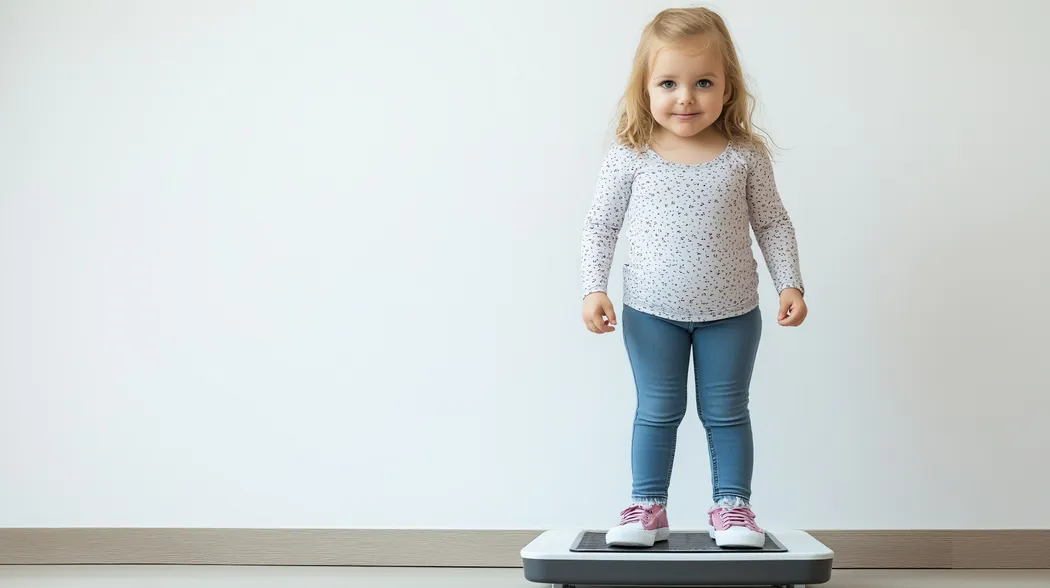
As a parent, few things are more reassuring than watching your child grow and hit developmental milestones. While every child’s journey is unique, consistent physical growth, particularly weight gain, is a vital sign of good health. The simple act of using a weighing machine for kids India moves growth tracking from a periodic doctor's visit to an informed, ongoing process at home. This supportive guide is designed to empower parents, in consultation with their pediatricians, to utilize a weighing machine safely and effectively. We aim to demystify the process and explain why and how accurate child weight monitoring at home India is a key step in proactive parenting.
Your Child’s Growth: Right Weighing Machine for Kids India
Learn when and how to start child weight monitoring at home in India. This guide explains growth charts, warning signs, and choosing the right weighing machine for kids to track healthy developments.
Apollo Pharmacy
Why Monitoring Children's Weight Matters? (Why Monitor Child’s Weight?)
Tracking weight is much more than just charting a number; it offers crucial, early insights into a child's overall well-being and nutritional status. Consistent monitoring helps healthcare providers see the full picture of a child’s development over time.
- Early Detection of Undernourishment: A sudden drop or plateau in weight can signal poor absorption of nutrients or insufficient caloric intake. Regular child weight monitoring at home India helps catch these issues quickly before they become serious.
- Identifying Risks of Overweight: Tracking weight helps spot early trends toward unhealthy gain before a child develops clinical obesity. This gives parents time to adjust diets and activity levels gradually and non-judgmentally.
- Effectiveness of Treatment: For children with chronic illnesses, weight tracking helps pediatricians assess if medications or dietary changes are working correctly. Weight often acts as a reliable gauge of the body's internal stability.
- Milestone Confirmation (Infants): Rapid weight gain in the first few months confirms successful breastfeeding or formula feeding and overall healthy metabolism.
- Establishing a Baseline: A reliable weighing machine for kids India helps establish a unique, healthy baseline for your child. Future measurements are compared against their own history, not external averages.
Deciphering the Story (Growth Charts)
Growth charts are graphical tools used by pediatricians worldwide to compare a child’s measurements against accepted standards for age and sex. Understanding how to read them provides context for the numbers from your weighing machine for kids India.
- What are Percentile Lines: These lines show what percentage of children of the same age and sex weigh more or less than your child. For example, the 50th percentile means 50% of peers weigh more and 50% weigh less.
- Focus on the Trend, Not the Dot: A single data point is rarely concerning; the smooth curve of growth over months is what truly matters. The goal is for your child to follow their own curve, whether it is high or low.
- Crossing the Lines: A worrying sign is when a child drastically jumps up or drops down two major percentile lines suddenly. This warrants a prompt discussion with your child’s doctor.
- WHO vs. IAP Standards: In India, charts may be based on WHO (World Health Organization) or IAP (Indian Academy of Pediatrics) standards. Both are designed to help doctors assess ideal growth patterns.
- BMI for Older Kids: After age two, weight is interpreted alongside height to calculate Body Mass Index (BMI). This provides a more accurate measure of healthy weight status.
Choosing Your Toolkit
Selecting the right equipment is vital for ensuring accurate child weight monitoring at home India, as inaccurate data is misleading. Different ages require different types of scales.
- Infant Digital Scales (Newborn to 1 Year): These scales feature a shallow, secure tray and a "tare" function to subtract the weight of blankets or diapers. Precision up to 5-10 grams is necessary for tiny babies.
- Standard Digital Scales (Ages 2+): Once the child can stand steadily, a regular high-quality digital personal scale is suitable. Look for a robust design that can handle slight movement or uneven pressure.
- Sturdy and Non-Slip Design: Choose a weighing machine for kids India with a wide, stable base and an anti-skid surface to prevent accidental falls. Safety must always come first.
- Measurement Units: Ensure the scale can easily switch between kilograms (kg) and pounds (lbs) to match your doctor’s preferred unit. Consistency in units is essential for accurate plotting.
- Memory Functionality: Some modern scales offer a memory or even Bluetooth function to track and log previous weights. This simplifies child weight monitoring at home India significantly for busy parents.
The Perfect Weigh-In (Routine)
Consistency in the weighing process is the key factor that determines the reliability of your weighing machine for kids India data. A chaotic routine yields meaningless numbers.
- Time of Day is Key: Always weigh the child at the same time, ideally first thing in the morning before breakfast. Body weight naturally fluctuates throughout the day due to food and water intake.
- Minimal Clothing Rule: Ensure the child is wearing the absolute minimum clothing (a diaper for infants, underwear for older kids). Even heavy clothes can skew the results dramatically.
- Fixed Frequency: For infants, weekly weighing is often recommended; for toddlers and older children, a monthly check is generally sufficient. Too frequent weighing (daily) often causes unnecessary anxiety.
- Zero Calibration: Always ensure the weighing machine for kids India is placed on a firm, flat surface and is set back to zero ("tared") before the child steps on. Carpeted floors should be avoided.
- Involving Older Children: Make the weighing process a neutral, positive experience for older kids. Explain that you are tracking their strength and growth, not judging their body.
What to Look For? (What’s Normal?)
Understanding the normal fluctuations and milestones in child growth ensures that your child weight monitoring at home India remains supportive, not stressful.
- Infant Weight Loss: It is perfectly normal for a newborn to lose up to 10% of their birth weight in the first week. They should regain this by two weeks of age.
- Rapid Growth Phases: Expect rapid weight and height spurts during infancy and puberty. Weight gain is not always steady; it often comes in bursts.
- The School-Age Slowdown: Between ages 5 and 10, weight gain typically slows down to a much more gradual, predictable pace. This is a normal phase of sustained, steady growth.
- Red Flag: Sudden Plateaus: If a child's weight completely stops increasing for several months when they are clearly still growing in height, this warrants investigation. This might indicate a nutritional imbalance.
- Red Flag: Rapid Unexplained Gain: Conversely, rapid, unexplained weight gain requires looking at diet, screen time, and thyroid function. This needs a complete pediatric review.
- Don't Ignore Height: Remember that weight must always be considered in context with height. A heavy child who is also very tall may be perfectly healthy.
Conclusion
Using a weighing machine for kids India is a small but powerful step toward proactive health management. When approached with knowledge and consistency, child weight monitoring at home India becomes an invaluable tool, providing the data needed for timely intervention and peace of mind. Remember that the scale is not a judge of your child's worth, but a compass guiding their journey to a healthy future. Always discuss your readings and any concerns with your child's pediatrician, as they are the experts in interpreting this vital data.


