
0
Welcome User
Login/Sign Up

Login/Sign Up
₹215
(Inclusive of all Taxes)
Get Free delivery (₹99) with
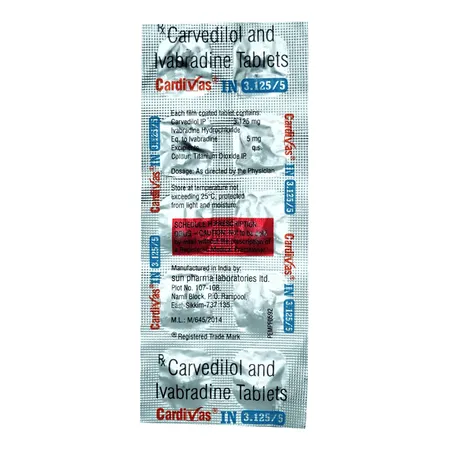
कार्डिवास आईएन 3125 एमजी/5 एमजी टैबलेट 10's एंटीहाइपरटेंसिव दवाओं के समूह से संबंधित है जिसका उपयोग हाइपरटेंशन (उच्च रक्तचाप) के इलाज के लिए किया जाता है। यह मध्यम से गंभीर हृदय विफलता और एनजाइना (हृदय-संबंधी सीने में दर्द) के इलाज में भी प्रभावी है, जिससे वयस्कों में दिल के दौरे या स्ट्रोक का खतरा कम होता है। उच्च रक्तचाप एक ऐसी स्थिति है जिसमें धमनी की दीवारों के खिलाफ रक्त का बल बहुत अधिक होता है। यह हृदय और धमनियों के काम का बोझ बढ़ा देगा। यदि यह लंबे समय तक जारी रहता है, तो हृदय और धमनियां ठीक से काम नहीं कर सकती हैं और हृदय, मस्तिष्क और गुर्दे की रक्त वाहिकाओं को नुकसान पहुंचा सकती हैं, जिसके परिणामस्वरूप हृदय विफलता, स्ट्रोक या गुर्दे की विफलता हो सकती है।
कार्डिवास आईएन 3125 एमजी/5 एमजी टैबलेट 10's में कार्वेडिलोल और इवाब्राडिन का संयोजन होता है। कार्वेडिलोल एपिनेफ्रीन या एड्रेनालाईन जैसे कुछ प्राकृतिक पदार्थों की क्रिया को अवरुद्ध करके रक्त वाहिकाओं को आराम देकर कार्य करता है। इवाब्राडिन प्रति मिनट कुछ धड़कनों से हृदय गति को कम करके काम करता है। इस तरह, यह हृदय की ऑक्सीजन की आवश्यकता को कम करता है, खासकर उन स्थितियों में जहां एनजाइना का दौरा पड़ सकता है। इस प्रकार, यह बढ़े हुए रक्तचाप को कम करता है और हृदय गति को धीरे-धीरे कम करता है, जिससे स्ट्रोक, दिल का दौरा या अन्य हृदय समस्याओं का खतरा कम होता है।
कार्डिवास आईएन 3125 एमजी/5 एमजी टैबलेट 10's को निर्धारित अनुसार लेना चाहिए। दवा की खुराक आपके डॉक्टर द्वारा आपकी चिकित्सा स्थिति के आधार पर तय की जाएगी। कुछ मामलों में, कार्डिवास आईएन 3125 एमजी/5 एमजी टैबलेट 10's दस्त, सिरदर्द, वजन बढ़ना, धीमी हृदय गति, सूखी आंखें, थकान, चक्कर आना या निम्न रक्तचाप जैसे कुछ दुष्प्रभाव पैदा कर सकता है। इनमें से अधिकांश दुष्प्रभावों के लिए चिकित्सा ध्यान देने की आवश्यकता नहीं होती है और समय के साथ धीरे-धीरे ठीक हो जाते हैं। हालांकि, यदि दुष्प्रभाव बने रहते हैं, तो कृपया अपने डॉक्टर से परामर्श करें।
यदि आपको इससे एलर्जी है तो कार्डिवास आईएन 3125 एमजी/5 एमजी टैबलेट 10's से बचना चाहिए। यदि आप गर्भवती हैं या स्तनपान करा रही हैं, तो कृपया इस दवा को लेने से पहले अपने डॉक्टर को सूचित करें। यदि आपको ब्रोंकाइटिस, अस्थमा, एम्फिसीमा (सांस की तकलीफ पैदा करने वाली फेफड़ों की स्थिति), गंभीर यकृत रोग, हार्ट ब्लॉक, धीमी हृदय गति, या सिक साइनस सिंड्रोम (हृदय के प्राकृतिक पेसमेकर की खराबी के कारण असामान्य हृदय ताल) है तो कार्डिवास आईएन 3125 एमजी/5 एमजी टैबलेट 10's लेने से बचें। कार्डिवास आईएन 3125 एमजी/5 एमजी टैबलेट 10's 18 वर्ष से कम उम्र के बच्चों के लिए अनुशंसित नहीं है। यदि आपको मधुमेह, कोरोनरी धमनी रोग, द्रव प्रतिधारण, थायराइड विकार, एनजाइना (सीने में दर्द), गुर्दे की बीमारी, धीमी हृदय गति, रेनॉड सिंड्रोम (एक संचार समस्या), या फियोक्रोमोसाइटोमा (अधिवृक्क ग्रंथियों में ट्यूमर) है, या कोई सर्जरी करवा रहे हैं तो अपने डॉक्टर को सूचित करें।
कार्डिवास आईएन 3125 एमजी/5 एमजी टैबलेट 10's का उपयोग एनजाइना (हृदय-संबंधी सीने में दर्द), हार्ट फेलियर और हाइपरटेंशन (उच्च रक्तचाप) के इलाज में किया जाता है। कार्डिवास आईएन 3125 एमजी/5 एमजी टैबलेट 10's के विस्तृत उपयोग इस प्रकार हैं:
कार्डिवास आईएन 3125 एमजी/5 एमजी टैबलेट 10's में कंट्रोल्ड रिलीज़ फ़ॉर्म में कार्वेडिलोल और इवाब्राडिन होता है। कार्वेडिलोल आपके शरीर में कुछ प्राकृतिक पदार्थों की क्रिया को अवरुद्ध करके रक्त वाहिकाओं को आराम देने में महत्वपूर्ण भूमिका निभाता है। इस प्रकार, यह रक्तचाप को कम करता है और स्ट्रोक, दिल का दौरा या अन्य हृदय समस्याओं के जोखिम को कम करता है। इवाब्राडिन प्रति मिनट कुछ धड़कनों से हृदय गति को कम करके काम करता है। इस तरह, यह हृदय की ऑक्सीजन की आवश्यकता को कम करता है, खासकर उन स्थितियों में जहाँ एनजाइना का दौरा पड़ सकता है।
असुरक्षित
कार्डिवास आईएन 3125 एमजी/5 एमजी टैबलेट 10's के साथ शराब का सेवन करने से बचें क्योंकि इससे लो ब्लड प्रेशर का खतरा बढ़ सकता है और चक्कर आना, बेहोशी, सिर हल्का महसूस होना या सिरदर्द जैसे दुष्प्रभाव हो सकते हैं।
सावधानी
यदि आप गर्भवती हैं या गर्भधारण की योजना बना रही हैं, तो कार्डिवास आईएन 3125 एमजी/5 एमजी टैबलेट 10's लेने से पहले अपने डॉक्टर को सूचित करें। यदि आपके डॉक्टर को लगता है कि इसके फायदे जोखिमों से अधिक हैं, तो वे आपको यह दवा लेने की सलाह दे सकते हैं।
असुरक्षित
कार्डिवास आईएन 3125 एमजी/5 एमजी टैबलेट 10's का उपयोग स्तनपान कराने वाली महिलाओं के लिए अनुशंसित नहीं है क्योंकि यह स्तन के दूध में जा सकता है और आपके शिशु को नुकसान पहुँचा सकता है। इसलिए, यदि आप स्तनपान करा रही हैं, तो कार्डिवास आईएन 3125 एमजी/5 एमजी टैबलेट 10's लेने से पहले अपने डॉक्टर को सूचित करें। आपका डॉक्टर आपको इस दवा के साथ उपचार के दौरान स्तनपान बंद करने का सुझाव दे सकता है।
असुरक्षित
कार्डिवास आईएन 3125 एमजी/5 एमजी टैबलेट 10's के सेवन से कुछ लोगों को चक्कर या थकान महसूस हो सकती है। इसलिए, यदि आपको कार्डिवास आईएन 3125 एमजी/5 एमजी टैबलेट 10's लेने के बाद चक्कर या थकान महसूस हो, तो गाड़ी चलाने से बचें।
सावधानी
यदि आपको पहले से लिवर (यकृत) की कोई बीमारी है या रही है, तो कार्डिवास आईएन 3125 एमजी/5 एमजी टैबलेट 10's लेने से पहले अपने डॉक्टर को जरूर बताएं। आपकी स्थिति के आधार पर आपके डॉक्टर इस दवा की खुराक बदल सकते हैं या इसके बदले कोई अन्य उपयुक्त दवा लिख सकते हैं।
सावधानी
यदि आपको किडनी की बीमारी है या पहले कभी रही है, तो कार्डिवास आईएन 3125 एमजी/5 एमजी टैबलेट 10's लेने से पहले अपने डॉक्टर को इसके बारे में ज़रूर बताएँ। आपकी स्थिति के आधार पर आपके डॉक्टर इस दवा की खुराक (डोज़) बदल सकते हैं या आपको कोई अन्य उपयुक्त विकल्प लिख सकते हैं।
असुरक्षित
कार्डिवास आईएन 3125 एमजी/5 एमजी टैबलेट 10's का उपयोग 18 वर्ष से कम उम्र के बच्चों और किशोरों में करने की सलाह नहीं दी जाती है, क्योंकि इसकी सुरक्षा और प्रभावशीलता स्थापित नहीं की गई है।
सावधानी
कार्डिवास आईएन 3125 एमजी/5 एमजी टैबलेट 10's का उपयोग हृदय गति को कम करके और हृदय के कार्यभार को कम करके हार्ट फेलियर और एनजाइना के इलाज के लिए किया जाता है। इसे केवल चिकित्सकीय देखरेख में ही लें, क्योंकि इसमें हृदय गति और रक्तचाप की सावधानीपूर्वक निगरानी की आवश्यकता होती है।
सावधानी
बुजुर्ग मरीज दिल की बीमारियों के लिए कार्डिवास आईएन 3125 एमजी/5 एमजी टैबलेट 10's ले सकते हैं, लेकिन केवल कड़ी डॉक्टरी निगरानी में। बुजुर्गों को चक्कर आना और निम्न रक्तचाप जैसे दुष्प्रभावों से बचने के लिए कम खुराक और नियमित निगरानी की आवश्यकता हो सकती है।
Have a query?
अगर आपको कार्डिवास आईएन 3125 एमजी/5 एमजी टैबलेट 10's या किसी अन्य दवा से एलर्जी है, तो कृपया अपने डॉक्टर को बताएं। कार्डिवास आईएन 3125 एमजी/5 एमजी टैबलेट 10's 18 वर्ष से कम उम्र के बच्चों के लिए अनुशंसित नहीं है। यदि आप गर्भवती हैं या स्तनपान करा रही हैं, तो कार्डिवास आईएन 3125 एमजी/5 एमजी टैबलेट 10's लेने से पहले कृपया अपने डॉक्टर को सूचित करें। यदि आपकी कोई सर्जरी होने वाली है, तो आपको अपने डॉक्टर को सूचित करने की सलाह दी जाती है कि आप कार्डिवास आईएन 3125 एमजी/5 एमजी टैबलेट 10's ले रहे हैं। यदि आपको ब्रोंकाइटिस, अस्थमा, एम्फिसीमा (फेफड़ों की एक स्थिति जिससे सांस लेने में तकलीफ होती है), गंभीर लिवर रोग, हार्ट ब्लॉक, धीमी हृदय गति, या सिक साइनस सिंड्रोम (हृदय के प्राकृतिक पेसमेकर की खराबी के कारण असामान्य हृदय ताल) है, तो कार्डिवास आईएन 3125 एमजी/5 एमजी टैबलेट 10's लेने से बचें। यदि आपको डायबिटीज, कोरोनरी धमनी रोग, द्रव प्रतिधारण, थायराइड विकार, एनजाइना (सीने में दर्द), किडनी रोग, धीमी धड़कन, रेनॉड सिंड्रोम (एक संचार समस्या), या फियोक्रोमोसाइटोमा (अधिवृक्क ग्रंथियों में ट्यूमर) है, तो कार्डिवास आईएन 3125 एमजी/5 एमजी टैबलेट 10's लेने से पहले अपने डॉक्टर को सूचित करें।
Drug-Drug Interactions: CARDIVAS IN 3.125/5 TABLETS may have interaction with pain killers (aspirin), calcium channel blockers (amlodipine), water pills (furosemide, hydrochlorothiazide), and thyroid medicines (levothyroxine).
Drug-Food Interactions: CARDIVAS IN 3.125/5 TABLETS may interact with grapefruit juice. Therefore, avoid intake of grapefruit juice with CARDIVAS IN 3.125/5 TABLETS as it may increase the levels of CARDIVAS IN 3.125/5 TABLETS in the blood. Also, avoid sodium, potassium, magnesium, and calcium-rich foods with CARDIVAS IN 3.125/5 TABLETS as they may reduce the effect of CARDIVAS IN 3.125/5 TABLETS .
Drug-Disease Interactions: Avoid taking CARDIVAS IN 3.125/5 TABLETS if you have bronchitis, asthma, emphysema (a lung condition causing shortness of breath), severe liver disease, heart block, slow heart rate, or sick sinus syndrome (abnormal heart rhythms caused by malfunction of heart’s natural pacemaker). If you have diabetes, coronary artery disease, fluid retention, thyroid disorder, angina (chest pain), kidney disease, slow heartbeats, Raynaud’s syndrome (a circulatory problem), or pheochromocytoma (tumor in the adrenal glands), inform your doctor before taking CARDIVAS IN 3.125/5 TABLETS .
Login/Sign Up
Login/Sign Up
Disclaimer
Recommended for a 30-day course: 4 Strips


