
0
Welcome User
Login/Sign Up

Login/Sign Up
₹17
(Inclusive of all Taxes)
₹13 with coupons & bank offers*
Get Free delivery (₹99) with
डिबिज़ाइड-एम टैबलेट 10's एंटी-डायबिटिक दवाओं की श्रेणी में आता है। इसका उपयोग टाइप 2 डायबिटीज मेलिटस के इलाज में किया जाता है। डायबिटीज मेलिटस एक मेटाबॉलिक बीमारी है जिसके कारण ब्लड शुगर का स्तर बढ़ जाता है।
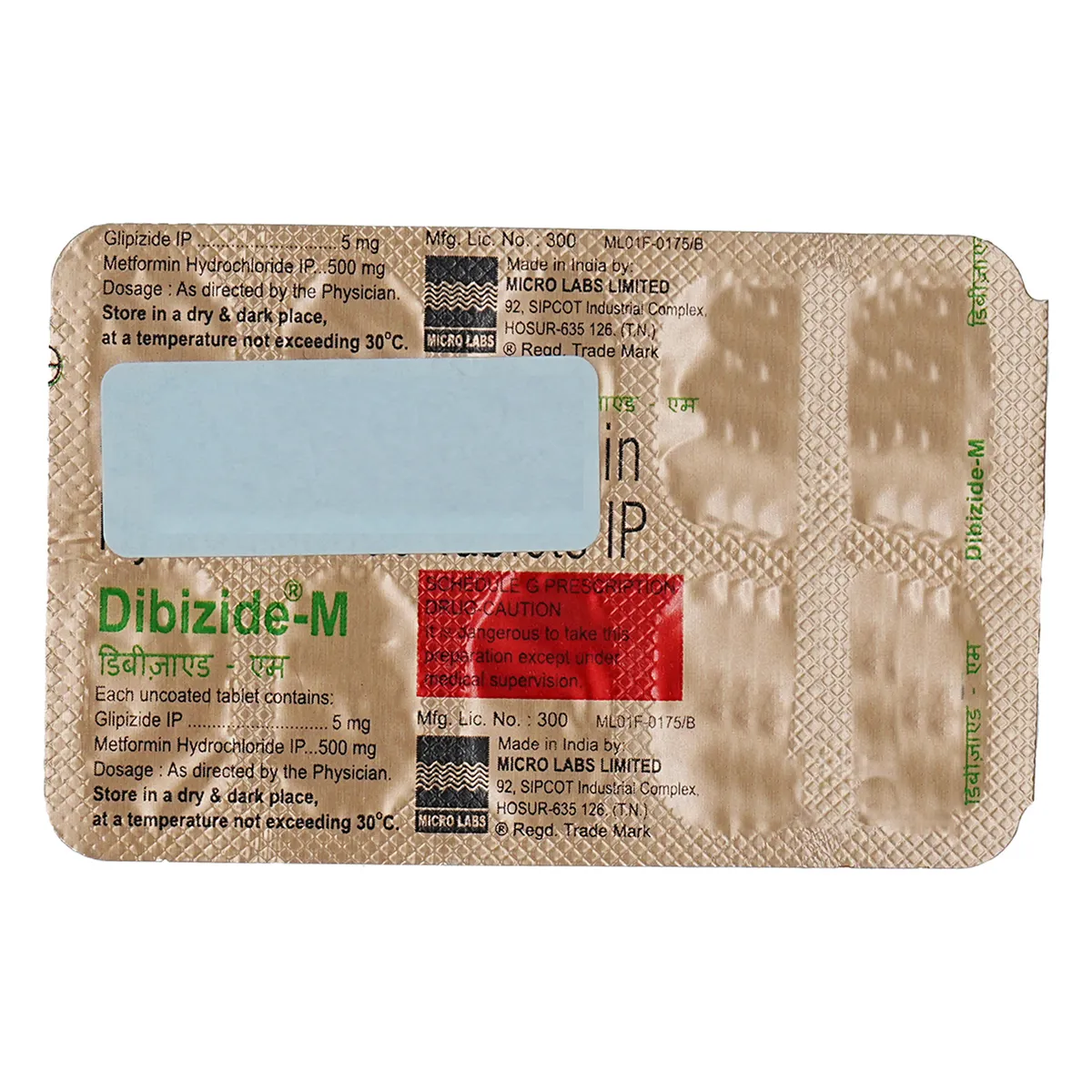
डिबिज़ाइड-एम टैबलेट 10's में ग्लिपिज़ाइड और मेटफॉर्मिन होता है। ग्लिपिज़ाइड पैनक्रियास की बीटा कोशिकाओं से इंसुलिन के स्राव को बढ़ावा देता है और लिवर से ग्लूकोज के उत्पादन को कम करता है। मेटफॉर्मिन इंसुलिन के स्राव को बढ़ाए बिना सीरम ग्लूकोज के स्तर को कम करता है।
अपने डॉक्टर द्वारा बताए अनुसार ही डिबिज़ाइड-एम टैबलेट 10's लें। डिबिज़ाइड-एम टैबलेट 10's के सामान्य साइड इफेक्ट्स में लो ब्लड शुगर, मतली, दस्त, अपच, सिरदर्द, चक्कर आना और धुंधला दिखाई देना शामिल हैं। हालांकि ये साइड इफेक्ट्स हर किसी को नहीं होते, लेकिन यदि ऐसा होता है, तो डॉक्टर से सलाह लें।
डिबिज़ाइड-एम टैबलेट 10's शुरू करने से पहले, यदि आपका हीमोग्लोबिन का स्तर कम है, या आपको दौरे (फिट्स) पड़ने, हृदय, किडनी और लिवर की बीमारी का कोई इतिहास रहा है, तो अपने डॉक्टर को ज़रूर बताएं। यदि आप गर्भवती हैं या स्तनपान करा रही हैं, तो अपने डॉक्टर से परामर्श लें।
डिबिज़ाइड-एम टैबलेट 10's का उपयोग टाइप 2 डायबिटीज मेलिटस के इलाज में किया जाता है। डिबिज़ाइड-एम टैबलेट 10's के विस्तृत उपयोग इस प्रकार हैं:
सावधानी
आपको सलाह दी जाती है कि आप डिबिज़ाइड-एम टैबलेट 10's के साथ शराब का सेवन न करें, क्योंकि इससे लैक्टिक एसिडोसिस (शरीर में लैक्टिक एसिड का जमाव) का खतरा बढ़ सकता है।
सावधानी
डिबिज़ाइड-एम टैबलेट 10's गर्भावस्था के दौरान भ्रूण को प्रभावित कर सकता है। डिबिज़ाइड-एम टैबलेट 10's शुरू करने से पहले कृपया अपने डॉक्टर से सलाह लें।
सावधानी
डिबिज़ाइड-एम टैबलेट 10's स्तनपान पर कैसा प्रभाव डालता है, इस बारे में पर्याप्त जानकारी उपलब्ध नहीं है। यदि आप स्तनपान करा रही हैं, तो डिबिज़ाइड-एम टैबलेट 10's शुरू करने से पहले डॉक्टर से सलाह लेना ही सुरक्षित है।
सावधानी
अगर आपका ब्लड शुगर लेवल बहुत ज्यादा या बहुत कम हो जाए, तो आपकी ड्राइविंग पर असर पड़ सकता है। अगर आपको चक्कर आना या सुस्ती महसूस हो रही हो, तो गाड़ी न चलाएं और न ही किसी मशीन का उपयोग करें।
सावधानी
जब आपको डिबिज़ाइड-एम टैबलेट 10's प्रिस्क्राइब किया जाए, तो यदि आपको लिवर की बीमारियों या हेपेटिक इम्पैरमेंट का कोई भी पुराना इतिहास है, तो अपने डॉक्टर को ज़रूर बताएं।
सावधानी
जब आपको डिबिज़ाइड-एम टैबलेट 10's दिया जाए, तो यदि आपको किडनी की बीमारी का कोई इतिहास रहा हो, तो अपने डॉक्टर को ज़रूर बताएं।
सावधानी
बच्चे को डिबिज़ाइड-एम टैबलेट 10's देने से पहले कृपया डॉक्टर से सलाह लें।
कृपया अपने डॉक्टर से सलाह लें।
डिबिज़ाइड-एम टैबलेट 10's का उपयोग सावधानी से करना चाहिए, खासकर यदि आपको कोई हृदय संबंधी समस्याएँ हैं। गंभीर हृदय विफलता वाले मरीज़ों को यह दवा नहीं लेनी चाहिए।
सावधानी
बुजुर्ग मरीज़ों को डिबिज़ाइड-एम टैबलेट 10's लेते समय सावधानी बरतनी चाहिए।
स्वस्थ खान-पान की आदतें:
शारीरिक गतिविधि और वजन प्रबंधन:
जीवनशैली और दैनिक देखभाल:
Have a query?
डिबिज़ाइड-एम टैबलेट 10's को काम करना शुरू करने में लगने वाला समय: डिबिज़ाइड-एम टैबलेट 10's का असर शुरू होने में कितना समय लगता है, यह चिकित्सकीय रूप से स्थापित नहीं है।
डिबिज़ाइड-एम टैबलेट 10's का असर कितने समय तक रहता है: डिबिज़ाइड-एम टैबलेट 10's के असर की अवधि चिकित्सकीय रूप से स्थापित नहीं है।
Drug-Drug Interactions
Dibizide-M Tablet may interact with medications that affect blood sugar levels or alter the body's response to treatment.
Drug-Food Interactions
Certain foods and beverages may affect the safety and effectiveness of Dibizide-M Tablet .
Drug-Disease Interactions
Certain medical conditions may require special precautions or make this medication unsuitable.
Login/Sign Up
Login/Sign Up
Disclaimer
Recommended for a 30-day course: 3 Strips


