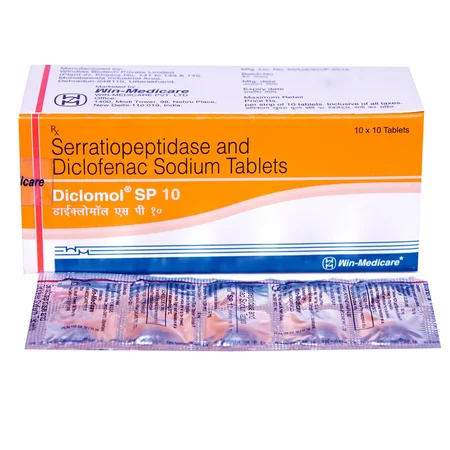
How does the drug interact with Diclomol SP 10 Tablet:
Co-administration of Leflunomide with Diclomol SP 10 Tablet may increase the risk of liver problems.
How to manage the interaction:
Co-administration of Leflunomide with Diclomol SP 10 Tablet can lead to an interaction; it can be taken if advised by your doctor. However, if you experience joint pain, unusual bleeding or bruising, skin rash, loss of appetite, weakness, stomach pain, dark urine, pale stools, or yellowing of the skin or eyes. Do not stop using any medication without consulting your doctor.
How does the drug interact with Diclomol SP 10 Tablet:
Coadministration of Ketorolac with Diclomol SP 10 Tablet can increase the risk of side effects like stomach inflammation, bleeding, or ulceration.
How to manage the interaction:
Co-administration of Ketorolac with Diclomol SP 10 Tablet can lead to an interaction, but it can be taken if advised by your doctor. However, if you experience any unusual bleeding, tarry stools, coughing or vomiting blood, severe headache, or weakness, consult your doctor immediately. Do not stop using any medications without a doctor's advice.
How does the drug interact with Diclomol SP 10 Tablet:
Taking Dasatinib with Diclomol SP 10 Tablet may increase the risk of unusual bleeding.
How to manage the interaction:
There may be a possible interaction of Dasatinib and Diclomol SP 10 Tablet but they can be taken if your doctor has prescribed them. Consult your doctor immediately if you experience unusual bleeding, dizziness, tarry stools, coughing up or vomiting blood, or severe headaches. Do not discontinue any medications without consulting a doctor.
How does the drug interact with Diclomol SP 10 Tablet:
Co-administration of Tacrolimus with Diclomol SP 10 Tablet may increase the risk of developing kidney problems.
How to manage the interaction:
Co-administration of Tacrolimus with Diclomol SP 10 Tablet can lead to an interaction, it can be taken if advised by your doctor. However, consult your doctor if you experience vomiting, loss of hunger, increased or decreased urination, swelling, shortness of breath, muscle cramps, or weakness. Do not stop using any medications without a doctor's advice.
How does the drug interact with Diclomol SP 10 Tablet:
Taking Lomitapide with Diclomol SP 10 Tablet will have an additive effect and may cause liver problems.
How to manage the interaction:
There may be a possible interaction of Lomitapide with Diclomol SP 10 Tablet, but they can be taken together if your doctor has prescribed them. Consult your doctor if you experience fever, joint pain, unusual bleeding or bruising, skin rash, vomiting, stomach pain, dark urine, pale stools, or yellowing of the skin or eyes. Do not stop using any medications without a doctor's advice.
How does the drug interact with Diclomol SP 10 Tablet:
Taking Prasugrel with Diclomol SP 10 Tablet may increase the risk of bleeding.
How to manage the interaction:
Co-administration of Prasugrel with Diclomol SP 10 Tablet can lead to an interaction; it can be taken if advised by a doctor. However, if you experience any unusual bleeding or bruising, tarry stools, coughing up or vomiting blood, severe headache, or weakness, consult your doctor immediately. Do not stop using any medications without a doctor's advice.
How does the drug interact with Diclomol SP 10 Tablet:
Taking Human immunoglobulin with Diclomol SP 10 Tablet may increase the risk of developing kidney problems.
How to manage the interaction:
Although there is an interaction of Human immunoglobulin with Diclomol SP 10 Tablet, you can take these medicines when prescribed by a doctor. Consult the doctor immediately if you experience vomiting, increased or decreased urination, sudden weight gain or loss, swelling, muscle cramps, weakness, or palpitations. Do not discontinue any medications without consulting a doctor.
How does the drug interact with Diclomol SP 10 Tablet:
Co-administration of Sulindac with Diclomol SP 10 Tablet can increase the risk of side effects.
How to manage the interaction:
Although there is an interaction of Sulindac with Diclomol SP 10 Tablet, it can be taken when advised by a doctor. However, if you experience any unusual bleeding, tarry stools, coughing up or vomiting blood, headache, or weakness, consult your doctor immediately. Do not stop using any medications without a doctor's advice.
How does the drug interact with Diclomol SP 10 Tablet:
Taking Ponatinib with Diclomol SP 10 Tablet can increase the risk of bleeding complications.
How to manage the interaction:
There may be a possible interaction of Ponatinib with Diclomol SP 10 Tablet, they can be takenif your doctor has prescribed them. However, consult your doctor immediately if you experience any unusual bleeding, tarry stools, coughing up or vomiting blood, or severe headaches. Do not discontinue any medications without consulting your doctor.
How does the drug interact with Diclomol SP 10 Tablet:
Co-administration of Flurbiprofen with Diclomol SP 10 Tablet may increase the risk of stomach bleeding and ulcers.
How to manage the interaction:
There is a possible interaction of Flurbiprofen with Diclomol SP 10 Tablet but they can be taken when your doctor has prescribed them. Consult your doctor immediately if you experience nausea, tarry stools, coughing up or vomiting fresh or dried blood, and weakness. Do not stop using any medications without first talking to your doctor.