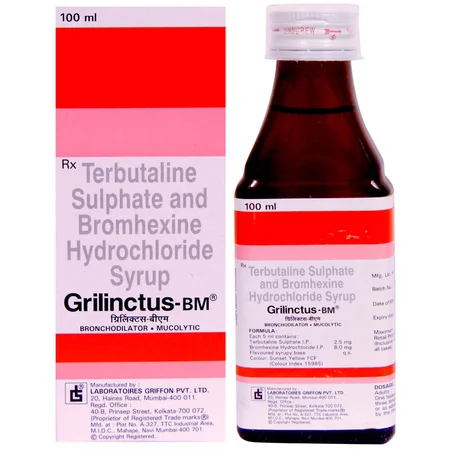
Grilinctus-BM Syrup is used to treat wet or productive cough associated with asthma, bronchitis, bronchiectasis, and COPD. It works by thinning and loosening thick mucus in the airways, making it easier to cough out. This helps clear chest congestion, improves airflow, and makes breathing more comfortable.
Here are the steps to manage medication-triggered tremors or involuntary shaking:
Notify your doctor immediately if you experience tremors or involuntary shaking after taking medication or adjusting your medication regimen.
Your doctor may adjust your medication regimen or recommend alternative techniques like relaxation, meditation, or journaling to alleviate tremor symptoms.
Your doctor may direct you to practice stress-reducing techniques, such as deep breathing exercises, yoga, or journaling.
Regular physical activity, such as walking or jogging, can help reduce anxiety and alleviate tremor symptoms.
Your doctor may recommend lifestyle changes, such as avoiding caffeine, getting enough sleep, and staying hydrated, to help manage tremors.
Maintain regular follow-up appointments with your doctor to monitor tremor symptoms and adjust treatment plans as needed.
Here are the steps to manage medication-triggered Nervousness:
Tell your doctor immediately if you experience symptoms of Nervousness, such as anxiety, jitteriness, or an increased heart rate, after taking medication or adjusting your medication regimen.
Your doctor may adjust your medication regimen to alleviate symptoms of Nervousness. This can include switching to a different medication, reducing the dosage, or temporarily stopping the medication. Your doctor may also recommend alternative techniques like relaxation, mindfulness meditation, or journaling. These techniques can help reduce anxiety and Nervousness.
Practice stress-reducing techniques, such as deep breathing exercises, yoga, or journaling, to help manage Nervousness.
Engage in regular physical activity, such as walking or jogging, to help reduce anxiety and improve mood.
Your doctor may advise considering cognitive-behavioural therapy (CBT) or other forms of talk therapy to address underlying anxiety or Nervousness.
You should maintain regular follow-up appointments with your doctor to monitor nervousness symptoms, adjust treatment plans as needed, and discuss any concerns or questions.
Here are the steps to manage the medication-triggered Tachycardia (Fast Heart Rate):
Contact your doctor immediately if you're experiencing a fast heart rate, palpitations, or other heart-related symptoms. This is crucial to determine whether the symptoms are related to your medication.
Your doctor may need to adjust your medication regimen to alleviate the fast heart rate symptoms. This could involve changing the medication, reducing the dosage, or adding new medications to counteract the side effects.
Follow your doctor's advice on monitoring your heart rate and blood pressure. This will help track any changes and ensure your heart rate returns normal.
If you experience severe symptoms such as chest pain, dizziness, or shortness of breath, seek immediate medical attention. These symptoms can indicate a more serious condition that requires prompt treatment.
Avoid triggers like alcohol, caffeine, and energy drinks.
Try relaxation techniques such as yoga, meditation, or deep breathing.
Exercise regularly as it helps maintain heart health.
Follow a nutritious and balanced diet.
Here are the 7 steps to manage Dizziness caused by medication:
Inform your doctor about dizziness symptoms. They may adjust your medication regimen or prescribe additional medications to manage symptoms.
Follow your doctor's instructions for taking medication, and take it at the same time every day to minimize dizziness.
When standing up, do so slowly and carefully to avoid sudden dizziness.
Avoid making sudden movements, such as turning or bending quickly, which can exacerbate dizziness.
Drink plenty of water throughout the day to stay hydrated and help alleviate dizziness symptoms.
If you're feeling dizzy, sit or lie down and rest until the dizziness passes.
Track when dizziness occurs and any factors that may trigger it, and share this information with your doctor to help manage symptoms.
Health Queries
I am having repeated allergy-related cough several times, and it keeps coming back again and again. What treatment can help control this cough properly?
Vikas Singh
M Pharmacy
A cough caused by allergies can keep coming back if you are exposed to things like dust, smoke, pollution, changes in weather, sinus drainage, strong smells, pets, or if your airways are sensitive. The cough often returns if the trigger is still around or if your airways stay irritated. Along with coughing, you might also notice throat irritation, sneezing, a stuffy nose, wheezing, or a tight feeling in your chest. To help reduce irritation, try to avoid dust, smoke, perfumes, and pollution as much as possible. Using steam inhalation, drinking warm fluids, staying well hydrated, and keeping your room clean and well ventilated can also help. If your throat feels worse at night, sleeping with your head slightly raised and avoiding cold drinks may make you more comfortable. Doctors may suggest antihistamines, allergy medicines, inhalers, or nasal sprays depending on whether your cough is due to allergies, sinus issues, or airway inflammation. It is important to get repeated coughing checked by a doctor, since problems like asthma, sinus allergies, acid reflux, or chronic airway sensitivity can cause similar symptoms. Stress and poor sleep can also make coughing worse for some people. Consult a doctor if you have trouble breathing, wheezing, chest pain, fever, blood in your mucus, or a cough that keeps you up at night.
I am having a dry cough without sputum, and it is causing discomfort. Which medicine or treatment may help relieve this cough?
Vikas Singh
M Pharmacy
A dry cough without sputum is commonly due to viral infection, allergy, throat irritation, weather changes, sinus drainage, acid reflux, or airway sensitivity. Continuous coughing may irritate the throat further and can disturb sleep, cause headache, chest discomfort, or throat dryness. The most suitable treatment depends on whether the cough is mainly allergic, infection-related, or triggered by environmental irritation. Warm fluids, steam inhalation, and maintaining good hydration may help soothe throat irritation naturally. Honey in warm water may also provide comfort in some adults. Avoid cold drinks, smoking, dust, strong perfumes, and excessive talking because these may continue triggering the cough. Proper rest and regular sleep may support faster recovery and reduce throat sensitivity. Doctors sometimes recommend cough syrups, antihistamines, or anti-allergy medicines depending on the pattern and duration of symptoms. A dry cough may continue for several days even after a viral illness begins to improve. Repeated antibiotic use is not always necessary if there are no signs of bacterial infection. Inform a doctor If the cough becomes persistent, disturbs breathing or sleep significantly, or is associated with chest tightness, fever, wheezing, or unusual weakness
I am having a cough and throat infection, and I am allergic to Amoxicillin. Which treatment or medicine may help me safely?
Vikas Singh
M Pharmacy
Cough and throat infection can happen because of viral infection, bacterial infection, allergy, weather changes, or throat irritation. Since you are allergic to Amoxicillin, it is important to avoid medicines from the same penicillin group unless specifically advised by a doctor. An amoxicillin allergy can sometimes cause rash, swelling, itching, breathing difficulty, or serious allergic reactions in sensitive people. Warm fluids, steam inhalation, saltwater gargles, and proper hydration may help soothe throat irritation and reduce coughing naturally. Avoid cold drinks, smoke, dust, and excessive talking because these may worsen throat discomfort further. Rest and proper sleep may also support recovery, especially if the infection is viral. Doctors may sometimes choose other antibiotic groups if a bacterial throat infection is strongly suspected, but the correct medicine depends on your symptoms, allergy severity, age, and medical history. Taking random antibiotics without guidance may not improve viral throat infections and can sometimes cause side effects. Consult a doctor if fever becomes high, breathing difficulty develops, throat swelling increases, mucus becomes thick, or the cough and throat pain continue worsening after several days.
I have had a dry cough, sore throat, and mild throat pain for the last few days. Can I take Grilinctus bm cough syrup for this problem?
Dr. S Aneela
M. Pharm (Pharmacology)., PhD
Dry cough, sore throat, and mild throat pain for a few days are commonly caused by viral infection, throat irritation, allergy, post-nasal drip, or seasonal weather changes. A dry cough may worsen because of throat dryness, dust exposure, cold drinks, smoking, or excessive talking. Mild throat discomfort often improves gradually with hydration and proper throat care. Grilinctus BM cough syrup is commonly used to help reduce dry cough and throat irritation. Some cough syrups may cause drowsiness, sleepiness, or dizziness in certain people, so caution may be needed while driving or working. Warm fluids, steam inhalation, saltwater gargles, and proper rest may also help soothe the throat and reduce cough naturally. Avoid smoking, very cold drinks, and dust exposure if they worsen symptoms. Consult your doctor if fever develops, breathing difficulty occurs, cough lasts more than 2 weeks, or you notice chest pain, wheezing, or blood in sputum.
She has a cough mainly at night and has been taking Amoxyclav and Grilinctus BM for the last 5 days. What should she do to get relief?
Dr. S Aneela
M. Pharm (Pharmacology)., PhD
A cough that becomes worse mainly at night can happen because of throat irritation, postnasal drip, allergy, viral infection, acid reflux, or chest infection. Amoxyclav and Grilinctus-BM may help in some conditions, but cough may still continue if the irritation is allergy-related, due to mucus drainage, or caused by viral inflammation rather than bacterial infection. Warm fluids, steam inhalation, and keeping the throat hydrated may help reduce nighttime irritation gradually. Sleeping with the head slightly elevated and avoiding cold drinks, smoke, dust, or strong perfumes may also improve symptoms. If the cough worsens after lying down, acidity or sinus drainage may also be contributing factors. A persistent night cough should be evaluated properly if it continues despite medicines because asthma, allergy, reflux, or sinus infection may require different treatment. Avoid repeatedly changing or adding antibiotics without proper medical advice because unnecessary antibiotics may not improve a viral or allergic cough. Consult a doctor if fever develops, breathing becomes difficult, wheezing appears, chest pain occurs, or the cough continues beyond a few days.
Have a query?
Drug-Drug Interactions
Drug-Drug Interaction: Inform your doctor if you are taking any other medicines, as there may be an interaction.
Antibiotic medicines (Gatifloxacin, Linezolid) • Potential effect: May raise the risk and severity of heart rhythm disturbances, especially in people with heart disease or electrolyte imbalance.
Anticancer drugs (Nilotinib, Ceritinib) • Potential effect: May increase the chance of abnormal heart rhythm.
Antipsychotic medicine (Amisulpride) • Potential effect: May increase the risk of serious heart rhythm abnormalities.
Medicines used to treat heart rhythm (Sotalol, Disopyramide) Potential effect: May lower the effect of Grilinctus-BM Syrup and further increase the risk of irregular heartbeat.
Blood pressure and heart medicines (Labetalol, Carvedilol) • Potential effect: May reduce the effectiveness of Grilinctus-BM Syrup .
Antidepressant medicine (Tranylcypromine) • Potential effect: May increase the risk of dangerously high blood pressure.
Drug–Food Interaction:
Caffeine: Avoid taking caffeine with Grilinctus-BM Syrup , as it may increase side effects.
Drug-Disease Interaction: Inform your doctor if you are suffering from any of these conditions.
How does the drug interact with Grilinctus-BM Syrup 100 ml: Taking Bromhexine and Terbutaline with Arsenic trioxide may increase the risk of irregular heart rhythm.
How to manage the interaction: Although there is a possible interaction, Bromhexine and Terbutaline can be taken with Arsenic trioxide if prescribed by the doctor. Consult the prescriber if you experience symptoms such as dizziness, shortness of breath, or heart palpitations. Do not discontinue the medications without consulting a doctor.
How does the drug interact with Grilinctus-BM Syrup 100 ml: Taking Efavirenz with Bromhexine and Terbutaline can increase the risk or severity of irregular heart rhythm.
How to manage the interaction: Taking Efavirenz with Bromhexine and Terbutaline together can result in an interaction; it can be taken if a doctor has advised it. However, if you experience dizziness, shortness of breath, chest pain or tightness, rapid heartbeat contact a doctor immediately. Do not discontinue any medications without consulting a doctor.
How does the drug interact with Grilinctus-BM Syrup 100 ml: Taking Carvedilol with Bromhexine and Terbutaline may reduce the beneficial effects of both medications.
How to manage the interaction: There may be a possibility of interaction between Terbutaline and Bromhexine with Carvedilol, but it can be taken if prescribed by a doctor. Do not stop using any medications without a doctor's advice.
How does the drug interact with Grilinctus-BM Syrup 100 ml: Taking Bromhexine and Terbutaline with nilotinib can increase the risk of an irregular heart rhythm.
How to manage the interaction: Taking Terbutaline and Bromhexine with nilotinib together can lead to an interaction, it can be taken if advised by a doctor. However, if you experience any dizziness, shortness of breath, heart palpitations contact a doctor immediately. Do not discontinue any medications without consulting a doctor.
How does the drug interact with Grilinctus-BM Syrup 100 ml: Co-administration of Labetalol with Bromhexine and Terbutaline together can decrease the medical benefits of both medications.
How to manage the interaction: Although taking Labetalol with Terbutaline and Bromhexine together can result in an interaction, it can be taken if a doctor has prescribed it. Do not discontinue any medications without a doctor's advice.
How does the drug interact with Grilinctus-BM Syrup 100 ml: Taking Propranolol together with Bromhexine and Terbutaline may reduce the benefits of both medications.
How to manage the interaction: Although taking Propranolol together with Bromhexine and Terbutaline can result in an interaction, they can be taken together if prescribed by a doctor. However, if you experience any unusual symptoms contact a doctor immediately. Do not stop using any medications without talking to a doctor.
How does the drug interact with Grilinctus-BM Syrup 100 ml: Taking Bromhexine and Terbutaline with Ziprasidone can increase the risk of abnormal heart rhythm.
How to manage the interaction: Co-administration of Ziprasidone with Bromhexine and Terbutaline can result in an interaction, but it can be taken together if prescribed by a doctor. However, consult a doctor if you experience dizziness, or shortness of breath. Do not discontinue any medications without consulting a doctor.
How does the drug interact with Grilinctus-BM Syrup 100 ml: Taking Bromhexine and Terbutaline with Disopyramide can increase the risk of an irregular heart rhythm.
How to manage the interaction: Co-administration of Terbutaline and Bromhexine with Disopyramide can lead to an interaction, it can be taken if advised by a doctor. However, if you experience dizziness, shortness of breath, heart palpitations contact a doctor immediately. Do not discontinue any medications without consulting a doctor.
How does the drug interact with Grilinctus-BM Syrup 100 ml: Taking Gatifloxacin with Bromhexine and Terbutaline can increase the risk or severity of irregular heart rhythms.
How to manage the interaction: Taking Gatifloxacin with Bromhexine and Terbutaline together can result in an interaction; it can be taken if a doctor has advised it. However, if you experience dizziness, shortness of breath, chest pain or tightness, or rapid heartbeat contact a doctor immediately. Do not discontinue any medications without consulting a doctor.
How does the drug interact with Grilinctus-BM Syrup 100 ml: Using moxifloxacin together with Bromhexine and Terbutaline can increase the risk of an irregular heart rhythm.
How to manage the interaction: Although there is a possible interaction between Moxifloxacin with Bromhexine and Terbutaline, you can take these medicines together if prescribed by a doctor. However, consult the doctor immediately if you experience dizziness, shortness of breath, or heart palpitations. Do not discontinue any medications without consulting a doctor.
Drug-Food Interactions
No Drug - Food interactions found in our database. Some may be unknown. Consult your doctor for what to avoid during medication.
Drug-Food Interactions
Login/Sign Up
Disclaimer
While we strive to provide complete, accurate, and expert-reviewed content on our 'Platform', we make no warranties or representations and disclaim all responsibility and liability for the completeness, accuracy, or reliability of the aforementioned content. The content on our platform is for informative purposes only, and may not cover all clinical/non-clinical aspects. Reliance on any information and subsequent action or inaction is solely at the user's risk, and we do not assume any responsibility for the same. The content on the Platform should not be considered or used as a substitute for professional and qualified medical advice. Please consult your doctor for any query pertaining to medicines, tests and/or diseases, as we support, and do not replace the doctor-patient relationship.




 ₹20.0Cashback (15%)
 Offers & Discounts


