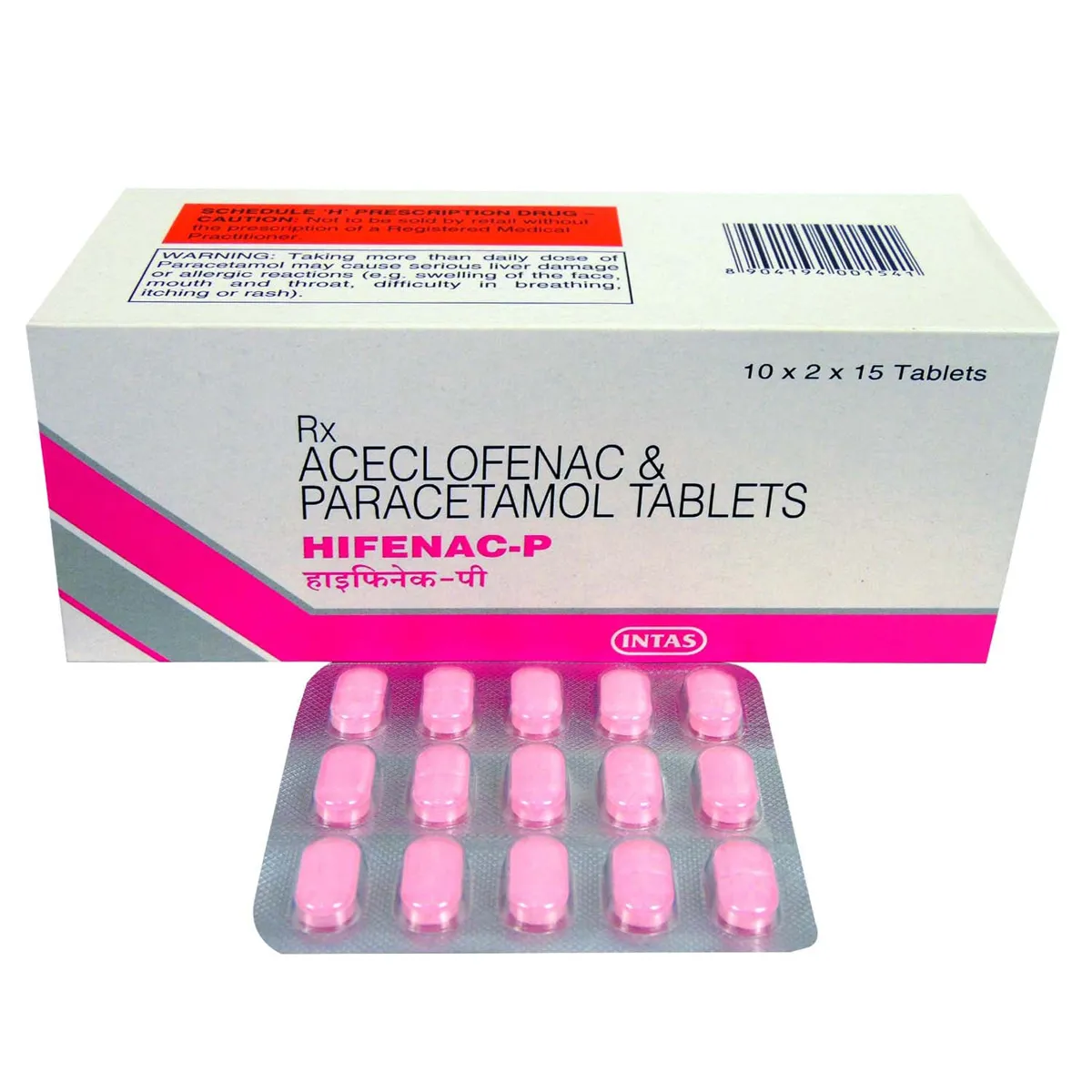
How does the drug interact with Hifenac-P Tablet:
Co-administration of Atenolol with Hifenac-P Tablet could decrease the action of Atenolol.
How to manage the interaction:
Although there is a possible interaction between Atenolol and Hifenac-P Tablet, you can take these medicines together if prescribed by a doctor. However, if you experience any unusual symptoms, consult the doctor. Do not discontinue any medications without a doctor's advice.
How does the drug interact with Hifenac-P Tablet:
Co-administration of Hifenac-P Tablet and Leflunomide may increase the risk of liver problems.
How to manage the interaction:
Although there is a possible interaction between Hifenac-P Tablet and Leflunomide, they can be taken together if prescribed by a doctor. However, if you experience symptoms such as fever, chills, swollen or painful joints, unexpected bleeding or bruises, skin rash, itching, vomiting, abdominal pain, light-colored stool, dark-colored urine, yellowing of the skin or eyes, decreased hunger, consult the doctor. Do not stop using any medications without talking to the doctor.
How does the drug interact with Hifenac-P Tablet:
Co-administration of Hifenac-P Tablet with Mipomersen may increase the risk or severity of liver injury.
How to manage the interaction:
There may be a possibility of interaction between Hifenac-P Tablet and Mipomersen, but it can be taken if prescribed by a doctor. However, if you experience symptoms such as fever, chills, swollen or painful joints, unexpected bleeding or bruises, skin rash, itching, vomiting, abdominal pain, light-colored stool, dark-colored urine, yellowing of the skin or eyes, decreased hunger, consult the doctor. Do not stop using any medications without talking to the doctor.
How does the drug interact with Hifenac-P Tablet:
Co-administration of Lomitapide and Hifenac-P Tablet may increase the risk of severity of liver injury.
How to manage the interaction:
Although there is a possible interaction between Hifenac-P Tablet and Lomitapide, you can take these medicines together if prescribed by a doctor. However, if you experience symptoms such as fever, chills, swollen or painful joints, unexpected bleeding or bruises, skin rash, itching, vomiting, abdominal pain, light-colored stool, dark-colored urine, yellowing of the skin or eyes, decreased hunger, consult the doctor. Do not stop using any medications without talking to the doctor.
How does the drug interact with Hifenac-P Tablet:
Co-administration of Hifenac-P Tablet with Ethanol can increase the risk of liver damage.
How to manage the interaction:
Although taking Hifenac-P Tablet with Ethanol can lead to an interaction, it can be taken if prescribed by the doctor. However, if you experience symptoms such as fever, chills, swollen or painful joints, unexpected bleeding or bruises, skin rash, itching, vomiting, abdominal pain, light-colored stool, dark-colored urine, yellowing of the skin or eyes, decreased hunger, consult the doctor. Do not stop using any medications without talking to the doctor.
How does the drug interact with Hifenac-P Tablet:
Co-administration of Teriflunomide with Hifenac-P Tablet may increase the risk or severity of Liver problems.
How to manage the interaction:
Taking Hifenac-P Tablet with Teriflunomide together can possibly result in an interaction, but it can be taken if a doctor has advised it. However, if you experience symptoms such as fever, chills, swollen or painful joints, unexpected bleeding or bruises, skin rash, itching, vomiting, abdominal pain, light-colored stool, dark-colored urine, yellowing of the skin or eyes, decreased hunger, consult the doctor. Do not stop using any medications without talking to the doctor.
How does the drug interact with Hifenac-P Tablet:
Co-administration of Hifenac-P Tablet and Ketoconazole may increase the risk of liver injury.
How to manage the interaction:
Although there is a possible interaction between Hifenac-P Tablet and Ketoconazole, you can take these medicines together if prescribed by a doctor. However, if you experience fever, chills, swollen or painful joints, unexpected bleeding or bruises, skin rash, itching, vomiting, abdominal pain, light-colored stool, dark-colored urine, yellowing of the skin or eyes, decreased hunger, consult the doctor. Do not stop using any medications without talking to the doctor.