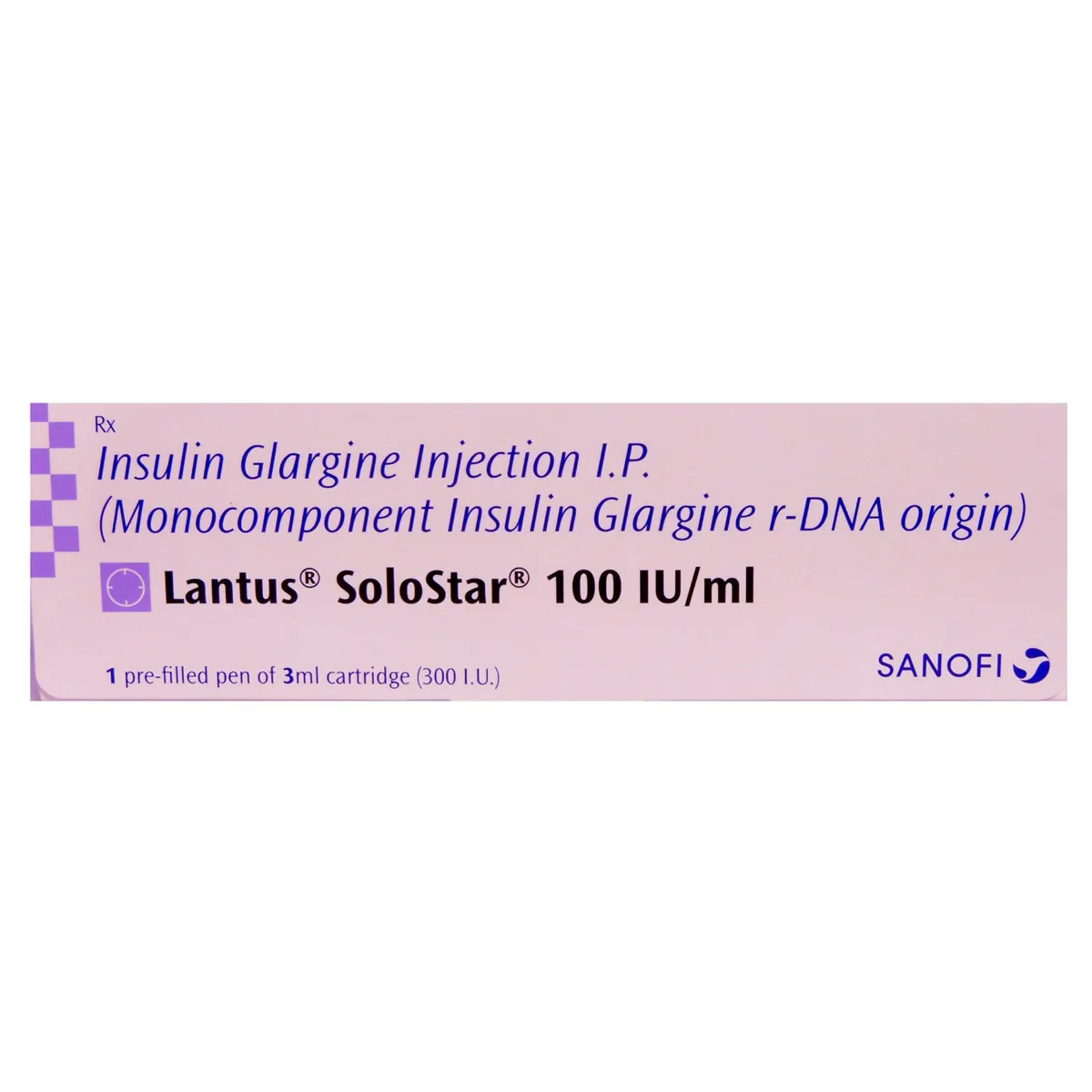
How does the drug interact with Lantus Solostar 100IU/ml Injection 3 ml:
Taking Lantus Solostar 100IU/ml Injection 3 ml with enoxacin affects blood glucose levels, which may cause hyperglycemia (high blood sugar) and hypoglycemia (low blood sugar) less frequently.
How to manage the interaction:
Although taking enoxacin and Lantus Solostar 100IU/ml Injection 3 ml together can possibly result in an interaction, it can be taken if your doctor has prescribed it. However, consult the doctor immediately if you experience hypoglycemia or hyperglycemia. Symptoms of hypoglycemia include headache, dizziness, drowsiness, nervousness, confusion, shaking, nausea, hunger, weakness, sweating, palpitation, and rapid heartbeat. Symptoms of hyperglycemia may include increased thirst, increased hunger, and increased urination. Do not stop using any medications without first talking to your doctor.
How does the drug interact with Lantus Solostar 100IU/ml Injection 3 ml:
Blood glucose levels can be affected by levofloxacin when taken with Lantus Solostar 100IU/ml Injection 3 ml. It may cause hyperglycemia (high blood glucose) and, less commonly, hypoglycemia (low blood glucose).
How to manage the interaction:
There could be a possible interaction between Lantus Solostar 100IU/ml Injection 3 ml and Levofloxacin but can be taken if prescribed by a doctor. However, consult the doctor immediately if you experience symptoms of hypoglycemia, which include headache, dizziness, drowsiness, nervousness, confusion, tremor, nausea, hunger, weakness, perspiration, palpitation, and rapid heartbeat, or symptoms of hyperglycemia which may include increased thirst, increased hunger, and increased urination. Do not stop using any medications without talking to a doctor.
How does the drug interact with Lantus Solostar 100IU/ml Injection 3 ml:
Taking Lantus Solostar 100IU/ml Injection 3 ml with Gemifloxacin affects blood glucose levels, which may cause hyperglycemia (high blood sugar) and hypoglycemia (low blood sugar) less frequently.
How to manage the interaction:
Although taking Gemifloxacin and Lantus Solostar 100IU/ml Injection 3 ml together can possibly result in an interaction, it can be taken if your doctor has prescribed it. However, consult the doctor immediately if you experience hypoglycemia or hyperglycemia. Symptoms of hypoglycemia include headache, dizziness, drowsiness, nervousness, confusion, shaking, nausea, hunger, weakness, sweating, palpitation, and rapid heartbeat. Symptoms of hyperglycemia may include increased thirst, increased hunger, and increased urination. Do not stop using any medications without first talking to your doctor.
How does the drug interact with Lantus Solostar 100IU/ml Injection 3 ml:
Taking Lantus Solostar 100IU/ml Injection 3 ml with Norfloxacin affects blood glucose levels, which may cause hyperglycemia (high blood sugar) and hypoglycemia (low blood sugar) less frequently.
How to manage the interaction:
Although taking Norfloxacin and Lantus Solostar 100IU/ml Injection 3 ml together can result in an interaction, it can be taken if your doctor has prescribed it. However, consult the doctor immediately if you experience hypoglycemia or hyperglycemia. Symptoms of hypoglycemia include headache, dizziness, drowsiness, nervousness, confusion, tremors, nausea, loss of hunger, weakness, sweating, palpitation, and rapid heartbeat. Symptoms of hyperglycemia may include increased thirst, increased hunger, and increased urination. Do not stop using any medications without talking to a doctor.
How does the drug interact with Lantus Solostar 100IU/ml Injection 3 ml:
Taking Lantus Solostar 100IU/ml Injection 3 ml with sparfloxacin affects blood glucose levels, which may cause hyperglycemia (high blood sugar) and hypoglycemia (low blood sugar) less frequently.
How to manage the interaction:
Although taking Sparfloxacin and Lantus Solostar 100IU/ml Injection 3 ml together can possibly result in an interaction, it can be taken if your doctor has prescribed it. However, consult the doctor immediately if you experience hypoglycemia or hyperglycemia. Symptoms of hypoglycemia include headache, dizziness, drowsiness, nervousness, confusion, shaking, nausea, hunger, weakness, sweating, palpitations, and rapid heartbeat. Symptoms of hyperglycemia may include increased thirst, increased hunger, and increased urination. Do not stop using any medications without first talking to your doctor.
How does the drug interact with Lantus Solostar 100IU/ml Injection 3 ml:
Taking Lantus Solostar 100IU/ml Injection 3 ml with gatifloxacin affects blood glucose levels, which may cause hyperglycemia (high blood sugar) and hypoglycemia (low blood sugar) less frequently.
How to manage the interaction:
Although taking Gatifloxacin and Lantus Solostar 100IU/ml Injection 3 ml together can possibly result in an interaction, it can be taken if your doctor has prescribed it. However, consult the doctor immediately if you experience hypoglycemia or hyperglycemia. Symptoms of hypoglycemia include headache, dizziness, drowsiness, nervousness, confusion, shaking, nausea, hunger, weakness, sweating, palpitation, and rapid heartbeat. Symptoms of hyperglycemia may include increased thirst, increased hunger, and increased urination. Do not stop using any medications without first talking to your doctor.
How does the drug interact with Lantus Solostar 100IU/ml Injection 3 ml:
Taking Lantus Solostar 100IU/ml Injection 3 ml with cinoxacin affects blood glucose levels, which may cause hyperglycemia (high blood sugar) and hypoglycemia (low blood sugar) less frequently.
How to manage the interaction:
Although taking cinoxacin and Lantus Solostar 100IU/ml Injection 3 ml together can possibly result in an interaction, it can be taken if your doctor has prescribed it. However, consult the doctor immediately if you experience hypoglycemia or hyperglycemia. Symptoms of hypoglycemia include headache, dizziness, drowsiness, nervousness, confusion, shaking, nausea, hunger, weakness, sweating, palpitation, and rapid heartbeat. Symptoms of hyperglycemia may include increased thirst, increased hunger, and increased urination. Do not stop using any medications without first talking to your doctor.
How does the drug interact with Lantus Solostar 100IU/ml Injection 3 ml:
Taking Lantus Solostar 100IU/ml Injection 3 ml with Moxifloxacin affects blood glucose levels, which may cause hyperglycemia (high blood sugar) and hypoglycemia (low blood sugar) less frequently.
How to manage the interaction:
Although taking Moxifloxacin and Lantus Solostar 100IU/ml Injection 3 ml together can result in an interaction, it can be taken if a doctor has prescribed it. However, consult the doctor immediately if you experience headache, dizziness, and rapid heartbeat, increased thirst, and increased urination. Do not stop using any medications without talking to a doctor.
How does the drug interact with Lantus Solostar 100IU/ml Injection 3 ml:
Taking Lantus Solostar 100IU/ml Injection 3 ml with lomefloxacin affects blood glucose levels, which may cause hyperglycemia (high blood sugar) and hypoglycemia (low blood sugar) less frequently.
How to manage the interaction:
Although taking Lomefloxacin and Lantus Solostar 100IU/ml Injection 3 ml together can possibly result in an interaction, it can be taken if your doctor has prescribed it. However, consult the doctor immediately if you experience hypoglycemia or hyperglycemia. Symptoms of hypoglycemia include headache, dizziness, drowsiness, nervousness, confusion, shaking, nausea, loss of hunger, weakness, sweating, palpitation, and rapid heartbeat. Symptoms of hyperglycemia may include increased thirst, increased hunger, and increased urination. Do not stop using any medications without talking to a doctor.
How does the drug interact with Lantus Solostar 100IU/ml Injection 3 ml:
Co-administration of Ofloxacin and Lantus Solostar 100IU/ml Injection 3 ml can sometimes have an effect on blood glucose levels.
How to manage the interaction:
Although combining Ofloxacin and Lantus Solostar 100IU/ml Injection 3 ml can lead to an interaction, they can be taken on a doctor's advice. If you experience any symptoms of hypoglycemia (headache, dizziness, sleepiness, nervousness, confusion, shaking, nausea, loss of hunger, weakness, sweating, palpitation, and rapid heartbeat) or hyperglycemia (increased thirst, hunger, and urination), consult a doctor. Keep an eye on your blood glucose levels. Do not discontinue any medications without consulting a doctor.