
0
Welcome User
Login/Sign Up

Login/Sign Up
₹163
(Inclusive of all Taxes)
₹109 with coupons & bank offers*
Get Free delivery (₹99) with
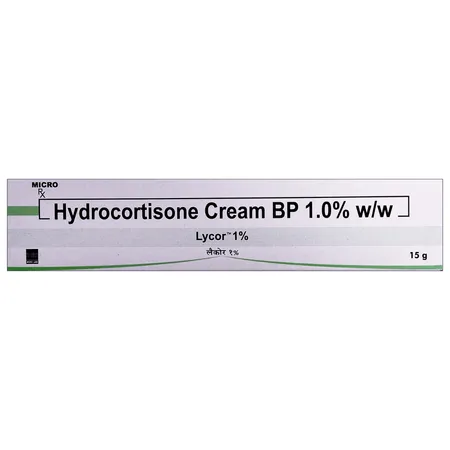
Lycor 1% Cream is used to provide relief from swelling, redness, itching, dryness, inflammation, and discomfort of certain skin conditions such as dermatitis (itchy swelling of the skin), eczema (itchy, cracked, swollen or rough skin) and insect bite reactions.
Lycor 1% Cream contains hydrocortisone, which acts within skin cells to inhibit the production of certain chemical messengers that cause redness, itching, and swelling.
Use Lycor 1% Cream as advised by your doctor. Some people may experience burning or stinging sensations at the site of application. These side effects do not require medical attention and gradually resolve over time.
If you are allergic to Lycor 1% Cream or any other medicines, please tell your doctor. If you are pregnant or breastfeeding, it is advisable to consult a physician before using Lycor 1% Cream. Do not use Lycor 1% Cream in more than prescribed doses or on a large area of skin for a prolonged time, as it may cause adverse effects.
Lycor 1% Cream is used in the treatment of swelling, redness, and itching caused by certain skin problems such as dermatitis, eczema and insect bite reactions. The detailed uses of Lycor 1% Cream are as follows:
Consult your doctor
The interaction of Lycor 1% Cream with alcohol is unknown. If you have any concerns regarding this, please discuss them with your doctor.
Consult your doctor
Lycor 1% Cream should not be used during pregnancy unless considered essential by the doctor. Therefore, if you are pregnant or planning pregnancy, please inform your doctor before using Lycor 1% Cream.
Consult your doctor
If you are breastfeeding, please inform your doctor before using Lycor 1% Cream.
Safe if prescribed
Lycor 1% Cream usually does not affect your ability to drive or operate machinery.
Consult your doctor
If you have liver problems, please consult your doctor before using Lycor 1% Cream.
Consult your doctor
If you have kidney problems, please consult your doctor before using Lycor 1% Cream.
Unsafe
Lycor 1% Cream is not recommended for children below 12 years unless advised by a doctor.
Consult your doctor
If you have any concerns regarding the use of Lycor 1% Cream in patients with heart problems, please consult a physician.
Consult your doctor
Limited information available about the use of Lycor 1% Cream in geriatric patients. Please consult your physician.
Healthy diet:
Stress management:
Environment changes:
Have a query?
Drug-Drug Interaction: Inform your doctor if you are using or have recently used any other medicines.
Drug-Food Interaction: No interactions found.
Drug-Disease Interaction: Inform your doctor if you have a history of the following conditions before using Lycor 1% Cream, as it may worsen your condition or cause complications.
Login/Sign Up
Login/Sign Up
Disclaimer


