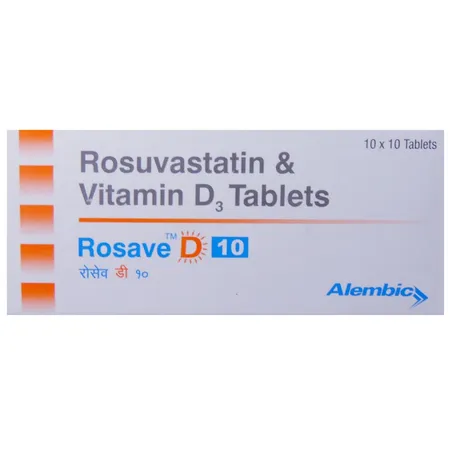
How does the drug interact with Rosave D 10 Tablet:
Co-administration of Rosave D 10 Tablet with Dihydrotachysterol can have toxic effects when taken in excess due to high calcium levels in the blood and urine, further leading to irregular heartbeat, seizures, kidney stones, and eventually calcification (accumulation of calcium salts in a body tissue) of the body's soft tissues, blood vessels, and cornea.
How to manage the interaction:
Although there is a possible interaction between Rosave D 10 Tablet and Dihydrotachysterol, you can take these medicines together if prescribed by a doctor. If you notice symptoms such as, fatigue, headache, ringing in the ears, loss of appetite, nausea, vomiting, constipation, dry mouth, metallic taste, muscle pain, bone pain, muscle incoordination, frequent urination, excessive thirst, weight loss, conjunctivitis ("pink eye"), light sensitivity, runny nose, itching, increased body temperature, and irregular heart rhythm, contact a doctor right away. Do not discontinue any medications without consulting a doctor.
How does the drug interact with Rosave D 10 Tablet:
Co-administration of Rosave D 10 Tablet with Paricalcitol can have toxic effects when taken in excess due to high calcium levels in the blood and urine, further leading to irregular heartbeat, seizures, kidney stones, and eventually calcification (accumulation of calcium salts in a body tissue) of the body's soft tissues, blood vessels, and cornea.
How to manage the interaction:
Although there is a possible interaction between Rosave D 10 Tablet and Paricalcitol, you can take these medicines together if prescribed by a doctor. If you notice symptoms such as, fatigue, headache, ringing in the ears, loss of appetite, nausea, vomiting, constipation, dry mouth, metallic taste, muscle pain, bone pain, muscle incoordination, frequent urination, excessive thirst, weight loss, conjunctivitis ("pink eye"), light sensitivity, runny nose, itching, increased body temperature, and irregular heart rhythm, contact a doctor right away. Do not discontinue any medications without consulting a doctor.
How does the drug interact with Rosave D 10 Tablet:
Co-administration of Rosave D 10 Tablet with Saquinavir can increase the blood levels of rosuvastatin and can increase the risk of developing liver damage and rhabdomyolysis(breakdown of skeletal muscle tissue).
How to manage the interaction:
Co-administration of Rosave D 10 Tablet with Saquinavir can lead to an interaction, it can be taken if advised by your doctor. However, if you experience any symptoms like muscle pain, tenderness, weakness, dark-colored urine, fever, chills, joint pain or swelling, unusual bleeding or bruising, skin rash, itching, loss of appetite, fatigue, nausea, vomiting, and yellowing of the skin or eyes, consult a doctor immediately. Do not stop using any medications without a doctor's advice.
How does the drug interact with Rosave D 10 Tablet:
Co-administration of Rosave D 10 Tablet with Clopidogrel can increase the blood levels of rosuvastatin and can increase the risk of developing liver damage and rhabdomyolysis(breakdown of skeletal muscle tissue).
How to manage the interaction:
Co-administration of Rosave D 10 Tablet with Clopidogrel can lead to an interaction, it can be taken if advised by your doctor. However, if you experience any symptoms like muscle pain, tenderness, weakness, dark-colored urine, fever, chills, joint pain or swelling, unusual bleeding or bruising, skin rash, itching, loss of appetite, fatigue, nausea, vomiting, and yellowing of the skin or eyes, consult a doctor immediately. Do not stop using any medications without a doctor's advice.
How does the drug interact with Rosave D 10 Tablet:
Co-administration of Rosave D 10 Tablet with Ritonavir can increase the blood levels of rosuvastatin and can increase the risk of developing liver damage and rhabdomyolysis(breakdown of skeletal muscle tissue).
How to manage the interaction:
Co-administration of Rosave D 10 Tablet with Ritonavir can lead to an interaction, it can be taken if advised by your doctor. However, if you experience any symptoms like muscle pain, tenderness, weakness, dark-colored urine, fever, chills, joint pain or swelling, unusual bleeding or bruising, skin rash, itching, loss of appetite, fatigue, nausea, vomiting, and yellowing of the skin or eyes, consult a doctor immediately. Do not stop using any medications without a doctor's advice.
How does the drug interact with Rosave D 10 Tablet:
Co-administration of Rosave D 10 Tablet with Doxercalciferol can have toxic effects when taken in excess due to high calcium levels in the blood and urine, further leading to irregular heartbeat, seizures, kidney stones, and eventually calcification (accumulation of calcium salts in a body tissue) of the body's soft tissues, blood vessels, and cornea.
How to manage the interaction:
Although there is a possible interaction between Rosave D 10 Tablet and Doxercalciferol, you can take these medicines together if prescribed by a doctor. If you notice symptoms such as, fatigue, headache, ringing in the ears, loss of appetite, nausea, vomiting, constipation, dry mouth, metallic taste, muscle pain, bone pain, muscle incoordination, frequent urination, excessive thirst, weight loss, conjunctivitis ("pink eye"), light sensitivity, runny nose, itching, increased body temperature, and irregular heart rhythm, contact a doctor right away. Do not discontinue any medications without consulting a doctor.
How does the drug interact with Rosave D 10 Tablet:
Co-administration of Rosave D 10 Tablet with Calcitriol can have toxic effects when taken in excess due to high calcium levels in the blood and urine, further leading to irregular heartbeat, seizures, kidney stones, and eventually calcification (accumulation of calcium salts in a body tissue) of the body's soft tissues, blood vessels, and cornea.
How to manage the interaction:
Although there is a possible interaction between Rosave D 10 Tablet and Calcitriol, you can take these medicines together if prescribed by a doctor. If you notice symptoms such as, fatigue, headache, ringing in the ears, loss of appetite, nausea, vomiting, constipation, dry mouth, metallic taste, muscle pain, bone pain, muscle incoordination, frequent urination, excessive thirst, weight loss, conjunctivitis ("pink eye"), light sensitivity, runny nose, itching, increased body temperature, and irregular heart rhythm, contact a doctor right away. Do not discontinue any medications without consulting a doctor.
How does the drug interact with Rosave D 10 Tablet:
Co-administration of Rosave D 10 Tablet with cyclosporin can increase the blood levels of rosuvastatin, causing side effects on your muscles.
How to manage the interaction:
Co-administration of Rosave D 10 Tablet with cyclosporine can lead to an interaction, it can be taken if advised by your doctor. However, if you experience any symptoms like muscle pain, tenderness, weakness, or dark-colored urine, consult a doctor immediately. Do not stop using any medications without a doctor's advice.
How does the drug interact with Rosave D 10 Tablet:
Coadministration of Rosave D 10 Tablet with Lenalidomide can increase the risk of rhabdomyolysis(breakdown of skeletal muscle tissue).
How to manage the interaction:
Although there is an interaction between Rosave D 10 Tablet and lenalidomide, it can be taken if prescribed by a doctor. However, if you experience muscle pain, tenderness, or weakness, fever, dark coloured urine, consult the doctor immediately. Do not discontinue any medications without consulting a doctor.
How does the drug interact with Rosave D 10 Tablet:
Co-administration of Rosave D 10 Tablet with Ergocalciferol can have toxic effects when taken in excess due to high calcium levels in the blood and urine, further leading to irregular heartbeat, seizures, kidney stones, and eventually calcification (accumulation of calcium salts in a body tissue) of the body's soft tissues, blood vessels, and cornea.
How to manage the interaction:
Although there is a possible interaction between Rosave D 10 Tablet and Ergocalciferol, you can take these medicines together if prescribed by a doctor. If you notice symptoms such as, fatigue, headache, ringing in the ears, loss of appetite, nausea, vomiting, constipation, dry mouth, metallic taste, muscle pain, bone pain, muscle incoordination, frequent urination, excessive thirst, weight loss, conjunctivitis ("pink eye"), light sensitivity, runny nose, itching, increased body temperature, and irregular heart rhythm, contact a doctor right away. Do not discontinue any medications without consulting a docto