
0
Welcome User
Login/Sign Up

Login/Sign Up
₹662
(Inclusive of all Taxes)
₹489 with coupons & bank offers*
Get Free delivery (₹99) with
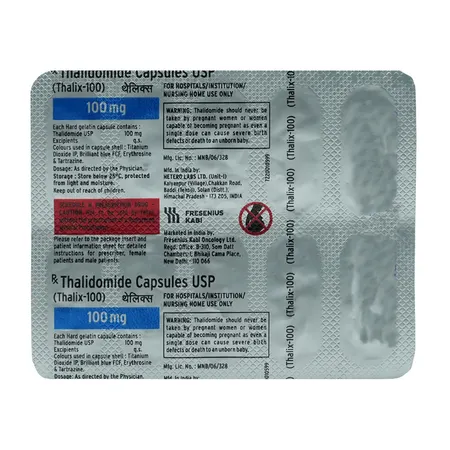
थालिक्स-100 कैप्सूल 10's का उपयोग मल्टीपल मायलोमा (एक प्रकार का कैंसर) के इलाज के लिए किया जाता है। इसका उपयोग एरिथेमा नोडोसम लेप्रोसम (ENL) के लक्षणों के इलाज और रोकथाम के लिए भी किया जाता है, और एरिथेमा नोडोसम लेप्रोसम की पुनरावृत्ति को रोकने और दबाने के लिए मेंटेनेंस थेरेपी के रूप में भी उपयोग किया जाता है। ENL कुष्ठ रोग (लेप्रोसी) की एक इम्यून-मीडिएटेड इन्फ्लेमेटरी जटिलता है।
थालिक्स-100 कैप्सूल 10's में थालिडोमाइड (thalidomide) होता है, जो कैंसर कोशिकाओं के बढ़ने को नियंत्रित करने में मदद करता है। यह शरीर की रोग प्रतिरोधक क्षमता (इम्यून रिस्पांस) को सहारा देता है और कैंसर के प्रसार को धीमा करता है। यह ट्यूमर के बढ़ने के लिए आवश्यक रक्त आपूर्ति को कम करने में भी मदद करता है। इससे मल्टीपल मायलोमा को मैनेज करने में मदद मिलती है।
थालिक्स-100 कैप्सूल 10's को अपने डॉक्टर द्वारा बताए अनुसार ही लें। आपको कब्ज, चक्कर आना, नींद आना, थकान, कंपकंपी (थरथराहट), डिस्एस्थेसिया (असामान्य संवेदना), रक्त कोशिकाओं की कमी, मतली, उल्टी और हाथ-पैरों में सूजन जैसे सामान्य दुष्प्रभाव अनुभव हो सकते हैं। यदि आपको इनमें से कोई भी दुष्प्रभाव लगातार महसूस होता है, तो अपने डॉक्टर से बात करें।
यदि आप गर्भवती हैं, तो थालिक्स-100 कैप्सूल 10's न लें, क्योंकि इससे बच्चे में गंभीर जन्म दोष या गर्भ में पल रहे बच्चे की मृत्यु हो सकती है। यदि आप स्तनपान करा रही हैं, तो थालिक्स-100 कैप्सूल 10's लेने से बचें। थालिक्स-100 कैप्सूल 10's से चक्कर आना, नींद आना और धुंधली दृष्टि हो सकती है, इसलिए तभी ड्राइव करें जब आप पूरी तरह सतर्क हों। 18 वर्ष से कम उम्र के बच्चों के लिए थालिक्स-100 कैप्सूल 10's की सलाह नहीं दी जाती है।
थालिक्स-100 कैप्सूल 10's का उपयोग विशिष्ट प्रकार के कैंसर और कुष्ठ रोग (leprosy) की सूजन संबंधी जटिलताओं के इलाज के लिए किया जाता है। थालिक्स-100 कैप्सूल 10's के विस्तृत उपयोगों में शामिल हैं:
थालिक्स-100 कैप्सूल 10's, जब इसे डॉक्टर द्वारा बताए अनुसार इस्तेमाल किया जाता है, तो इसके निम्नलिखित लाभ हो सकते है:
मल्टीपल मायलोमा (Multiple Myeloma) के लिए:
एरिथेमा नोडोसम लेप्रोसम (Erythema Nodosum Leprosum - ENL) के लिए:
असुरक्षित
थालिक्स-100 कैप्सूल 10's लेते समय आपको शराब के सेवन से बचने की सलाह दी जाती है क्योंकि इससे नींद बढ़ सकती है।
असुरक्षित
थालिक्स-100 कैप्सूल 10's प्रेगनेंसी कैटेगरी X के अंतर्गत आता है। थालिक्स-100 कैप्सूल 10's को प्रेगनेंसी के दौरान नहीं लेना चाहिए क्योंकि इससे अजन्मे बच्चे में गंभीर जन्मजात दोष या मृत्यु हो सकती है। यदि आप प्रजनन आयु की महिला हैं, तो अत्यधिक प्रभावी गर्भनिरोधक का उपयोग करें। यदि आप गर्भवती हैं, आपको लगता है कि आप गर्भवती हैं, या आप प्रेगनेंसी की योजना बना रही हैं, तो अपने डॉक्टर को सूचित करें।
असुरक्षित
थालिक्स-100 कैप्सूल 10's का सेवन करते समय स्तनपान करने से बचें क्योंकि यह ज्ञात नहीं है कि थालिक्स-100 कैप्सूल 10's स्तन के दूध में पहुंचता है या नहीं।
असुरक्षित
थालिक्स-100 कैप्सूल 10's से चक्कर आना, नींद आना और धुंधला दिखाई दे सकता है। जब तक आप पूरी तरह सतर्क न हों, तब तक गाड़ी न चलाएं या भारी मशीनरी का उपयोग न करें।
सावधानी
अगर आपको लिवर से जुड़ी कोई समस्या है या इस बारे में कोई और चिंता है, तो कृपया अपने डॉक्टर से सलाह लें।
सावधानी
कृपया अपने डॉक्टर से सलाह लें यदि आपको किडनी की समस्या है या इस संबंध में कोई अन्य चिंता है।
असुरक्षित
थालिक्स-100 कैप्सूल 10's 18 साल से कम उम्र के बच्चों के लिए अनुशंसित नहीं है, क्योंकि इसकी सुरक्षा और प्रभावशीलता अभी तक स्थापित नहीं की गई है।
सावधानी
जिन मरीजों को दिल की बीमारी है, उन्हें थालिक्स-100 कैप्सूल 10's का इस्तेमाल सावधानी से करना चाहिए। थालिक्स-100 कैप्सूल 10's लेने से पहले अपने डॉक्टर को दिल से जुड़ी किसी भी समस्या के बारे में बताएं।
सावधानी
थालिक्स-100 कैप्सूल 10's को बुजुर्ग मरीजों को सावधानी से देना चाहिए, क्योंकि उनमें साइड इफेक्ट्स का खतरा बढ़ सकता है। थालिक्स-100 कैप्सूल 10's का इस्तेमाल करने से पहले डॉक्टर से सलाह ज़रूर लें।
आहार:
शारीरिक गतिविधि:
आदतें और सुरक्षा:
Have a query?
Some medicines may affect how Thalix-100 Capsule works or increase the risk of side effects:
Login/Sign Up
The following foods and drinks may affect how Thalix-100 Capsule works or increase the risk of side effects:
Login/Sign Up
Disclaimer


