How does the drug interact with Valcivir-500 Tablet:
Taking Cidofovir with Valaciclovir can increase the risk of kidney problems.
How to manage the interaction:
Taking Valcivir-500 Tablet with Cidofovir is not recommended as it can lead to an interaction, but can be taken together if prescribed by a doctor. However, if you experience nausea, vomiting, loss of hunger, increased or decreased urination, sudden weight gain or loss, swelling, shortness of breath, muscle cramps, tiredness, weakness, dizziness, confusion, or an irregular heart rhythm, consult a doctor. Do not discontinue any medications without consulting a doctor.
How does the drug interact with Valcivir-500 Tablet:
Co-administration of iopamidol with Valcivir-500 Tablet may increase the effect of iopamidol.
How to manage the interaction:
Although taking iopamidol and Valcivir-500 Tablet together can possibly result in an interaction, it can be taken if your doctor has prescribed it. However, consult the doctor immediately if you experience symptoms such as nausea, vomiting, loss of appetite, increased urination, weight loss, fluid retention, swelling, shortness of breath, muscle cramps, tiredness, weakness, dizziness, confusion, and irregular heart rhythm. Do not stop using any medications without consulting a doctor.
How does the drug interact with Valcivir-500 Tablet:
Co-administration of iotalamic acid with Valcivir-500 Tablet may increase the effect of iotalamic acid.
How to manage the interaction:
Although taking iotalamic acid and Valcivir-500 Tablet together can possibly result in an interaction, it can be taken if your doctor has prescribed it. Do not stop using any medications without consulting a doctor.
How does the drug interact with Valcivir-500 Tablet:
Co-administration of metrizamide with Valcivir-500 Tablet may increase the risk of side effects.
How to manage the interaction:
Although taking metrizamide and Valcivir-500 Tablet together can possibly result in an interaction, it can be taken if your doctor has prescribed it. However, consult the doctor immediately if you experience symptoms such as nausea, vomiting, loss of appetite, increased urination, weight loss, swelling, shortness of breath, muscle cramps, tiredness, weakness, dizziness, confusion, and irregular heart rhythm. Do not stop using any medications without consulting a doctor.
How does the drug interact with Valcivir-500 Tablet:
Co-administration of iodamide with Valcivir-500 Tablet may increase the effect of iodamide.
How to manage the interaction:
Although taking iodamide and Valcivir-500 Tablet together can possibly result in an interaction, it can be taken if your doctor has prescribed it. However, consult the doctor immediately if you experience symptoms such as nausea, vomiting, loss of appetite, increased urination, weight loss, swelling, shortness of breath, muscle cramps, tiredness, weakness, dizziness, confusion, and irregular heart rhythm. Do not stop using any medications without consulting a doctor.
How does the drug interact with Valcivir-500 Tablet:
Coadministration of Sirolimus with Valcivir-500 Tablet may increase the risk or severity of kidney problems.
How to manage the interaction:
Although taking Sirolimus and Valcivir-500 Tablet together can possibly result in an interaction, it can be taken if a doctor has prescribed it. However, consult the doctor immediately if you experience symptoms such as nausea, vomiting, loss of appetite, increased urination, weight loss, swelling, shortness of breath, muscle cramps, tiredness, weakness, dizziness, confusion, and irregular heart rhythm. Do not stop using any medications without consulting a doctor.
How does the drug interact with Valcivir-500 Tablet:
Co-administration of tenofovir alafenamide with Valcivir-500 Tablet may increase the risk of kidney problems.
How to manage the interaction:
Although taking tenofovir alafenamide and Valcivir-500 Tablet together can possibly result in an interaction, it can be taken if your doctor has prescribed it. However, consult the doctor immediately if you experience symptoms such as nausea, vomiting, loss of appetite, increased urination, weight loss, swelling, shortness of breath, muscle cramps, tiredness, weakness, dizziness, confusion, and irregular heart rhythm. Do not stop using any medications without consulting a doctor.
How does the drug interact with Valcivir-500 Tablet:
Co-administration of iohexol with Valcivir-500 Tablet may increase the risk of side effects.
How to manage the interaction:
Although taking iohexol and Valcivir-500 Tablet together can possibly result in an interaction, it can be taken if your doctor has prescribed it. However, consult the doctor immediately if you experience symptoms such as nausea, vomiting, loss of appetite, increased urination, weight loss, swelling, shortness of breath, muscle cramps, tiredness, weakness, dizziness, confusion, and irregular heart rhythm. Do not stop using any medications without consulting a doctor.
How does the drug interact with Valcivir-500 Tablet:
Co-administration of temsirolimus with Valcivir-500 Tablet may increase the risk of kidney problems.
How to manage the interaction:
Although taking temsirolimus and Valcivir-500 Tablet together can possibly result in an interaction, it can be taken if your doctor has prescribed it. However, consult the doctor immediately if you experience symptoms such as nausea, vomiting, loss of appetite, increased urination, weight loss, swelling, shortness of breath, muscle cramps, tiredness, weakness, dizziness, confusion, and irregular heart rhythm. Do not stop using any medications without consulting a doctor.
How does the drug interact with Valcivir-500 Tablet:
Co-administration of tenofovir disoproxil with Valcivir-500 Tablet may increase the risk of kidney problems.
How to manage the interaction:
Although taking tenofovir disoproxil and Valcivir-500 Tablet together can possibly result in an interaction, it can be taken if your doctor has prescribed it. However, consult the doctor immediately if you experience symptoms such as nausea, vomiting, loss of appetite, increased urination, weight loss, swelling, shortness of breath, muscle cramps, tiredness, weakness, dizziness, confusion, and irregular heart rhythm. Do not stop using any medications without consulting a doctor.


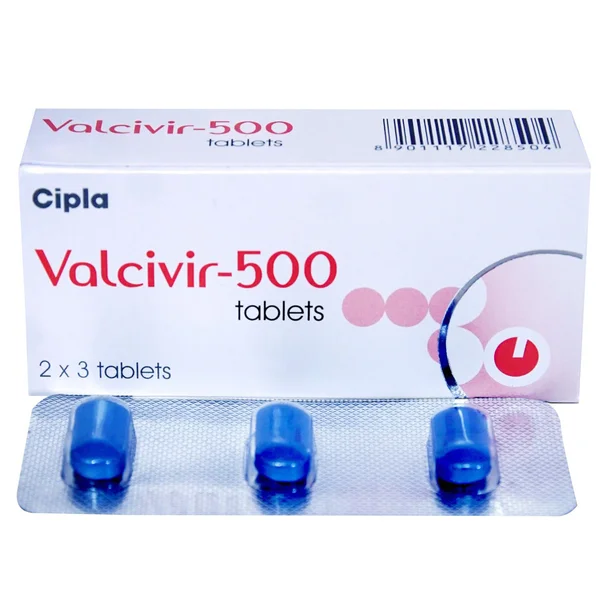


 ₹35.0Cashback (15%)
 Offers & Discounts


 RX
RX


