
0
Welcome User
Login/Sign Up

Login/Sign Up
₹7.5
(Inclusive of all Taxes)
Get Free delivery (₹99) with
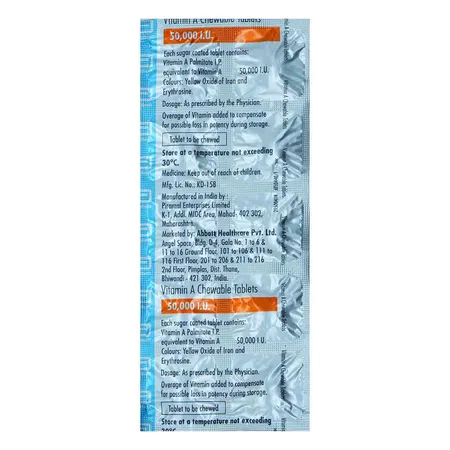
विटामिन ए चबाने योग्य टैबलेट 10's 'विटामिन' नामक दवाओं के वर्ग से संबंधित है। इसका उपयोग मुख्य रूप से विटामिन ए की कमी और पोषण संबंधी कमियों के उपचार में किया जाता है। इसका उपयोग विभिन्न त्वचा उत्पादों में झुर्रियों और बढ़े हुए छिद्रों को कम करने के लिए भी किया जाता है।
विटामिन ए चबाने योग्य टैबलेट 10's में रेटिनॉल होता है, जो गाजर, ब्रोकोली, पनीर, अंडे, दूध आदि जैसे विभिन्न खाद्य पदार्थों में मौजूद होता है। विटामिन ए आंख के रेटिना में प्रकाश-संवेदनशील तंत्रिका कोशिकाओं (फोटोरिसेप्टर) के कामकाज के लिए आवश्यक है, जो रात की दृष्टि बनाए रखने में सहायता करता है।
विटामिन ए चबाने योग्य टैबलेट 10's शायद ही कभी कुछ मामलों में दस्त, सिरदर्द, मतली और उल्टी जैसे दुष्प्रभाव पैदा कर सकता है। इन दुष्प्रभावों के लिए चिकित्सा ध्यान देने की आवश्यकता नहीं होती है और समय के साथ धीरे-धीरे ठीक हो जाते हैं। विटामिन ए चबाने योग्य टैबलेट 10's को डॉक्टर या फार्मासिस्ट के सुझाव के अनुसार लें।
यदि आपको उपचार के दौरान कोई एलर्जी संबंधी प्रतिक्रिया दिखाई देती है तो इसे बंद कर दें और अपने डॉक्टर को सूचित करें। साथ ही, विटामिन ए चबाने योग्य टैबलेट 10's का उपयोग करने से पहले यदि आपको किसी दवा से कोई त्वचा संबंधी प्रतिक्रिया या जलन हुई है तो अपने डॉक्टर को सूचित करें। किसी भी दुष्प्रभाव से बचने के लिए अपने डॉक्टर को अपनी स्वास्थ्य स्थिति और आपके द्वारा ली जाने वाली सभी दवाओं के बारे में सूचित रखें। यदि आप गर्भवती हैं या स्तनपान करा रही हैं तो विटामिन ए चबाने योग्य टैबलेट 10's न लें, जब तक कि डॉक्टर सलाह न दें।
विटामिन ए चबाने वाली टैबलेट को आसानी से सेवन करने के लिए डिज़ाइन किया गया है, जिससे आपकी पोषण संबंधी ज़रूरतों को पूरा करना आसान हो जाता है।
प्रत्येक टैबलेट में आवश्यक विटामिन ए होता है, जो स्वस्थ दृष्टि बनाए रखने, प्रतिरक्षा कार्य का समर्थन करने और समग्र कल्याण को बढ़ावा देने में महत्वपूर्ण भूमिका निभाता है। 10 टैबलेट के सुविधाजनक पैक के साथ, आप उन्हें आसानी से अपने साथ ले जा सकते हैं या घर पर संभाल कर रख सकते हैं।
विटामिन ए चबाने वाली टैबलेट के साथ, आप यह सुनिश्चित कर सकते हैं कि आपको अपने शरीर के कार्यों का समर्थन करने के लिए आवश्यक पोषक तत्व मिल रहे हैं। इन चबाने वाली टैबलेट को अपनी दैनिक दिनचर्या में शामिल करें और विटामिन ए के लाभों का एक सरल और सुखद रूप में अनुभव करें।
विटामिन ए चबाने वाली टैबलेट के साथ अपने स्वास्थ्य और जीवन शक्ति को बढ़ावा दें।
विटामिन ए चबाने योग्य टैबलेट 10'sविशेषताएं
विटामिन ए चबाने योग्य टैबलेट 10's का उपयोग विटामिन ए की कमी और पोषण संबंधी कमी के प्रबंधन और उपचार में किया जाता है। विटामिन ए चबाने योग्य टैबलेट 10's के विस्तृत उपयोग इस प्रकार हैं:
विटामिन ए चबाने योग्य टैबलेट 10's में रेटिनॉल होता है, जिसे विटामिन ए के नाम से भी जाना जाता है, जो कोशिका के विकास, मेटाबॉलिज्म, दृष्टि और प्रतिरक्षा कार्यों के लिए आवश्यक है। यह बीमारी और संक्रमण के खिलाफ शरीर की प्राकृतिक सुरक्षा में भी मदद करता है। यह स्वस्थ त्वचा को बनाए रखने और संक्रमण से लड़ने में भी उपयोगी है। इस प्रकार, विटामिन ए चबाने योग्य टैबलेट 10's विटामिन ए की कमी और पोषण संबंधी कमियों के इलाज में मदद करता है।
सावधानी
विटामिन ए चबाने योग्य टैबलेट 10's लेते समय शराब का सेवन करने की सलाह नहीं दी जाती है क्योंकि इससे अप्रिय दुष्प्रभाव हो सकते हैं।
सावधानी
विटामिन ए चबाने योग्य टैबलेट 10's आमतौर पर गर्भवती महिलाओं के लिए सुझाई गई खुराक में लेने पर सुरक्षित है। हालाँकि, यदि आप गर्भवती हैं या गर्भावस्था की योजना बना रही हैं, तो विटामिन ए चबाने योग्य टैबलेट 10's लेने से पहले अपने डॉक्टर को सूचित करें। यदि लाभ जोखिमों से अधिक हैं तो आपका डॉक्टर यह दवा लिख सकता है।
सावधानी
यदि आप स्तनपान करा रही हैं, तो विटामिन ए चबाने योग्य टैबलेट 10's लेने से पहले अपने डॉक्टर को सूचित करें। यदि इसके फायदे जोखिमों से अधिक हों, तो आपके डॉक्टर यह दवा लिख सकते हैं।
कृपया अपने डॉक्टर से सलाह लें।
विटामिन ए चबाने योग्य टैबलेट 10's से आमतौर पर आपकी गाड़ी चलाने की क्षमता प्रभावित नहीं होती है। हालाँकि, यदि आपको विटामिन ए चबाने योग्य टैबलेट 10's का उपयोग करते समय कोई दुष्प्रभाव महसूस होता है, तो गाड़ी न चलाएँ या मशीनरी का संचालन न करें।
कृपया अपने डॉक्टर से सलाह लें।
अगर आपको लिवर से जुड़ी कोई समस्या है या पहले कभी रही है, तो अपने डॉक्टर को बताएं।
कृपया अपने डॉक्टर से सलाह लें।
अगर आपको किडनी से जुड़ी कोई बीमारी है या पहले कभी हुई है, तो अपने डॉक्टर को बताएं।
सावधानी
विटामिन ए चबाने योग्य टैबलेट 10's आमतौर पर बच्चों के लिए सुरक्षित है। दवा की खुराक आपके बाल रोग विशेषज्ञ द्वारा तय की जाएगी।
कृपया अपने डॉक्टर से सलाह लें।
यदि आपको पहले से हृदय संबंधी कोई समस्या है, तो विटामिन ए चबाने योग्य टैबलेट 10's लेने से पहले कृपया अपने डॉक्टर से सलाह लें। यदि इसके लाभ जोखिमों से अधिक हैं, तो आपके डॉक्टर विटामिन ए चबाने योग्य टैबलेट 10's प्रिस्क्राइब करेंगे।
यदि डॉक्टर द्वारा सुझाया गया हो तो सुरक्षित है।
विटामिन ए चबाने योग्य टैबलेट 10's आमतौर पर बुजुर्ग मरीजों के लिए सुरक्षित माना जाता है; हालांकि, उम्र से संबंधित संवेदनशीलता के कारण महत्वपूर्ण सावधानियां बरतनी चाहिए।
यदि आप गर्भवती हैं, स्तनपान करा रही हैं, कोई दवा ले रही हैं, या कोई चिकित्सीय स्थिति है, तो उपयोग करने से पहले किसी स्वास्थ्य देखभाल पेशेवर से सलाह लें। बच्चों की पहुँच से दूर रखें। सुझाई गई खुराक से अधिक न लें।
Have a query?
यदि आपको उपचार के दौरान कोई एलर्जिक रिएक्शन दिखाई दे, तो इसे लेना बंद कर दें और अपने डॉक्टर को सूचित करें। किसी भी दुष्प्रभाव से बचने के लिए अपने डॉक्टर को अपनी स्वास्थ्य स्थिति और आपके द्वारा ली जा रही सभी दवाओं के बारे में सूचित करते रहें। साथ ही, विटामिन ए चबाने योग्य टैबलेट 10's का उपयोग करने से पहले अपने डॉक्टर को बताएं कि क्या आपको किसी दवा से त्वचा पर कोई रिएक्शन या जलन, मैलाब्सॉर्प्शन सिंड्रोम, लिवर/किडनी की बीमारी या कोई अन्य स्थिति है। विटामिन ए बच्चों, गर्भवती महिलाओं और स्तनपान कराने वाली माताओं के लिए सुझाई गई खुराक में लेने पर सुरक्षित है। विटामिन ए की सुझाई गई खुराक से अधिक न लेने की सलाह दी जाती है क्योंकि इससे बड़े प्रतिकूल प्रभाव हो सकते हैं।
Drug-Drug Interactions: No interactions found.
Drug-Food Interactions: Avoid or reduce intake of alcohol.
Drug-Disease Interactions: Inform your doctor if you have liver/kidney disease, skin disorders, and malabsorption syndrome.
Login/Sign Up
Login/Sign Up
Disclaimer


