
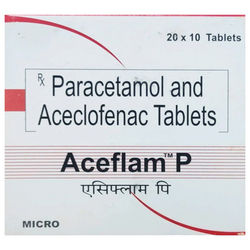


Aceflam P Tablet 10's
₹52.9
MRP ₹70.525% off
 ₹5.0Cashback (10%)
(Inclusive of all Taxes)
₹38 with coupons & bank offers*
 Offers & Discounts
Get Free delivery (₹99) with


Delivery Information
More about the Product
Composition :
Manufacturer/Marketer :
Consume Type :
Expires on or after :
Return Policy :
About Aceflam P Tablet
Aceflam P Tablet is a prescription medication used to manage pain, swelling, and inflammation in various conditions affecting the joints and muscles. It is commonly prescribed to treat pain associated with osteoarthritis, rheumatoid arthritis, and ankylosing spondylitis. This medication helps ease everyday discomfort, allowing for better physical function and mobility.
For the best results, Aceflam P Tablet should be taken consistently at the exact times prescribed by your doctor. It is highly recommended to take this tablet with or immediately after a meal to protect your stomach from irritation. Alongside taking your medication regularly, incorporating gentle, low-impact exercise and maintaining a healthy weight can significantly improve your joint health and pain management.
While taking Aceflam P Tablet , some people may experience mild side effects such as nausea, indigestion, or mild stomach pain. However, you should consult your doctor immediately if you notice serious signs of trouble, such as dark or tarry stools, severe stomach pain, vomiting blood, or yellowing of your eyes and skin.
Before starting Aceflam P Tablet , talk to your doctor if you have a history of high blood pressure, heart problems, asthma, or kidney or liver disease. Do not take this medication if you currently have an active stomach ulcer, severe heart failure, or if you have previously had an allergic reaction to aspirin or other pain-relieving medicines.
Avoid drinking alcohol while taking Aceflam P Tablet , as this combination greatly increases the risk of stomach bleeding and liver damage. It is also important to talk to your doctor or pharmacist if you are pregnant, breastfeeding, or elderly, as your dosage and monitoring may need to be carefully adjusted by a healthcare professional.
Uses of Aceflam P Tablet
Aceflam P Tablet is used to treat pain. The detailed uses of Aceflam P Tablet are as follows:
- Osteoarthritis: Helps reduce joint pain, stiffness, and swelling in the knees, hips, and hands.
- Rheumatoid arthritis: Eases long-term joint inflammation, pain, and swelling caused by an overactive immune system.
- Ankylosing spondylitis: Relieves spine stiffness and back pain, helping you stay active and flexible.
- Acute pain: Eases short-term pain from muscle aches, dental procedures, ear or throat pain, or minor physical injuries.
Key Benefits
Aceflam P Tablet provides reliable, daily support to help you manage your health. This medicine brings several key health benefits:
- Faster Recovery: By targeting both pain and inflammation at the source, Aceflam P Tablet helps you recover more quickly from painful flare-ups and muscle strains.
- Improved Joint Mobility: The reduction in swelling allows for smoother joint movement, making it easier to perform daily activities like walking, climbing stairs, and bending without discomfort.
- Dual-Action Pain Relief: Because it contains two distinct active ingredients that work in different ways, it provides more comprehensive relief than single-ingredient pain relievers.
- Do not consume spicy foods, caffeine, and alcohol.
- Choose low-acid fruits and vegetables like apples, melons, and carrots.
- Include whole grains like whole-wheat bread, oatmeal, and brown rice.
- Limit processed meats like hotdogs and sausages.
- Avoid fatty, spicy, or acidic salad dressings.
- Limit tomatoes and tomato-based products.
- Quit smoking to promote ulcer healing.
- Adopt a balanced diet and lifestyle to reduce the risk of peptic ulcers.
- Follow a low-fiber, soft food diet with easily digestible liquids and pureed foods.
- Begin with clear liquids like water, broth, and electrolyte drinks.
- Progress to soft foods like mashed potatoes, applesauce, plain yogurt, scrambled eggs, and well-cooked rice.
- Avoid high-fiber foods, raw vegetables, tough meats, spicy foods, and irritants to the digestive tract.
- Eat smaller, frequent meals to reduce digestive strain.
- Stay hydrated with plenty of fluids, avoiding sugary drinks.
- Chew food thoroughly to aid digestion.
- Avoid strenuous activities and rest when needed.
- Before altering your diet, seek guidance from your healthcare provider.
- Always follow your doctor's instructions on dietary restrictions and medical supervision.
- Inform your doctor about the nausea and discuss possible alternatives to the medication or adjustments to the dosage.
- Divide your daily food intake into smaller, more frequent meals to reduce nausea.
- Opt for bland, easily digestible foods like crackers, toast, plain rice, bananas, and applesauce.
- Avoid certain foods that can trigger nausea, such as fatty, greasy, spicy, and smelly foods.
- Drink plenty of fluids, such as water, clear broth, or electrolyte-rich beverages like coconut water or sports drinks.
- Use ginger (tea, ale, or candies) to help relieve nausea.
- Get adequate rest and also avoid strenuous activities that can worsen nausea.
- Talk to your doctor about taking anti-nausea medication if your nausea is severe.
- Record when your nausea occurs, what triggers it, and what provides relief to help you identify patterns and manage your symptoms more effectively.
- Preventing Vomiting (Before it Happens)
- Take medication exactly as prescribed by your doctor. This can help minimize side effects, including vomiting.
- Having a small meal before taking your medication can help reduce nausea and vomiting.
- Talk to your doctor about taking anti-nausea medication along with your prescribed medication.
- Managing Vomiting (If it Happens)
- Try taking ginger in the form of tea, ale, or candy to help alleviate nausea and vomiting.
- What to Do if Vomiting Persists
- Consult your doctor if vomiting continues or worsens, consult the doctor for guidance on adjusting your medication or additional treatment.
- Tell your doctor about your GAS symptoms. They may change your medication regimen or prescribe additional drugs to help you manage them.
- To manage GAS symptoms, eat a balanced diet of fibre, vegetables, and fruits.
- Drink enough water throughout the day to avoid constipation and treat GAS symptoms.
- Regular exercise like yoga and walking may help stimulate digestion and alleviate GAS symptoms.
- Take probiotics only if your doctor advises, as they may help alleviate GAS symptoms by promoting gut health.
- Take medication for GAS symptoms only if your doctor advises, as certain medications can interact with your existing prescriptions or worsen symptoms.
- If symptoms persist, worsen, or are accompanied by severe abdominal pain, vomiting, or bleeding, seek immediate medical attention.
- Inform your doctor about your constipation symptoms. They may adjust your medication or advise alternative treatments.
- Stay hydrated by drinking sufficient of water (at least 8-10 glasses a day) to help soften stool and promote bowel movements.
- Increase fibre intake by eating foods high in fibre, such as fruits, whole grains, vegetables and legumes, to help bulk up the stool.
- Establish a bowel routine by trying to go to the bathroom at the same time each day to train your bowels.
- Engaging in regular exercise, like walking or yoga, can support in bowel movement stimulation.
- Consult your doctor if constipation persists, and discuss alternative treatments or adjustments to your medication.
Directions for Use
Follow these steps to take Aceflam P Tablet safely and effectively:
- Swallow the tablet whole with a full glass of water. Do not crush, chew, or break it, as this can affect how the medicine is absorbed.
- Always take this medication with or after a meal. This helps protect your stomach lining and prevents mild indigestion.
- Take the medicine at the same time each day to maintain a consistent level in your body.
Remember to always follow your doctor's exact instructions regarding your specific schedule and length of treatment.
How Aceflam P Tablet Works

Alcohol
Unsafe
You are recommended not to consume alcohol along with Aceflam P Tablet as it contains paracetamol which can together damage your liver severely.

Pregnancy
Consult your doctor
The safety of this medicine for use during pregnancy is not known. Hence, it is not recommended for use in pregnancy unless considered essential by your doctor.

Breast Feeding
Consult your doctor
Aceflam P Tablet should not be used without consultation with your doctor if you are breast-feeding. It is not known if this medicine passes into breast milk. It is not recommended for use during breast-feeding unless considered essential by your doctor.

Driving
Unsafe
Aceflam P Tablet usually causes dizziness, drowsiness and visual disturbances which may affect their ability to drive or operate machinery. Make sure you are not affected before driving or operating machinery.

Liver
Caution
Aceflam P Tablet to be taken with caution, especially if you have a history of liver disease. The dose may have to be adjusted by your doctor.

Kidney
Caution
Aceflam P Tablet to be taken with caution, especially if you have a history of kidney disease. The dose may have to be adjusted by your doctor.

Children
Unsafe
The safety and efficacy of Aceflam P Tablet in children have not been established. Aceflam P Tablet is not recommended in children.

Heart
Unsafe
Aceflam P Tablet should be avoided in cardiac patients as it can lead to serious cardiavascular risks

Geriatrics
Caution
Aceflam P Tablet should be used under caution in geriatric patients as it can lead to serious side effects/
What if I have taken an overdose of Aceflam P Tablet
Diet & Lifestyle Advise
- Maintain a healthy weight: Carrying excess weight puts additional strain on weight-bearing joints like the knees and hips, which can worsen joint pain.
- Engage in low-impact exercise: Swimming, walking, and cycling keep the muscles surrounding your joints strong and flexible without causing high impact or stress.
- Stay well-hydrated: Drinking plenty of water helps your kidneys flush out medications safely and supports overall joint lubrication.
- Incorporate anti-inflammatory foods: A diet rich in leafy greens, berries, olive oil, and nuts can help support your body's natural defense against inflammation.
- Avoid smoking: Smoking can worsen tissue inflammation and slow down your body's natural recovery process.
Health Queries


Have a query?
How Soon It Starts Working
- The time required for Aceflam P Tablet to start to work: Aceflam P Tablet ideally shows its action within 30 minutes after administration.
- The time for which the effects of Aceflam P Tablet last: The effect of Aceflam P Tablet lasts 8 to 12 hours.
What if you forget to take Aceflam P Tablet
Storage
Drug Warnings
- Do not take other medications containing paracetamol or NSAIDs (like ibuprofen or naproxen) while taking Aceflam P Tablet to prevent accidental overdose.
- Avoid alcohol completely while taking this medicine, as it increases the risk of stomach bleeding and liver damage.
- Monitor your stool color closely; if you notice dark, black, or tarry stools, stop taking the medicine and consult your doctor immediately.
- Be cautious if you drive or operate machinery, as this medication can occasionally cause dizziness or drowsiness in some people.
- If you are scheduled for any surgery, including dental procedures, inform your surgeon or dentist that you are taking Aceflam P Tablet .
Drug-Drug Interactions


Drug-Drug Interaction Summary:
Inform your doctor if you are taking any of the following medicines, as they may interact.
- Other NSAIDs or blood thinners (like warfarin or aspirin): May increase the risk of stomach ulcers and serious stomach bleeding.
- Blood pressure medicines (like ACE inhibitors or beta-blockers): May reduce the effectiveness of these medications, making blood pressure harder to control.
- Diuretics (water pills) or immunosuppressants (like cyclosporine): May increase the risk of kidney damage when combined with Aceflam P Tablet .
- Methotrexate: Taking this medicine with methotrexate may increase methotrexate levels in the body and raise the risk of serious side effects, including bone marrow suppression, liver toxicity, and kidney problems. Close medical supervision may be required.
Drug-Drug Interactions
Login/Sign Up
Co-administration of Aceflam P Tablet with Mipomersen may increase the risk or severity of liver injury.
How to manage the interaction:
There may be a possibility of interaction between Aceflam P Tablet and Mipomersen, but it can be taken if prescribed by a doctor. However, if you experience symptoms such as fever, chills, swollen or painful joints, unexpected bleeding or bruises, skin rash, itching, vomiting, abdominal pain, light-colored stool, dark-colored urine, yellowing of the skin or eyes, decreased hunger, consult the doctor. Do not stop using any medications without talking to the doctor.
Co-administration of Teriflunomide with Aceflam P Tablet may increase the risk or severity of Liver problems.
How to manage the interaction:
Taking Aceflam P Tablet with Teriflunomide together can possibly result in an interaction, but it can be taken if a doctor has advised it. However, if you experience symptoms such as fever, chills, swollen or painful joints, unexpected bleeding or bruises, skin rash, itching, vomiting, abdominal pain, light-colored stool, dark-colored urine, yellowing of the skin or eyes, decreased hunger, consult the doctor. Do not stop using any medications without talking to the doctor.
Co-administration of Atenolol with Aceflam P Tablet could decrease the action of Atenolol.
How to manage the interaction:
Although there is a possible interaction between Atenolol and Aceflam P Tablet, you can take these medicines together if prescribed by a doctor. However, if you experience any unusual symptoms, consult the doctor. Do not discontinue any medications without a doctor's advice.
Co-administration of Lomitapide and Aceflam P Tablet may increase the risk of severity of liver injury.
How to manage the interaction:
Although there is a possible interaction between Aceflam P Tablet and Lomitapide, you can take these medicines together if prescribed by a doctor. However, if you experience symptoms such as fever, chills, swollen or painful joints, unexpected bleeding or bruises, skin rash, itching, vomiting, abdominal pain, light-colored stool, dark-colored urine, yellowing of the skin or eyes, decreased hunger, consult the doctor. Do not stop using any medications without talking to the doctor.
Co-administration of Aceflam P Tablet with Ethanol can increase the risk of liver damage.
How to manage the interaction:
Although taking Aceflam P Tablet with Ethanol can lead to an interaction, it can be taken if prescribed by the doctor. However, if you experience symptoms such as fever, chills, swollen or painful joints, unexpected bleeding or bruises, skin rash, itching, vomiting, abdominal pain, light-colored stool, dark-colored urine, yellowing of the skin or eyes, decreased hunger, consult the doctor. Do not stop using any medications without talking to the doctor.
Co-administration of Aceflam P Tablet and Leflunomide may increase the risk of liver problems.
How to manage the interaction:
Although there is a possible interaction between Aceflam P Tablet and Leflunomide, they can be taken together if prescribed by a doctor. However, if you experience symptoms such as fever, chills, swollen or painful joints, unexpected bleeding or bruises, skin rash, itching, vomiting, abdominal pain, light-colored stool, dark-colored urine, yellowing of the skin or eyes, decreased hunger, consult the doctor. Do not stop using any medications without talking to the doctor.
Co-administration of Aceflam P Tablet and Ketoconazole may increase the risk of liver injury.
How to manage the interaction:
Although there is a possible interaction between Aceflam P Tablet and Ketoconazole, you can take these medicines together if prescribed by a doctor. However, if you experience fever, chills, swollen or painful joints, unexpected bleeding or bruises, skin rash, itching, vomiting, abdominal pain, light-colored stool, dark-colored urine, yellowing of the skin or eyes, decreased hunger, consult the doctor. Do not stop using any medications without talking to the doctor.
Drug-Food Interactions
Drug-Food Interactions
Login/Sign Up

Customers Also Bought
FAQs
Disclaimer
Author Details


Reference
- Electronic Medicines Compendium (EMC). Pil.4240 Patient Information Leaflet (PIL). Cheshire, UK: Datapharm; 2025. [Accessed on 02 Jun. 2026]Check here
- Electronic Medicines Compendium (EMC). Pil.10548 Patient Information Leaflet (PIL). Cheshire, UK: Datapharm; 2025. [Accessed on 02 Jun. 2026]Check here
- CiplaMed Clinical Compendium. Voltanec Prs Product Specification Guide. Mumbai, India: Cipla; 2024. [Accessed on 02 Jun. 2026]Check here
- Aceclofenac And Paracetamol Aceclofenac And Paracetamol. [Accessed on 14 Aug. 2024]Check here
- Aceclofenac + Paracetamol Pharmacology & Usage Details. [Accessed on 02 Jun. 2026]Check here
- Eraas International Eraas International. [Accessed on 14 Aug. 2024]Check here
Country of origin
Manufacturer/Marketer address
Therapeutic Class
Habit Forming

