apollo
logo
0
Select Delivery Location
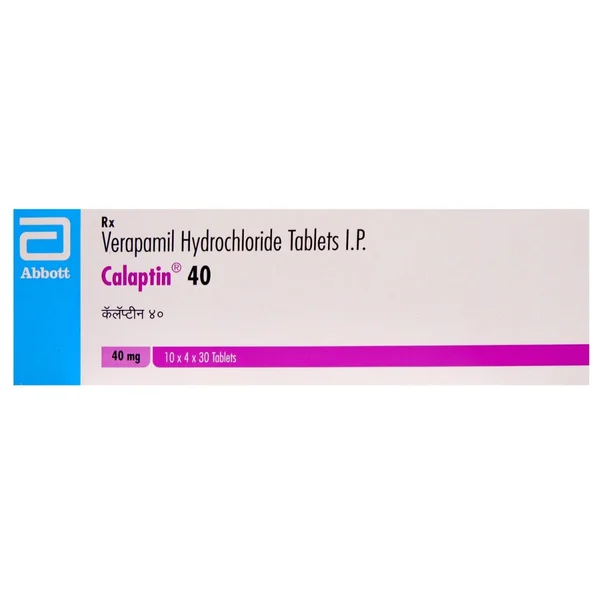
compositionComposition:VERAPAMIL-40MG
prescriptionPrescription Medicine

Calaptin 40 Tablet is used in the treatment of high blood pressure, angina (chest pain), and irregular heart rhythm. It lowers blood pressure by relaxing the blood vessels and reducing the workload on the heart. It helps prevent chest pain by improving blood flow and oxygen supply to the heart. It also helps control the rate and rhythm of the heartbeat by normalising electrical signals in the heart.

Read more
Written By Veda Maddala , M Pharmacy
Reviewed By Bayyarapu Mahesh Kumar , M Pharmacy
OffersOffers & Discounts

Get Free delivery (₹99) with circle icon

Join Circle
coupon
Get Extra 18% Off with Coupons
coupon
coupon
coupon
Extra 10% Off with Bank Offers

More about the Product

Composition :

VERAPAMIL-40MG

Manufacturer/Marketer :

Abbott India Ltd

Consume Type :

Oral

Expires on or after :

Jan-27

Return Policy :

Not Returnable

NPPA :

Regulated

About Calaptin 40 Tablet

Calaptin 40 Tablet is used to treat hypertension (high blood pressure), angina pectoris (chest pain), and arrhythmias (abnormal or irregular heart rhythms).

Calaptin 40 Tablet contains Verapamil, which works by inhibiting the entry of calcium into the muscles of the heart and blood vessels. This relaxes the blood vessels and reduces the workload on the heart, helping to lower high blood pressure and slow the heart rate.

Take Calaptin 40 Tablet exactly as prescribed by your doctor. Swallow it whole with a glass of water; do not crush or chew it. Calaptin 40 Tablet may cause common side effects such as nausea, constipation, headache, dizziness, and low blood pressure. Please consult your doctor if these side effects persist or worsen.

Do not take Calaptin 40 Tablet if you are allergic to any of its ingredients or if you have severe heart failure, severe hypotension (low blood pressure), severe bradycardia (slow heart rate), sick sinus syndrome (sinus node unable to control heartbeat properly), or Wolff-Parkinson-White syndrome (rapid heart rate associated with dizziness). Calaptin 40 Tablet should be used during pregnancy and breastfeeding only if clearly needed and prescribed by your doctor.

Uses of Calaptin 40 Tablet

Calaptin 40 Tablet is used to treat hypertension, angina pectoris, and arrhythmias. The detailed uses of Calaptin 40 Tablet are as follows:

  • Treatment of hypertension: Calaptin 40 Tablet is used to lower high blood pressure and reduce the risk of heart attack and stroke.
  • Treatment of angina pectoris: Calaptin 40 Tablet is used to prevent and manage chest pain associated with physical activity or stress.
  • Treatment of arrhythmia: Calaptin 40 Tablet is used to treat certain heart rhythm disorders, such as atrial flutter, atrial fibrillation, and supraventricular tachycardia.

Have a query?

Directions for Use

  • Calaptin 40 Tablet can be taken with or without food as advised by a doctor.
  • Take Calaptin 40 Tablet at a fixed time every day for the best results or as advised by a doctor.
  • Swallow the tablet as a whole with a glass of water.
  • Do not chew, crush, or break it.

Key Benefits

Calaptin 40 Tablet offers the following medicinal benefits:

  • Lowers high blood pressure (hypertension) by relaxing the blood vessels and decreasing the workload on the heart.
  • Prevents and treats angina (chest pain) by improving blood flow and oxygen supply to the heart.
  • Controls abnormal or irregular heart rhythms by normalising electrical signals in the heart.
  • May help reduce the episodes of migraine headaches.

How Calaptin 40 Tablet Works

Calaptin 40 Tablet contains Verapamil, which works by inhibiting the entry of calcium into the heart and blood vessel muscles. This relaxes the blood vessels, reduces the workload on the heart, and normalises the electrical signals in the heart. As a result, Calaptin 40 Tablet lowers high blood pressure and controls the rate and rhythm of the heartbeat.

Storage

Store in a cool and dry place away from sunlight
Side effects of Calaptin 40 Tablet
Dealing with Medication-Induced Headache:
  • Hydrate your body: Drink enough water to prevent dehydration and headaches.
  • Calm Your Mind: Deep breathing and meditation can help you relax and relieve stress.
  • Rest and Recharge: Sleep for 7-8 hours to reduce headache triggers.
  • Take rest: lie down in a quiet, dark environment.
  • Cold or warm compresses can help reduce tension.
  • Stay Upright: Maintain good posture to keep symptoms from getting worse.
  • To treat headaches naturally, try acupuncture or massage therapy.
  • Over-the-counter pain relievers include acetaminophen and ibuprofen.
  • Prescription Assistance: Speak with your doctor about more substantial drug alternatives.
  • Severe Headaches: Seek emergency medical assistance for sudden, severe headaches.
  • Frequent Headaches: If you get reoccurring headaches, consult your doctor.
  • Headaches with Symptoms: Seek medical attention if your headaches include fever, disorientation, or weakness.
Here are the 7 steps to manage Dizziness caused by medication:
  • Inform your doctor about dizziness symptoms. They may adjust your medication regimen or prescribe additional medications to manage symptoms.
  • Follow your doctor's instructions for taking medication, and take it at the same time every day to minimize dizziness.
  • When standing up, do so slowly and carefully to avoid sudden dizziness.
  • Avoid making sudden movements, such as turning or bending quickly, which can exacerbate dizziness.
  • Drink plenty of water throughout the day to stay hydrated and help alleviate dizziness symptoms.
  • If you're feeling dizzy, sit or lie down and rest until the dizziness passes.
  • Track when dizziness occurs and any factors that may trigger it, and share this information with your doctor to help manage symptoms.
Here are the steps to cope with constipation as a side effect of medication:
  • Inform your doctor about your constipation symptoms. They may adjust your medication or advise alternative treatments.
  • Stay hydrated by drinking sufficient of water (at least 8-10 glasses a day) to help soften stool and promote bowel movements.
  • Increase fibre intake by eating foods high in fibre, such as fruits, whole grains, vegetables and legumes, to help bulk up the stool.
  • Establish a bowel routine by trying to go to the bathroom at the same time each day to train your bowels.
  • Engaging in regular exercise, like walking or yoga, can support in bowel movement stimulation.
  • Consult your doctor if constipation persists, and discuss alternative treatments or adjustments to your medication.
  • Rest well; get enough sleep.
  • Eat a balanced diet and drink enough water.
  • Manage stress with yoga and meditation.
  • Limit alcohol and caffeine.
  • Physical activities like walking or jogging might help boost energy and make you feel less tired.
Managing Low Blood Pressure Triggered by Medication: Expert Advice:
  • If you experience low blood pressure symptoms like dizziness, lightheadedness, or fainting while taking medication, seek immediate medical attention.
  • Make lifestyle modifications and adjust your medication regimen under medical guidance to manage low blood pressure.
  • As your doctor advises, regularly check your blood pressure at home. Record your readings to detect any changes and share them with your doctor.
  • Fluid intake plays a vital role in managing blood pressure by maintaining blood volume, regulating blood pressure, and supporting blood vessel function. Drinking enough fluids helps prevent dehydration, maintain electrolyte balance, and regulate fluid balance.
  • Take regular breaks to sit or lie down if you need to stand for long periods.
  • When lying down, elevate your head with extra pillows to help improve blood flow.
  • Avoid heavy exercise or strenuous activities that can worsen low blood pressure.
  • Wear compression socks as your doctor advises to enhance blood flow, reduce oedema, and control blood pressure.
  • If symptoms persist or worsen, or if you have concerns about your condition, seek medical attention for personalized guidance and care.

What if I have taken an overdose of Calaptin 40 Tablet

Do not take more than the prescribed dose of Calaptin 40 Tablet , as it may cause serious side effects. If you suspect you have taken an overdose or notice any unusual symptoms, please consult a doctor immediately.

Drug Warnings

  • Do not take Calaptin 40 Tablet if you are allergic to any of its ingredients.
  • Calaptin 40 Tablet is not recommended if you have conditions like severe heart failure, severe hypotension (low blood pressure), severe bradycardia (slow heart rate), sick sinus syndrome (sinus node unable to control heartbeat properly), or Wolff-Parkinson-White syndrome (rapid heart rate associated with dizziness).
  • Before taking Calaptin 40 Tablet , inform your doctor if you have neuromuscular disorders (such as myasthenia gravis and muscular dystrophy), first-degree heart block, or liver or kidney problems.
  • Calaptin 40 Tablet should be used during pregnancy and breastfeeding only if clearly needed and prescribed by your doctor.
  • Calaptin 40 Tablet may cause dizziness, so do not drive or operate heavy machinery if you feel dizzy.

Drug-Drug Interactions

verifiedApollotooltip
VerapamilDofetilide
Critical
VerapamilFlibanserin
Critical

Drug-Drug Interactions

Login/Sign Up

VerapamilDofetilide
Critical
How does the drug interact with Calaptin 40 Tablet:
Using dofetilide together with Calaptin 40 Tablet may significantly increase the blood levels of dofetilide. This can increase the risk or severity of side effects.

How to manage the interaction:
Taking Calaptin 40 Tablet with Dofetilide is not recommended, please consult your doctor before taking it. You should seek immediate medical attention if you develop sudden dizziness, lightheadedness, fainting, shortness of breath, or heart palpitations. Do not discontinue any medications without first consulting a doctor.
VerapamilFlibanserin
Critical
How does the drug interact with Calaptin 40 Tablet:
Using flibanserin together with Calaptin 40 Tablet can significantly increase the blood levels of flibanserin.

How to manage the interaction:
Taking Calaptin 40 Tablet with Flibanserin is generally avoided as it can result in an interaction. Call a doctor immediately if you experience excessive drowsiness and decreases in blood pressure that can lead to dizziness, lightheadedness, fainting, and accidental injury, contact a doctor immediately. Do not discontinue any medications without consulting a doctor.
VerapamilArbutamine
Critical
How does the drug interact with Calaptin 40 Tablet:
Taking Calaptin 40 Tablet with Arbutamine can increase the risk or severity of irregular heart rhythms.

How to manage the interaction:
Taking Calaptin 40 Tablet with Arbutamine together is generally avoided as it can result in an interaction, it can be taken when a doctor has advised it. However, if you experience irregular heartbeat, chest tightness, blurred vision, or nausea. contact a doctor immediately. Do not discontinue any medications without consulting a doctor.
How does the drug interact with Calaptin 40 Tablet:
Using pimozide together with Calaptin 40 Tablet can increase the blood levels and risk of developing irregular heart rhythms. The risk increases in patients with a history of heart illness or electrolyte imbalance.

How to manage the interaction:
Taking Calaptin 40 Tablet with Pimozide is generally avoided as it can cause an interaction. However, if you experience sudden dizziness, lightheadedness, fainting, shortness of breath, chest pain or tightness, rapid heartbeat, or memory loss, contact a doctor immediately. Do not discontinue any medications without consulting a doctor.
How does the drug interact with Calaptin 40 Tablet:
Coadministration of cisapride together with Calaptin 40 Tablet may significantly increase the blood levels of cisapride. This can increase the risk or severity of side effects.

How to manage the interaction:
Taking Calaptin 40 Tablet with Cisapride is not recommended, please consult a doctor before taking it. You should seek immediate medical attention if you develop sudden dizziness, lightheadedness, fainting, shortness of breath, or heart palpitations during treatment with cisapride.
VerapamilLomitapide
Critical
How does the drug interact with Calaptin 40 Tablet:
Using lomitapide together with Calaptin 40 Tablet may significantly increase the blood levels of lomitapide.

How to manage the interaction:
Taking Calaptin 40 Tablet with Lomitapide is generally avoided as it can possibly result in an interaction. Call a doctor if you experience diarrhea, nausea, vomiting, stomach pain or discomfort, indigestion, gas, constipation, and yellowing of skin or eyes. Do not discontinue any medications without consulting a doctor.
VerapamilEliglustat
Critical
How does the drug interact with Calaptin 40 Tablet:
The metabolism of Eliglustat can be decreased when combined with Calaptin 40 Tablet. This can increase the risk or severity of side effects.

How to manage the interaction:
Taking Calaptin 40 Tablet with Eliglustat is not recommended as it can result in an interaction, it can be taken if your doctor has advised it. However, if you experience sudden dizziness, lightheadedness, fainting, shortness of breath, chest pain or tightness, or rapid heartbeat, contact a doctor immediately. Do not discontinue any medications without consulting a doctor.
How does the drug interact with Calaptin 40 Tablet:
Coadministration of Ivabradine with Calaptin 40 Tablet can increase blood levels and the side effects of Ivabradine.

How to manage the interaction:
Taking Ivabradine with Calaptin 40 Tablet together can result in an interaction, it can be taken if your doctor has advised it. However, contact a doctor immediately if you experience sudden dizziness, lightheadedness, fainting, shortness of breath, chest pain or tightness, rapid heartbeat, or memory loss. Do not discontinue any medications without consulting a doctor.
How does the drug interact with Calaptin 40 Tablet:
Coadministration of Amiodarone with Calaptin 40 Tablet can lead to increased negative effects.

How to manage the interaction:
Taking Amiodarone with Calaptin 40 Tablet together can result in an interaction, it can be taken if a doctor has advised it. However, if you experience reduced heart rate, dizziness, fainting, or headaches, contact a doctor. Do not discontinue any medications without consulting a doctor.
VerapamilAcebutolol
Severe
How does the drug interact with Calaptin 40 Tablet:
Taking Calaptin 40 Tablet with acebutolol can increase the side effects of Calaptin 40 Tablet.

How to manage the interaction:
Although taking Calaptin 40 Tablet and Acebutolol together can result in an interaction, it can be taken if a doctor has prescribed it. However, if you experience fatigue, headache, fainting, swelling of the extremities, weight gain, shortness of breath, chest pain, or irregular heartbeat, consult a doctor. Do not discontinue any medications without consulting a doctor.

Drug-Food Interactions

verifiedApollotooltip
VERAPAMIL-40MGGrapefruit and Grapefruit Juice
Moderate

Drug-Food Interactions

Login/Sign Up

VERAPAMIL-40MGGrapefruit and Grapefruit Juice
Moderate
Common Foods to Avoid:
Grapefruit Juice

How to manage the interaction:
Consuming Grapefruit juice with Calaptin 40 Tablet can increase the blood levels and effects of Calaptin 40 Tablet. Avoid the Consumption of Grapefruit juice with Calaptin 40 Tablet. Contact a doctor if you experience sudden, unexplained weight gain, swelling of the hands, ankles, or feet, chest pain, or difficulty breathing.

Diet & Lifestyle Advise

Dietary recommendations:

  • Opt for a diet rich in whole grains, fruits, veggies and low-fat dairy products.
  • Limit sodium chloride (table salt) intake to 2300 mg per day; ideally, less than 1500 mg for most adults.
  • Including heart-healthy omega-3 fatty acid-containing food drinks in your daily diet.
  • Use low-fat cooking oils such as olive, soybean, canola, and coconut oil to help lower your elevated blood pressure.

Lifestyle measures:

  • Keep your weight under control with a body mass index (BMI) of 19.5-24.9.
  • Do regular exercise for at least 150 minutes per week (about 30 minutes most days).
  • Quit smoking and avoid consuming excessive alcohol.
  • Try to reduce stress by practising mindfulness techniques and spending time with your loved ones.
  • Monitor your blood pressure and heart rate daily, and if there are significant fluctuations, contact your doctor immediately.

Habit Forming

No

Therapeutic Class

[CALCIUM CHANNEL BLOCKERS]

All Substitutes & Brand Comparisons

bannner image

Alcohol

Unsafe

It is not recommended to consume alcohol while using Calaptin 40 Tablet as it may worsen your condition.

bannner image

Pregnancy

Caution

Calaptin 40 Tablet should be used only during the first trimester of pregnancy if clearly needed and prescribed by your doctor. Your doctor will weigh the benefits and any potential risks before prescribing this medicine.

bannner image

Breast Feeding

Caution

Calaptin 40 Tablet should be taken during breastfeeding only if clearly needed and prescribed by your doctor. Your doctor will weigh the benefits and any potential risks before prescribing this medicine.

bannner image

Driving

Caution

Calaptin 40 Tablet may cause dizziness, so do not drive or operate heavy machinery if you feel dizzy after taking this medicine.

bannner image

Liver

Caution

Calaptin 40 Tablet should be used with caution if you have liver conditions. Your doctor may adjust the dose based on your condition.

bannner image

Kidney

Caution

Calaptin 40 Tablet should be used with caution if you have kidney conditions. Your doctor may adjust the dose based on your condition.

bannner image

Children

Caution

Calaptin 40 Tablet should be used in children below 12 years only if clinically needed and if the benefits outweigh the risks. It is not recommended for use in young infants.

bannner image

Heart

Safe if prescribed

Calaptin 40 Tablet is often prescribed to patients with heart problems to treat hypertension. However, it must be taken strictly under medical supervision, as it can affect liver and kidney function and may interact with other heart medications.

bannner image

Geriatrics

Safe if prescribed

Calaptin 40 Tablet is safe for use in elderly patients if prescribed by the physician.

FAQs

Calaptin 40 Tablet is used to treat hypertension (high blood pressure), angina pectoris (chest pain), and arrhythmias (abnormal or irregular heart rhythms).

Calaptin 40 Tablet contains Verapamil, which works by inhibiting the entry of calcium into the heart and blood vessel muscles. This relaxes the blood vessels, reduces the workload on the heart, and normalises the electrical signals in the heart. As a result, Calaptin 40 Tablet lowers high blood pressure and controls the rate and rhythm of the heartbeat.

It is not recommended to take Calaptin 40 Tablet with other medicines to treat high blood pressure, especially beta-blockers such as atenolol, propranolol, and metoprolol. It may cause an atrioventricular block (a type of heart block) and bradycardia (slow heart rate).

The common side effects of Calaptin 40 Tablet are nausea, constipation, headache, dizziness, and low blood pressure. These side effects usually don’t require treatment and gradually resolve over time. However, if these side effects persist or worsen, inform your doctor immediately.

Calaptin 40 Tablet should not be taken in people with any degree of heart failure (unless you have a pacemaker), who are taking beta-blockers, who have severe hypotension (low blood pressure), who have severe bradycardia (low heart rate), and Wolff-Parkinson-White syndrome (rapid heart rate associated with dizziness).

To take Calaptin 40 Tablet , swallow the medication whole with a glass of water. Do not chew, crush, or break it. Aim to take it at the same time every day to get the best results. Follow the dosage and duration your doctor prescribes, and do not adjust the dose without consulting them. Take Calaptin 40 Tablet exactly as your doctor directs to ensure safe and effective treatment.

Calaptin 40 Tablet should be used in children below 12 years only if clinically needed and if the benefits outweigh the risks. It is not recommended for use in young infants.

If you're feeling better, don't stop taking the medicine! Instead, report your progress to your doctor and follow their advice. Remember, finishing the full course of medicine is crucial to ensuring your condition is fully gone and doesn't come back. Your doctor will guide you on what to do next, so be sure to check in with them.

Calaptin 40 Tablet is a calcium channel blocker used to treat high blood pressure (hypertension), angina (chest pain), and certain heart rhythm disorders. It works by relaxing the blood vessels and decreasing the workload on the heart.

The duration of taking Calaptin 40 Tablet varies depending on your specific condition and response to the medication. For chronic conditions such as high blood pressure or angina, Calaptin 40 Tablet is typically taken long-term. Your doctor will assess your individual needs and determine the appropriate length of time for you to take Calaptin 40 Tablet , ensuring you receive the most effective treatment.

Calaptin 40 Tablet is generally considered safe when used as prescribed by a doctor. However, like all medications, it can have side effects and potential interactions with other drugs. It's important to follow your doctor's instructions and inform them of any pre-existing and existing medical conditions or medication history to avoid negative complications.

Yes, Calaptin 40 Tablet causes dizziness, which is reported as the most common side effect. Please ensure your safety, exercise caution while driving, and avoid alcohol consumption, as it can worsen the condition. There's no need to panic, as this side effect typically subsides as your body adjusts to the medication over time. However, if the dizziness persists, consult your doctor for personalised guidance and management.

Mild side effects are common and often temporary when taking Calaptin 40 Tablet . However, in rare cases, they may become severe due to many factors, depending on individuality. Be alert for symptoms like swelling, breathing difficulties, slow heartbeat, fainting, blurred vision, rash, nausea, or extreme tiredness. If you experience any of these side effects, consult your doctor promptly for proper guidance and management.

Calaptin 40 Tablet is not suitable for individuals with certain medical conditions. These include severe heart failure, specific heart rhythm disorders like atrial fibrillation, very rapid heartbeats, low blood pressure, cardiogenic shock, sick sinus syndrome without a pacemaker, and second or third-degree heart block without a pacemaker. Additionally, those allergic to Calaptin 40 Tablet composition should not take this medication. Consult your doctor to determine whether Calaptin 40 Tablet is safe based on your unique health situation and goal.

The symptoms of overdosing Calaptin 40 Tablet may include dizziness, blurred vision, slow, fast, or irregular heartbeat, seizures, confusion, difficulty breathing, or swallowing. Take caution while taking the dose to avoid negative symptoms. If any of these symptoms worsen, please contact your doctor immediately.

The most common side effects of the Calaptin 40 Tablet are nausea, constipation, headache, dizziness, and low blood pressure. These side effects are usually mild and temporary and resolve as your body adjusts to the medication. However, if any side effects persist or worsen, it's essential to consult your doctor for proper guidance and care.

It's important to consult your doctor before taking Calaptin 40 Tablet during pregnancy or while breastfeeding. Calaptin 40 Tablet can cross the placenta and be found in small amounts in breast milk, which can have effects on infants. It's crucial to weigh the potential benefits against the risks. Please consult your doctor for proper guidance and care.

Follow a balanced diet, engage in regular physical activity, limit salt intake, maintain a healthy weight, limit alcohol consumption, quit smoking, stay hydrated, and regularly monitor blood pressure.

Before taking Calaptin 40 Tablet , it's crucial to consult your doctor and inform them about any pre-existing medical conditions, allergies, and current medications, vitamins, or supplements. This includes heart, liver, and kidney problems, as well as pregnancy or breastfeeding plans. Also, avoid consuming grapefruit or juice and alcohol, as they may interact with Calaptin 40 Tablet . Be aware of potential side effects such as dizziness, slow heartbeat, constipation, nausea, headache, or tiredness, and promptly report any severe or persistent symptoms to your doctor. These precautions will ensure safe usage and minimise potential risks associated with Calaptin 40 Tablet .

Country of origin

India

Manufacturer/Marketer address

16th Floor, Godrej BKC, Plot – C, “G” Block, Bandra-Kurla Complex, Bandra (East), Mumbai – 400 051, India
Other Info - CAL2074

Disclaimer

While we strive to provide complete, accurate, and expert-reviewed content on our 'Platform', we make no warranties or representations and disclaim all responsibility and liability for the completeness, accuracy, or reliability of the aforementioned content. The content on our platform is for informative purposes only, and may not cover all clinical/non-clinical aspects. Reliance on any information and subsequent action or inaction is solely at the user's risk, and we do not assume any responsibility for the same. The content on the Platform should not be considered or used as a substitute for professional and qualified medical advice. Please consult your doctor for any query pertaining to medicines, tests and/or diseases, as we support, and do not replace the doctor-patient relationship.

Author Details

Doctor imageWe provide you with authentic, trustworthy and relevant information

whatsapp Floating Button
Buy Now
Add 1 Strips