
0

 Prescription Medicine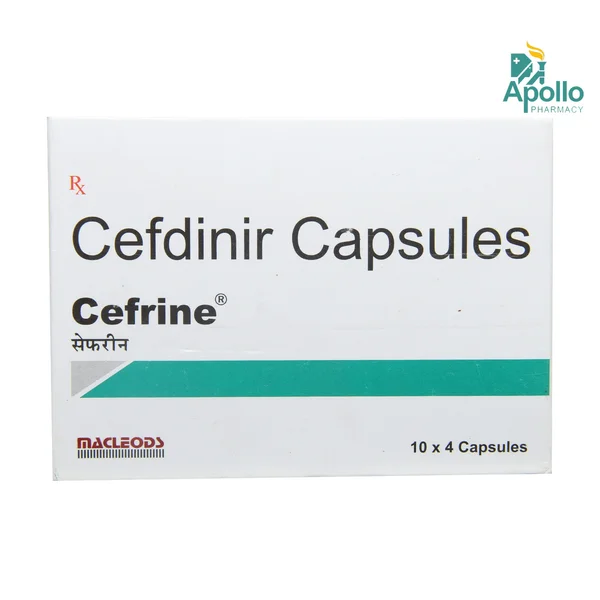


₹34.38 per unit
BEST VALUE
₹34.4 per unit
₹137.5
 ₹21.0Cashback (15%)
(Inclusive of all Taxes)
 Offers & Discounts
Get Free delivery (₹99) with


Composition :
Manufacturer/Marketer :
Consume Type :
Expires on or after :
Return Policy :
About Cefrine Capsule
Cefrine Capsule belongs to a class of medication called 'antibiotics' used to treat several bacterial infections of the urinary tract, bones and joints, heart, lungs, brain, chest, ears, skin or soft tissues. Bacterial infection is when harmful bacteria grow in the body and cause infection. It can infect any part of the body and multiply very quickly. Cefrine Capsule does not work against infections caused by a virus such as flu or a common cold.
Cefrine Capsule contains Cefdinir, a cephalosporin antibiotic that works by interfering with the formation of the bacterial cell wall (a protective covering) necessary for their survival. This damages the bacterial cell wall and kills bacteria.
Take Cefrine Capsule as prescribed by your doctor. You are advised to take Cefrine Capsule for as long as your doctor has prescribed it for you based on your medical condition. In some cases, you may experience diarrhoea, nausea, stomach pain, vomiting, rash, headache or vaginal itching or discharge. Most of these side effects of Cefrine Capsule do not require medical attention and gradually resolve over time. However, if the side effects persist or worsen, please consult your doctor.
Please tell your doctor if you are allergic to Cefrine Capsule, cephalosporin antibiotics or any other medicines, please tell your doctor. If you are pregnant or breastfeeding, inform your doctor before taking Cefrine Capsule. Cefrine Capsule is not recommended for babies below six months of age as the safety and effectiveness were not established. Drive only if alert, as the Cefrine Capsule may cause dizziness. You are advised to maintain a time gap of a minimum of 2 hours between taking Cefrine Capsule and antacids containing aluminium, magnesium, iron supplements and multivitamins containing iron. These may reduce the body's absorption of Cefrine Capsule by the body.
Uses of Cefrine Capsule
Cefrine Capsule is used to treat various bacterial infections. The detailed uses of Cefrine Capsule are as follows:

Have a query?
Directions for Use
Key Benefits
Cefrine Capsule contains Cefdinir, a cephalosporin antibiotic used to treat several bacterial infections. Cefdinir is a broad-spectrum antibiotic that acts against aerobic (grow in the presence of oxygen) and anaerobic (grow in the absence of oxygen) gram-negative and gram-positive bacteria. It interferes with the formation of the bacterial cell wall (a protective covering) that is necessary for their survival. Thereby damaging the bacterial cell wall and killing bacteria.
How Cefrine Capsule Works
Storage
Drug Warnings
Please tell your doctor if you are allergic to Cefrine Capsule, cephalosporin antibiotics, or other medicines. If you have kidney problems or inflammation of the large intestine, inform your doctor before taking Cefrine Capsule. If you are pregnant or breastfeeding, consult a doctor before taking Cefrine Capsule. Cefrine Capsule is not recommended for babies below six months of age as the safety and effectiveness were not established. Drive only if alert, as the Cefrine Capsule may cause dizziness. You are recommended to complete the entire course of Cefrine Capsule as your doctor prescribes for effective results. Cefrine Capsule may interact with specific tests such as glucose (sugar) in urine and Coomb's test, giving false-positive results. Therefore, inform your doctor that you are taking Cefrine Capsule before undergoing any tests. You are advised to maintain a time gap of a minimum of 2 hours between taking Cefrine Capsule and antacids containing aluminium, magnesium, iron supplements and multivitamins containing iron. These may reduce the body's absorption of Cefrine Capsule by the body.
Drug-Drug Interactions


Login/Sign Up
Drug-Food Interactions
Login/Sign Up
Diet & Lifestyle Advise
Habit Forming
Therapeutic Class

 RX
RXAlembic Pharmaceuticals Ltd
₹19.7
(₹4.93 per unit)
RXParenteral Drugs India Ltd
₹81.25
(₹20.31 per unit)
RXTorrent Pharmaceuticals Ltd
₹205
(₹20.5 per unit)

Alcohol
Caution
The interaction of Cefrine Capsule with alcohol is unknown. Please consult a doctor before consuming alcohol while using Cefrine Capsule.

Pregnancy
Caution
Cefrine Capsule is a category B pregnancy drug and is given to pregnant women only if the doctor thinks the benefits outweigh the risks. Please consult a doctor if you are pregnant or planning for pregnancy.

Breast Feeding
Caution
It is unknown whether Cefrine Capsule is excreted in human milk. Cefrine Capsule is given to breastfeeding mothers if the doctor thinks the benefits outweigh the risks. Please consult a doctor if you are breastfeeding.

Driving
Caution
Cefrine Capsule may cause dizziness in some people. Therefore, avoid driving if you feel dizzy after taking Cefrine Capsule.

Liver
Safe if prescribed
If you have any concerns regarding the use of Cefrine Capsule in patients with liver problems, please consult a doctor.

Kidney
Caution
Take Cefrine Capsule with caution, especially if you have a history of Kidney diseases or conditions. Your doctor may adjust the dose as needed.

Children
Caution
Cefrine Capsule is not recommended for babies below 6 months of age as the safety and effectiveness were not established.

Heart
Caution
Please inform your doctor if you have heart problems before taking Cefrine Capsule, as there is limited information available on its safety in such cases.

Geriatrics
Caution
Geriatric patients can generally take Cefrine Capsule safely. However, since kidney function often declines with age, dosage adjustments may be needed if renal function is significantly impaired. Regular monitoring and consultation with your doctor are recommended to ensure safe use.
Cefrine Capsule is used to treat bacterial infections of the urinary tract, bones and joints, heart, lungs, brain, chest, ears, skin or soft tissues.
Cefrine Capsule contains Cefdinir, an antibiotic that works by interfering with the formation of the bacterial cell wall (a protective covering), which is necessary for their survival. This damages the bacterial cell wall and kills the bacteria.
It is not recommended to take Cefrine Capsule with probenecid (used to lower high uric acid levels) as it may increase the levels of Cefrine Capsule in the blood and increase the risk of adverse effects such as diarrhoea, kidney problems, vomiting, and nausea. However, please consult your doctor before taking Cefrine Capsule with other medicines.
Cefrine Capsule may cause diarrhoea, a common side effect. However, if the condition persists or worsens, or if you notice blood or mucus in your stools, avoid taking Cefrine Capsule and consult a doctor immediately.
Cefrine Capsule may interfere with the urine test (for sugar) and the Coombs test (for blood test), giving false-positive results. Therefore, if you are about to undergo any laboratory tests, inform your doctor or lab technician that you are taking Cefrine Capsule.
Cefrine Capsule is not used to treat viral infections; it is an antibiotic used only to treat bacterial infections.
You are advised to maintain a time gap of at least 2 hours between taking Cefrine Capsule and antacids containing aluminium and magnesium, as these may reduce the body's absorption of Cefrine Capsule. However, please consult a doctor before taking other medicines with Cefrine Capsule.
Country of origin
Manufacturer/Marketer address


