
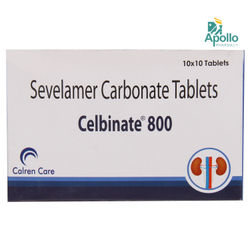
Celbinate 800 Tablet 10's




₹360
 ₹54.0Cashback (15%)
(Inclusive of all Taxes)
₹251 with coupons & bank offers*
 Offers & Discounts
Get Free delivery (₹99) with


Delivery Information
More about the Product
Composition :
Manufacturer/Marketer :
Consume Type :
Expires on or after :
Return Policy :
About Celbinate 800 Tablet
Celbinate 800 Tablet is a medication prescribed to lower high phosphorus levels in the blood of adults with chronic kidney disease who are on dialysis. When kidney function declines, the body cannot remove excess phosphorus, which can lead to severe health complications. This medicine helps manage this buildup by targeting the phosphorus in your digestive tract.
To get the best results, you must take Celbinate 800 Tablet consistently with every meal or snack. Taking it with food is essential because it works directly on the phosphorus present in your meals. Along with taking this medicine, your doctor will likely recommend a low-phosphorus diet and other lifestyle adjustments to help control your levels.
Most people tolerate this medicine well, but it can cause common digestive side effects like nausea, vomiting, bloating, or mild constipation. If you experience severe stomach pain, persistent constipation, or difficulty swallowing, you should stop taking it and contact your doctor immediately.
Before starting this medication, tell your doctor if you have a history of bowel blockages, severe constipation, swallowing difficulties, or major stomach surgery. Do not take this if you have a known bowel obstruction or naturally low levels of phosphorus in your blood.
This medicine can interact with several other oral drugs by preventing your body from absorbing them properly. Talk to your doctor or pharmacist if you are taking antibiotics, thyroid hormones, or heart medications, as you may need to space them apart from Celbinate 800 Tablet . If you are pregnant, breastfeeding, or an older adult, consult your doctor for personalised advice before starting treatment.
Uses of Celbinate 800 Tablet
Celbinate 800 Tablet is used to lower high phosphorus levels in the blood. The detailed uses of Celbinate 800 Tablet are as follows:
- High blood phosphorus levels (hyperphosphatemia) in kidney disease patients on dialysis: Celbinate 800 Tablet helps control blood phosphorus levels in adults with chronic kidney disease who are receiving haemodialysis or peritoneal dialysis.
Key Benefits
Celbinate 800 Tablet helps manage elevated phosphorus levels in people with chronic kidney disease, particularly those undergoing dialysis. By reducing the absorption of phosphorus from food, it helps maintain healthier mineral balance in the body and supports long-term bone and cardiovascular health. This medicine offers several key benefits:
- Supports Stronger and Healthier Bones: By helping keep phosphorus levels within the recommended range, Celbinate 800 Tablet reduces the risk of mineral imbalances that can weaken bones over time. This supports bone strength and may help reduce the likelihood of bone pain, fractures, and other complications associated with chronic kidney disease.
- Helps Maintain Healthy Blood Vessel Function: Excess phosphorus can contribute to the formation of calcium-phosphate deposits in blood vessels and soft tissues. By controlling phosphorus levels, Celbinate 800 Tablet helps reduce the risk of these deposits, supporting healthier blood vessel function and overall cardiovascular health.
- Promotes Long-Term Health in Dialysis Patients: Regular use of Celbinate 800 Tablet as prescribed helps manage one of the key complications of chronic kidney disease. By maintaining healthier phosphorus levels, it supports better overall health and may help reduce the risk of long-term complications related to mineral and bone disorders.
- Preventing Vomiting (Before it Happens)
- Take medication exactly as prescribed by your doctor. This can help minimize side effects, including vomiting.
- Having a small meal before taking your medication can help reduce nausea and vomiting.
- Talk to your doctor about taking anti-nausea medication along with your prescribed medication.
- Managing Vomiting (If it Happens)
- Try taking ginger in the form of tea, ale, or candy to help alleviate nausea and vomiting.
- What to Do if Vomiting Persists
- Consult your doctor if vomiting continues or worsens, consult the doctor for guidance on adjusting your medication or additional treatment.
- Inform your doctor about the nausea and discuss possible alternatives to the medication or adjustments to the dosage.
- Divide your daily food intake into smaller, more frequent meals to reduce nausea.
- Opt for bland, easily digestible foods like crackers, toast, plain rice, bananas, and applesauce.
- Avoid certain foods that can trigger nausea, such as fatty, greasy, spicy, and smelly foods.
- Drink plenty of fluids, such as water, clear broth, or electrolyte-rich beverages like coconut water or sports drinks.
- Use ginger (tea, ale, or candies) to help relieve nausea.
- Get adequate rest and also avoid strenuous activities that can worsen nausea.
- Talk to your doctor about taking anti-nausea medication if your nausea is severe.
- Record when your nausea occurs, what triggers it, and what provides relief to help you identify patterns and manage your symptoms more effectively.
- Inform Your Doctor: Notify your doctor immediately about your diarrhoea symptoms. This allows them to adjust your medication or provide guidance on managing side effects.
- Stay Hydrated: Drink plenty of fluids to replace lost water and electrolytes. Choose water, clear broth, and electrolyte-rich drinks. Avoid carbonated or caffeinated beverages to effectively rehydrate your body.
- Follow a Bland Diet: Eat easy-to-digest foods to help firm up your stool and settle your stomach. Try incorporating bananas, rice, applesauce, toast, plain crackers, and boiled vegetables into your diet.
- Avoid Trigger Foods: Steer clear of foods that can worsen diarrhoea, such as spicy, fatty, or greasy foods, high-fibre foods, and dairy products (especially if you're lactose intolerant).
- Practice Good Hygiene: Maintain good hygiene to prevent the spread of infection. To stay healthy, wash your hands frequently, clean and disinfect surfaces regularly, and avoid exchanging personal belongings with others.
- Take Anti-Diarrheal Medications: If your doctor advises, anti-diarrheal medications such as loperamide might help manage diarrhoea symptoms. Always follow your doctor's directions.
- Keep track of your diarrhoea symptoms. If they don't get better or worse or are accompanied by severe stomach pain, blood, or dehydration signs (like extreme thirst or dark urine), seek medical help.
- Take medications with food (if recommended): It can help prevent stomach distress and indigestion.
- Eat smaller, more frequent meals: Divide daily food intake into smaller, more frequent meals to ease digestion.
- Avoid trigger foods: Identify and avoid foods that trigger indigestion, such as spicy, fatty, or acidic foods.
- Stay upright after eating: Sit or stand upright for at least 1-2 hours after eating to prevent stomach acid from flowing into the oesophagus.
- Avoid carbonated drinks: Avoid drinking carbonated beverages, such as soda or beer, which can worsen indigestion.
- Manage stress: To alleviate indigestion, engage in stress-reducing activities like deep breathing exercises or meditation.
- Consult a doctor if needed: If indigestion worsens or persists, consult a healthcare professional to adjust the medication regimen or explore alternative treatments.
- Drink water or other clear fluids.
- To prevent worsening of pain, limit intake of tea, coffee, or alcohol.
- Include bland foods like rice, toast, crackers, and rice in your diet.
- Avoid lying down immediately after eating as it may cause indigestion or heartburn.
- Avoid acidic and spicy food as it may cause indigestion.
- Tell your doctor about your GAS symptoms. They may change your medication regimen or prescribe additional drugs to help you manage them.
- To manage GAS symptoms, eat a balanced diet of fibre, vegetables, and fruits.
- Drink enough water throughout the day to avoid constipation and treat GAS symptoms.
- Regular exercise like yoga and walking may help stimulate digestion and alleviate GAS symptoms.
- Take probiotics only if your doctor advises, as they may help alleviate GAS symptoms by promoting gut health.
- Take medication for GAS symptoms only if your doctor advises, as certain medications can interact with your existing prescriptions or worsen symptoms.
- If symptoms persist, worsen, or are accompanied by severe abdominal pain, vomiting, or bleeding, seek immediate medical attention.
- Inform your doctor about your constipation symptoms. They may adjust your medication or advise alternative treatments.
- Stay hydrated by drinking sufficient of water (at least 8-10 glasses a day) to help soften stool and promote bowel movements.
- Increase fibre intake by eating foods high in fibre, such as fruits, whole grains, vegetables and legumes, to help bulk up the stool.
- Establish a bowel routine by trying to go to the bathroom at the same time each day to train your bowels.
- Engaging in regular exercise, like walking or yoga, can support in bowel movement stimulation.
- Consult your doctor if constipation persists, and discuss alternative treatments or adjustments to your medication.
Directions for Use
To get the full benefit of Celbinate 800 Tablet and minimise side effects, follow these simple guidelines:
- Swallow the tablets whole with a glass of water during your meals or snacks.
- Do not chew, crush, or break the tablets, as they can expand rapidly in your throat and cause choking.
- If you are taking the oral suspension powder form, mix the exact prescribed amount with the recommended amount of water, stir thoroughly, and drink the entire mixture immediately. Do not leave the mixture sitting.
- Always follow your doctor's exact instructions regarding how and when to take this medicine.
- Your healthcare provider may need to adjust your dosage over time based on your routine blood test results.
How Celbinate 800 Tablet Works

Alcohol
Unsafe
You are recommended to avoid alcohol consumption while taking Celbinate 800 Tablet to avoid unpleasant side effects.

Pregnancy
Consult your doctor
Celbinate 800 Tablet is not absorbed by the body and is not expected to reach the baby. If you are pregnant or planning to become pregnant, tell your doctor. They will advise you whether you should take Celbinate 800 Tablet during this time.

Breast Feeding
Consult your doctor
Celbinate 800 Tablet is not absorbed by the body and is not expected to pass into breast milk. If you are breastfeeding or plan to breastfeed, tell your doctor. They will advise you if you should take Celbinate 800 Tablet while breastfeeding.

Driving
Safe if prescribed
Celbinate 800 Tablet has no or negligible influence on the ability to drive or operate any machinery.

Liver
Consult your doctor
Please consult your doctor if you have a liver impairment or any concerns regarding this.

Kidney
Consult your doctor
Please consult your doctor if you have kidney impairment or any concerns regarding this.

Children
Caution
Celbinate 800 Tablet is not recommended for children below 6 years as its safety and effectiveness are not known.

Heart
Caution
Extreme caution should be exercised in cardiac patients while taking Celbinate 800 Tablet . The patient should be closely monitored for any changes.

Geriatrics
Consult your doctor
Please consult a doctor before giving Celbinate 800 Tablet to geriatric patients. Your doctor will prescribe Celbinate 800 Tablet if the benefits outweigh the risks.
What if I have taken an overdose of Celbinate 800 Tablet
Diet & Lifestyle Advise
- Follow a low-phosphorus diet as recommended by your healthcare team or dietitian. Avoid or limit high-phosphorus foods such as dairy products, nuts, seeds, dark colas, beer, and processed meats containing phosphate additives.
- Maintain a daily food and symptom journal to track your meals and monitor for any digestive changes like constipation.
- Attend all scheduled blood tests. Your doctor will need to regularly check your phosphorus, calcium, bicarbonate, and chloride levels to ensure the treatment is working safely.
- Stay hydrated by drinking the amount of fluids recommended by your doctor, which helps manage and prevent mild constipation.

Have a query?
How Soon It Starts Working
- The time required for Celbinate 800 Tablet to start to work: The time required for Celbinate 800 Tablet to show its action is not clinically established.
- The time for which the effects of Celbinate 800 Tablet last: The duration of action for Celbinate 800 Tablet is not clinically established.
What if you forget to take Celbinate 800 Tablet
Storage
Drug Warnings
- Always take this medicine with food to ensure it can bind to the phosphorus in your meals effectively.
- Never split, crush, or chew the tablets, as they can swell and block your airway.
- Keep a close watch on your bowel movements. If you experience severe constipation or do not have a bowel movement for several days, contact your healthcare provider immediately.
- Separate your other oral medications carefully. Take other oral drugs at least 1 hour before or 3 hours after taking Celbinate 800 Tablet to prevent absorption issues.
- Inform any healthcare provider you visit that you are taking this medicine, especially if you are scheduled for any stomach or bowel surgeries.
Drug-Drug Interactions


Drug-Drug Interaction Summary:
- Ciprofloxacin: Taking Celbinate 800 Tablet can lower the amount of this antibiotic your body absorbs. Take ciprofloxacin at least 2 hours before or 6 hours after taking this medicine.
- Mycophenolate mofetil: This medicine may reduce the absorption of mycophenolate mofetil (an immunosuppressant), potentially lowering its effectiveness.
- Levothyroxine: This thyroid medicine may not be absorbed properly if taken with Celbinate 800 Tablet . Take your thyroid medication at least 4 hours before taking this medicine.
- Digoxin: Celbinate 800 Tablet may interfere with how your body absorbs digoxin, a medication used for heart conditions.
Drug-Drug Interactions
Login/Sign Up
Gemifloxacin's efficiency can be decreased by Celbinate 800 Tablet if it prevents the drug from being absorbed into the bloodstream. this is caused by the combined use of gemifloxacin and Celbinate 800 Tablet.
How to manage the interaction:
Co-administration of enoxacin and Celbinate 800 Tablet can lead to an interaction, but it can be taken if your doctor advises. It has been advised to separate the dosing of these medications by at least 4 hours and consult the doctor if your symptoms do not improve. Do not stop using any medications without a doctor's advice.
Co-administration of Enoxacin and Celbinate 800 Tablet can decrease the blood levels and effectiveness of Enoxacin.
How to manage the interaction:
Co-administration of Enoxacin and Celbinate 800 Tablet can lead to an interaction, but it can be taken if advised by your doctor. Do not stop using any medications without a doctor's advice.
Co-administration of Celbinate 800 Tablet with Ergocalciferol can decrease the effects of Ergocalciferol.
How to manage the interaction:
Co-administration of Celbinate 800 Tablet with Ergocalciferol can lead to an interaction, but they can be taken if advised by your doctor. Consult the doctor if your symptoms worsen. Do not stop using any drugs without a doctor's advice.
Drug-Food Interactions
Drug-Food Interaction Summary:
- There are no known direct interactions with specific foods, but taking this medicine without food prevents it from working, as it must bind to phosphorus in your meals.
Drug-Food Interactions
Login/Sign Up

All Substitutes & Brand Comparisons


FAQs
Disclaimer
Author Details


Reference
- Electronic Medicines Compendium (EMC). Pil.8784 Patient Information Leaflet (PIL). Cheshire, UK: Datapharm; 2025. [Accessed on 02 Jun. 2026]Check here
- U.S. Food and Drug Administration (FDA). 022127S019,022318S021Lbl [FDA Prescribing Information]. Silver Spring, MD: FDA; 2024. [Accessed on 02 Jun. 2026]Check here
- Electronic Medicines Compendium (EMC). Pil.3681 Patient Information Leaflet (PIL). Cheshire, UK: Datapharm; 2025. [Accessed on 02 Jun. 2026]Check here
- Drugs.com Clinical Review Team. Sevelamer Suspension Clinical Drug Monograph. Auckland, NZ: Drugs.com; 2026. [Accessed on 02 Jun. 2026]Check here
- Sevelamer hydrochloride. 2000. [Accessed on 30 Jan. 2019]Check here
- Sevelamer Sevelamer. 1998. [Accessed on 6 Apr. 2019]Check here
- National Center for Biotechnology Information. [Accessed on 06 Aug. 2023]Check here
Country of origin
Manufacturer/Marketer address
Therapeutic Class
Habit Forming


Recommended for a 30-day course: 3 Strips