
0

 Prescription Medicine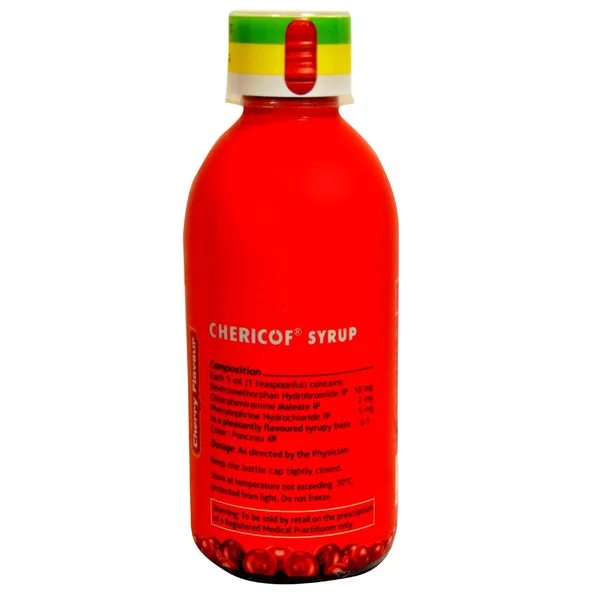


₹1.31 per ml
BEST VALUE
₹1.4 per ml
₹131
 ₹20.0Cashback (15%)
(Inclusive of all Taxes)
 Offers & Discounts
Get Free delivery (₹99) with


Manufacturer/Marketer :
Consume Type :
Expires on or after :
Return Policy :
About Chericof Syrup
Chericof Syrup belongs to a class of antiarrhythmic medicines used to treat irregular heartbeats (arrhythmias) and protect the heart during the early stages after a heart attack (myocardial infarction), which occurs when the heart muscle does not receive enough blood and oxygen.
Chericof Syrup contains Atenolol, which works by blocking certain natural substances in the heart and blood vessels. This slows the heart rate and reduces blood pressure, lowering the risk of heart attack, stroke, and kidney problems.
Chericof Syrup is administered by a healthcare professional; do not self-administer. Some people may experience cold hands or feet, diarrhoea, nausea, or tiredness. These side effects usually resolve over time, but consult your doctor if they persist or worsen.
Before using Chericof Syrup , inform your doctor if you have any allergies to its ingredients, are pregnant, planning pregnancy, or breastfeeding. For pediatric use, the dose and duration must be determined by a paediatrician and administered under strict medical supervision. Additionally, provide your doctor with your complete medical history and details of any current medications to minimise the risk of adverse effects or drug interactions.
Uses of Chericof Syrup
Chericof Syrup is used to treat dry cough. The detailed uses of Chericof Syrup are as follows:
Health Queries
My child had a cough and was given Deriphyllin tablet and Chericof syrup by the doctor. Now he has a fever. What should I do?

M Pharmacy
My child has a mucous cough and cold. We used Chericof and Brodil as prescribed, but there's no improvement. Any suggestions for a better syrup?

M. Pharm (Pharmacology)., PhD
My child has a runny nose and cough. We have been giving Chericof Syrup and Xyilomist nasal drops for the last 3 days. Is that enough?
M. Pharm (Pharmacology)., PhD
My child has a cough and is on Deriphyllin tablets and Chericof syrup, but now he has a fever. What should we do?
M. Pharm (Pharmacology)., PhD

Have a query?
Directions for Use
Key Benefits
How Chericof Syrup Works
Storage
What if I have taken an overdose of Chericof Syrup
Drug Warnings
Drug-Drug Interactions


Login/Sign Up
Drug-Food Interactions
Login/Sign Up
Diet & Lifestyle Advise
Habit Forming
Therapeutic Class

 RX
RXPanacea Biotec Ltd
₹103
(₹1.03/ 1ml)
 RX
RXProcter & Gamble Health Ltd
₹113
(₹1.13/ 1ml)
 RX
RXMankind Pharma Pvt Ltd
₹113
(₹1.13/ 1ml)

Alcohol
Caution
Avoid consumption of alcohol with Chericof Syrup as it may increase drowsiness. Please consult a doctor before consuming alcohol with Chericof Syrup .

Pregnancy
Caution
The safety of Chericof Syrup in pregnant women is unknown. Therefore, it is given to pregnant women only if the doctor thinks the benefits outweigh the risks.

Breast Feeding
Caution
It is unknown whether Chericof Syrup is excreted in human milk. Chericof Syrup is given to breastfeeding mothers only if the doctor thinks benefits are greater than risks.

Driving
Caution
Chericof Syrup may cause dizziness or drowsiness in some people. Therefore, drive only if you are alert after taking Chericof Syrup .

Liver
Caution
Take Chericof Syrup with caution, especially if you have a history of Liver diseases/conditions. The dose may be adjusted by your doctor as required.

Kidney
Caution
Take Chericof Syrup with caution, especially if you have a history of Kidney diseases/conditions. The dose may be adjusted by your doctor as required.

Children
Caution
The dose and duration must be determined by a paediatrician and administered under strict medical supervision.

Heart
Unsafe
Chericof Syrup is contraindicated in cardiac patients due to its adverse effects. However, if prescribed extreme caution should be exercised.

Geriatrics
Unsafe
Chericof Syrup is not safe for use in elderly patients due to its severe side effects.
Chericof Syrup is used to treat dry cough.
Chericof Syrup is a combination drug, primarily used to treat dry cough. Chlorpheniramine works by blocking the action of histamine, a substance responsible for causing allergic reactions. Phenylephrine is a 'decongestant' that helps in shrinking the blood vessels located in the nasal passage, thereby reducing stuffy nose. Dextromethorphan works by blocking the transmission of nerve signals from the cough center in the brain to the muscles that produce cough.
Consuming alcohol, along with Chericof Syrup , may potentiate some of the pharmacologic effects of CNS-active agents. If used together, it may lead to symptoms like confusion, central nervous system depression, impairment of thinking and judgment.
No, you should not take Chericof Syrup if you need to undergo surgery, as it may lead to excessive drowsiness and sleepiness when given along with anaesthesia. Please inform your doctor before surgery if you are taking Chericof Syrup as the doctor may stop it 72 hours before the surgery.
It is not recommended to take Chericof Syrup along with any antidepressant medication, especially MAO inhibitors (linezolid, phenelzine, selegiline, rasagiline, isocarboxazid, tranylcypromine), as it may lead to unpleasant side effects or any drug interaction. Also, Chericof Syrup should be taken at least 15 days after your last dose of antidepressants.
Take the missed dose as soon as you remember. If it is almost time for your next dose, wait until then to take Chericof Syrup and skip the missed dose. Do not take extra medicine to make up for the missed dose.
Chericof Syrup should be used with caution, only when prescribed by a doctor, in patients with glaucoma. As Chericof Syrup may rarely worsen the symptoms of glaucoma.
Yes, Chericof Syrup can cause sleepiness or drowsiness as a common side effect. Chericof Syrup contains dextromethorphan and phenylephrine, which can cause drowsiness, dizziness, nausea, dry mouth, and headache. Therefore, avoid activities that require mental alertness until you know how Chericof Syrup affects you.
No, taking Chericof Syrup at a dose higher than recommended will not make it more effective; it can actually be harmful. Overdosing can lead to severe side effects and toxicity. Therefore, follow your doctor’s instructions carefully.
It is unknown whether Chericof Syrup passes into human milk. Therefore, please consult your doctor if you are supposed to breastfeed while taking Chericof Syrup . Your doctor will prescribe Chericof Syrup only if the benefits outweigh the risks.
Store at a temperature not exceeding 30°C in a cool and dry place. Protect it from sunlight and moisture. Keep out of reach of children.
Chericof Syrup is primarily used to treat dry cough and relieve allergy symptoms such as a runny nose, stuffy nose, sneezing, and watery eyes. However, it is not typically recommended for chronic cough or asthma. Therefore, please consult your doctor for appropriate medications and treatments for chronic cough or asthma.
Both Chericof Syrup and other cold or allergy medicines may contain dextromethorphan, phenylephrine, and chlorpheniramine as active components. Therefore, combining cold or allergy medicines with Chericof Syrup increases the chance of side effects. So, always consult your doctor before combining Chericof Syrup with other medicines.
Avoid alcohol that can increase the drowsiness and dizziness caused by Chericof Syrup . Inform your doctor if you have any pre-existing conditions, such as heart, kidney, lung, liver, thyroid problems, diabetes, glaucoma, or prostate issues. Inform your doctor if you are taking other medications, or if you are breastfeeding, pregnant or planning pregnancy. Drink plenty of fluids while taking Chericof Syrup to loosen mucus. Take Chericof Syrup exactly as prescribed by your doctor. Do not exceed the recommended dose.
It is not known whether Chericof Syrup can cause fetal harm. Therefore, please consult your doctor if you are pregnant before taking Chericof Syrup . Your doctor will prescribe Chericof Syrup only if the benefits outweigh the risks.
The duration for using Chericof Syrup depends on the severity of your symptoms and your doctor's advice. Generally, it is meant for short-term use to relieve symptoms like dry cough, runny nose, and sneezing. Follow your doctor's instructions on how long to use it and consult your doctor if you have any concerns.
The common side effects of Chericof Syrup are dry mouth, throat or nose, drowsiness, blurred vision, constipation, dizziness, restlessness or excitation. If any of these side effects persist or worsen, please consult your doctor.
Country of origin
Manufacturer/Marketer address

Customers Also Bought


