0
Welcome User
Login/Sign Up

Login/Sign Up

₹115
(Inclusive of all Taxes)
Get Free delivery (₹99) with
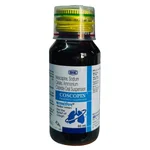
Coscopin Paediatric Suspension belongs to a class of medicines called expectorants used to provide relief from cough. Coughing (dry or productive) is the body’s way of clearing irritants (like allergens, mucus, or smoke) from airways and preventing infection. There are two types of coughs, namely: Dry cough and chesty cough. A dry cough is tickly and doesn't produce any vicious or thick mucus, while a chesty cough (wet cough) means mucous or sputum is produced to help clear your airways.
Coscopin Paediatric Suspension is a combination of Noscapine (cough suppressant), Ammonium chloride (expectorant), and Sodium citrate (mucolytic agent). Noscapine belongs to the cough suppressants class that blocks the transmission of nerve signals from the cough centre in the brain to the muscles that produce cough, thereby decreasing the need to cough. Ammonium chloride belongs to the class of expectorants that reduce mucus stickiness and clear airways. Sodium citrate is a mucolytic agent (cough/sputum thinner) that works by thinning and loosening phlegm (mucus) in the lungs, windpipe, and nasal passage.
Your doctor will recommend how often your child needs to take Coscopin Paediatric Suspension based on his/her medical condition. Sometimes, Coscopin Paediatric Suspension may cause side effects such as headache, dizziness, nausea, constipation, and drowsiness. Most of these side effects do not require medical attention and gradually resolve over time. However, if the side effects persist or bother your child, please consult a doctor.
If your child is allergic to Coscopin Paediatric Suspension or any other medicines, please tell your doctor. Use Coscopin Paediatric Suspension with caution in children with pre-existing respiratory failure or any other lung disease. If you are using any other prescription or non-prescription medicines for your child, inform your doctor.
Coscopin Paediatric Suspension is used in the treatment of Cough. The detailed uses of Coscopin Paediatric Suspension are as follows:
Coscopin Paediatric Suspension is a combination of three drugs, namely: Noscapine, Ammonium chloride, and Sodium citrate. Noscapine belongs to the cough suppressants class that works by blocking the transmission of nerve signals from the cough centre in the brain to the muscles that produce cough, thereby decreasing the need to cough. Ammonium chloride belongs to the class of expectorants that reduce mucus stickiness and clear airways. Sodium citrate is a mucolytic agent (cough/sputum thinner) that works by thinning and loosening the viscous phlegm (mucus) in the lungs, windpipe, and nasal passage, which helps it to cough out easily.
Not applicable
-
Not applicable
-
Not applicable
-
Not applicable
-
Caution
Inform your doctor if your child has liver problems. The doctor may adjust the dose or prescribe a suitable alternative based on the medical condition of your child.
Caution
Inform your doctor if your child has kidney problems. The doctor may adjust the dose or prescribe a suitable alternative based on the medical condition of your child.
Safe if prescribed
Use Coscopin Paediatric Suspension for children in doses as advised by the doctor.
Caution
Coscopin Paediatric Suspension should be used with caution in children who have heart problems. Therefore, please consult your doctor before using Coscopin Paediatric Suspension.
Not applicable
Coscopin Paediatric Suspension is for paediatric patients only.
Have a query?
If your child is allergic to Coscopin Paediatric Suspension or any other medicines, please tell your doctor. Use Coscopin Paediatric Suspension with caution in children with pre-existing respiratory failure or any other lung disease. If you are using any other prescription or non-prescription medicines for your child, inform your doctor.
Drug-Drug Interaction: If your child is taking any other prescription or non-prescription medicines, inform your doctor.
Drug-Food Interaction: Coscopin Paediatric Suspension may interact with liquorice extract and enhance the hypoglycemic (low blood sugar) effect.
Drug-Disease Interaction: If your child has any health problems, please inform your doctor before using Coscopin Paediatric Suspension.
Login/Sign Up
Login/Sign Up
Coscopin Paediatric Suspension is used to treat Cough.
Coscopin Paediatric Suspension contains Noscapine, Ammonium chloride and Sodium citrate. Noscapine belongs to the class of cough suppressants that block the transmission of nerve signals from the cough centre in the brain to the muscles that produce cough. Thus, it decreases the need to cough. Ammonium chloride is an expectorant that reduces the stickiness of mucus and helps to remove it from the airways. Sodium citrate is a mucolytic agent (cough/sputum thinner) that works by thinning and loosening the viscous phlegm (mucus) in the lungs, windpipe and nasal passage thereby helping to cough out easily.
Coscopin Paediatric Suspension may cause constipation as a side effect. However, if the condition persists or bothers your child, please consult a doctor.
You are not recommended to stop giving Coscopin Paediatric Suspension without consulting your doctor as it may worsen cough or cause recurring symptoms in your child. Therefore, use Coscopin Paediatric Suspension for as long as your doctor has prescribed it, and if your child experiences any difficulty while taking Coscopin Paediatric Suspension, please consult your doctor.
Disclaimer