
Welcome User
Login/Sign Up

Login/Sign Up
₹125.5
(Inclusive of all Taxes)
₹93 with coupons & bank offers*
Get Free delivery (₹99) with
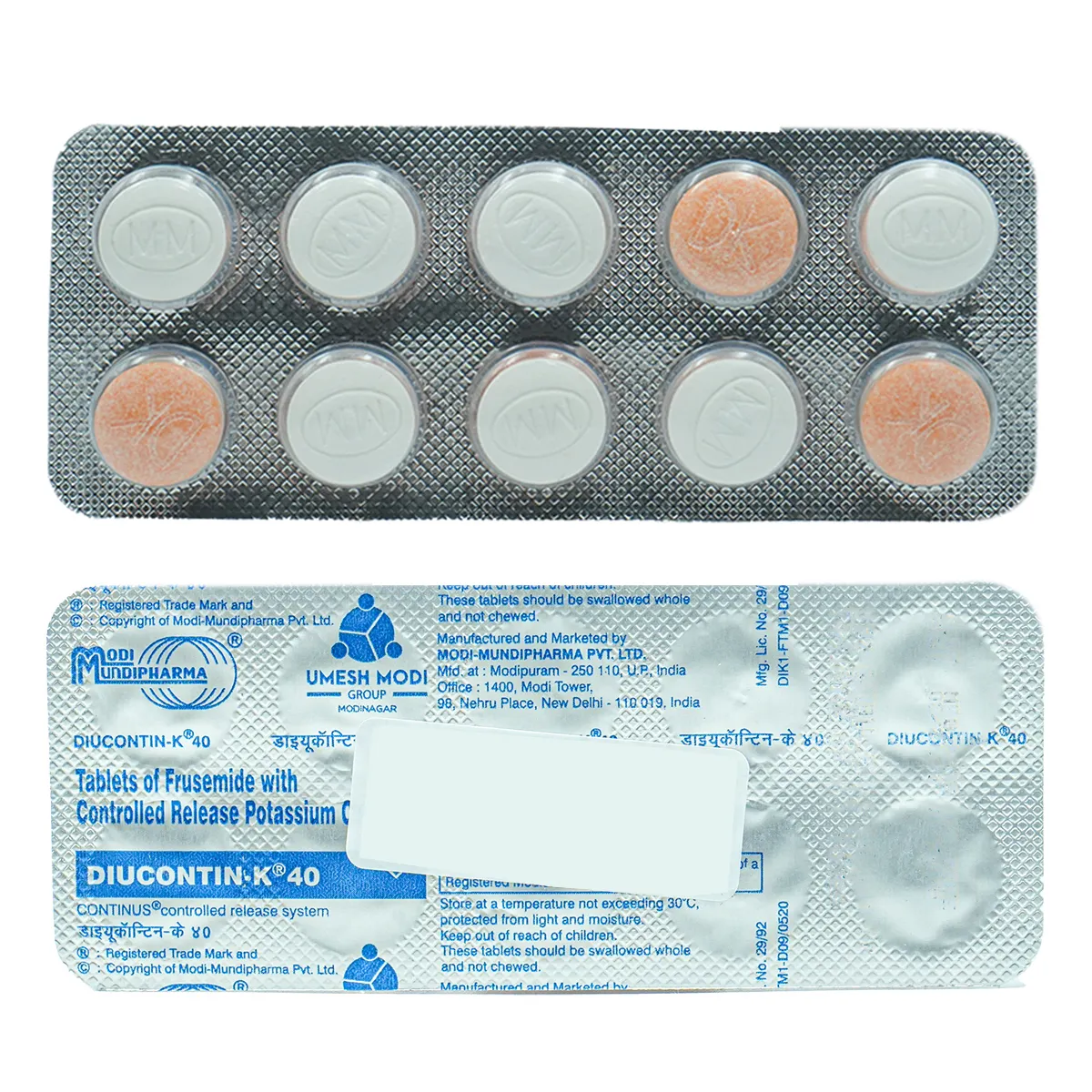
Diucontin K 40 Tablet is a prescription medicine used to treat fluid build-up (oedema) caused by conditions such as heart failure, liver disease, or kidney disorders. It contains furosemide, which helps your kidneys remove excess salt and water through urine, and potassium chloride, which helps replace potassium that may be lost due to the increased urination caused by furosemide. This combination helps reduce swelling and other symptoms associated with excess fluid retention while supporting healthy potassium levels.
Take Diucontin K 40 Tablet exactly as prescribed by your doctor, preferably at the same time each day. It is usually taken earlier in the day to avoid frequent urination at night and may be taken with or without food, depending on your doctor's instructions. Reducing excess salt in your diet may also help manage fluid retention.
Common side effects may include increased urination, dizziness, nausea, or stomach discomfort. Contact your doctor promptly if you develop severe muscle weakness or cramps, extreme thirst, confusion, a fast or irregular heartbeat, or signs of an allergic reaction, as these symptoms may indicate changes in fluid or electrolyte levels or another reaction requiring medical attention.
Before taking Diucontin K 40 Tablet , tell your doctor if you have kidney or liver problems, diabetes, gout, low blood pressure, difficulty passing urine, Addison's disease, or any condition affecting your potassium levels. This medicine may not be suitable if you are unable to pass urine or have high potassium levels in your blood. Your doctor may monitor your kidney function and electrolyte levels, including potassium and sodium, during treatment.
Diucontin K 40 Tablet may interact with certain blood pressure medicines, non-steroidal anti-inflammatory drugs (NSAIDs) such as ibuprofen, lithium, and other medicines that affect potassium levels or kidney function. Tell your doctor about all medicines and supplements you take. If you are pregnant, breastfeeding, or an older adult, your doctor will assess whether this medicine is appropriate for you and may recommend closer monitoring.
Diucontin K 40 Tablet is used to manage excess fluid build-up in the body while helping maintain healthy potassium levels. It may be prescribed for:
Diucontin K 40 Tablet helps relieve symptoms caused by excess fluid build-up while replacing potassium that may be lost during treatment. The primary benefits include:
Caution
You are not recommended to consume alcohol along with Diucontin K 40 Tablet to avoid unpleasant side-effects.
Caution
Diucontin K 40 Tablet should not be used during pregnancy unless clearly necessary. Your doctor will weigh the benefits and any potential risks before prescribing it to you. Please consult your doctor.
Caution
Diucontin K 40 Tablet should not be used when breastfeeding unless clearly necessary. Your doctor will weigh the benefits and any potential risks before prescribing it to you. Please consult your doctor.
Caution
It is not recommended to drive after taking Diucontin K 40 Tablet as it may occasionally cause drowsiness.
Caution
Diucontin K 40 Tablet to be taken with caution, especially if you have a history of liver diseases/conditions. Your doctor may adjust your dose depending upon your current liver conditions.
Caution
Diucontin K 40 Tablet to be taken with caution, especially if you have a history of Kidney diseases/conditions. Your doctor may adjust your dose depending upon your current kidney conditions.
Caution
Diucontin K 40 Tablet to be taken with caution, especially if you are children below the age of 12. Your doctor may adjust your dose depending upon your age.
Caution
Diucontin K 40 Tablet should be taken with caution in patients with heart problems. Therefore, please inform your doctor before using Diucontin K 40 Tablet .
Caution
Diucontin K 40 Tablet should be given with caution in elderly patients due to an increased risk of side effects. Please inform your doctor before use.
Have a query?
The time required for Diucontin K 40 Tablet to start to work: The time required for Diucontin K 40 Tablet to show its action is unknown. The time for which the effects of Diucontin K 40 Tablet last: The duration of action for Diucontin K 40 Tablet is clinically unknown.
The following medicines may interact with Diucontin K 40 Tablet and require closer monitoring or dose adjustments:
Login/Sign Up
Certain foods or drinks may affect the safety or tolerability of Diucontin K 40 Tablet . Important interactions include:
Login/Sign Up
Disclaimer


