
0
Welcome User
Login/Sign Up

Login/Sign Up
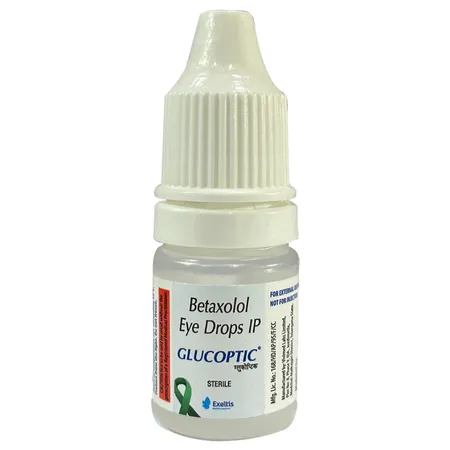
₹55
(Inclusive of all Taxes)
Get Free delivery (₹99) with
GLUCOPTIC DROP is a prescription eye drop used to lower abnormally high pressure inside the eye. This increased pressure is common in conditions like open-angle glaucoma and ocular hypertension. By lowering the fluid buildup, this medication helps protect your optic nerve and preserves your eyesight.
To ensure it works effectively, you must use GLUCOPTIC DROP consistently and at the same time every day. You apply this liquid directly to the affected eye as directed, making sure to remove any contact lenses first. Along with using these drops, incorporating light physical exercise and limiting caffeine can help support healthy eye pressure.
While using this medication, you may experience mild, short-lived side effects like a slight stinging or watering of the eyes. These feelings are normal and usually go away quickly, but you should consult your doctor immediately if you develop serious symptoms such as shortness of breath or a very slow heartbeat.
Before using this medicine, talk to your healthcare provider about your complete medical history. Do not take this if you have serious lung issues like asthma, severe chronic obstructive pulmonary disease (COPD), or certain heart conditions such as a very slow heart rate or severe heart failure.
This medication can interact with other blood pressure or heart medicines, which may cause your heart rate to drop too low. It is also important for pregnant women, breastfeeding mothers, or elderly individuals to consult their healthcare provider before beginning treatment to ensure it is safe.
Your doctor may prescribe GLUCOPTIC DROP to treat several conditions, including:
GLUCOPTIC DROP provides targeted eye care support by helping maintain healthy pressure inside the eyes and protecting long-term vision. By controlling eye pressure directly at the source, this medicine offers several key health benefits:
Always follow your doctor's exact instructions on how to use this medicine. Follow these step-by-step instructions for safe and effective use:
Caution
Interaction of alcohol with GLUCOPTIC DROP is unknown. Please consult a doctor before consuming alcohol with GLUCOPTIC DROP.
Caution
GLUCOPTIC DROP is a Category C pregnancy drug and is not recommended for use during pregnancy unless your doctor considers it essential.
Unsafe
Avoid breastfeeding while taking GLUCOPTIC DROP as it may be excreted in breast milk and cause adverse effects in the baby.
Caution
GLUCOPTIC DROP may cause dizziness or blurred vision in some people. So, drive only when your vision is clear and are alert after taking GLUCOPTIC DROP.
Caution
Inform your doctor if you have a history of Liver diseases/conditions.
Caution
Inform your doctor if you have a history of Kidney diseases/conditions.
Unsafe
GLUCOPTIC DROP is not recommended for children.
Consult your doctor
Please consult your doctor before using GLUCOPTIC DROP if you have pre-existing heart problems. Your doctor will prescribe GLUCOPTIC DROP if the benefits outweigh the risks.
Consult your doctor
Please consult a doctor before administering GLUCOPTIC DROP to geriatric patients. Your doctor will prescribe GLUCOPTIC DROP if the benefits outweigh the risks.
Have a query?
The time required for GLUCOPTIC DROP to start to work: GLUCOPTIC DROP ideally shows its action within 30 minutes to 1 hour after administration. The time for which the effects of GLUCOPTIC DROP last: The effect of GLUCOPTIC DROP lasts for 12 hours.
Drug-Drug Interactions:
Inform your doctor if you are taking any of the following medicines, as they may interact.
Drug-Food Interactions:
Drug-Disease Interactions:
Inform your doctor if you have a history of the following conditions before taking GLUCOPTIC DROP, as it may worsen your condition or cause complications.
Login/Sign Up
Login/Sign Up
FDC Ltd
₹68.5
(₹13.7/ 1ml)
Intas Pharmaceuticals Ltd
₹76
(₹15.2/ 1ml)
Disclaimer


