apollo
logo
0
Select Delivery Location
prescription
Prescription Medicine
info
Written By Bayyarapu Mahesh Kumar , M Pharmacy
Reviewed By Santoshini Reddy G , M Pharmacy
OffersOffers & Discounts

Get Free delivery (₹99) with circle icon

Join Circle
Get Extra 18% Off with Coupons
Extra 10% Off with Bank Offers
bank offer
bank offer
bank offer

More about the Product

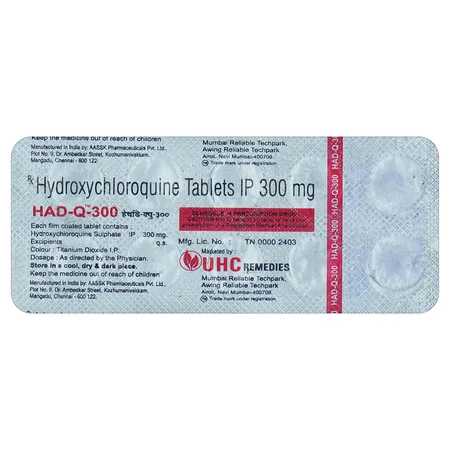
Manufacturer/Marketer :

Uhc Remedies

Consume Type :

Oral

Expires on or after :

Jan-27

Return Policy :

Not Returnable

About Had-Q-300 Tablet

Had-Q-300 Tablet is a prescription medication used to manage and treat specific chronic inflammatory and infectious conditions. It is primarily used to manage autoimmune diseases like rheumatoid arthritis and systemic lupus erythematosus, as well as to prevent and treat malaria infections. By targeting these conditions, the medicine helps reduce tissue damage and prevent severe disease flare-ups.

To get the best results, you must take Had-Q-300 Tablet consistently at the same time every day as directed by your healthcare provider. Always take your dose with a meal or a glass of milk to prevent stomach discomfort. Incorporating regular, low-impact exercise and protecting your skin from direct sun exposure can also help support your overall treatment plan.

While taking this medication, you may experience mild stomach issues like nausea or cramping, which usually fade as your body adjusts. However, you must contact your doctor immediately if you notice any changes in your vision, unusual muscle weakness, or irregular heartbeats.

Before starting this medicine, tell your healthcare provider if you have a history of eye diseases, kidney or liver damage, or heart rhythm disorders. Do not take this if you have a known allergy to similar anti-malarial medicines. Your doctor will help determine if this is the safest option for your condition.

Certain medicines, such as antacids or diabetes medications, can interact with Had-Q-300 Tablet , and consuming alcohol may increase your risk of stomach upset and liver damage. Smoking should also be avoided as it can significantly reduce the effectiveness of this treatment for skin-related lupus symptoms. If you are pregnant, planning to become pregnant, breastfeeding, or are an older adult, consult your doctor before starting therapy

Uses of Had-Q-300 Tablet

Your doctor may prescribe this medicine to treat several conditions, including:

  • Rheumatoid arthritis: Had-Q-300 Tablet helps reduce joint pain, swelling, and morning stiffness, allowing for improved physical function and joint mobility over time.
  • Systemic lupus erythematosus: It helps control skin rashes, joint pain, extreme fatigue, and other inflammatory symptoms associated with both systemic and discoid lupus.
  • Malaria: It is prescribed to prevent and treat malaria infections caused by mosquito bites in regions where the parasites have not developed resistance to hydroxychloroquine therapy.

Key Benefits

When taken as prescribed, this medicine offers several important benefits, including:

  • Long-Term Control of Chronic Inflammation: Had-Q-300 Tablet helps reduce inflammation associated with autoimmune conditions such as rheumatoid arthritis and lupus, which may help decrease flare-ups, joint pain, and stiffness for improved daily comfort and mobility.
  • Protection Against Autoimmune-Related Damage: By controlling an overactive immune response, Had-Q-300 Tablet helps reduce the risk of progressive damage to joints and internal organs caused by ongoing inflammation.
  • Improved Daily Function and Quality of Life: By easing symptoms and improving disease control, Had-Q-300 Tablet supports better physical activity, independence, and the ability to perform everyday tasks more comfortably.
  • Relief from Lupus-Related Skin Symptoms: In some patients with lupus, Had-Q-300 Tablet may help reduce inflammation-related skin problems, including rashes that worsen with sunlight exposure.
Side effects of Had-Q-300 Tablet
  • Drink water or other clear fluids.
  • To prevent worsening of pain, limit intake of tea, coffee, or alcohol.
  • Include bland foods like rice, toast, crackers, and rice in your diet.
  • Avoid lying down immediately after eating as it may cause indigestion or heartburn.
  • Avoid acidic and spicy food as it may cause indigestion.
Overcome Medication-Induced Nausea: A 9-Step Plan
  • Inform your doctor about the nausea and discuss possible alternatives to the medication or adjustments to the dosage.
  • Divide your daily food intake into smaller, more frequent meals to reduce nausea.
  • Opt for bland, easily digestible foods like crackers, toast, plain rice, bananas, and applesauce.
  • Avoid certain foods that can trigger nausea, such as fatty, greasy, spicy, and smelly foods.
  • Drink plenty of fluids, such as water, clear broth, or electrolyte-rich beverages like coconut water or sports drinks.
  • Use ginger (tea, ale, or candies) to help relieve nausea.
  • Get adequate rest and also avoid strenuous activities that can worsen nausea.
  • Talk to your doctor about taking anti-nausea medication if your nausea is severe.
  • Record when your nausea occurs, what triggers it, and what provides relief to help you identify patterns and manage your symptoms more effectively.
  • Skin rash caused by allergies is due to irritants or allergens. Therefore, avoid contact with such irritants.
  • Consult your doctor for proper medication and apply an anti-itch medication. Follow the schedule and use the medication whenever needed.
  • Protect your skin from extreme heat and try to apply wet compresses.
  • Soak in the cool bath, which gives a soothing impact to the affected area.
Here are the few steps for dealing with itching caused by drug use:
  • Report the itching to your doctor immediately; they may need to change your medication or dosage.
  • Use a cool, damp cloth on the itchy area to help soothe and calm the skin, reducing itching and inflammation.
  • Keep your skin hydrated and healthy with gentle, fragrance-free moisturizers.
  • Try not to scratch, as this can worsen the itching and irritate your skin.
  • If your doctor prescribes, you can take oral medications or apply topical creams or ointments to help relieve itching.
  • Track your itching symptoms and follow your doctor's guidance to adjust your treatment plan if needed. If the itching persists, consult your doctor for further advice.
Here are the precise steps to cope with diarrhoea caused by medication usage:
  • Inform Your Doctor: Notify your doctor immediately about your diarrhoea symptoms. This allows them to adjust your medication or provide guidance on managing side effects.
  • Stay Hydrated: Drink plenty of fluids to replace lost water and electrolytes. Choose water, clear broth, and electrolyte-rich drinks. Avoid carbonated or caffeinated beverages to effectively rehydrate your body.
  • Follow a Bland Diet: Eat easy-to-digest foods to help firm up your stool and settle your stomach. Try incorporating bananas, rice, applesauce, toast, plain crackers, and boiled vegetables into your diet.
  • Avoid Trigger Foods: Steer clear of foods that can worsen diarrhoea, such as spicy, fatty, or greasy foods, high-fibre foods, and dairy products (especially if you're lactose intolerant).
  • Practice Good Hygiene: Maintain good hygiene to prevent the spread of infection. To stay healthy, wash your hands frequently, clean and disinfect surfaces regularly, and avoid exchanging personal belongings with others.
  • Take Anti-Diarrheal Medications: If your doctor advises, anti-diarrheal medications such as loperamide might help manage diarrhoea symptoms. Always follow your doctor's directions.
  • Keep track of your diarrhoea symptoms. If they don't get better or worse or are accompanied by severe stomach pain, blood, or dehydration signs (like extreme thirst or dark urine), seek medical help.
To prevent, manage, and treat Constipation caused by medication usage, follow these steps:
  • Preventing Vomiting (Before it Happens)
  • Take medication exactly as prescribed by your doctor. This can help minimize side effects, including vomiting.
  • Having a small meal before taking your medication can help reduce nausea and vomiting.
  • Talk to your doctor about taking anti-nausea medication along with your prescribed medication.
  • Managing Vomiting (If it Happens)
  • Try taking ginger in the form of tea, ale, or candy to help alleviate nausea and vomiting.
  • What to Do if Vomiting Persists
  • Consult your doctor if vomiting continues or worsens, consult the doctor for guidance on adjusting your medication or additional treatment.

Directions for Use

  • Had-Q-300 Tablet can be taken with or without food.
  • Take Had-Q-300 Tablet as prescribed by your healthcare provider. Your doctor will decide the dose, depending on the severity of your symptoms.
  • Swallow the medicine as a whole with a full glass of water.
  • Do not crush, chew, or break the medicine, as it may affect the way the medication is absorbed.

How Had-Q-300 Tablet Works

Had-Q-300 Tablet contains hydroxychloroquine. It belongs to a class of medications known as disease-modifying antirheumatic drugs (DMARDs) and antimalarials. In autoimmune conditions, your immune system mistakenly attacks your body's own healthy tissues. This medicine works by accumulating in the lysosomal compartments of your immune cells, raising their pH levels. This action interferes with the cells' ability to process proteins and send inflammatory signals, effectively calming the overactive immune response that causes pain and swelling. When used to treat malaria, the medicine enters the red blood cells and targets the malaria parasites living inside them. It prevents the parasite from breaking down and neutralising heme, a toxic byproduct of haemoglobin. The buildup of this toxic heme kills the parasite, clearing the infection from your bloodstream.
bannner image

Alcohol

Safe

Avoid alcohol while using Had-Q-300 Tablet since it can worsen your side effects and may interfere with the working of the medicine.

bannner image

Pregnancy

Unsafe

Had-Q-300 Tablet is not recommended during pregnancy. Please seek medical advice if you are pregnant or planning to conceive.

bannner image

Breast Feeding

Unsafe

Had-Q-300 Tablet is not recommended during lactation since it is excreted into the breast milk. Please consult your doctor before starting Had-Q-300 Tablet if you are a breastfeeding mother.

bannner image

Driving

Unsafe

Had-Q-300 Tablet may cause blurry vision affecting your ability to drive or operate. In such cases, do not drive or operate machinery until you are alert and have a clear vision.

bannner image

Liver

Consult your doctor

Let your doctor know if you have any history of liver diseases before using Had-Q-300 Tablet .

bannner image

Kidney

Consult your doctor

Let your doctor know if you have any history of kidney diseases before using Had-Q-300 Tablet .

bannner image

Children

Unsafe

Safety and efficacy of Had-Q-300 Tablet have not been established in children; please seek medical advice for more information.

bannner image

Heart

Consult your doctor

Had-Q-300 Tablet can affect heart rhythm and may cause QT prolongation or arrhythmias, especially in those with existing heart conditions. If you have heart problems, it's crucial to consult your doctor before taking it, as close monitoring may be needed to avoid serious complications.

bannner image

Geriatrics

Caution

Geriatric patients can take Had-Q-300 Tablet , but it may be more sensitive to side effects like vision changes, heart rhythm issues, or kidney problems. Regular monitoring and dose adjustments help ensure safe use.

What if I have taken an overdose of Had-Q-300 Tablet

In case of an accidental overdose, seek immediate emergency medical attention or contact a poison control centre. An overdose of this medication can be serious and life-threatening, especially in young children. Symptoms of overdose may include convulsions, headache, heart rhythm disturbances, and drowsiness.

Diet & Lifestyle Advise

  • Protect your skin: Since hydroxychloroquine therapy can make your skin highly sensitive to sunlight, wear protective clothing, hats, and apply broad-spectrum sunscreen (SPF 30 or higher) when outdoors.
  • Prioritise regular eye exams: Schedule a baseline eye exam before starting the medication, and undergo annual comprehensive eye checkups as directed by your doctor to monitor your retinal health.
  • Keep joints active: If treating arthritis, perform low-impact exercises like swimming, cycling, or walking to keep your joints flexible and strong without placing excess stress on them.
  • Avoid smoking: Smoking can decrease the effectiveness of this medication, especially when treating skin-related lupus symptoms. Talk to your healthcare team if you need support quitting.

Have a query?

How Soon It Starts Working

The time required for Had-Q-300 Tablet to start to work: The onset time of Had-Q-300 Tablet has not been clinically established.

The time for which the effects of Had-Q-300 Tablet last: The duration of Had-Q-300 Tablet ’s effect is clinically not established.

What if you forget to take Had-Q-300 Tablet

If you miss a dose, take it as soon as you remember. If it is almost time for your next scheduled dose, skip the missed dose and resume your regular dosing schedule. Do not take a double dose to make up for a missed one. Talk to your doctor or pharmacist if you frequently miss doses.

Storage

• Store Had-Q-300 Tablet tablets at room temperature, ideally between 20°C and 25°C (68°F to 77°F). • Keep the container tightly closed to protect the medication from moisture and direct light.

Drug Warnings

  • Check for Antacid Interactions: Avoid taking antacids containing magnesium or aluminium within 4 hours of taking Had-Q-300 Tablet , as they may reduce the absorption of the medicine and make it less effective.
  • Monitor Blood Sugar Levels: If you have diabetes, check your blood glucose regularly, as Had-Q-300 Tablet may lower blood sugar levels and increase the risk of hypoglycaemia.
  • Attend Regular Eye Check-ups: Maintain scheduled eye examinations, as early retinal changes may not cause noticeable vision problems but can be detected through routine monitoring.
  • Avoid Alcohol Consumption: Limit or avoid alcohol while taking Had-Q-300 Tablet , as it may worsen stomach irritation and increase the risk of liver-related side effects, especially during long-term use.
  • Report Muscle or Coordination Problems: Contact your doctor if you notice unusual muscle weakness, difficulty with coordination, or other nerve-related symptoms, particularly after prolonged use of Had-Q-300 Tablet .

Drug-Drug Interactions

verifiedApollotooltip

Drug-Drug Interactions:

Inform your doctor if you are taking any of the following medicines, as they may interact.

  • Antacids (containing magnesium or aluminium): Can decrease the absorption of Had-Q-300 Tablet . Space these medications at least 4 hours apart.
  • Digoxin: Had-Q-300 Tablet may raise digoxin levels in your blood, increasing the risk of digoxin toxicity.
  • Diabetes medications (insulin or oral tablets): Combined use can lower blood glucose levels, increasing the risk of low blood sugar.
  • Arrhythmia medications (such as amiodarone): Taking these together can increase the risk of serious, irregular heart rhythms.


Drug-Food Interactions:

  • Grapefruit juice: May increase the concentration of the medication in your body, potentially increasing the risk of side effects. Avoid consuming large quantities of grapefruit products during treatment.


Drug-Disease Interactions:

Inform your doctor if you have a history of the following conditions before taking Had-Q-300 Tablet , as it may worsen your condition or cause complications.

  • Psoriasis: May trigger or worsen severe skin flare-ups in patients with pre-existing psoriasis.
  • G6PD deficiency: May cause the destruction of red blood cells (hemolytic anaemia) in individuals with this inherited enzyme deficiency.
  • Liver or kidney disease: Impaired liver or kidney function can slow down how your body processes and clears the drug, requiring cautious dose adjustments.
  • Heart disease: May worsen existing heart block or irregular heart rhythm conditions.
HydroxychloroquineAurothioglucose
Critical

Drug-Drug Interactions

Login/Sign Up

HydroxychloroquineAurothioglucose
Critical
How does the drug interact with Had-Q-300 Tablet:
Using Aurothioglucose and Had-Q-300 Tablet together can cause blood disorders and other severe side effects.

How to manage the interaction:
Taking Had-Q-300 Tablet with Aurothioglucose is not recommended, please consult your doctor before taking it. If you experience any symptoms, contact your doctor immediately. Do not discontinue any medications without first consulting your doctor.
How does the drug interact with Had-Q-300 Tablet:
Taking Ziprasidone and Haloperidol can increase the risk of an irregular heart rhythm.

How to manage the interaction:
Taking Ziprasidone and Haloperidol together is not recommended as it can lead to an interaction, it can be taken if advised by your doctor. However, if you experience any symptoms like sudden dizziness, lightheadedness, fainting, shortness of breath, heart palpitations, diarrhea, or vomiting, contact your doctor immediately. Do not discontinue any medications without first consulting your doctor.
How does the drug interact with Had-Q-300 Tablet:
Combining Cisapride and Haloperidol can increase the risk of an irregular heart rhythm.

How to manage the interaction:
Taking Cisapride and Haloperidol together is not recommended as it can lead to an interaction, it can be taken if advised by your doctor. However, if you experience any symptoms like sudden dizziness, lightheadedness, fainting, shortness of breath, heart palpitations, diarrhea, or vomiting, contact your doctor immediately. Do not discontinue any medications without first consulting your doctor.
How does the drug interact with Had-Q-300 Tablet:
Coadministration of ceritinib and Had-Q-300 Tablet can increase the risk of irregular heart rhythm.

How to manage the interaction:
Co-administration of ceritinib and Had-Q-300 Tablet can lead to an interaction, but it can be taken together if prescribed by a doctor. However, consult your doctor if you experience sudden dizziness, lightheadedness, fainting, shortness of breath. Do not discontinue any medications without consulting a doctor.
How does the drug interact with Had-Q-300 Tablet:
Taking clarithromycin with Had-Q-300 Tablet can increase the risk of an irregular heart rhythm.

How to manage the interaction:
Although there is a possible interaction, clarithromycin can be taken with daclatasvir if prescribed by the doctor. Consult the prescriber immediately if you experience sudden lightheadedness, dizziness, fainting, shortness of breath, or heart palpitations during treatment with these medications. Do not discontinue the medication without consulting a doctor.
Severe
How does the drug interact with Had-Q-300 Tablet:
The combined use of quinidine and Had-Q-300 Tablet can increase the risk of an irregular heart rhythm.

How to manage the interaction:
Co-administration of quinidine and Had-Q-300 Tablet can lead to an interaction, it can be taken if advised by your doctor. However, if you experience any symptoms like dizziness, lightheadedness, fainting, shortness of breath, or heart palpitations, consult the doctor immediately. Do not stop using any medications without a doctor's advice.
How does the drug interact with Had-Q-300 Tablet:
The combined use of paliperidone and Had-Q-300 Tablet can increase the risk of an irregular heart rhythm.

How to manage the interaction:
Co-administration of paliperidone and Had-Q-300 Tablet can lead to an interaction, it can be taken if advised by your doctor. However, if you experience any symptoms like dizziness, lightheadedness, fainting, shortness of breath, or heart palpitations, consult the doctor immediately. Do not stop using any medications without a doctor's advice.
How does the drug interact with Had-Q-300 Tablet:
The combined use of oxaliplatin and Had-Q-300 Tablet can increase the risk of an irregular heart rhythm.

How to manage the interaction:
Co-administration of oxalipatin and Had-Q-300 Tablet can lead to an interaction, it can be taken if advised by your doctor. However, if you experience any symptoms like dizziness, lightheadedness, fainting, shortness of breath, or heart palpitations, consult the doctor immediately. Do not stop using any medications without a doctor's advice.
How does the drug interact with Had-Q-300 Tablet:
Taking lithium with Had-Q-300 Tablet can increase the risk of an irregular heart rhythm.

How to manage the interaction:
Co-administration of lithium and Had-Q-300 Tablet can lead to an interaction, it can be taken if advised by your doctor. However, if you experience any symptoms like dizziness, lightheadedness, fainting, shortness of breath, or heart palpitations, consult the doctor immediately. Do not stop using any medications without a doctor's advice.
How does the drug interact with Had-Q-300 Tablet:
The combined use of sotalol and Had-Q-300 Tablet can increase the risk of an irregular heart rhythm. The risk increases in patients with a history of heart illness or electrolyte imbalance.

How to manage the interaction:
Co-administration of sotalol and Had-Q-300 Tablet can lead to an interaction, it can be taken if advised by a doctor. However, if you experience any symptoms like dizziness, lightheadedness, fainting, shortness of breath, or heart palpitations, consult the doctor immediately. Do not stop using any medications without a doctor's advice.

Drug-Food Interactions

verifiedApollotooltip
HYDROXYCHLOROQUINE-300MGGrapefruit and Grapefruit Juice
Moderate

Drug-Food Interactions

Login/Sign Up

HYDROXYCHLOROQUINE-300MGGrapefruit and Grapefruit Juice
Moderate
Common Foods to Avoid:
Grapefruit Juice, Grapefruit

How to manage the interaction:
Grapefruit juice can increase the blood levels and effects of Had-Q-300 Tablet, which may result in an irregular heart rate or other conduction disturbances. consumption of grape juice or grapefruit can lead to an interaction. However, if you experience any symptoms like sudden dizziness, lightheadedness, fainting, shortness of breath, or heart palpitations, consult doctor immediately. avoid grape fruit.

All Substitutes & Brand Comparisons

Habit Forming

No

Therapeutic Class

[ANTIDIABETICS, ANTI- MALARIALS, ANTIRHEUMATICS]

FAQs

Had-Q-300 Tablet is used to treat type 2 diabetes mellitus, acute or chronic rheumatoid arthritis, dyslipidaemia (abnormally elevated cholesterol levels), systemic and discoid lupus erythematosus (autoimmune disease), polymorphous light eruption (a rash caused by sun exposure), and malaria.

Had-Q-300 Tablet contains Hydroxychloroquine, an anti-inflammatory drug that reduces inflammation in people with autoimmune disorders. Hydroxychloroquine improves insulin sensitivity in diabetes and has a hypoglycaemic effect. It is a disease-modifying anti-rheumatic agent that inhibits the production of rheumatoid factor in rheumatoid arthritis. It also decreases the elevated cholesterol levels in the body and reduces the risk of cardiovascular diseases. Hydroxychloroquine is also an anti-malarial drug that treats malaria by increasing the concentration of a toxic compound in the parasite that leads to its death.

Inform your doctor in advance if you have any liver or kidney problems, heart diseases, diabetes, G-6-PD (glucose-6 phosphate dehydrogenase) deficiency (a genetic enzyme deficiency), high blood pressure, serious stomach or gut problems, nervous system problems, psoriasis, porphyria (a blood disorder), history of heart attack (myocardial infarction), electrolyte imbalance, fits, and allergic reactions to medicines.

Had-Q-300 Tablet may cause drug-induced retinopathy (a disease related to the retina) when taken more than recommended. You may not be advised Had-Q-300 Tablet by your doctor if you have vision changes or damage to your retina. If the doctor has prescribed you this medicine knowing your medical history, you may be further advised to take ophthalmological examinations, including visual acuity, ophthalmoscopy, fundoscopy, and visual field tests. If there are any changes in these examinations, you may be asked to discontinue the treatment.

Hydroxychloroquine may sometimes affect mental health and cause problems like irrational thoughts, anxiety, hallucinations, feeling confused or feeling depressed, including thoughts of self-harm or suicide. Hence, you should speak to your doctor before using Had-Q-300 Tablet .

The side effects of Had-Q-300 Tablet include headache, blurred vision, stomach pain, nausea, vomiting, and diarrhoea. If these side effects persist or worsen, please consult your doctor.

Had-Q-300 Tablet is currently under study in several clinical trials (research studies in human beings) to treat patients with COVID-19 (the illness caused by the novel coronavirus) and to prevent the spread of new coronavirus infection. Had-Q-300 Tablet has shown some activity against the novel coronavirus in laboratory studies (in vitro studies). However, to determine whether Had-Q-300 Tablet is effective against the novel coronavirus, further evidence is needed.

No, we do not need to maintain a stock of Had-Q-300 Tablet . If you think you may have the new coronavirus infection, consult a doctor immediately and follow their advice strictly. Do not self-administer Had-Q-300 Tablet . Remember that it should be taken only if prescribed by a doctor.

Had-Q-300 Tablet should be taken as advised by the doctor. Take it with a meal or glass of milk to prevent nausea and stomach upset. Swallow it as whole. Do not crush, break or chew it.

Had-Q-300 Tablet may take a few weeks or months to show improvement in your symptoms of rheumatoid arthritis or other autoimmune diseases. However, it is important that you be patient and keep taking it regularly. In the meanwhile, your doctor may prescribe some additional medications to provide temporary relief from the symptoms.

Before starting treatment with Had-Q-300 Tablet , you must get an eye test and it should be repeated every12 months. Additionally, your doctor may recommend routine checks for your blood counts (CBC) and liver function test (LFT). If any abnormality is detected, your doctor may discontinue Had-Q-300 Tablet .

Had-Q-300 Tablet contains Hydroxychloroquine, an anti-malarial drug with anti-inflammatory and immunomodulatory properties. It is neither an opioid, nor a painkiller nor a steroid. Had-Q-300 Tablet increases the concentration of a toxic compound in the parasite that leads to its death. It reduces inflammation in people with autoimmune disorders. It is a disease-modifying anti-rheumatic agent that inhibits the production of rheumatoid factor in rheumatoid arthritis.

Yes, you may take ibuprofen with Had-Q-300 Tablet as there are no interactions found between them. However, always please consult your doctor before taking other medicines with Had-Q-300 Tablet .

If you stop taking Had-Q-300 Tablet without doctor’s consultation, your illness may worsen. Therefore, even if you start feeling better, do not stop taking Had-Q-300 Tablet without first consulting your doctor.

Yes, you need to be careful while using Had-Q-300 Tablet if you are diabetic as it may lower your blood glucose levels to dangerous levels so much resulting in loss of consciousness (severe hypoglycemia). Make sure to monitor your blood glucose levels regularly and if it begins to drop, contact your doctor immediately. Your doctor may change the doses of your anti-diabetic medications as per your blood glucose levels.

Yes, you may take Had-Q-300 Tablet but maintain a gap of minimum 4 hours between Had-Q-300 Tablet and antacid. If this gap is not maintained, then the antacid may interfere with the working or absorption of Had-Q-300 Tablet . Thereby, you may not experience the full benefits of Had-Q-300 Tablet .

For chronic conditions like rheumatoid arthritis or lupus, it may take 4 to 12 weeks of consistent use to notice an improvement in symptoms, and up to 6 months for the full benefits. Talk to your doctor if you do not notice any changes after several weeks.

No, you should not stop taking your medication abruptly, even if you feel completely healthy. Stopping the treatment can cause your symptoms to flare up or worsen. Always talk to your doctor before making changes to your dosing schedule.

Long-term use of this class of medication can occasionally cause damage to the retina at the back of the eye. Regular eye checks help monitor for early, subtle changes before your vision is affected. Talk to your doctor about your eye exam schedule.

Managing autoimmune diseases is crucial during pregnancy, but this medicine does cross the placenta. Talk to your doctor to weigh the clinical benefits of keeping your condition stable against any potential risks to the developing baby.

It is highly recommended to take this medication with a meal or a glass of milk. This protects your stomach lining and significantly reduces common side effects like nausea and abdominal cramps. Talk to your pharmacist if stomach issues persist.

Had-Q-300 Tablet is a mild immunomodulator rather than a strong immunosuppressant. It calms the specific pathways of the immune system that cause chronic inflammation, without leaving your entire body highly vulnerable to general infections. Talk to your doctor for more details.

Stop taking the medication and contact your healthcare provider immediately if you experience any changes in your vision, such as blurriness or difficulty reading. Your doctor will perform an eye examination to evaluate the cause.

Generally, moderate intake of coffee or tea is fine. However, caffeine can sometimes worsen stomach sensitivity or mild headaches caused by the medication. Talk to your doctor or pharmacist if you notice increased side effects after consuming caffeine.

Disclaimer
While we strive to provide complete, accurate, and expert-reviewed content on our 'Platform', we make no warranties or representations and disclaim all responsibility and liability for the completeness, accuracy, or reliability of the aforementioned content. The content on our platform is for informative purposes only, and may not cover all clinical/non-clinical aspects. Reliance on any information and subsequent action or inaction is solely at the user's risk, and we do not assume any responsibility for the same. The content on the Platform should not be considered or used as a substitute for professional and qualified medical advice. Please consult your doctor for any query pertaining to medicines, tests and/or diseases, as we support, and do not replace the doctor-patient relationship.

Country of origin

INDIA

Manufacturer/Marketer address

Mumbai Reliable Tech Park, 8Th Floor, Awing Reliable Techpark, Airoli, Navi Mumbai - 400708
Other Info - HAD0018
whatsapp Floating Button
Buy Now
Add to Cart