Apollo
logo
0
Select Delivery Location
Best Price

₹58 with coupons & bank offers*

View

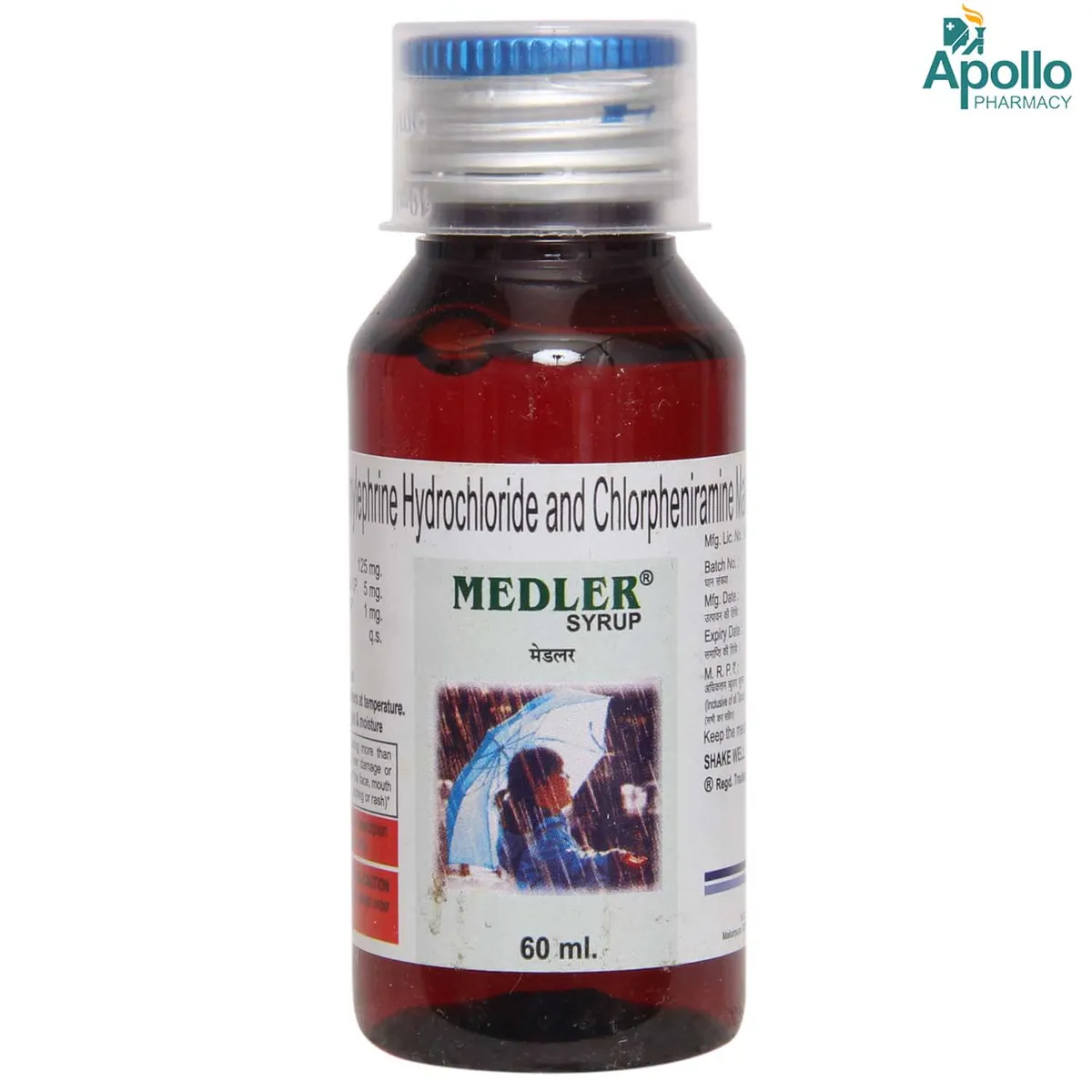
Medler Syrup is used to treat common cold and allergy. It works by relieving congestion and blocking the production of certain chemical messengers that cause allergic reactions and pain. In some cases, this medicine may cause side effects such as nausea, sleepiness, dizziness, headache, restlessness, nervousness, and insomnia. Before taking this medicine, inform the doctor if you are pregnant or breastfeeding, taking any other medication, or have any pre-existing medical conditions.

Read more
Written By Bayyarapu Mahesh Kumar , M Pharmacy
Reviewed By Dr Aneela Siddabathuni , MPharma., PhD
OffersOffers & Discounts

Get Free delivery (₹99) with circle icon

Join Circle
coupon
Get 18% Off with Coupons
coupon
Extra 10% Off with Bank Offers
bank offer
bank offer
bank offer

More about the Product

Manufacturer/Marketer :

Comed Chemicals Ltd

Consume Type :

Oral

Expires on or after :

Jan-27

Return Policy :

Not Returnable

About Medler Syrup

Medler Syrup is an oral medicine used to manage and relieve symptoms associated with the common cold, flu, sinusitis, and upper respiratory allergies. It helps treat several symptoms at once, including nasal congestion, a runny nose, sneezing, minor body aches, and fever.

You can take Medler Syrup with or without food, though taking it with a meal or a glass of milk can help prevent a mild upset stomach. Making simple lifestyle adjustments, such as drinking plenty of warm fluids and using a saline nasal spray, can further support your recovery.

While taking Medler Syrup, some individuals may experience mild side effects like drowsiness, dry mouth, or minor dizziness. However, if you experience serious side effects such as a rapid heart rate, severe dizziness, or signs of an allergic reaction, stop taking the medication and consult your doctor right away.

Talk to your doctor before taking Medler Syrup if you have pre-existing health conditions such as high blood pressure, diabetes, thyroid disease, glaucoma, or difficulty urinating due to an enlarged prostate. Do not take this if you have a history of severe liver problems or if you have taken certain antidepressant medicines, such as monoamine oxidase inhibitors (MAOIs), within the past 14 days.

This medicine can interact with alcohol, which can increase the risk of liver damage and intensify drowsiness. It may also interact with other medications like sedatives, blood pressure therapies, or other pain relievers, so it is important to discuss your current medication list with a pharmacist. If you are pregnant, breastfeeding, or an older adult, consult your doctor before using Medler Syrup to ensure it is safe for your specific situation.

Uses of Medler Syrup

Medler Syrup is used in the treatment of the Common cold and allergies. The detailed uses of Medler Syrup are as follows:

  • Common Cold and Flu: Medler Syrup helps manage and relieve multiple cold and flu symptoms, including fever, body aches, sore throat, sneezing, and a runny nose.
  • Allergic Rhinitis: It helps reduce seasonal or year-round allergy symptoms, such as itchy, watery eyes, sneezing, and nasal congestion.
  • Sinusitis and Sinus Congestion: It relieves pressure and swelling in the nasal and sinus passages, making it easier to breathe.

Key Benefits

Medler Syrup helps provide convenient multi-symptom relief by addressing several common cold, flu, and allergy symptoms in a single medicine. By combining pain-relieving, decongestant, and antihistamine actions, it helps reduce discomfort, improve breathing, and support a more comfortable recovery.

Benefits may include:

  • Helps relieve multiple cold and flu symptoms, including fever, body aches, nasal congestion, runny nose, and sneezing.
  • Reduces swelling in the nasal passages and sinuses to improve airflow and ease sinus pressure and congestion.
  • Helps control sneezing, runny nose, and watery eyes by blocking the effects of histamine.
  • Reduces throat irritation caused by frequent sneezing and nasal drainage.
  • Promotes more restful sleep by relieving bothersome cold and allergy symptoms.
  • Improves overall comfort and supports daily activities during recovery.
Side effects of Medler Syrup 60 ml
  • Get urgent medical help if you notice abnormal lung sounds with symptoms, like bluish skin, flare-ups of your nostrils, or trouble breathing.
  • If you have asthma or allergies, managing these conditions with inhalers and bronchodilators can help prevent abnormal lung sounds.
  • Infections may need antibiotics or breathing therapy to help open your airways and make breathing easier.
  • Wash your hands regularly and take other steps to avoid getting sick and spreading germs.
  • Doing breathing exercises can help improve your lung function and make breathing easier.
  • Contact your physician right away if you suffer from hypoxia symptoms including chest pain, disorientation, or shortness of breath.
  • Your doctor can monitor your progress and modify treatment programs with the help of routine follow-up sessions.
  • Omega-3 supplements may support the transport of oxygen to tissues.
  • Regular exercise improves cardiovascular health and boosts oxygen delivery to tissues.
  • Quit smoking, as it can worsen hypoxia.

Directions for Use

  • Medler Syrup can be taken with or without food. However, if it causes stomach upset, take it with food.
  • Follow your doctor's instructions on the dosage and timing of this medication.
  • Take the prescribed dose by mouth using the measuring cup/dosing syringe/dropper provided by the pack.
  • Avoid using regular household spoons, as they may not measure the dose correctly. Shake well before use.

How Medler Syrup Works

Medler Syrup contains Acetaminophen, Pseudoephedrine, and Chlorpheniramine that work together in different ways to address your symptoms: Acetaminophen acts as a pain reliever and fever reducer. It works by blocking certain chemical messengers involved in pain signalling while acting on the brain's temperature-regulating centre to reduce fever. Pseudoephedrine is a decongestant. It narrows swollen blood vessels in the nasal passages, reducing congestion and allowing air to flow more freely through the nose. Chlorpheniramine is an antihistamine. It blocks the effects of histamine, a natural chemical released during allergic reactions and some viral infections. This helps relieve sneezing, a runny nose, an itchy nose, and watery eyes.
bannner image

Alcohol

Unsafe

Avoid consumption of alcohol with Medler Syrup as it may increase the risk of liver damage and cause increased drowsiness, dizziness or difficulty concentrating. Please consult a doctor before consuming alcohol with Medler Syrup.

bannner image

Pregnancy

Caution

It is not known whether Medler Syrup is safe to be used in pregnancy. If you are pregnant, consult your doctor before taking this medicine.

bannner image

Breast Feeding

Caution

Medler Syrup may be excreted in breast milk and cause harm to the baby. Besides this, Medler Syrup may also slow milk production. Hence, if you are breastfeeding, consult your doctor before taking this medicine.

bannner image

Driving

Unsafe

Medler Syrup may cause blurred vision or impair thinking in some people. Therefore, drive only if you are alert after taking Medler Syrup.

bannner image

Liver

Caution

Medler Syrup has acetaminophen, which may causes harm to the liver in doses more than the recommended dose. Take Medler Syrup with caution, especially if you have a history of liver diseases/conditions. Your doctor may adjust the dose based on your condition.

bannner image

Kidney

Caution

Take Medler Syrup with caution, especially if you have a history of kidney diseases/conditions. Your doctor may adjust the dose based on your condition.

bannner image

Children

Caution

Medler Syrup is not recommended for children below 4 years of age as the safety and efficacy are not established.

bannner image

Heart

Unsafe

Medler Syrup is not recommended in cardiac patients due to its adverse effects. However, if prescribed extreme caution should be exercised.

bannner image

Geriatrics

Caution

Medler Syrup can be given in elderly patients with extreme caution, due to the cause of adverse effects like liver/kidney problems,or gastrointestinal problems.

What if I have taken an overdose of Medler Syrup

In case of an accidental overdose, seek immediate medical attention or contact a poison control centre right away, even if you do not feel sick. An overdose of this medication can cause serious health issues, including severe liver damage or dangerous heart and blood pressure problems.

Diet & Lifestyle Advise

  • Stay Hydrated: Drink plenty of water, herbal teas, or clear broths. This helps thin mucus in your sinuses and throat, making it easier to clear.
  • Soothe Nasal Passages: Use a cool-mist humidifier in your bedroom or take a warm, steamy shower to help relieve nasal irritation and sinus pressure.
  • Get Adequate Rest: Allow your body enough time to recover by getting plenty of physical rest, which supports your immune system in fighting the infection.
  • Avoid Alcohol: Do not drink alcohol while taking this medication, as it can worsen dehydration and increase drowsiness.
  • Reduce Irritant Exposure: Avoid tobacco smoke and other airborne irritants, as they can worsen nasal swelling, congestion, and cough symptoms.
health query

Have a query?

How Soon It Starts Working

The time required for Medler Syrup to start to work: Medler Syrup ideally shows its action within 30 to 60 minutes of administration. The time for which the effects of Medler Syrup last: Medler Syrup effect lasts for 4 to 6 hours.

What if you forget to take Medler Syrup

If you miss a dose and are taking Medler Syrup on a regular schedule, take it as soon as you remember. If it is almost time for your next scheduled dose, skip the missed dose and resume your regular timing. Do not take a double dose to make up for a missed one.

Storage

• Store Medler Syrup at room temperature, ideally between 20°C and 25°C (68°F and 77°F). Keep the medication in its original container to protect it from direct light and moisture.

Drug Warnings

  • Know When to Avoid It: Do not use this combination medicine if you are allergic to acetaminophen, pseudoephedrine, chlorpheniramine, or any of the ingredients in Medler Syrup or have taken monoamine oxidase inhibitors (MAOIs), a type of antidepressant medicine, within the last 14 days.
  • Check Other Medicines: Always check the active ingredients on the labels of other over-the-counter cough, cold, or allergy products to ensure you are not doubling up on similar medicines.
  • Use Caution While Driving: This medication can cause significant drowsiness. Avoid driving, operating heavy machinery, or performing tasks that require mental alertness until you know how Medler Syrup affects you.
  • Monitor Your Symptoms: If your symptoms do not improve within 7 days, or if they are accompanied by a high fever, skin rash, or a persistent headache, stop taking the medicine and consult your doctor.
  • Limit Caffeine Intake: Limit your intake of caffeine (such as coffee, tea, and certain sodas) while taking Medler Syrup, as caffeine can worsen feelings of nervousness or a rapid heart rate.
  • Extra Care for Older Adults: Older adults may be more sensitive to this medication. Drowsiness and dizziness can increase the risk of falls, while the pseudoephedrine component may cause a greater rise in blood pressure or heart rate. Use only under medical advice.
  • Short-Term Use Only: Do not use this combination medicine for longer than 3–7 days unless advised by your doctor. Prolonged use, particularly of the pseudoephedrine component, may worsen nasal congestion or delay appropriate treatment if symptoms persist.

Drug-Drug Interactions

verifiedApollotooltip
  • Monoamine Oxidase Inhibitors (MAOIs): Taking Medler Syrup with or within 14 days of stopping an MAOI can cause a dangerous, life-threatening spike in blood pressure.
  • Other Acetaminophen-containing products: Combining these increases the risk of accidental overdose and severe liver damage.
  • Central Nervous System Depressants: Taking Medler Syrup with sedatives, tranquillizers, or sleep aids can cause extreme drowsiness and slow breathing.
  • Blood Pressure Medications: The decongestant component in Medler Syrup may reduce the effectiveness of medications used to lower blood pressure.

Drug-Drug Interactions

Login/Sign Up

How does the drug interact with Medler Syrup 60 ml:
Co-administration of Medler Syrup 60 ml with potassium citrate can make potassium more irritating to your upper intestine and stomach.

How to manage the interaction:
Taking Medler Syrup 60 ml together with potassium citrate can result in an interaction, it can be taken if a doctor has advised it. However, if you experience severe abdominal pain, bloating, sudden dizziness or lightheadedness, nausea, vomiting (especially with blood), loss of appetite, and/or black, tarry stools, consult a doctor. Do not stop using any medications without a doctor’s advice.
How does the drug interact with Medler Syrup 60 ml:
Taking Medler Syrup 60 ml with Linezolid can cause an increase in high blood pressure.

How to manage the interaction:
Taking Medler Syrup 60 ml with Linezolid is not recommended, as it results in an interaction, it can be taken if prescribed by the doctor. However, if you experience sudden headaches, blurred vision, confusion, seizures, chest pain, nausea or vomiting, sweating, lightheadedness, fainting, sudden numbness or weakness (especially on one side of the body), speech difficulties, or fever, consult a doctor immediately. Do not stop using any medications without a doctor’s advice
How does the drug interact with Medler Syrup 60 ml:
Taking Medler Syrup 60 ml with Methylene blue can cause an increase in high blood pressure.

How to manage the interaction:
Taking Medler Syrup 60 ml with Methylene blue is not recommended, as it results in an interaction, it can be taken if prescribed by the doctor. However, if you experience sudden headaches, blurred vision, confusion, seizures, chest pain, nausea or vomiting, sweating, lightheadedness, fainting, sudden numbness or weakness (especially on one side of the body), speech difficulties, or fever, consult a doctor immediately. Do not stop using any medications without a doctor’s advice
How does the drug interact with Medler Syrup 60 ml:
Co-administration of Medler Syrup 60 ml together with Selegiline can raise blood pressure.

How to manage the interaction:
Taking Medler Syrup 60 ml with Selegiline is not recommended, as it results in an interaction, it can be taken together if prescribed by a doctor. However, consult a doctor immediately if you experience any symptoms such as severe headache, blurred vision, confusion, fits, chest pain, nausea or vomiting, sudden numbness or weakness (especially on one side of the body), speech difficulties, fever, sweating, lightheadedness, and/or fainting. Do not discontinue any medications without consulting a doctor.
How does the drug interact with Medler Syrup 60 ml:
Taking Medler Syrup 60 ml with Propofol can increase the levels of phenylephrine.

How to manage the interaction:
Taking Medler Syrup 60 ml with Propofol is not recommended, as it can lead to an interaction, but it can be taken if prescribed by the doctor. Do not discontinue the medications without consulting a doctor.
How does the drug interact with Medler Syrup 60 ml:
Co-administration of Medler Syrup 60 ml with Sevoflurane can increase the levels of phenylephrine leading to side effects.

How to manage the interaction:
Taking Medler Syrup 60 ml with Sevoflurane is not recommended, as it leads to an interaction, it can be taken if prescribed by the doctor. However, if you experience severe headaches, chest pain, dizziness, difficulty breathing, nausea, vomiting, blurred vision, or anxiety. Do not discontinue the medications without consulting a doctor.
How does the drug interact with Medler Syrup 60 ml:
Taking Medler Syrup 60 ml with Tranylcypromine can increase the risk of high blood pressure.

How to manage the interaction:
Taking Medler Syrup 60 ml with Tranylcypromine is not recommended, as it can lead to an interaction, but can be taken together if prescribed by a doctor. However, consult a doctor if you experience severe headaches, blurred vision, confusion, seizures, chest pain, nausea or vomiting, sudden numbness or weakness (especially on one side of the body), speech difficulties, fever, sweating, lightheadedness, and fainting. Do not discontinue any medications without consulting a doctor.
How does the drug interact with Medler Syrup 60 ml:
Taking Medler Syrup 60 ml with Furazolidone can cause an increase in high blood pressure.

How to manage the interaction:
Taking Medler Syrup 60 ml with Furazolidone is not recommended, as it results in an interaction, it can be taken if prescribed by the doctor. However, if you experience sudden and severe headache, blurred vision, confusion, seizures, chest pain, nausea or vomiting, sweating, lightheadedness, fainting, sudden numbness or weakness (especially on one side of the body), speech difficulties, fever, consult a doctor immediately. It is advised to use Phenylephrine only after 14 days of stopping Furazolidone. Do not stop using any medications without a doctor’s advice
How does the drug interact with Medler Syrup 60 ml:
Taking Medler Syrup 60 ml with Isoflurane may lead to increased side effects of Phenylephrine.

How to manage the interaction:
Co-administration of Medler Syrup 60 ml with Isoflurane can possibly result in an interaction, but it can be taken if a doctor has advised it. However, if you experience any unusual symptoms, consult a doctor. Do not discontinue any medications without a doctor's advice.
How does the drug interact with Medler Syrup 60 ml:
Co-administration of Medler Syrup 60 ml with Isocarboxazid can increase the risk of high blood pressure.

How to manage the interaction:
Taking Medler Syrup 60 ml with Isocarboxazid can result in an interaction, but it can be taken if your doctor has advised it. However, if you have any of these symptoms -sudden and severe headache, blurred vision, confusion, seizures, chest pain, nausea or vomiting, sudden numbness or weakness (especially on one side of the body), speech difficulties, fever, sweating, lightheadedness, and/or fainting, make sure to consult a doctor right away. Do not stop using any medications without consulting a doctor.

Drug-Food Interactions

verifiedApollotooltip
  • Alcohol: Drinking alcohol while taking Medler Syrup significantly increases the risk of liver damage and amplifies drowsiness.
  • Caffeine: Consuming high amounts of caffeine can increase restlessness, nervousness, and a rapid heart rate.
     
No Drug - Food interactions found in our database. Some may be unknown. Consult your doctor for what to avoid during medication.

Drug-Food Interactions

Login/Sign Up

Habit Forming

No

Therapeutic Class

[ANTIALLERGIC]

FAQs

Medler Syrup is used to treat symptoms of the common cold and allergies like sneezing, runny/stuffy nose, fever, headache, body pains, congestion or watery eyes.
Medler Syrup contains Acetaminophen, Pseudoephedrine, and Chlorpheniramine. Acetaminophen works by inhibiting the production of certain chemical messengers in the brain known as prostaglandins responsible for pain and fever. Pseudoephedrine works by contracting and narrowing the blood vessels. Chlorpheniramine works by blocking the action of histamine, a substance responsible for causing allergic reactions. Collectively, Medler Syrup helps to provide relief from allergy symptoms such as sneezing, running nose, watery eyes, itching, swelling and congestion or stiffness.
Yes, Medler Syrup may cause drowsiness. It is not necessary for everyone taking Medler Syrup to experience this side effect. Therefore, avoid driving or operating heavy machinery if you feel drowsy after taking Medler Syrup.
Yes, Medler Syrup contains acetaminophen, which acts as a mild pain killer (analgesic) and fever reducer (antipyretic). It works by inhibiting the production of certain chemical messengers in the brain known as prostaglandins responsible for pain and fever.
Medler Syrup contains Acetaminophen. This medicine is known to harm the liver, mainly in doses more than the recommended level. Also, avoid drinking alcohol while taking this Medler Syrup, as it may further increase your risk of liver damage.
Do not use this medicine if you have taken an MAO inhibitor in the past 14 days. A dangerous drug interaction could occur. MAO inhibitors include isocarboxazid, linezolid, phenelzine, rasagiline, selegiline and tranylcypromine.
Medler Syrup should be used with caution in patients with glaucoma. Consult your doctor for further advice.
Medler Syrup is safe when used in the dose and duration as advised by a doctor. Do not use more than the recommended dose.
You are recommended not to stop taking Medler Syrup without consulting your doctor as stopping it suddenly can cause adverse effects. Therefore, continue taking Medler Syrup for the duration prescribed and if you experience any difficulty while taking Medler Syrup, consult your doctor so that the dose may be reduced gradually.
Yes, Medler Syrup may cause drowsiness. It is optional for everyone taking Medler Syrup to experience this side effect. Therefore, avoid driving or operating heavy machinery if you feel dizzy after taking Medler Syrup.
Store Medler Syrup at a temperature below 30°C in a cool and dry place as advised on the label. Protect from light and moisture. Keep it out of reach of children.
If you are pregnant or breastfeeding, you are recommended to consult your doctor before using Medler Syrup. The safety of Medler Syrup during pregnancy is not well-established, and it may be excreted in breast milk, potentially harming the baby. Medler Syrup may reduce milk production while breastfeeding. Therefore, seek medical advice before taking Medler Syrup.
You are recommended to take Medler Syrup for as long as it is advised by your doctor for effective results. If your symptoms continue or worsen, seek further advice from your doctor.
You are recommended to consult your doctor before combining Medler Syrup with other cold or allergy treatments, as there could be potential interactions. Your doctor will advise based on your specific health condition. Do not self-medicate.
You are recommended to avoid alcohol while taking Medler Syrup, as it may cause liver damage or cause excessive drowsiness. Please, consult the doctor if you have any concerns.
If you are allergic to any ingredient in Medler Syrup, do not use Medler Syrup. Consult your doctor immediately for alternative options. Always inform your doctor about your allergies before starting any new treatment.
Medler Syrup should be avoided if you are allergic to any of its active ingredients. If you are pregnant, or breastfeeding it is essential to consult your doctor before using Medler Syrup. Always inform your healthcare provider about your medical history to ensure safe usage.
No, you should avoid drinking alcohol while taking Medler Syrup. Alcohol can increase the risk of liver damage from the pain-relieving component and can severely increase drowsiness and dizziness caused by the antihistamine. Avoid alcohol until you have completed your treatment to reduce the risk of serious side effects.
Yes, Medler Syrup contains an antihistamine component that frequently causes drowsiness. You should avoid driving, operating machinery, or performing dangerous tasks until you know how Medler Syrup affects you. If drowsiness interferes with your daily activities, ask your healthcare provider whether a different medicine may be more suitable.
You should consult your doctor first. Medler Syrup contains a decongestant that can narrow blood vessels, which may raise your blood pressure and heart rate. Your healthcare provider can determine whether Medler Syrup is appropriate based on your blood pressure control.
You must be extremely careful. Many over-the-counter medicines contain the same ingredients as Medler Syrup, particularly pain relievers. Taking them together can lead to an accidental overdose and severe liver damage. Always check the active ingredients on product labels before taking more than one cold or flu medicine.
The safety of Medler Syrup in children depends on the child's age and the specific product formulation. Never give adult formulations of Medler Syrup to young children. Always use a product that is appropriate for the child's age and follow the recommended dosing instructions carefully.
Seek medical help or call a poison control centre immediately, even if you do not feel any symptoms. An overdose of the pain-relieving component in Medler Syrup can cause delayed but severe liver damage. Do not wait for symptoms to appear, as serious liver damage may develop even when you initially feel well.

Disclaimer

While we strive to provide complete, accurate, and expert-reviewed content on our 'Platform', we make no warranties or representations and disclaim all responsibility and liability for the completeness, accuracy, or reliability of the aforementioned content. The content on our platform is for informative purposes only, and may not cover all clinical/non-clinical aspects. Reliance on any information and subsequent action or inaction is solely at the user's risk, and we do not assume any responsibility for the same. The content on the Platform should not be considered or used as a substitute for professional and qualified medical advice. Please consult your doctor for any query pertaining to medicines, tests and/or diseases, as we support, and do not replace the doctor-patient relationship.

Country of origin

INDIA

Manufacturer/Marketer address

2nd Floor, Sun Plaza-I, Nr. Vadsar Bridge, GIDC Road, Makarpura, Vadodara - 390 010
Other Info - MED0006
whatsapp Floating Button
Buy Now