apollo
0
  1. Home
  2. Medicine
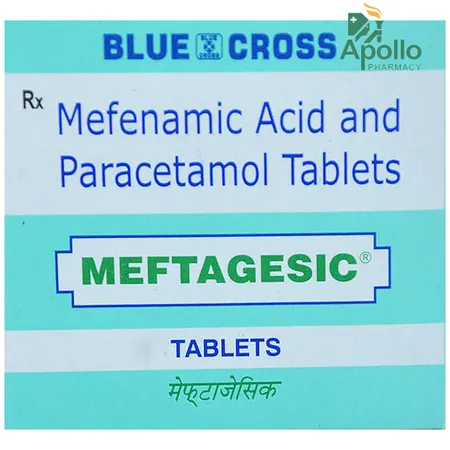
  3. Meftagesic Tablet 10's

Prescription drug
 Trailing icon
coupon
Get 18% Off with Coupons
coupon
coupon
coupon
Extra 10% Off with Bank Offers
Reviewed By Dr Aneela Siddabathuni , MPharma., PhD

Meftagesic Tablet is used to treat fever and mild to moderate pain in children. The medicine provides effective pain relief and helps improve comfort in conditions involving inflammation and fever.

Read more

Manufacturer/Marketer :

Blue Cross Laboratories Pvt Ltd

Consume Type :

Oral

Expires on or after :

Return Policy :

Not Returnable

About Meftagesic Tablet

Meftagesic Tablet is used to relieve pain and fever. It helps relieve muscle and dental pain in children. Acute pain is short-term and caused by damage to the tissues of the muscle, bone, or other organs. Chronic pain lasts for a long duration and is caused by pathologies like nerve damage, etc.

Meftagesic Tablet is a combination of mefenamic acid and paracetamol. Mefenamic acid works by blocking the effect of a chemical known as prostaglandin. Paracetamol inhibits the synthesis of a chemical messenger (prostaglandin) and promotes heat loss (through sweating).

Meftagesic Tablet may cause certain side effects in your child, such as abdominal pain, cold-like nose symptoms (in children), or diarrhoea (in children). These side effects do not require medical attention and gradually resolve over time. However, if the side effects persist or worsen, please consult your paediatrician.

Meftagesic Tablet is intended for pediatric use only. Avoid giving Meftagesic Tablet to your child if she/he is allergic to any of its components. Keep your doctor informed about your child’s health condition, including his current medications and medical history, to rule out any side effects/interactions.

Uses of Meftagesic Tablet

Meftagesic Tablet is used in the treatment of pain and fever in children. The detailed uses of Meftagesic Tablet are as follows:

  • Pain Relief: Meftagesic Tablet is commonly used to alleviate moderate to severe pain, including headaches, dental pain, and muscle aches.
  • Fever Reduction: Meftagesic Tablet can be effective in lowering fever, making it suitable for treating febrile conditions associated with various infections.

Have a query?

Directions for Use

  • Meftagesic Tablet can be given to your child with food to prevent stomach upset.
  • Typically, it is given 2-3 times a day. However, follow the doctor's instructions regarding the required dosage and timing of this medication for optimal effectiveness.
  • Shake the bottle well before each use.
  • Give your child the prescribed dose by mouth using the measuring cup/dosing syringe/dropper provided with the pack.
  • Avoid using regular household spoons, as they may not measure the dose correctly.

Key Benefits

  • Relieves pain: Helps reduce mild to moderate pain such as headache, toothache, and muscle pain.
  • Reduces fever: Helps lower high body temperature during infections.
  • Reduces inflammation: Helps decrease swelling and inflammation associated with pain.
  • Provides quick comfort: Helps improve overall comfort in conditions causing pain and fever.

How Meftagesic Tablet Works

Meftagesic Tablet is a combination medicine containing two drugs, namely, Mefenamic acid (NSAID) and Paracetamol (antipyretic). • Mefenamic acid works by blocking the effect of a chemical known as prostaglandin, which is responsible for inducing pain and inflammation in the body. • Paracetamol lowers the elevated body temperature and mild pain by inhibiting the synthesis of a chemical messenger (prostaglandin) and promoting heat loss (through sweating) that helps reset the hypothalamic thermostat.

Storage

Store in a cool and dry place away from sunlight
Side effects of Meftagesic Tablet
  • Do not consume spicy foods, caffeine, and alcohol.
  • Choose low-acid fruits and vegetables like apples, melons, and carrots.
  • Include whole grains like whole-wheat bread, oatmeal, and brown rice.
  • Limit processed meats like hotdogs and sausages.
  • Avoid fatty, spicy, or acidic salad dressings.
  • Limit tomatoes and tomato-based products.
  • Quit smoking to promote ulcer healing.
  • Adopt a balanced diet and lifestyle to reduce the risk of peptic ulcers.
Overcome Medication-Induced Nausea: A 9-Step Plan
  • Inform your doctor about the nausea and discuss possible alternatives to the medication or adjustments to the dosage.
  • Divide your daily food intake into smaller, more frequent meals to reduce nausea.
  • Opt for bland, easily digestible foods like crackers, toast, plain rice, bananas, and applesauce.
  • Avoid certain foods that can trigger nausea, such as fatty, greasy, spicy, and smelly foods.
  • Drink plenty of fluids, such as water, clear broth, or electrolyte-rich beverages like coconut water or sports drinks.
  • Use ginger (tea, ale, or candies) to help relieve nausea.
  • Get adequate rest and also avoid strenuous activities that can worsen nausea.
  • Talk to your doctor about taking anti-nausea medication if your nausea is severe.
  • Record when your nausea occurs, what triggers it, and what provides relief to help you identify patterns and manage your symptoms more effectively.
To prevent, manage, and treat Constipation caused by medication usage, follow these steps:
  • Preventing Vomiting (Before it Happens)
  • Take medication exactly as prescribed by your doctor. This can help minimize side effects, including vomiting.
  • Having a small meal before taking your medication can help reduce nausea and vomiting.
  • Talk to your doctor about taking anti-nausea medication along with your prescribed medication.
  • Managing Vomiting (If it Happens)
  • Try taking ginger in the form of tea, ale, or candy to help alleviate nausea and vomiting.
  • What to Do if Vomiting Persists
  • Consult your doctor if vomiting continues or worsens, consult the doctor for guidance on adjusting your medication or additional treatment.
Here are the precise steps to cope with diarrhoea caused by medication usage:
  • Inform Your Doctor: Notify your doctor immediately about your diarrhoea symptoms. This allows them to adjust your medication or provide guidance on managing side effects.
  • Stay Hydrated: Drink plenty of fluids to replace lost water and electrolytes. Choose water, clear broth, and electrolyte-rich drinks. Avoid carbonated or caffeinated beverages to effectively rehydrate your body.
  • Follow a Bland Diet: Eat easy-to-digest foods to help firm up your stool and settle your stomach. Try incorporating bananas, rice, applesauce, toast, plain crackers, and boiled vegetables into your diet.
  • Avoid Trigger Foods: Steer clear of foods that can worsen diarrhoea, such as spicy, fatty, or greasy foods, high-fibre foods, and dairy products (especially if you're lactose intolerant).
  • Practice Good Hygiene: Maintain good hygiene to prevent the spread of infection. To stay healthy, wash your hands frequently, clean and disinfect surfaces regularly, and avoid exchanging personal belongings with others.
  • Take Anti-Diarrheal Medications: If your doctor advises, anti-diarrheal medications such as loperamide might help manage diarrhoea symptoms. Always follow your doctor's directions.
  • Keep track of your diarrhoea symptoms. If they don't get better or worse or are accompanied by severe stomach pain, blood, or dehydration signs (like extreme thirst or dark urine), seek medical help.
Here are the steps to manage Gastrointestinal Air and Swelling (GAS) caused by medication:
  • Tell your doctor about your GAS symptoms. They may change your medication regimen or prescribe additional drugs to help you manage them.
  • To manage GAS symptoms, eat a balanced diet of fibre, vegetables, and fruits.
  • Drink enough water throughout the day to avoid constipation and treat GAS symptoms.
  • Regular exercise like yoga and walking may help stimulate digestion and alleviate GAS symptoms.
  • Take probiotics only if your doctor advises, as they may help alleviate GAS symptoms by promoting gut health.
  • Take medication for GAS symptoms only if your doctor advises, as certain medications can interact with your existing prescriptions or worsen symptoms.
  • If symptoms persist, worsen, or are accompanied by severe abdominal pain, vomiting, or bleeding, seek immediate medical attention.
Here are the steps to cope with constipation as a side effect of medication:
  • Inform your doctor about your constipation symptoms. They may adjust your medication or advise alternative treatments.
  • Stay hydrated by drinking sufficient of water (at least 8-10 glasses a day) to help soften stool and promote bowel movements.
  • Increase fibre intake by eating foods high in fibre, such as fruits, whole grains, vegetables and legumes, to help bulk up the stool.
  • Establish a bowel routine by trying to go to the bathroom at the same time each day to train your bowels.
  • Engaging in regular exercise, like walking or yoga, can support in bowel movement stimulation.
  • Consult your doctor if constipation persists, and discuss alternative treatments or adjustments to your medication.

What if I have taken an overdose of Meftagesic Tablet

In case the child accidentally takes an overdose of Meftagesic Tablet than prescribed and shows some signs of unwanted side effects such as CNS toxicity, especially convulsions, it is necessary to take the patient to an emergency department at the nearest medical facility to receive treatment. Timely medical support helps patients overcome dangerous situations.

Drug Warnings

  • Avoid giving Meftagesic Tablet to your child if they are allergic to it.
  • Keep your paediatrician informed about your child’s health condition, including their previous medications and medical history, to rule out any side effects or interactions.
  • Before administration, inform the paediatrician about all the OTC medicines, including other vitamin supplements, that your child is taking.
  • It is advised not to exceed the prescribed dose of medicine.
  • Also, inform your doctor if your child has liver or kidney-related issues before administration.
  • Meftagesic Tablet is intended for use by children. Hence, adults, pregnant women, and breastfeeding mothers should avoid taking this medicine.

Drug-Drug Interactions

verifiedApollotooltip

Drug-Drug Interactions

Login/Sign Up

How does the drug interact with Meftagesic Tablet:
Coadministration of Meftagesic Tablet with Ketorolac can increase the risk or severity of gastric bleeding and ulcers.

How to manage the interaction:
Taking Meftagesic Tablet with Ketorolac together can result in an interaction, it can be taken if your doctor has advised it. However, if you notice any unusual bleeding or bruising, other signs of bleeding, dizziness, lightheadedness, red or black tarry stools, coughing up or vomiting blood, severe headache, and weakness, you should contact a doctor immediately. Do not stop using any medications without talking to a doctor.
How does the drug interact with Meftagesic Tablet:
Co-administration of Meftagesic Tablet with Meloxicam together can increase the risk or severity of bleeding.

How to manage the interaction:
Taking Meftagesic Tablet with Meloxicam together is generally avoided as it can result in an interaction, it can be taken if a doctor has advised it. However, if you notice any unusual bleeding or bruising, other signs of bleeding, dizziness, lightheadedness, red or black tarry stools, coughing up or vomiting blood, severe headache, and weakness, you should contact a doctor immediately. Do not stop using any medications without talking a doctor.
How does the drug interact with Meftagesic Tablet:
Coadministration of Meftagesic Tablet with Rivaroxaban can increase the risk or severity of gastric bleeding, ulceration, and rarely, perforation leading to serious blood loss.

How to manage the interaction:
Taking Meftagesic Tablet with Rivaroxaban together can result in an interaction, it can be taken if your doctor has advised it. However, if you notice any unusual bleeding or bruising, other signs of bleeding, dizziness, lightheadedness, red or black tarry stools, coughing up or vomiting blood, severe headache, and weakness, you should contact a doctor immediately. Do not stop using any medications without talking to a doctor.
How does the drug interact with Meftagesic Tablet:
Coadministration of Meftagesic Tablet with Leflunomide can increase the risk or severity of liver disease.

How to manage the interaction:
Taking Meftagesic Tablet with Leflunomide together can result in an interaction, it can be taken if your doctor has advised it. However, if you notice any symptoms of fever, chills, joint pain or swelling, unusual bleeding or bruising, skin rash, itching, loss of appetite, fatigue, nausea, vomiting, dark-colored urine, light-colored stools, and/or yellowing of the skin or eyes, you should contact a doctor immediately. Do not stop using any medications without talking to a doctor.
How does the drug interact with Meftagesic Tablet:
Co-administration of Meftagesic Tablet with Flurbiprofen can increase the risk or severity of gastric bleeding, ulceration, and rarely, perforation leading to serious blood loss.

How to manage the interaction:
Taking Meftagesic Tablet with Flurbiprofen together can result in an interaction, it can be taken if your doctor has advised it. However, if you notice any symptoms of dizziness, lightheadedness, unusual bleeding or bruising, red or black tarry stools, coughing up or vomiting blood, severe headache, and weakness, you should contact a doctor immediately. Do not stop using any medications without talking to a doctor.
How does the drug interact with Meftagesic Tablet:
Coadministration of Meftagesic Tablet with Naproxen can increase the risk or severity of stomach bleeding, ulceration, and rarely, perforation leading to serious blood loss.

How to manage the interaction:
Taking Meftagesic Tablet with Naproxen together can result in an interaction, it can be taken if your doctor has advised it. However, if you notice any unusual bleeding or bruising, other signs of bleeding, dizziness, lightheadedness, red or black tarry stools, coughing up or vomiting blood, severe headache, and weakness, you should contact a doctor immediately. Do not stop using any medications without talking to a doctor.
How does the drug interact with Meftagesic Tablet:
The combined use of Indometacin and Meftagesic Tablet can increase the risk of side effects in the gastrointestinal tract such as inflammation, bleeding, ulceration, and rarely, perforation.

How to manage the interaction:
Taking Indometacin with Meftagesic Tablet together can result in an interaction, but it can be taken if your doctor has advised it. However, if you experience unusual bleeding or bruising, dizziness, lightheadedness, red or black, tarry stools, coughing up or vomiting fresh or dried blood that looks like coffee grounds, severe headache, and weakness, consult a doctor. Do not stop using any medications without a doctor's advice.
How does the drug interact with Meftagesic Tablet:
The combined use of Meftagesic Tablet and Tenofovir alafenamide can increase the risk of kidney problems.

How to manage the interaction:
Taking Meftagesic Tablet and Tenofovir alafenamide together can lead to an interaction, it can be taken if advised by your doctor. However, if you experience any symptoms like nausea, vomiting, loss of appetite, increased or decreased urination, sudden weight gain or weight loss, fluid retention, swelling, shortness of breath, bone pain, muscle cramps, tiredness, weakness, dizziness, confusion, and irregular heart rhythm, contact a doctor immediately. Do not discontinue any medications without consulting a doctor.
How does the drug interact with Meftagesic Tablet:
Meftagesic Tablet and Apixaban co-administration may raise the risk of bleeding.

How to manage the interaction:
Even though combining Meftagesic Tablet and Apixaban may cause an interaction, it is still possible to take it if your doctor advises you to. Consult a doctor if you experience symptoms like blood in your urine or stool (or a black stool), severe bruising, prolonged nosebleeds, feeling dizzy or lightheaded, weakness or severe headache, vomiting blood or coughing up blood, heavy menstrual bleeding (in women), difficulty breathing, or chest pain. Without first consulting your doctor, never stop taking any medications.
How does the drug interact with Meftagesic Tablet:
Combining Meftagesic Tablet with Enoxaparin can increase the risk of bleeding and hemorrhage.

How to manage the interaction:
Although there is a possible interaction between Meftagesic Tablet and Enoxaparin, you can take these medicines together if prescribed by your doctor. If you notice any symptoms like bleeding, bruising, swelling, vomiting, headache, dizziness, weakness, or blood in your urine or stool, make sure to contact a doctor immediately. Do not stop using any medications without talking to a doctor.

Drug-Food Interactions

verifiedApollotooltip
No Drug - Food interactions found in our database. Some may be unknown. Consult your doctor for what to avoid during medication.

Drug-Food Interactions

Login/Sign Up

Diet & Lifestyle Advise

Diet

  • Include food rich in antioxidants, such as berries, spinach, kidney beans, dark chocolate, etc in your child's diet.
  • Make your child to drink more fluids to avoid dehydration.
  • Eat a balanced diet that includes fruits, vegetables, and whole grains to support better recovery.

Lifestyle changes

  • Sleeping for 7-9 hours each night can help your child stay fit and safe.
  • Allow light activities only and avoid strenuous play until the child feels better.

Habit Forming

No

Therapeutic Class

[ANALGESIC AND ANTIPYRETIC AGENT]

All Substitutes & Brand Comparisons

bannner image

Alcohol

Not applicable

-

bannner image

Pregnancy

Not applicable

-

bannner image

Breast Feeding

Not applicable

-

bannner image

Driving

Not applicable

-

bannner image

Liver

Consult your doctor

Please consult your doctor if your child has a liver impairment or if you have any concerns regarding this.

bannner image

Kidney

Consult your doctor

Please consult your doctor if your child has a kidney impairment or if you have any concerns regarding this.

bannner image

Children

Safe if prescribed

Meftagesic Tablet is safe for children over 6 months of age when prescribed by a doctor. Your paediatrician will decide the dose of the medicine. Do not give your child more than the recommended dose.

bannner image

Heart

Consult your doctor

If your child has a heart condition, Meftagesic Tablet should only be given under a doctor’s supervision.

bannner image

Geriatrics

Not applicable

Meftagesic Tablet is specifically for children's use and is not meant for geriatric patients.

FAQs

Meftagesic Tablet is used to treat Pain and Fever.

Mefenamic acid (NSAID) and Paracetamol (antipyretic). Mefenamic acid works by blocking the effect of a chemical known as prostaglandin, which is responsible for inducing pain and inflammation in our body. Paracetamol lowers elevated body temperature and mild pain by inhibiting the synthesis of a chemical messenger (prostaglandin) and promoting heat loss (through sweating).

Meftagesic Tablet can cause diarrhea as a side effect in some children. If your child has diarrhea that is watery or bloody, call your doctor. Do not use anti-diarrhea medicine unless your paediatrician tells you to.

The side effects of Meftagesic Tablet include nausea, indigestion, stomach pain and diarrhoea. If these side effects persist or worsen, please consult your doctor.

Yes, Meftagesic Tablet is safe to use in the prescribed dose and duration. The patient should follow the doctor’s recommendations.

Meftagesic Tablet is generally used for short term and can be stopped when the pain is relieved. However, it should be continued for as long as it is advised by your doctor.

Yes, the use of Meftagesic Tablet can cause nausea and vomiting. Taking it with food, milk, or antacids can avoid nausea. Avoid giving your child fried or fatty foods along with Meftagesic Tablet . If vomiting occurs, let your child drink plenty of water or other fluids by taking small and frequent sips. If vomiting persists and if you notice signs of dehydration, such as a low frequency of urination and dark colored and strong-smelling urine, consult your doctor. Do not give any other medicine to your child without consulting your doctor.

Meftagesic Tablet is contraindicated in patients with known allergy to painkillers (NSAIDS) or any of the components or excipients of this medicine. Also, let the doctor know if the patient has kidney or liver disease.

You are recommended to consult your doctor before giving Meftagesic Tablet to your child with vitamin B-complex or other supplements.

Yes, the long-term use of Meftagesic Tablet can cause damage to the kidneys. Normal kidneys produce prostaglandins, a chemical that protects them from damage. Long-term use of painkillers lowers the prostaglandin levels in the body, leading to kidney damage. Therefore, painkillers are not recommended for patients with underlying kidney disease.

No, taking higher than the recommended dose of Meftagesic Tablet may increase the risk of side effects such as nausea, vomiting, indigestion, heartburn, diarrhoea and can also harm the kidneys when used for an extended period of time. If your child's pain is not relieved by the recommended doses or if your child experiences increased severity of pain, please consult your doctor.

Store Meftagesic Tablet below 25°C. Protect from light. Keep it out of reach and sight of children.

Country of origin

India

Manufacturer/Marketer address

Peninsula Chambers, Peninsula Corporate Park, G.K Marg, Lower Parel (West), Mumbai - 400013, Maharashtra, INDIA.
Other Info - MEF0046

Disclaimer

While we strive to provide complete, accurate, and expert-reviewed content on our 'Platform', we make no warranties or representations and disclaim all responsibility and liability for the completeness, accuracy, or reliability of the aforementioned content. The content on our platform is for informative purposes only, and may not cover all clinical/non-clinical aspects. Reliance on any information and subsequent action or inaction is solely at the user's risk, and we do not assume any responsibility for the same. The content on the Platform should not be considered or used as a substitute for professional and qualified medical advice. Please consult your doctor for any query pertaining to medicines, tests and/or diseases, as we support, and do not replace the doctor-patient relationship.

Author Details

Doctor imageWe provide you with authentic, trustworthy and relevant information

whatsapp Floating Button
Buy Now
Add to Cart