
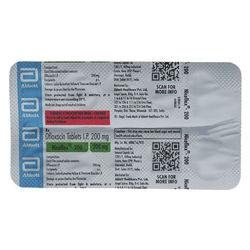

Nicoflox 200 mg Tablet 10's
₹62.4
MRP ₹113.545% off
 ₹6.0Cashback (10%)
(Inclusive of all Taxes)
₹45 with coupons & bank offers*
 Offers & Discounts
Get Free delivery (₹99) with


Delivery Information
More about the Product
Composition :
Manufacturer/Marketer :
Consume Type :
Expires on or after :
Return Policy :
About Nicoflox 200 mg Tablet 10's
Nicoflox 200 mg Tablet 10's is a prescription medication used to treat a variety of bacterial infections in the body. It belongs to a class of medicines called fluoroquinolone antibiotics, which work by stopping the growth of harmful bacteria. Doctors commonly prescribe it for infections of the urinary tract, lungs, prostate, and skin.
To clear your infection completely, you must take Nicoflox 200 mg Tablet 10's regularly at the exact times prescribed by your doctor, even if you start feeling better. It is usually taken once or twice daily and can be taken with or without food.
Do not take Nicoflox 200 mg Tablet 10's at the same time as dairy products, calcium-fortified foods, antacids, or mineral supplements, as they can reduce how much medicine your body absorbs. Take Nicoflox 200 mg Tablet 10's at least 2 hours before or 2 hours after these products. Staying well-hydrated by drinking plenty of water during your treatment is a highly helpful lifestyle habit that supports your kidneys while taking this medicine.
While taking Nicoflox 200 mg Tablet 10's, you might experience mild side effects like nausea, diarrhoea, or headache. However, you must contact your doctor immediately if you experience serious issues such as severe joint or tendon pain, numbness, tingling, or sudden changes in your mood or sleep patterns.
Talk to your doctor before taking Nicoflox 200 mg Tablet 10's if you have a history of tendon problems, nerve disorders, kidney disease, or myasthenia gravis. Do not take this medicine if you have ever had a severe allergic reaction to similar antibiotics, or if you have a history of tendon swelling or tearing caused by this class of drugs.
This medicine can interact with multivitamin supplements, antacids containing magnesium or aluminium, and iron pills, which can stop your body from absorbing the medicine properly. You should also limit alcohol intake as it can worsen dizziness, and consult your doctor if you are pregnant, breastfeeding, or over the age of 65 before starting treatment.
Uses of Nicoflox 200 mg Tablet 10's
Nicoflox 200 mg Tablet 10's may be prescribed to treat the following bacterial infections:
- Urinary tract infections (UTIs): Nicoflox 200 mg Tablet 10's helps clear bacterial infections of the bladder and kidneys by stopping the bacteria from multiplying.
- Respiratory tract infections: It treats lung infections like bacterial bronchitis and pneumonia by targeting and eliminating the responsible bacteria.
- Prostate infections: It penetrates prostate tissue effectively to resolve long-term or sudden bacterial inflammation of the prostate gland.
- Skin and soft tissue infections: It destroys bacteria causing deep or superficial skin infections, helping your skin heal.
Key Benefits
Nicoflox 200 mg Tablet 10's helps treat bacterial infections and supports recovery in several ways:
- Treats Bacterial Infections: Effectively targets and eliminates bacteria responsible for a variety of infections.
- Relieves Infection Symptoms: Helps reduce symptoms such as pain, fever, burning during urination, coughing, and other infection-related discomforts.
- Promotes Faster Recovery: By controlling bacterial growth, it helps the body recover more quickly and return to normal daily activities.
- Prevents Infection Progression: Helps stop the spread and worsening of bacterial infections when taken as prescribed.
- Reduces the Risk of Recurrence: Completing the full course of treatment helps ensure that harmful bacteria are eliminated and may reduce the risk of the infection returning or developing antibiotic resistance.
- Drink water or other clear fluids.
- To prevent worsening of pain, limit intake of tea, coffee, or alcohol.
- Include bland foods like rice, toast, crackers, and rice in your diet.
- Avoid lying down immediately after eating as it may cause indigestion or heartburn.
- Avoid acidic and spicy food as it may cause indigestion.
- Chest pain may last for a while and needs immediate medical attention as it is a significant health issue to be attended to.
- Take rest and refrain from doing physical activity for a while, and restart after a few days.
- Try applying an ice pack to the strained area for at least 20 minutes thrice a day. Ice pack thus helps reduce inflammation.
- Sit upright and maintain proper posture if there is persistent chest pain. • Use extra pillows to elevate your position and prop your chest up while sleeping.
- Inform your doctor about dry mouth symptoms. They may adjust your medication regimen or prescribe additional medications to manage symptoms.
- Drink plenty of water throughout the day to help keep your mouth moist and alleviate dry mouth symptoms.
- Chew sugar-free gum or candies to increase saliva production and keep your mouth moisturized.
- Use saliva substitutes, such as mouthwashes or sprays, only if your doctor advises them to help moisturize your mouth and alleviate dry mouth symptoms.
- Avoid consuming smoking, alcohol, spicy or acidic foods, and other irritants that may aggravate dry mouth symptoms.
- Schedule regular dental check-ups to keep track of your oral health and handle any dry mouth issues as they arise.
- Regularly brush and floss your teeth.
- Rinse your mouth with water and baking soda a solution to neutralize acid in the mouth. This makes your food taste as it should.
- Drink plenty of water or non-caffeinated drinks to prevent dry mouth which may lead to altered taste.
- Try ginger, peppermint, fruit or green teas, lemonade, ginger ale or fruit juice to help mask unpleasant tastes.
- Try sucking on sugar-free ice pops or ice cubes to prevent dry mouth.
- Rest well; get enough sleep.
- Eat a balanced diet and drink enough water.
- Manage stress with yoga and meditation.
- Limit alcohol and caffeine.
- Physical activities like walking or jogging might help boost energy and make you feel less tired.
- Wear cotton underwear and loose pants to facilitate better airflow.
- Try meditation and yoga to reduce stress and improve balance hormones.
- Eat foods like yogurt or kefir to support vaginal health.
- Gently clean the genital area with soap and lukewarm water.
- Avoid fragrant soap, bubble baths, and douches; these can also irritate.
- Tell your doctor about any medications or supplements you’re taking, as they may affect vaginal discharge treatments.
Directions for Use
To use Nicoflox 200 mg Tablet 10's safely and effectively, follow these instructions:
- Swallow the tablet whole with a full glass of water. Do not crush, chew, or break the tablet.
- You can take this medicine with or without food, but try to take it at the same times each day to keep a constant level of medicine in your body.
- Avoid taking this medicine at the same time as antacids, iron supplements, multivitamins, or dairy products (like milk or yoghurt), as they can block its absorption. Take Nicoflox 200 mg Tablet 10's either 2 hours before or 2 hours after these substances.
- Drink plenty of fluids throughout the day while taking this medicine to protect your kidneys.
Always follow your doctor's exact instructions regarding the duration of your treatment. Even if your symptoms disappear, continue taking the medication until the full prescribed course is finished.
How Nicoflox 200 mg Tablet 10's Works

Alcohol
Unsafe
Alcohol is not known to cause any unpleasant side effects if taken along with Nicoflox 200 mg Tablet 10's. But intake of alcohol with Nicoflox 200 mg Tablet 10's may damage your liver. So intake of Nicoflox 200 mg Tablet 10's should be avoided with Nicoflox 200 mg Tablet 10's.

Pregnancy
Unsafe
Nicoflox 200 mg Tablet 10's is a pregnancy Category C medicine. It is not known whether Nicoflox 200 mg Tablet 10's will affect pregnant women or fetus or not. Hence, the intake of Nicoflox 200 mg Tablet 10's should be avoided if you are pregnant or planning to become pregnant as it may harm the baby.

Breast Feeding
Caution
Nicoflox 200 mg Tablet 10's is excreted in human milk. But the amount of Nicoflox 200 mg Tablet 10's absorbed by the nursing infant is unknown. So, it should not be taken while breastfeeding.

Driving
Caution
Nicoflox 200 mg Tablet 10's can affect alertness and coordination. So, operating machinery which requires concentration should be avoided.

Liver
Caution
Nicoflox 200 mg Tablet 10's to be taken with caution, especially if you have a history of liver diseases/conditions. Your doctor may have to adjust the dose if there are symptoms of nausea, vomiting, loss of appetite, dark-colored urine, yellowing of or skin/eye.

Kidney
Caution
Nicoflox 200 mg Tablet 10's to be taken with caution, especially if you have a history of Kidney diseases/conditions. The dose may have to be adjusted by your doctor.

Children
Safe if prescribed
Nicoflox 200 mg Tablet 10's can be given to children but under child specialist medical supervision. Nicoflox 200 mg Tablet 10's is prescribed to the children to treat complicated urinary tract infections, anthrax infection, or plague infection.

Heart
Consult your doctor
Please consult your doctor before using Nicoflox 200 mg Tablet 10's if you have pre-existing heart problems. Your doctor will prescribe Nicoflox 200 mg Tablet 10's if the benefits outweigh the risks.

Geriatrics
Consult your doctor
Please consult a doctor before giving Nicoflox 200 mg Tablet 10's to geriatric patients. Your doctor will prescribe Nicoflox 200 mg Tablet 10's if the benefits outweigh the risks.
What if I have taken an overdose of Nicoflox 200 mg Tablet 10's
Diet & Lifestyle Advise
- Stay well-hydrated: Drink 8 to 10 glasses of water daily to help prevent the medicine from forming crystals in your urine.
- Avoid direct sunlight: This medicine makes your skin highly sensitive to UV rays. Wear protective clothing, hats, and a broad-spectrum sunscreen when outdoors, and avoid tanning beds.
- Separate calcium and dairy: Do not eat calcium-rich foods (like milk, yoghurt, or calcium-fortified juices) at the same time as Nicoflox 200 mg Tablet 10's, as they significantly lower the medicine's effectiveness.
- Rest your joints: Avoid strenuous exercise or heavy lifting during your treatment, as fluoroquinolone medicines can weaken tendons and increase the risk of injury.
Health Queries


Have a query?
How Soon It Starts Working
The time required for Nicoflox 200 mg Tablet 10's to start to work: Nicoflox 200 mg Tablet 10's ideally shows its action within 1 to 2 hours after administration. The time for which the effects of Nicoflox 200 mg Tablet 10's last: The effect of Nicoflox 200 mg Tablet 10's lasts for 2 days.
What if you forget to take Nicoflox 200 mg Tablet 10's
Storage
- Store Nicoflox 200 mg Tablet 10's at controlled room temperature, ideally between 20°C and 25°C (68°F to 77°F).
- Keep the medication in its original container, tightly closed, to protect it from direct light, heat, and moisture.
Drug Warnings
- Check your tendons: Stop taking Nicoflox 200 mg Tablet 10's immediately and contact your doctor if you experience sudden pain, snapping, or swelling in a tendon or joint.
- Watch for nerve pain: Discontinue the medicine and alert your healthcare provider if you experience numbness, tingling, or a 'pins and needles' sensation in your hands or feet.
- Inspect the tablets: Always inspect your tablets before taking them; do not use them if the packaging is damaged, or if the tablets are discoloured or crumbling.
- Monitor your blood sugar: If you have diabetes, monitor your blood sugar closely, as this medicine can cause sudden shifts in blood glucose levels.
- Avoid driving if dizzy: Do not drive, operate machinery, or perform tasks requiring mental alertness until you know how this medication affects you.
Drug-Drug Interactions


Drug-Drug Interaction Summary:
Inform your doctor if you are taking any of the following medicines, as they may interact with Nicoflox 200 mg Tablet 10's:
- Antacids, iron, and zinc supplements: Taking these alongside Nicoflox 200 mg Tablet 10's can bind the antibiotic in your gut, severely reducing how much of the medicine your body absorbs.
- Blood thinners (like warfarin): Combining these can increase the effect of the blood thinner, raising your risk of bleeding.
- Nonsteroidal anti-inflammatory drugs (NSAIDs): Taking painkillers like ibuprofen with Nicoflox 200 mg Tablet 10's can increase the risk of central nervous system stimulation and seizures.
- Diabetes medications: Can interact to cause unpredictable shifts in blood sugar levels, increasing the risk of low blood sugar.
Drug-Drug Interactions
Login/Sign Up
Coadministration of Nicoflox 200 mg Tablet with Sotalol can increase the risk or severity of irregular heart rhythms.
How to manage the interaction:
Taking Nicoflox 200 mg Tablet with Sotalol together is generally avoided as it can result in an interaction, it can be taken if a doctor has advised it. If you experience sudden dizziness, lightheadedness, fainting, shortness of breath, chest pain or tightness, rapid heartbeat, or memory loss, contact a doctor. Do not discontinue any medications without consulting a doctor.
Coadministration of Nicoflox 200 mg Tablet with Cisapride can increase the risk or severity of irregular heart rhythms.
How to manage the interaction:
Taking Nicoflox 200 mg Tablet with Cisapride together can result in an interaction, it can be taken if your doctor has advised it. However, if you experience sudden dizziness, lightheadedness, fainting, shortness of breath, chest pain or tightness, rapid heartbeat, or memory loss, contact a doctor immediately. Do not discontinue any medications without consulting a doctor. Note: Cisapride is no longer available on the market. Cisapride should only be taken if prescribed by a doctor and closely monitored.
Coadministration of Nicoflox 200 mg Tablet with Saquinavir can increase the risk or severity of irregular heart rhythms.
How to manage the interaction:
Taking Nicoflox 200 mg Tablet with Saquinavir together is generally avoided as it can result in an interaction, it can be taken if your doctor has advised it. However, if you experience sudden dizziness, lightheadedness, fainting, shortness of breath, chest pain or tightness, rapid heartbeat, or memory loss, contact a doctor immediately. Do not discontinue any medications without consulting a doctor.
Coadministration of Nicoflox 200 mg Tablet with Dronedarone can increase the risk or severity of irregular heart rhythm.
How to manage the interaction:
Taking Nicoflox 200 mg Tablet with Dronedarone together can result in an interaction, it can be taken if your doctor has advised it. However, if you experience sudden dizziness, lightheadedness, fainting, shortness of breath, chest pain or tightness, rapid heartbeat, or memory loss, contact a doctor immediately. Do not discontinue any medications without consulting a doctor.
The combination of Amiodarone and Nicoflox 200 mg Tablet may significantly increase the risk of an abnormal heart rhythm.
How to manage the interaction:
Although Amiodarone and Nicoflox 200 mg Tablet interact, it can be taken if prescribed by a doctor. If you get dizziness, lightheadedness, fainting, or fast or racing heartbeats, consult a doctor. Do not stop taking any medications without consulting a doctor.
Coadministration of Nicoflox 200 mg Tablet with Pimozide can increase the risk or severity of irregular heart rhythms.
How to manage the interaction:
Taking Nicoflox 200 mg Tablet with Pimozide together can result in an interaction, it can be taken if your doctor has advised it. However, if you experience sudden dizziness, lightheadedness, fainting, shortness of breath, chest pain or tightness, rapid heartbeat, or memory loss, contact a doctor immediately. Do not discontinue any medications without consulting a doctor.
Using bepridil together with Nicoflox 200 mg Tablet drugs can increase the risk of an irregular heart rhythm that may be serious.
How to manage the interaction:
Taking Nicoflox 200 mg Tablet with Bepridil can cause an interaction, please consult your doctor before taking it. You should seek immediate medical attention if you develop sudden dizziness, lightheadedness, fainting, or fast or pounding heartbeats. Do not stop using any medications without consulting a doctor.
Coadministration of Nicoflox 200 mg Tablet with Disopyramide can increase the risk of irregular heart rhythms.
How to manage the interaction:
Taking Nicoflox 200 mg Tablet with Disopyramide together is not recommended as it can result in an interaction, it can be taken if your doctor has advised it. However, if you experience sudden dizziness, lightheadedness, fainting, shortness of breath, or rapid heartbeat, contact a doctor immediately. Do not discontinue any medications without consulting a doctor.
Coadministration of Nicoflox 200 mg Tablet with Ziprasidone can increase the risk or severity of irregular heart rhythm.
How to manage the interaction:
Taking Nicoflox 200 mg Tablet with Ziprasidone together can result in an interaction, it can be taken if your doctor has advised it. However, if you experience sudden dizziness, lightheadedness, fainting, shortness of breath, chest pain or tightness, rapid heartbeat, or memory loss, contact a doctor immediately. Do not discontinue any medications without consulting a doctor.
Coadministration of Nicoflox 200 mg Tablet with Thioridazine can increase the risk or severity of irregular heart rhythms.
How to manage the interaction:
Taking Nicoflox 200 mg Tablet with Thioridazine together is generally avoided as it can result in an interaction, it can be taken if your doctor has advised it. However, if you experience sudden dizziness, lightheadedness, fainting, shortness of breath, chest pain or tightness, rapid heartbeat, or memory loss, contact a doctor immediately. Do not discontinue any medications without consulting a doctor.
Drug-Food Interactions
Drug-Food Interaction Summary:
Certain foods and beverages may affect how Nicoflox 200 mg Tablet 10's works or increase the risk of side effects:
- Dairy products and calcium-fortified foods: Consuming these alone with the medicine can block its absorption, making the treatment less effective.
- Caffeine: This medicine can slow down how your body processes caffeine, leading to increased jitteriness, a rapid heartbeat, or sleep issues.
Drug-Food Interactions
Login/Sign Up
Avocado, Beetroot, Cereals, Cheese, Chicken, Black Beans, Eggs, Clams, Chickpea, Whole Grains, Shellfish, Spinach, Salmon, Red Meat, Oysters, Potatoes, Kidney Beans, Mackerel, Milk, Kale, Tuna, Yogurt, Liver, Low-Fat Milk, Trout, Fortified Breakfast Cereal, Fish, Beef
How to manage the interaction:
Nicoflox 200 mg Tablet and a multivitamin with minerals should not be taken together orally. Products containing magnesium, aluminium, calcium, iron, or other minerals may decrease the effects of Nicoflox 200 mg Tablet. If at all possible, avoid taking multivitamins containing minerals while receiving Nicoflox 200 mg Tablet treatment. Do not discontinue any medications without first consulting your doctor.


FAQs
Disclaimer
Author Details


Reference
- MedlinePlus. A691005 Patient Information Monograph. Bethesda, MD: U.S. National Library of Medicine (NLM); 2025. [Accessed on 02 Jun. 2026]Check here
- Drugs.com Clinical Review Team. Ofloxacin Clinical Drug Monograph. Auckland, NZ: Drugs.com; 2026. [Accessed on 02 Jun. 2026]Check here
- Ofloxacin [EMC SmPC]. 2016. [Accessed on 01 Apr. 2019]Check here
- Ofloxacin [Prescribing Information]. 2008. [Accessed on 01 Apr. 2019]Check here
- David G. Bailey, George Dresser and J. Malcolm O. Arnold, MB. National Library of Medicine (NIH). Grapefruit–medication interactions: Forbidden fruit or avoidable consequences. [Revised in 18th October 2018] [Accessed on 3rd May 2022]Check here
- Cologne, Germany: Institute for Quality and Efficiency in Health Care (IQWiG). National Library of Medicine (NIH). Using medication: Using antibiotics correctly and avoiding resistance. [Revised in 13th December 2013] [Accessed on 3rd May 2022]Check here
- Gerard Laboratories. Electronic Medicines Compendium (EMC). [Revised in November 2021] [Accessed on 3rd May 2022]Check here
Country of origin
Manufacturer/Marketer address
Therapeutic Class
Habit Forming

