apollo
logo
0
Not for online sale
prescription
Prescription Medicine
info
Best Price

₹83 with coupons & bank offers*

View

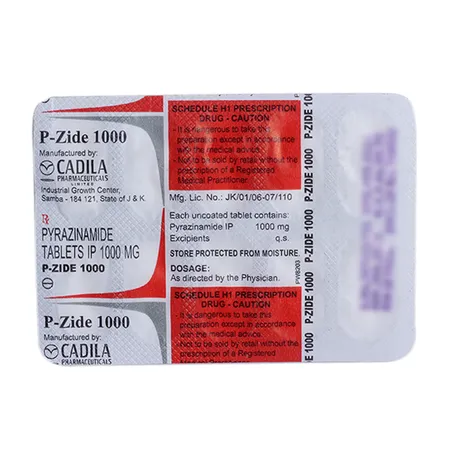
P-Zide 1000 Tablet is used to treat and prevent tuberculosis. It contains Pyrazinamide which converts a special enzyme to an active form that inhibits the synthesis of fatty acids; this disrupts the cell membrane and disables energy production necessary for the survival of the TB bacteria. It may cause common side effects such as muscle/joint pain, nausea, vomiting and loss of appetite. Before taking this medicine, you should tell your doctor if you are allergic to any of its components or if you are pregnant/breastfeeding, and about all the medications you are taking and pre-existing medical conditions.

Read more
Written By Veda Maddala , M Pharmacy
Reviewed By Bayyarapu Mahesh Kumar , M Pharmacy
OffersOffers & Discounts

Get Free delivery (₹99) with circle icon

Join Circle
Get Extra 18% Off with Coupons
Extra 10% Off with Bank Offers
bank offer
bank offer
bank offer

More about the Product

Composition :

PYRAZINAMIDE-1000MG

Manufacturer/Marketer :

Cadila Pharmaceuticals Ltd

Consume Type :

Oral

Expires on or after :

Jan-27

Return Policy :

Not Returnable

NPPA :

Regulated

About P-Zide 1000 Tablet

P-Zide 1000 Tablet is an oral prescription medication used to treat tuberculosis (TB) in combination with other medicines. It works by stopping the growth of the bacteria that cause this serious lung infection. Because tuberculosis requires multi-drug therapy, this medication is always prescribed alongside other antibiotics to ensure the infection is completely cleared.

For this medicine to work effectively, you must take it consistently and exactly as prescribed by your healthcare provider. You can take P-Zide 1000 Tablet with or without food, but taking it with a full glass of water at the same time every day is highly recommended to maintain steady levels in your body. To support your body’s recovery, focus on eating a nutrient-rich diet, staying well-hydrated, and getting plenty of rest.

While taking P-Zide 1000 Tablet , some people may experience side effects such as joint pain or mild stomach upset. However, you must contact your doctor immediately if you notice serious symptoms, particularly signs of liver damage. These include yellowing of your eyes or skin, dark urine, persistent nausea, or severe abdominal pain.

Do not take this if you have severe liver disease or active gout. Before starting P-Zide 1000 Tablet , it is crucial to tell your doctor if you have kidney problems, diabetes, or a history of gout, as this medication can worsen these conditions or require special monitoring.

This medicine can interact with alcohol, which significantly increases your risk of experiencing serious liver damage. You should also consult your doctor before taking this medicine if you are pregnant, breastfeeding, or planning a pregnancy, as treatment plans must be carefully managed for these specific groups.

Uses of P-Zide 1000 Tablet

P-Zide 1000 Tablet is used in the treatment of Tuberculosis (TB). The detailed uses of P-Zide 1000 Tablet are as follows:

  • Tuberculosis (TB) treatment: P-Zide 1000 Tablet is used as part of a combination regimen to treat active tuberculosis infections, helping to kill the bacteria in your body and prevent the spread of the infection to others.

Key Benefits

P-Zide 1000 Tablet helps treat tuberculosis (TB) by working as part of a combination of anti-tuberculosis medicines to clear the infection.

Benefits may include:

  • Helps treat tuberculosis as part of a complete treatment plan.
  • Reduces symptoms such as persistent cough, fever, and fatigue.
  • Improves lung health as the infection clears.
  • Supports a faster and more complete recovery from tuberculosis.
  • Promotes the prevention of treatment failure and drug-resistant tuberculosis when taken as prescribed.
Side effects of P-Zide 1000 Tablet
To prevent, manage, and treat Constipation caused by medication usage, follow these steps:
  • Preventing Vomiting (Before it Happens)
  • Take medication exactly as prescribed by your doctor. This can help minimize side effects, including vomiting.
  • Having a small meal before taking your medication can help reduce nausea and vomiting.
  • Talk to your doctor about taking anti-nausea medication along with your prescribed medication.
  • Managing Vomiting (If it Happens)
  • Try taking ginger in the form of tea, ale, or candy to help alleviate nausea and vomiting.
  • What to Do if Vomiting Persists
  • Consult your doctor if vomiting continues or worsens, consult the doctor for guidance on adjusting your medication or additional treatment.
Here are the step-by-step strategies to manage the side effects of " Muscle Pain" caused by medication usage:
  • Report to Your Doctor: Inform your doctor about the muscle pain, as they may need to adjust your medication.
  • Stretch Regularly: Gentle stretching can help relieve muscle pain and stiffness.
  • Stay Hydrated: Adequate water intake supports muscle health by removing harmful substances and maintaining proper muscle function.
  • Warm or Cold Compresses: Apply cold or warm compresses to the affected area to reduce pain and inflammation.
  • Rest and Relaxation: Adequate rest helps alleviate muscle strain, while relaxation techniques like deep breathing and meditation can soothe muscle tightness, calm the mind, and promote relief from discomfort.
  • Gentle Exercise: Participate in low-impact activities, such as yoga or short walks, to improve flexibility, reduce muscle tension, and alleviate discomfort.
  • Consult a physician: If your symptoms don't improve or get worse, go to the doctor for help and guidance.
Managing Medication-Triggered malaise (Feeling Unwell): A Step-by-Step Guide:
  • If you experience persistent or severe malaise (a general feeling of discomfort, illness, or unease) after taking medication, seek medical attention immediately.
  • Inform your doctor about the medication you're taking and the symptoms you're experiencing.
  • Your treatment plan may be modified, which may include adjusting the dosage, substituting with an alternative medication, or discontinuing the medication. Additionally, certain lifestyle changes may be recommended to help manage symptoms.
  • To manage malaise symptoms, follow your doctor's advice, such as getting plenty of rest, staying hydrated, and practicing stress-reducing techniques.
  • Track your symptoms regularly and report any changes or concerns to your healthcare provider to ensure the malaise is managed effectively.
  • Painful urination can be reduced by drinking lots of water.
  • Don't hold urine, as it can worsen the pain during urination.
  • Try taking probiotics and eating garlic, which can help reduce painful urination.
  • Sleep well and give enough rest to your body.
  • Take a balanced diet and avoid bladder-irritating foods.
  • Quit smoking and intake of alcohol.
  • Practice yoga and meditation to improve inner strength and stay healthy.

Directions for Use

  • Swallow the tablet whole with a full glass of water. Do not crush, chew, or break the tablet unless your doctor specifically tells you to do so.
  • You can take this medicine with or without food. If it upsets your stomach, taking it with meals may help reduce nausea or discomfort.
  • Always take P-Zide 1000 Tablet exactly as your doctor has instructed. Do not skip doses or stop taking the medication early, even if you start to feel better, as the infection can return and become harder to treat.
  • Talk to your doctor or pharmacist if you have questions about how to take your medicine.

How P-Zide 1000 Tablet Works

P-Zide 1000 Tablet contains Pyrazinamide, an antibacterial medicine that specifically targets the bacteria causing tuberculosis. It is active in acidic environments, such as inside the inflammatory cells, where the tuberculosis bacteria often hide and multiply. Once inside these cells, the medicine is converted into its active form. This active form disrupts the bacteria's ability to create vital proteins and energy, effectively stopping their growth and leading to their destruction. Because it targets bacteria in a unique stage of their life cycle, it is highly effective when used alongside other tuberculosis medications.
bannner image

Alcohol

Unsafe

You are recommended to avoid alcohol consumption while taking P-Zide 1000 Tablet . Alcohol intake, along with P-Zide 1000 Tablet , may cause increased liver damage. Please consult your doctor for more information.

bannner image

Pregnancy

Caution

P-Zide 1000 Tablet should be used with caution during pregnancy. Please consult your doctor before taking P-Zide 1000 Tablet if you are pregnant or planning to conceive.

bannner image

Breast Feeding

Caution

P-Zide 1000 Tablet is not recommended for use during breastfeeding since it is excreted into the breast milk and may harm a nursing baby. Please consult your doctor if you are a breastfeeding mother.

bannner image

Driving

Caution

It is not known if P-Zide 1000 Tablet alters the ability to drive. Do not drive if you experience any symptoms that affect your ability to drive or operate machinery.

bannner image

Liver

Caution

P-Zide 1000 Tablet is not recommended in patients with severe liver damage. Please consult your doctor since P-Zide 1000 Tablet should be used with caution in patients with liver impairment/liver disease. Regular monitoring of the liver with liver function tests is also advised.

bannner image

Kidney

Caution

Please consult your doctor since P-Zide 1000 Tablet should be used with caution in patients with kidney impairment/kidney disease. Your doctor may adjust the dosage in case of renal dysfunction.

bannner image

Children

Caution

P-Zide 1000 Tablet is recommended in children below 12 years of age only after doctor's advice.

bannner image

Heart

Safe if prescribed

P-Zide 1000 Tablet can be used in cardiac patients if prescribed by the physician.

bannner image

Geriatrics

Caution

Exercise caution while giving P-Zide 1000 Tablet in elderly patients due to the risk of age-related sid eeffcets.

What if I have taken an overdose of P-Zide 1000 Tablet

If you suspect an overdose, seek emergency medical attention or contact a poison control centre immediately. Symptoms of an overdose may include severe nausea, vomiting, or abnormal liver function signs.

Diet & Lifestyle Advise

  • Avoid alcohol completely: Drinking alcohol while taking P-Zide 1000 Tablet significantly increases the risk of severe liver damage.
  • Stay well-hydrated: Drink plenty of fluids, especially water, to help your kidneys flush out uric acid and reduce the risk of painful gout attacks.
  • Monitor your blood sugar: If you have diabetes, check your blood glucose levels regularly, as this medication can affect blood sugar control.
  • Eat a balanced, nutritious diet: Focus on protein-rich foods, fresh fruits, and vegetables to help your body rebuild strength and recover from tuberculosis.
health query

Have a query?

How Soon It Starts Working

  • The time required for P-Zide 1000 Tablet to start to work: P-Zide 1000 Tablet ideally shows its action within 2 hours after administration.
  • The time for which the effects of P-Zide 1000 Tablet last: The effect of P-Zide 1000 Tablet lasts for 27 to 30 hours.

What if you forget to take P-Zide 1000 Tablet

If you miss a dose of P-Zide 1000 Tablet , take it as soon as you remember. However, if it is almost time for your next scheduled dose, skip the missed dose and continue with your regular schedule. Do not take a double dose to make up for a missed one. Talk to your doctor or pharmacist if you miss multiple doses.

Storage

• Store in a cool and dry place away from sunlight. • Keep out of sight and reach of children. • Non cold chain - To be stored in cool places at 10ºC to 25ºC or below 30ºC.

Drug Warnings

  • Get regular liver tests: Your doctor will schedule regular blood tests to monitor your liver function while you are taking this medication. Do not skip these appointments.
  • Watch for gout symptoms: This medicine can raise uric acid levels in your blood. Alert your healthcare provider immediately if you experience sudden, severe joint pain, particularly in your big toe.
  • Complete the full course: Never stop taking P-Zide 1000 Tablet early, even if your symptoms disappear. Stopping treatment too soon can cause the tuberculosis infection to return and become resistant to antibiotics.
  • Inform all healthcare providers: Let any doctor, dentist, or pharmacist you visit know that you are currently taking P-Zide 1000 Tablet for tuberculosis treatment.

Drug-Drug Interactions

verifiedApollotooltip
  • Gout medications (e.g., allopurinol, probenecid): P-Zide 1000 Tablet can raise uric acid levels, which may decrease the effectiveness of medicines used to treat gout.
  • Other Tuberculosis Medicines (e.g., rifampin, isoniazid): Combining these medicines is necessary for treatment but increases the risk of liver damage, requiring close monitoring by your doctor.
  • Immunosuppressants (e.g., cyclosporine): P-Zide 1000 Tablet may decrease cyclosporine levels in your body, reducing its effectiveness.
PyrazinamideLomitapide
Severe

Drug-Drug Interactions

Login/Sign Up

How does the drug interact with P-Zide 1000 Tablet:
Co-administration of Teriflunomide with P-Zide 1000 Tablet may increase the risk or severity of liver damage.

How to manage the interaction:
Although taking Teriflunomide and P-Zide 1000 Tablet together can evidently cause an interaction, it can be taken if a doctor has suggested it. If you have any of these symptoms, it's important to contact your doctor immediately: fever, chills, joint pain, swelling, bruising, skin rash, itching, loss of appetite, fatigue, nausea, vomiting, abdominal pain, dark-colored urine, or bleeding. Do not stop using any medications without a doctor's advice. Do not discontinue the medication without consulting a doctor.
PyrazinamideLomitapide
Severe
How does the drug interact with P-Zide 1000 Tablet:
Co-administration of Lomitapide with P-Zide 1000 Tablet may increase in the risk or severity of liver problems.

How to manage the interaction:
Although taking Lomitapide and P-Zide 1000 Tablet together can evidently cause an interaction, it can be taken if a doctor has suggested it. If you have any of these symptoms, it's important to contact your doctor immediately: fever, chills, joint pain, swelling, bruising, skin rash, itching, loss of appetite, fatigue, nausea, vomiting, abdominal pain, dark-colored urine, or bleeding. Do not stop using any medications without a doctor's advice. Do not discontinue the medication without consulting a doctor.
How does the drug interact with P-Zide 1000 Tablet:
Co-administration of Ketoconazole with P-Zide 1000 Tablet may increase the risk or severity of liver damage.

How to manage the interaction:
Although taking Ketoconazole and P-Zide 1000 Tablet together can result in an interaction, it can be taken if a doctor has prescribed it. However, if you have any of the following symptoms: fever, chills, joint pain or swelling, unusual bleeding or bruising, skin rash, itching, fatigue, lack of appetite, nausea, vomiting, abdominal pain, dark urine, light stools, and/or yellowing of the skin or eyes, consult a doctor immediately. Do not discontinue the medication without consulting a doctor.
How does the drug interact with P-Zide 1000 Tablet:
Taking rifampicin together with P-Zide 1000 Tablet can cause liver problems.

How to manage the interaction:
Although there is an interaction between P-Zide 1000 Tablet and rifampicin, they can be taken together if prescribed by a doctor. However, if you experience fever, rash, less desire to eat, nausea, vomiting, fatigue, right upper abdominal pain, or dark urine, contact your doctor immediately. Do not discontinue any medications without consulting a doctor.
How does the drug interact with P-Zide 1000 Tablet:
Co-administration of leflunomide with P-Zide 1000 Tablet may increase the risk or severity of liver problems.

How to manage the interaction:
Although taking Leflunomide and P-Zide 1000 Tablet together can cause an interaction, they can be taken together if prescribed by a doctor. However, if you experience fever, chills, joint pain or swelling, unusual bleeding or bruising, skin rash, itching, less desire to eat, fatigue, nausea, vomiting, abdominal pain, or yellowing of the skin or eyes, contact a doctor immediately. Do not discontinue any medications without consulting a doctor.

Drug-Food Interactions

verifiedApollotooltip
  • Alcohol: Consuming alcohol while taking P-Zide 1000 Tablet may increase the risk of liver damage and may worsen side effects such as nausea.
  • Foods High in Purines: Consuming foods such as red meat, organ meats, shellfish, or beer while taking P-Zide 1000 Tablet may increase uric acid levels and may raise the risk of gout attacks.
No Drug - Food interactions found in our database. Some may be unknown. Consult your doctor for what to avoid during medication.

Drug-Food Interactions

Login/Sign Up

Habit Forming

No

Therapeutic Class

[ANTI- TUBERCULOSIS]

FAQs

P-Zide 1000 Tablet is used to treat and prevent tuberculosis.
P-Zide 1000 Tablet contains Pyrazinamide. It is bactericidal and works by stopping the growth of Mycobacterium tuberculosis, a bacterium that causes tuberculosis.
P-Zide 1000 Tablet is not recommended for use in the medical history of liver or kidney diseases, diabetes, gout, high uric acid level in the blood, alcohol use and undergoing dialysis treatment. Please let your doctor know if you have any other medical problems before starting P-Zide 1000 Tablet .
P-Zide 1000 Tablet can affect the live vaccines like typhoid vaccine and decrease its effectiveness. Please consult a doctor before you start P-Zide 1000 Tablet if you are undergoing any vaccinations.
It is advised to take P-Zide 1000 Tablet 30 minutes before food or 2 hours after food. Please consult your doctor for more information.
P-Zide 1000 Tablet gets converted in the body to Pyrazinoic acid that blocks the excretion of urates (salt form of uric acid) by the kidneys. Increased blood levels of uric acid (hyperuricemia) causes pain, swelling, redness and stiffness in joints (gout). Hence, P-Zide 1000 Tablet should be avoided if you have a history of gout.
P-Zide 1000 Tablet is an antibiotic that belongs to the group of anti-tuberculosis (TB) drugs. It is used for the treatment of tuberculosis which is an infectious disease that mainly affects lungs but can also impact other parts of the body.
Yes, P-Zide 1000 Tablet is bactericidal. It works by inhibiting the growth of Mycobacterium tuberculosis, the bacteria that is responsible for causing tuberculosis.
P-Zide 1000 Tablet causes hyperuricemia and gout by inhibiting the renal excretion of uric acid, which can lead to the precipitation or worsening of gout. It should be used with caution in individuals with hyperuricemia or a history of gout.
The side effects of P-Zide 1000 Tablet include nausea, vomiting, muscle/joint pain, nausea and loss of appetite. Consult the doctor if any of these symptoms persist or worsen.
No, you should avoid alcohol completely while taking P-Zide 1000 Tablet . Alcohol increases your risk of experiencing severe liver damage. Talk to your doctor if you have concerns about stopping alcohol use.
The duration of your treatment depends on your specific tuberculosis treatment plan, which usually lasts several months. Always complete the entire course prescribed by your doctor, even if you feel better. Talk to your doctor before stopping the medicine.
Yes, P-Zide 1000 Tablet can cause joint pain because it can raise uric acid levels in the blood. If you experience severe, sudden joint pain, especially in your big toe, contact your doctor immediately, as this could be a sign of gout.
You can take P-Zide 1000 Tablet with or without food. If you experience stomach upset or nausea, taking it with a meal can help ease these symptoms. Talk to your doctor or pharmacist if stomach discomfort persists.
If you are pregnant or planning to become pregnant, you must discuss the risks and benefits with your doctor. P-Zide 1000 Tablet is used during pregnancy only when clearly needed and prescribed by a specialist. Talk to your doctor to understand your options.
No, P-Zide 1000 Tablet does not typically change the colour of your urine. However, if you notice your urine becoming very dark, it could be a sign of liver damage. Contact your doctor immediately if this happens.
Mild nausea can occur when you start taking P-Zide 1000 Tablet . Taking the tablet with food can help. However, if the nausea is severe, persistent, or accompanied by vomiting or yellowing of your eyes, contact your doctor right away.
Yes, but you must inform your doctor before starting treatment. If you have kidney disease, your doctor may need to adjust your dose or monitor your kidney function more closely. Talk to your doctor to ensure safe use.

Disclaimer

While we strive to provide complete, accurate, and expert-reviewed content on our 'Platform', we make no warranties or representations and disclaim all responsibility and liability for the completeness, accuracy, or reliability of the aforementioned content. The content on our platform is for informative purposes only, and may not cover all clinical/non-clinical aspects. Reliance on any information and subsequent action or inaction is solely at the user's risk, and we do not assume any responsibility for the same. The content on the Platform should not be considered or used as a substitute for professional and qualified medical advice. Please consult your doctor for any query pertaining to medicines, tests and/or diseases, as we support, and do not replace the doctor-patient relationship.

Country of origin

India

Manufacturer/Marketer address

Sarkhej-Dholka Road, Bhat, Ahmedabad-382 210, INDIA.
Other Info - PZI0003
whatsapp Floating Button