apollo
logo
0
Select Delivery Location
OffersOffers & Discounts

Get Free delivery (₹99) with circle icon

Join Circle
coupon
Get Extra 12% Off with Coupons
coupon
coupon
coupon
Extra 10% Off with Bank Offers

More about the Product

Composition :

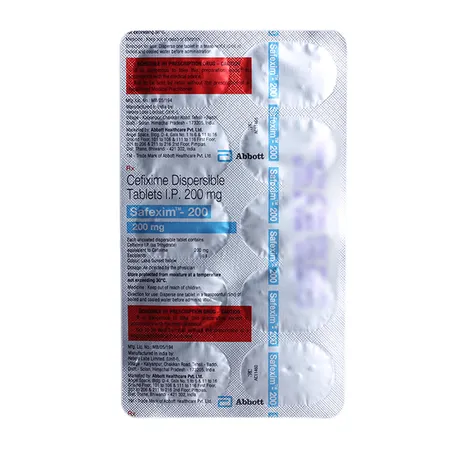
CEFIXIME-200MG

Manufacturer/Marketer :

Abbott India Ltd

Consume Type :

Oral

Expires on or after :

Jan-27

Return Policy :

Not Returnable

NPPA :

Regulated

About Safexim 200 mg Tablet

Safexim 200 mg Tablet belongs to a group of cephalosporin antibiotics. It is used to treat bacterial infections of the ear, nose, sinuses, throat, chest, lungs and urinary system. Additionally, it is also prescribed to treat uncomplicated gonorrhoea.

Safexim 200 mg Tablet contains Cefixime, which works by inhibiting cell wall synthesis. In turn, Safexim 200 mg Tablet weakens and destroys the bacterial cell wall, leading to death. As a result, Safexim 200 mg Tablet helps to treat bacterial infections.

Safexim 200 mg Tablet should be as advised by the doctor. Safexim 200 mg Tablet may cause side effects like diarrhoea, nausea, loose stools, abdominal pain, dyspepsia, indigestion, and vomiting. If the side effects are persistent, inform your doctor.

Inform your doctor about your child's entire medical history and if they are taking any other medicines. Let your doctor know if your child is allergic to any of the components in Safexim 200 mg Tablet .

Uses of Safexim 200 mg Tablet

Safexim 200 mg Tablet is used in the treatment of Bacterial Infections. The detailed uses of Safexim 200 mg Tablet are as follows:

  • Treatment of Bacterial Infections: Safexim 200 mg Tablet is widely used to combat bacterial infections such as respiratory tract infections and urinary tract infections.


Have a query?

Side effects of Safexim 200 mg Tablet
To prevent, manage, and treat Constipation caused by medication usage, follow these steps:
  • Preventing Vomiting (Before it Happens)
  • Take medication exactly as prescribed by your doctor. This can help minimize side effects, including vomiting.
  • Having a small meal before taking your medication can help reduce nausea and vomiting.
  • Talk to your doctor about taking anti-nausea medication along with your prescribed medication.
  • Managing Vomiting (If it Happens)
  • Try taking ginger in the form of tea, ale, or candy to help alleviate nausea and vomiting.
  • What to Do if Vomiting Persists
  • Consult your doctor if vomiting continues or worsens, consult the doctor for guidance on adjusting your medication or additional treatment.
Here are the precise steps to cope with diarrhoea caused by medication usage:
  • Inform Your Doctor: Notify your doctor immediately about your diarrhoea symptoms. This allows them to adjust your medication or provide guidance on managing side effects.
  • Stay Hydrated: Drink plenty of fluids to replace lost water and electrolytes. Choose water, clear broth, and electrolyte-rich drinks. Avoid carbonated or caffeinated beverages to effectively rehydrate your body.
  • Follow a Bland Diet: Eat easy-to-digest foods to help firm up your stool and settle your stomach. Try incorporating bananas, rice, applesauce, toast, plain crackers, and boiled vegetables into your diet.
  • Avoid Trigger Foods: Steer clear of foods that can worsen diarrhoea, such as spicy, fatty, or greasy foods, high-fibre foods, and dairy products (especially if you're lactose intolerant).
  • Practice Good Hygiene: Maintain good hygiene to prevent the spread of infection. To stay healthy, wash your hands frequently, clean and disinfect surfaces regularly, and avoid exchanging personal belongings with others.
  • Take Anti-Diarrheal Medications: If your doctor advises, anti-diarrheal medications such as loperamide might help manage diarrhoea symptoms. Always follow your doctor's directions.
  • Keep track of your diarrhoea symptoms. If they don't get better or worse or are accompanied by severe stomach pain, blood, or dehydration signs (like extreme thirst or dark urine), seek medical help.
Overcome Medication-Induced Nausea: A 9-Step Plan
  • Inform your doctor about the nausea and discuss possible alternatives to the medication or adjustments to the dosage.
  • Divide your daily food intake into smaller, more frequent meals to reduce nausea.
  • Opt for bland, easily digestible foods like crackers, toast, plain rice, bananas, and applesauce.
  • Avoid certain foods that can trigger nausea, such as fatty, greasy, spicy, and smelly foods.
  • Drink plenty of fluids, such as water, clear broth, or electrolyte-rich beverages like coconut water or sports drinks.
  • Use ginger (tea, ale, or candies) to help relieve nausea.
  • Get adequate rest and also avoid strenuous activities that can worsen nausea.
  • Talk to your doctor about taking anti-nausea medication if your nausea is severe.
  • Record when your nausea occurs, what triggers it, and what provides relief to help you identify patterns and manage your symptoms more effectively.
Here are the precise steps to cope with diarrhoea caused by medication usage:
  • Inform Your Doctor: Notify your doctor immediately about your diarrhoea symptoms. This allows them to adjust your medication or provide guidance on managing side effects.
  • Stay Hydrated: Drink plenty of fluids to replace lost water and electrolytes. Choose water, clear broth, and electrolyte-rich drinks. Avoid carbonated or caffeinated beverages to effectively rehydrate your body.
  • Follow a Bland Diet: Eat easy-to-digest foods to help firm up your stool and settle your stomach. Try incorporating bananas, rice, applesauce, toast, plain crackers, and boiled vegetables into your diet.
  • Avoid Trigger Foods: Steer clear of foods that can worsen diarrhoea, such as spicy, fatty, or greasy foods, high-fibre foods, and dairy products (especially if you're lactose intolerant).
  • Practice Good Hygiene: Maintain good hygiene to prevent the spread of infection. To stay healthy, wash your hands frequently, clean and disinfect surfaces regularly, and avoid exchanging personal belongings with others.
  • Take Anti-Diarrheal Medications: If your doctor advises, anti-diarrheal medications such as loperamide might help manage diarrhoea symptoms. Always follow your doctor's directions.
  • Keep track of your diarrhoea symptoms. If they don't get better or worse or are accompanied by severe stomach pain, blood, or dehydration signs (like extreme thirst or dark urine), seek medical help.
  • Drink water or other clear fluids.
  • To prevent worsening of pain, limit intake of tea, coffee, or alcohol.
  • Include bland foods like rice, toast, crackers, and rice in your diet.
  • Avoid lying down immediately after eating as it may cause indigestion or heartburn.
  • Avoid acidic and spicy food as it may cause indigestion.
Here are the step-by-step strategies to manage the side effects of "indigestion" caused by medication usage:
  • Take medications with food (if recommended): It can help prevent stomach distress and indigestion.
  • Eat smaller, more frequent meals: Divide daily food intake into smaller, more frequent meals to ease digestion.
  • Avoid trigger foods: Identify and avoid foods that trigger indigestion, such as spicy, fatty, or acidic foods.
  • Stay upright after eating: Sit or stand upright for at least 1-2 hours after eating to prevent stomach acid from flowing into the oesophagus.
  • Avoid carbonated drinks: Avoid drinking carbonated beverages, such as soda or beer, which can worsen indigestion.
  • Manage stress: To alleviate indigestion, engage in stress-reducing activities like deep breathing exercises or meditation.
  • Consult a doctor if needed: If indigestion worsens or persists, consult a healthcare professional to adjust the medication regimen or explore alternative treatments.

Directions for Use

  • Safexim 200 mg Tablet can be administered with or without food as advised by the doctor.
  • Follow your doctor's instructions on the dosage and timing of this medication to ensure safety.
  • It should be swallowed as a whole with a glass of water.
  • Do not chew, crush or break it.

Key Benefits

  • Helps treat a wide range of bacterial infections affecting different parts of the body.
  • Effective in managing ear, nose, sinus, and throat infections.
  • Useful in treating chest and lung infections such as bronchitis and pneumonia.
  • Helps control urinary tract infections, including cystitis and kidney infections.
  • Reduces infection-related symptoms like fever, pain, and inflammation.
  • Supports faster recovery when used for short-term treatment as prescribed.

How Safexim 200 mg Tablet Works

Safexim 200 mg Tablet contains Cefixime, which works by inhibiting cell wall synthesis. In turn, Safexim 200 mg Tablet weakens and destroys the bacterial cell wall, leading to death. As a result, Safexim 200 mg Tablet helps to treat bacterial infections.

Storage

Store in a cool and dry place away from sunlight

What if I have taken an overdose of Safexim 200 mg Tablet

An overdose of Safexim 200 mg Tablet may cause severe vomiting and seizures. Seek immediate medical attention if you observe any symptoms or think you have taken too much. Do this even if there are no signs of discomfort or poisoning.

Drug Warnings

  • Do not give Safexim 200 mg Tablet if your child is allergic to any of its components.
  • Before using Safexim 200 mg Tablet , let your doctor know about all your child's medical conditions, sensitivities, and any medications they are taking.

Drug-Drug Interactions

verifiedApollotooltip
CefiximeCholera, live attenuated
Severe

Drug-Drug Interactions

Login/Sign Up

CefiximeCholera, live attenuated
Severe
How does the drug interact with Safexim 200 mg Tablet:
Co-administration of Safexim 200 mg Tablet with Cholera vaccine may reduce the effectiveness of the vaccine.

How to manage the interaction:
Talk to your doctor before receiving the cholera vaccine if you are currently being treated with Safexim 200 mg Tablet or have been treated within the last 14 days. To ensure adequate vaccine response, you should not receive cholera vaccine until at least 14 days after you complete your antibiotic therapy. Do not discontinue the medication without consulting a doctor.

Drug-Food Interactions

verifiedApollotooltip
No Drug - Food interactions found in our database. Some may be unknown. Consult your doctor for what to avoid during medication.

Drug-Food Interactions

Login/Sign Up

Diet & Lifestyle Advise

Probiotics Support:

  • Give probiotics after completing the full course of Safexim 200 mg Tablet to help restore healthy gut bacteria.
  • Probiotics can reduce the risk of antibiotic-associated diarrhoea.
  • Include fermented foods such as yoghurt, cheese, sauerkraut, and kimchi to support gut health.
  • Eating a variety of plant-based foods helps build a healthy gut microbiome.

Hydration Care:

  • Give plenty of water to the child to prevent dehydration.
  • Maintaining good hydration is especially important when the child is unwell.

Habit Forming

No

Therapeutic Class

[ANTIBIOTICS]
bannner image

Alcohol

Not applicable

It is intended for Children.

bannner image

Pregnancy

Not applicable

It is intended for Children.

bannner image

Breast Feeding

Not applicable

It is intended for Children.

bannner image

Driving

Not applicable

It is intended for Children.

bannner image

Liver

Caution

Inform the doctor if your child has liver problems. Your doctor will weigh the benefits and potential risks before prescribing it.

bannner image

Kidney

Caution

Inform your doctor if your child has kidney problems. Your doctor will weigh the benefits and potential risks before prescribing it.

bannner image

Children

Safe if prescribed

Safexim 200 mg Tablet is safe for children if prescribed by the doctor. Your doctor may prescribe the dose based on the child's condition and age.

bannner image

Heart

Consult your doctor

Please consult your doctor before giving Safexim 200 mg Tablet to your child. Your doctor will prescribe Safexim 200 mg Tablet if the benefits outweigh the risks.

bannner image

Geriatrics

Not applicable

Safexim 200 mg Tablet is for paediatric patients only.

FAQs

Safexim 200 mg Tablet is used to treat bacterial infections.

Safexim 200 mg Tablet inhibits cell wall synthesis, weakening and ultimately destroying the bacterial cell wall, leading to death. As a result, Safexim 200 mg Tablet helps to treat bacterial infections.

Safexim 200 mg Tablet can cause diarrhoea. If your child has diarrhoea that is watery or bloody, call your paediatrician. Do not use anti-diarrhoea medicine unless your paediatrician instructs.

Yes, Safexim 200 mg Tablet can be used to treat urinary tract infection (UTI). However, it should be taken under the supervision of a healthcare professional.

Safexim 200 mg Tablet is active against a very wide spectrum of bacteria such as Staphylococcus aureus, Streptococcus pneumoniae, Streptococcus pyogenes (the cause of strep throat), Hemophilus influenzae, Moraxella catarrhalis, E. coli, Klebsiella, Proteus mirabilis, Salmonella, Shigella, and Neisseria gonorrhoeae.

No, it does not treat colds, flu, or other viral infections. It is meant for only specific bacterial infections.

Customer Reviews

5

star icon
star icon
star icon
star icon
star icon

1 Ratings,

1 Reviews

5 star icon

100%

4 star icon

0%

3 star icon

0%

2 star icon

0%

1 star icon

0%

A

ABHISHEK

Posted at Feb 25, 2026

5star icon

Pack: 10 Tablet

Replacement received. Thank you so much Apollo Kirti Nagar for prompt response on this matter. Really appreciate and highly recommend apollo.

Country of origin

India

Manufacturer/Marketer address

401, LSC, C-Block, Mohan Place Saraswati Vihar Delhi Dl 110034 INDIA
Other Info - SAF0039

Disclaimer

While we strive to provide complete, accurate, and expert-reviewed content on our 'Platform', we make no warranties or representations and disclaim all responsibility and liability for the completeness, accuracy, or reliability of the aforementioned content. The content on our platform is for informative purposes only, and may not cover all clinical/non-clinical aspects. Reliance on any information and subsequent action or inaction is solely at the user's risk, and we do not assume any responsibility for the same. The content on the Platform should not be considered or used as a substitute for professional and qualified medical advice. Please consult your doctor for any query pertaining to medicines, tests and/or diseases, as we support, and do not replace the doctor-patient relationship.
whatsapp Floating Button
Buy Now
Add to Cart