Apollo
logo
0
Select Delivery Location
prescription
Prescription Medicine
info
Best Price

₹174 with coupons & bank offers*

View

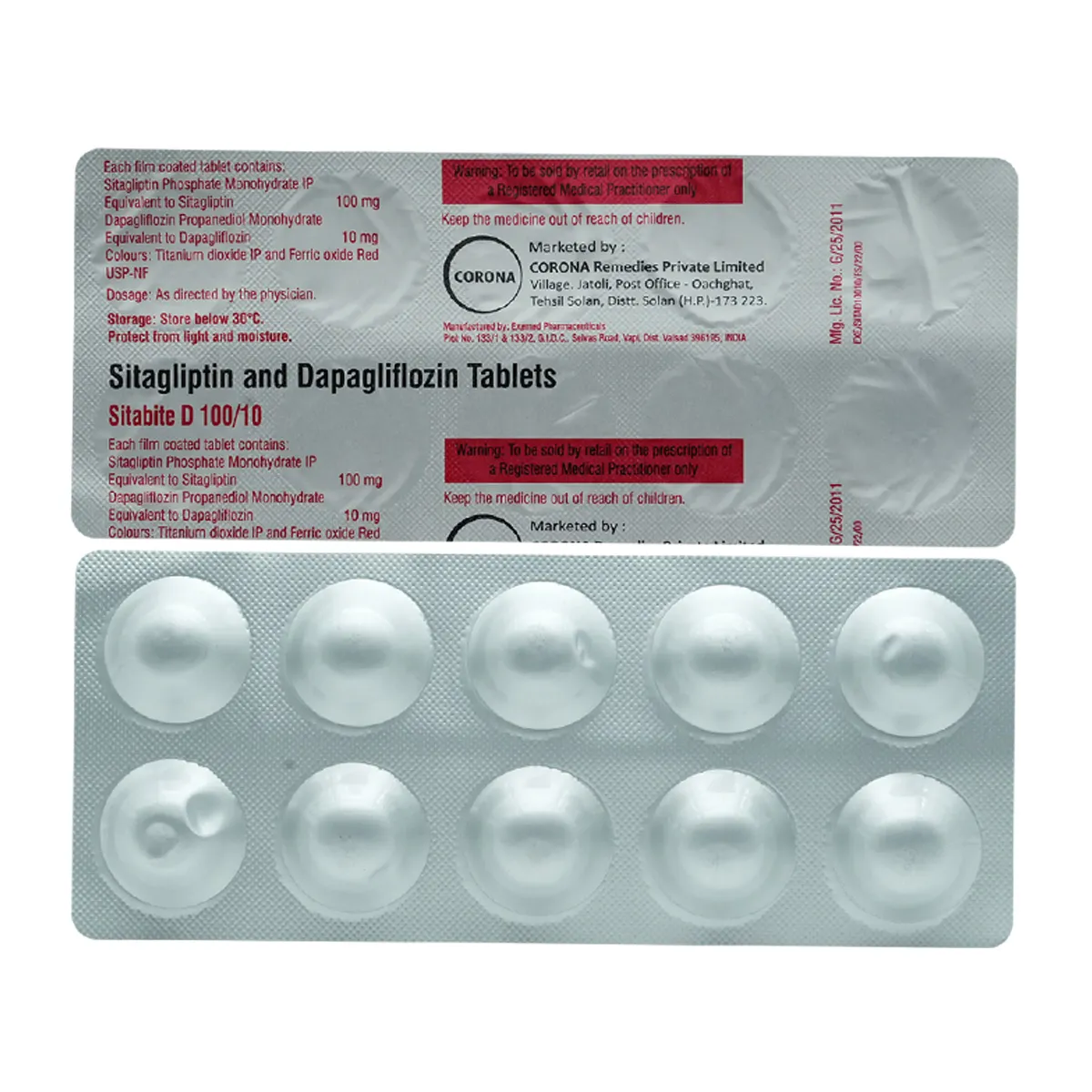
Sitabite D 100/10 mg Tablet is used to treat type-2 diabetes mellitus. It contains Dapagliflozin and Sitagliptin. Dapagliflozin lowers blood glucose levels and increases glucose excretion in the urine. By improving insulin levels and lowering glucagon levels (the hormone that raises blood glucose levels), sitagliptin decreases the amount of glucose the liver produces. Thus, it helps control blood sugar levels. Common side effects of this medicine include diarrhoea, hypoglycaemia, headache, nausea, and vomiting.

Read more
Written By Dr. Lakshmithulasi Yarragunta , PharmD (PB)
Reviewed By Dr Aneela Siddabathuni , MPharma., PhD
OffersOffers & Discounts

Get Free delivery (₹99) with circle icon

Join Circle
coupon
Get 18% Off with Coupons
coupon
Extra 10% Off with Bank Offers
bank offer
bank offer
bank offer

More about the Product

Manufacturer/Marketer :

Corona Remedies Pvt Ltd

Consume Type :

Oral

Expires on or after :

Jan-27

Return Policy :

Not Returnable

About Sitabite D 100/10 mg Tablet

Sitabite D 100/10 mg Tablet is an oral prescription tablet used to lower blood sugar levels in adults with type 2 diabetes. This medication contains a combination of two active therapies that work together to help control blood glucose. It is prescribed as an addition to diet and exercise to help manage diabetes.

To achieve the best results, you must take Sitabite D 100/10 mg Tablet consistently every day at the same time, exactly as your doctor instructs. You can take this tablet with or without food, though taking it with a meal may prevent an upset stomach. Incorporating a balanced, low-sugar diet and a regular exercise routine is essential to help the medication work effectively.

While taking this medication, you may experience common, mild side effects like a runny nose, sore throat, or mild urinary tract infections. However, you must contact your doctor immediately if you experience serious side effects, such as severe, persistent stomach pain or signs of dehydration.

Before starting Sitabite D 100/10 mg Tablet , talk to your doctor if you have a history of kidney disease, pancreas problems, or heart failure. Do not take this if you have type 1 diabetes, diabetic ketoacidosis, or severe kidney impairment, as it is not designed to treat these conditions.

This medicine can interact with certain blood pressure pills or other diabetes medications, which can increase the risk of low blood sugar or dehydration. You should avoid heavy alcohol consumption because it can increase your risk of severe pancreas irritation or blood sugar fluctuations. Pregnant women, breastfeeding mothers, and elderly individuals should consult their doctor before starting Sitabite D 100/10 mg Tablet to ensure it is safe for them.

Uses of Sitabite D 100/10 mg Tablet

Sitabite D 100/10 mg Tablet is used in the treatment of type-2 diabetes mellitus. The detailed uses of Sitabite D 100/10 mg Tablet are as follows:

  • Type 2 Diabetes Mellitus: Sitabite D 100/10 mg Tablet helps lower daily blood sugar levels by aiding the kidneys in removing excess sugar through urine, helping the pancreas release more insulin, and reducing the amount of sugar the liver produces.

Key Benefits

Sitabite D 100/10 mg Tablet helps improve blood sugar control in adults with type 2 diabetes when used alongside a healthy diet and regular exercise.
Benefits may include:

  • It helps keep blood sugar within your target range and can help improve day-to-day well-being and reduce the risk of diabetes-related complications over time.
  • By keeping your blood sugar stable throughout the day, Sitabite D 100/10 mg Tablet plays a vital role in protecting your long-term health.
  • Maintaining consistent control over your blood glucose levels helps prevent serious diabetes-related complications, such as nerve damage, kidney issues, and vision loss.
  • Additionally, this medication simplifies your treatment plan. Because it combines two active therapies into a single daily tablet, it reduces the number of pills you need to take, making it easier to stick to your daily routine.
Side effects of Sitabite D 100 mg/10 mg Tablet
Here are the steps to manage the medication-triggered Upper respiratory tract infection:
  • Inform your doctor about the symptoms you're experiencing due to medication.
  • Your doctor may adjust your treatment plan, which could include changing your medication, adding new medications, or offering advice on managing your symptoms.
  • Practice good hygiene, including frequent handwashing, avoiding close contact with others, and avoiding sharing utensils or personal items.
  • Stay hydrated by drinking plenty of fluids to help loosen and clear mucus from your nose, throat, and airways.
  • Get plenty of rest and engage in stress-reducing activities to help your body recover. If your symptoms don't subside or worsen, consult your doctor for further guidance.
Dealing with Medication-Induced Headache:
  • Hydrate your body: Drink enough water to prevent dehydration and headaches.
  • Calm Your Mind: Deep breathing and meditation can help you relax and relieve stress.
  • Rest and Recharge: Sleep for 7-8 hours to reduce headache triggers.
  • Take rest: lie down in a quiet, dark environment.
  • Cold or warm compresses can help reduce tension.
  • Stay Upright: Maintain good posture to keep symptoms from getting worse.
  • To treat headaches naturally, try acupuncture or massage therapy.
  • Over-the-counter pain relievers include acetaminophen and ibuprofen.
  • Prescription Assistance: Speak with your doctor about more substantial drug alternatives.
  • Severe Headaches: Seek emergency medical assistance for sudden, severe headaches.
  • Frequent Headaches: If you get reoccurring headaches, consult your doctor.
  • Headaches with Symptoms: Seek medical attention if your headaches include fever, disorientation, or weakness.
  • If you experience low blood sugar levels, inform your doctor. They will assess the severity and make recommendations for the next actions.
  • Your doctor will assess your symptoms, blood sugar levels, and overall health before recommending the best course of action, which may include treatment, lifestyle modifications, or prescription adjustments.
  • Follow your doctor's instructions carefully to manage the episode and adjust your treatment plan.
  • Make medication adjustments as recommended by your doctor to prevent future episodes.
  • Implement diet and lifestyle modifications as your doctor advises to manage low blood sugar levels.
  • Monitor your blood sugar levels closely for patterns and changes.
  • Track your progress by recording your blood sugar levels, food intake, and physical activity.
  • Seek further guidance from your doctor if symptoms persist or worsen so that your treatment plan can be revised.
Here are the precise steps to cope with diarrhoea caused by medication usage:
  • Inform Your Doctor: Notify your doctor immediately about your diarrhoea symptoms. This allows them to adjust your medication or provide guidance on managing side effects.
  • Stay Hydrated: Drink plenty of fluids to replace lost water and electrolytes. Choose water, clear broth, and electrolyte-rich drinks. Avoid carbonated or caffeinated beverages to effectively rehydrate your body.
  • Follow a Bland Diet: Eat easy-to-digest foods to help firm up your stool and settle your stomach. Try incorporating bananas, rice, applesauce, toast, plain crackers, and boiled vegetables into your diet.
  • Avoid Trigger Foods: Steer clear of foods that can worsen diarrhoea, such as spicy, fatty, or greasy foods, high-fibre foods, and dairy products (especially if you're lactose intolerant).
  • Practice Good Hygiene: Maintain good hygiene to prevent the spread of infection. To stay healthy, wash your hands frequently, clean and disinfect surfaces regularly, and avoid exchanging personal belongings with others.
  • Take Anti-Diarrheal Medications: If your doctor advises, anti-diarrheal medications such as loperamide might help manage diarrhoea symptoms. Always follow your doctor's directions.
  • Keep track of your diarrhoea symptoms. If they don't get better or worse or are accompanied by severe stomach pain, blood, or dehydration signs (like extreme thirst or dark urine), seek medical help.
  • Get ample rest; this helps your stomach to settle.
  • Eat soft and easy-to-digest foods like white rice, bananas, crackers and apple sauce.
  • Include probiotics-rich food like yoghurt, kefir, or miso, as they help maintain gut functioning.
  • Wash your hands properly before preparing/eating food and after using the toilet.
  • Drink water, broth or diluted fruit juice to replace electrolytes and lost fluids.
  • Avoid caffeine, alcohol, high-fat, fried and fast foods, as well as sweetened beverages.
  • Drink water or other clear fluids.
  • To prevent worsening of pain, limit intake of tea, coffee, or alcohol.
  • Include bland foods like rice, toast, crackers, and rice in your diet.
  • Avoid lying down immediately after eating as it may cause indigestion or heartburn.
  • Avoid acidic and spicy food as it may cause indigestion.
Overcome Medication-Induced Nausea: A 9-Step Plan
  • Inform your doctor about the nausea and discuss possible alternatives to the medication or adjustments to the dosage.
  • Divide your daily food intake into smaller, more frequent meals to reduce nausea.
  • Opt for bland, easily digestible foods like crackers, toast, plain rice, bananas, and applesauce.
  • Avoid certain foods that can trigger nausea, such as fatty, greasy, spicy, and smelly foods.
  • Drink plenty of fluids, such as water, clear broth, or electrolyte-rich beverages like coconut water or sports drinks.
  • Use ginger (tea, ale, or candies) to help relieve nausea.
  • Get adequate rest and also avoid strenuous activities that can worsen nausea.
  • Talk to your doctor about taking anti-nausea medication if your nausea is severe.
  • Record when your nausea occurs, what triggers it, and what provides relief to help you identify patterns and manage your symptoms more effectively.

Directions for Use

  • Take Sitabite D 100/10 mg Tablet with or without food or as advised by a doctor.
  • Follow your doctor's instructions on the dosage and timing of this medication, to ensure the safety.
  • Swallow the medicine as a whole with a glass of water.
  • Do not crush, break, or chew it.

How Sitabite D 100/10 mg Tablet Works

Sitabite D 100/10 mg Tablet combines two different active mechanisms to manage blood sugar. Dapagliflozin: It targets your kidneys. It stops your kidneys from absorbing sugar back into your blood, which allows your body to filter out excess sugar and release it when you urinate. Sitagliptin: It works on your digestive system and pancreas. It helps your pancreas release more insulin after you eat, which allows your cells to use sugar more effectively. At the same time, it tells your liver to make less sugar, helping to keep your fasting blood sugar in check.
bannner image

Alcohol

Unsafe

Avoid consumption of alcohol during treatment with Sitabite D 100/10 mg Tablet as it may cause serious side effects.

bannner image

Pregnancy

Consult your doctor

If you are pregnant or planning pregnancy, inform your doctor before starting treatment with Sitabite D 100/10 mg Tablet . Your doctor may prescribe this medicine if the benefits outweigh the risks.

bannner image

Breast Feeding

Consult your doctor

Limited data is available on the effect of Sitabite D 100/10 mg Tablet on breastfeeding. Hence, if you are a nursing mother, inform your doctor before taking Sitabite D 100/10 mg Tablet . Your doctor may prescribe this medicine if the benefits outweigh the risks.

bannner image

Driving

Caution

Sitabite D 100/10 mg Tablet may occasionally cause dizziness. Hence, drive only if you are alert after taking this medicine.

bannner image

Liver

Caution

If you have a pre-existing or a history of liver disease, inform your doctor before taking Sitabite D 100/10 mg Tablet . Your doctor may adjust the dose of this medicine or prescribe a suitable alternative based on your condition.

bannner image

Kidney

Caution

If you have a pre-existing or a history of kidney disease, inform your doctor before taking Sitabite D 100/10 mg Tablet . Your doctor may adjust the dose of this medicine or prescribe a suitable alternative based on your condition.

bannner image

Children

Unsafe

Sitabite D 100/10 mg Tablet is not recommended for use in children below 12 years of age as the safety and efficacy are not established.

bannner image

Heart

Safe

Sitabite D 100/10 mg Tablet is safe to be used in heart conditions. This medicine shows potential benefits in patients with heart failure and other associated conditions.

bannner image

Geriatrics

Safe

Sitabite D 100/10 mg Tablet is not generally contraindicated in elderly patients, but caution is advised, and it should be used with careful consideration of potential risks and benefits.

What if I have taken an overdose of Sitabite D 100/10 mg Tablet

If you suspect an overdose, seek immediate medical attention or contact a poison control center right away. Symptoms of an overdose may include extreme weakness, shakiness, sweating, or severe dizziness.

Diet & Lifestyle Advise

  • Monitor your carbohydrate intake: Focus on eating complex carbohydrates, like whole grains and non-starchy vegetables, to prevent sudden spikes in your blood sugar.
  • Stay well-hydrated: Because this medication helps your body remove sugar through your urine, you may lose more fluids than usual. Drink plenty of water throughout the day to prevent dehydration.
  • Engage in regular physical activity: Aim for at least 150 minutes of moderate exercise, like brisk walking, per week to help your body use insulin more effectively.
  • Check your feet daily: People with diabetes are prone to foot issues. Wash your feet daily, dry them thoroughly, and inspect them for any cuts, sores, or red spots.
health query

Have a query?

How Soon It Starts Working

The time required for Sitabite D 100/10 mg Tablet to start to work: Sitabite D 100/10 mg Tablet ideally shows its action within few hours after administration. The time for which the effects of Sitabite D 100/10 mg Tablet last: The effect of Sitabite D 100/10 mg Tablet lasts for 24 hours.

What if you forget to take Sitabite D 100/10 mg Tablet

If you miss a dose, take it as soon as you remember. However, if it is almost time for your next scheduled dose, skip the missed dose and return to your regular routine. Do not take a double dose to make up for a missed one.

Storage

•Store Sitabite D 100/10 mg Tablet at room temperature, between 20°C and 25°C (68°F to 77°F).

Drug Warnings

  • Observe your breathing and energy levels: Report any rapid breathing, deep fatigue, or sudden confusion immediately, as these can be warning signs of a serious condition called diabetic ketoacidosis.
  • Practice good daily hygiene: Because this medication increases sugar in your urine, maintaining clean, dry skin in genital areas is vital to prevent fungal infections.
  • Check your kidney function regularly: Ensure you attend all scheduled blood and urine tests so your doctor can monitor how well your kidneys are filtering this medication.
  • Carry a fast-acting sugar source: Always keep fruit juice, honey, or glucose tablets with you in case you experience sudden symptoms of low blood sugar when taking this with other diabetes medicines.

Drug-Drug Interactions

verifiedApollotooltip
  • Insulin and sulfonylureas: Taking Sitabite D 100/10 mg Tablet with these medications can increase the risk of low blood sugar (hypoglycemia). Your doctor may need to adjust your doses.
  • Diuretics (water pills): These can increase your risk of dehydration and low blood pressure when taken alongside Sitabite D 100/10 mg Tablet .

Drug-Drug Interactions

Login/Sign Up

How does the drug interact with Sitabite D 100 mg/10 mg Tablet:
Co-administration of Gatifloxacin with Dapagliflozin and Sitagliptin may alter blood glucose levels.

How to manage the interaction:
Although there is a possible interaction of Gatifloxacin with Dapagliflozin and Sitagliptin they can be taken if prescribed by the doctor. Consult a doctor if you experience nervousness, headache, dizziness, weakness, palpitation, increased urination, or increased thirst and hunger. Maintaining blood glucose levels is advised. Do not discontinue the medication without consulting a doctor.

Drug-Food Interactions

verifiedApollotooltip
  • Alcohol: Avoid heavy alcohol consumption, as it can increase the risk of low blood sugar and raise the risk of a dangerous condition called ketoacidosis or pancreatitis.
No Drug - Food interactions found in our database. Some may be unknown. Consult your doctor for what to avoid during medication.

Drug-Food Interactions

Login/Sign Up

Habit Forming

No

Therapeutic Class

[ANTIDIABETICS]

FAQs

Sitabite D 100/10 mg Tablet is used to treat type-2 diabetes mellitus. Type-2 diabetes mellitus (also known as non-insulin-dependent diabetes or adult-onset diabetes) is a medical condition in which blood glucose levels are above normal due to insulin deficiency, insulin resistance, or both.
Low-fibre diets, high-fat diets, sugary diets, obesity, smoking, stress, lack of exercise, age, genetic factors, and certain medical conditions are the common causes of diabetes.
Sitabite D 100/10 mg Tablet is a combination medicine containing Sitagliptin that enhances glucose-mediated insulin secretion, thereby reducing fasting and post-prandial blood sugar concentrations. Dapagliflozin lowers blood glucose levels and increases the excretion of glucose in the urine. By increasing insulin levels and lowering glucagon levels (the hormone that raises blood glucose levels), sitagliptin decreases the amount of glucose the liver produces.
You should not take Sitabite D 100/10 mg Tablet during pregnancy, especially during the second and third trimesters, as it may harm an unborn baby. If you are planning a pregnancy or become pregnant, talk to your doctor immediately to discuss alternative treatments.
Some people may experience mild weight loss when taking Sitabite D 100/10 mg Tablet because one of its components helps release excess sugar and calories through urine. However, this medication is not a weight-loss drug. Talk to your doctor to understand what to expect.
While Sitabite D 100/10 mg Tablet is unlikely to cause low blood sugar on its own, it can happen if you take it with other diabetes medications. If you feel shaky, sweaty, or dizzy, consume a fast-acting sugar source like fruit juice or hard candy, and talk to your doctor.
It is best to avoid or strictly limit alcohol while taking Sitabite D 100/10 mg Tablet because alcohol can increase the risk of severe complications like low blood sugar or pancreas inflammation. Talk to your doctor about safe alcohol consumption limits.
One of the active ingredients in Sitabite D 100/10 mg Tablet works by filtering excess sugar out of your blood and removing it through your urine, which naturally increases the amount and frequency of urination. Talk to your doctor if this becomes problematic.
Yes, because Sitabite D 100/10 mg Tablet increases the amount of sugar in your urine, it creates an environment where yeast can grow more easily, potentially leading to genital yeast infections. Talk to your doctor if you experience redness, itching, or discharge.
Yes, Sitabite D 100/10 mg Tablet is designed to work alongside a healthy diet and regular exercise, not replace them. Following your dietary plan is essential for successfully managing your blood sugar levels. Talk to your doctor or a dietitian for personalised advice.

Disclaimer

While we strive to provide complete, accurate, and expert-reviewed content on our 'Platform', we make no warranties or representations and disclaim all responsibility and liability for the completeness, accuracy, or reliability of the aforementioned content. The content on our platform is for informative purposes only, and may not cover all clinical/non-clinical aspects. Reliance on any information and subsequent action or inaction is solely at the user's risk, and we do not assume any responsibility for the same. The content on the Platform should not be considered or used as a substitute for professional and qualified medical advice. Please consult your doctor for any query pertaining to medicines, tests and/or diseases, as we support, and do not replace the doctor-patient relationship.

Country of origin

India

Manufacturer/Marketer address

Corona House, Block C, Mondeal Business Park, Near Gurudwara,, S. G. Highway, Thaltej, Thaltej, Ahmedabad, Gujarat 380059
Other Info - SIT0194
whatsapp Floating Button

Recommended for a 30-day course: 3 Strips

Buy Now