apollo
logo
0
Select Delivery Location
prescription
Prescription Medicine
info
Written By Bayyarapu Mahesh Kumar , M Pharmacy
Reviewed By Dr Aneela Siddabathuni , MPharma., PhD
OffersOffers & Discounts

Get Free delivery (₹99) with circle icon

Join Circle
Get Extra 18% Off with Coupons
Extra 10% Off with Bank Offers
bank offer
bank offer
bank offer

More about the Product

Manufacturer/Marketer :

Lupin Ltd

Consume Type :

Oral

Expires on or after :

Jan-27

Return Policy :

Not Returnable

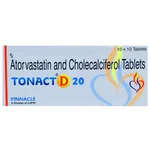
About Tonact D 20 Tablet

Tonact D 20 Tablet is a prescription medicine used to lower high cholesterol levels and improve vitamin D levels in the body. It combines atorvastatin, a cholesterol-lowering medicine, with cholecalciferol (vitamin D3), which helps maintain healthy bones and muscles. Together, these ingredients help support heart and bone health.

For the best results, you should take this medicine once daily at the same time every day. It can be taken with or without food. Taking it with a meal, particularly one containing some dietary fat, may help improve the absorption of the vitamin D component, although atorvastatin itself does not require food for absorption. Along with taking this medication, incorporating a heart-healthy diet low in saturated fats and regular exercise is essential to achieve optimal cardiovascular benefits.

While taking Tonact D 20 Tablet , you may experience mild side effects such as muscle aches, mild stomach upset, or headache. However, if you develop severe muscle pain, dark-colored urine, or signs of liver damage like yellowing of your skin or eyes, you must contact your doctor immediately.

Before starting Tonact D 20 Tablet , tell your doctor if you have a history of liver disease, kidney problems, or thyroid disorders. Do not take this medicine if you are pregnant, planning to become pregnant, breastfeeding, or if you have active liver disease.

Certain medications, including some antibiotics and antifungals, can interact with Tonact D 20 Tablet and increase the risk of serious muscle side effects, while drinking alcohol daily can increase your risk of liver damage. If you are an older adult, your doctor may want to monitor you more closely, as elderly individuals can be more sensitive to muscle-related side effects. Always discuss your complete medical history with your healthcare provider.

Uses of Tonact D 20 Tablet

Tonact D 20 Tablet may be prescribed for the following conditions: 

  • High cholesterol (hyperlipidemia): Tonact D 20 Tablet helps lower 'bad' cholesterol (LDL) and triglycerides while raising 'good' cholesterol (HDL) in the blood to reduce plaque buildup in your arteries.
  • Vitamin D deficiency: It restores healthy vitamin D levels in the body, which is crucial for proper calcium absorption and maintaining strong bones.
  • Prevention of cardiovascular disease: By lowering cholesterol and improving blood vessel health, it reduces the risk of serious events like heart attacks and strokes.
     

Key Benefits

Tonact D 20 Tablet combines cholesterol management with vitamin D supplementation, helping support both cardiovascular and bone health in a convenient single treatment.

  • Lowers Bad Cholesterol Levels: Helps reduce low-density lipoprotein (LDL) cholesterol levels, supporting healthier blood vessels and circulation.
  • Supports Heart Health: By improving cholesterol levels, it may help reduce the risk of heart disease, heart attack, and stroke.
  • Improves Vitamin D Levels: Helps restore and maintain healthy vitamin D levels in the body.
  • Supports Bone Strength: Adequate vitamin D levels help improve calcium absorption, supporting stronger bones and overall skeletal health.
  • Promotes Muscle Function: Correcting vitamin D deficiency may help improve muscle health and reduce symptoms associated with low vitamin D levels.
     
Side effects of Tonact D 20 Tablet
Here are the precise steps to cope with diarrhoea caused by medication usage:
  • Inform Your Doctor: Notify your doctor immediately about your diarrhoea symptoms. This allows them to adjust your medication or provide guidance on managing side effects.
  • Stay Hydrated: Drink plenty of fluids to replace lost water and electrolytes. Choose water, clear broth, and electrolyte-rich drinks. Avoid carbonated or caffeinated beverages to effectively rehydrate your body.
  • Follow a Bland Diet: Eat easy-to-digest foods to help firm up your stool and settle your stomach. Try incorporating bananas, rice, applesauce, toast, plain crackers, and boiled vegetables into your diet.
  • Avoid Trigger Foods: Steer clear of foods that can worsen diarrhoea, such as spicy, fatty, or greasy foods, high-fibre foods, and dairy products (especially if you're lactose intolerant).
  • Practice Good Hygiene: Maintain good hygiene to prevent the spread of infection. To stay healthy, wash your hands frequently, clean and disinfect surfaces regularly, and avoid exchanging personal belongings with others.
  • Take Anti-Diarrheal Medications: If your doctor advises, anti-diarrheal medications such as loperamide might help manage diarrhoea symptoms. Always follow your doctor's directions.
  • Keep track of your diarrhoea symptoms. If they don't get better or worse or are accompanied by severe stomach pain, blood, or dehydration signs (like extreme thirst or dark urine), seek medical help.
Here are the steps to manage Joint Pain caused by medication usage:
  • Please inform your doctor about joint pain symptoms, as they may adjust your medication regimen or prescribe additional medications to manage symptoms.
  • Your doctor may prescribe common pain relievers if necessary to treat joint discomfort.
  • Maintaining a healthy lifestyle is key to relieving joint discomfort. Regular exercise, such as low-impact sports like walking, cycling, or swimming, should be combined with a well-balanced diet. Aim for 7-8 hours of sleep per night to assist your body in repairing and rebuilding tissue.
  • Applying heat or cold packs to the affected joint can help reduce pain and inflammation.
  • Please track when joint pain occurs and any factors that may trigger it, and share this information with your doctor to help manage symptoms.
  • If your joint pain is severe or prolonged, consult a doctor to rule out any underlying disorders that may require treatment.
Here are the steps to manage the medication-triggered Common Cold:
  • Inform your doctor about the common cold symptoms you're experiencing due to medication.
  • Your doctor may adjust your treatment plan, which could include changing your medication, adding new medications, or offering advice on managing your symptoms.
  • Practice good hygiene, including frequent handwashing, avoiding close contact with others, and avoiding sharing utensils or personal items.
  • Drink plenty of fluids, such as warm water or soup, to help thin out mucus.
  • Get plenty of rest and engage in stress-reducing activities to help your body recover. If your symptoms don't subside or worsen, consult your doctor for further guidance.
Here are the step-by-step strategies to manage the side effects of "indigestion" caused by medication usage:
  • Take medications with food (if recommended): It can help prevent stomach distress and indigestion.
  • Eat smaller, more frequent meals: Divide daily food intake into smaller, more frequent meals to ease digestion.
  • Avoid trigger foods: Identify and avoid foods that trigger indigestion, such as spicy, fatty, or acidic foods.
  • Stay upright after eating: Sit or stand upright for at least 1-2 hours after eating to prevent stomach acid from flowing into the oesophagus.
  • Avoid carbonated drinks: Avoid drinking carbonated beverages, such as soda or beer, which can worsen indigestion.
  • Manage stress: To alleviate indigestion, engage in stress-reducing activities like deep breathing exercises or meditation.
  • Consult a doctor if needed: If indigestion worsens or persists, consult a healthcare professional to adjust the medication regimen or explore alternative treatments.
Overcome Medication-Induced Nausea: A 9-Step Plan
  • Inform your doctor about the nausea and discuss possible alternatives to the medication or adjustments to the dosage.
  • Divide your daily food intake into smaller, more frequent meals to reduce nausea.
  • Opt for bland, easily digestible foods like crackers, toast, plain rice, bananas, and applesauce.
  • Avoid certain foods that can trigger nausea, such as fatty, greasy, spicy, and smelly foods.
  • Drink plenty of fluids, such as water, clear broth, or electrolyte-rich beverages like coconut water or sports drinks.
  • Use ginger (tea, ale, or candies) to help relieve nausea.
  • Get adequate rest and also avoid strenuous activities that can worsen nausea.
  • Talk to your doctor about taking anti-nausea medication if your nausea is severe.
  • Record when your nausea occurs, what triggers it, and what provides relief to help you identify patterns and manage your symptoms more effectively.
Here are the steps to manage Gastrointestinal Air and Swelling (GAS) caused by medication:
  • Tell your doctor about your GAS symptoms. They may change your medication regimen or prescribe additional drugs to help you manage them.
  • To manage GAS symptoms, eat a balanced diet of fibre, vegetables, and fruits.
  • Drink enough water throughout the day to avoid constipation and treat GAS symptoms.
  • Regular exercise like yoga and walking may help stimulate digestion and alleviate GAS symptoms.
  • Take probiotics only if your doctor advises, as they may help alleviate GAS symptoms by promoting gut health.
  • Take medication for GAS symptoms only if your doctor advises, as certain medications can interact with your existing prescriptions or worsen symptoms.
  • If symptoms persist, worsen, or are accompanied by severe abdominal pain, vomiting, or bleeding, seek immediate medical attention.
Here are the steps to cope with constipation as a side effect of medication:
  • Inform your doctor about your constipation symptoms. They may adjust your medication or advise alternative treatments.
  • Stay hydrated by drinking sufficient of water (at least 8-10 glasses a day) to help soften stool and promote bowel movements.
  • Increase fibre intake by eating foods high in fibre, such as fruits, whole grains, vegetables and legumes, to help bulk up the stool.
  • Establish a bowel routine by trying to go to the bathroom at the same time each day to train your bowels.
  • Engaging in regular exercise, like walking or yoga, can support in bowel movement stimulation.
  • Consult your doctor if constipation persists, and discuss alternative treatments or adjustments to your medication.

Directions for Use

To use Tonact D 20 Tablet safely and effectively, follow these instructions: 

  • Swallow the tablet whole with a full glass of water.
  • You may take this medicine with or without food. Taking it with a meal may help support absorption of the vitamin D component.
  • Take the medicine at the same time every day to maintain consistent cholesterol control and vitamin D levels.
  • Continue taking it regularly even if you feel well, as high cholesterol often causes no noticeable symptoms.

Always follow your doctor's instructions regarding the dose and duration of treatment. 
 

How Tonact D 20 Tablet Works

Tonact D 20 Tablet contains two active ingredients that work in different ways to protect your cardiovascular and skeletal systems. The first active component, atorvastatin, belongs to a group of medicines called statins. It works by blocking an enzyme called HMG-CoA reductase, which plays a key role in cholesterol production in the liver. As cholesterol production decreases, the liver increases the number of LDL receptors on its surface, allowing it to remove more 'bad' cholesterol (LDL) from the bloodstream and helping improve overall cholesterol levels. The second active component, cholecalciferol, is a form of vitamin D3. Once processed by your liver and kidneys, it helps your intestines absorb calcium from your diet. Since statins can sometimes be associated with muscle discomfort, having healthy levels of vitamin D3 helps support muscle health and bone strength, complementing the cholesterol-lowering action. Together, these actions help improve cholesterol control while supporting bone and muscle health.
bannner image

Alcohol

Unsafe

Do not drink too much while taking this medicine. Drinking a lot of alcohol will make you more likely to get muscle problems (like myopathy and rhabdomyolysis) and liver problems (with side effects like yellowing of eye/skin and urine).

bannner image

Pregnancy

Unsafe

Tonact D 20 Tablet is a pregnancy category X medicine. So it may cause damage to the fetus or unborn baby. Hence, Tonact D 20 Tablet is not recommended during pregnancy. Contact your doctor before taking Tonact D 20 Tablet if you are pregnant or suspect pregnancy.

bannner image

Breast Feeding

Caution

Tonact D 20 Tablet can pass into your breast milk and may harm your baby. So, before using Tonact D 20 Tablet , consult a doctor.

bannner image

Driving

Safe if prescribed

Tonact D 20 Tablet has no or negligible influence on the ability to drive and use machines.

bannner image

Liver

Caution

Tonact D 20 Tablet should be taken with caution, especially if you have a history of liver disease or conditions. Your doctor may need to adjust the dose.

bannner image

Kidney

Caution

Tonact D 20 Tablet to be taken with caution, especially if you have a history of kidney diseases/conditions. Your doctor may need to adjust the dose.

bannner image

Children

Caution

Tonact D 20 Tablet is not indicated in the treatment of patients below the age of 10 years.

bannner image

Heart

Safe if prescribed

Tonact D 20 Tablet can be used in heart patients if prescribed by the physician to reduce the risk of heart attack and stroke. Please consult your physician if you have any concerns.

bannner image

Geriatrics

Safe if prescribed

Tonact D 20 Tablet is safe for use in elderly patients if recommended by the doctor.

What if I have taken an overdose of Tonact D 20 Tablet

An overdose of Tonact D 20 Tablet may cause unpleasant side effects. If you suspect you have taken an overdose, please consult a doctor immediately.

Diet & Lifestyle Advise

  • Adopt a heart-healthy diet: Focus on eating foods low in saturated fats and trans fats, such as whole grains, vegetables, fruits, and lean proteins like fish or poultry.
  • Limit cholesterol-rich foods: Reduce your intake of red meat, full-fat dairy products, and fried foods to help the medication work more effectively.
  • Incorporate healthy fats: Use olive oil or consume avocados and nuts, which contain healthy fats that support positive cholesterol ratios.
  • Engage in regular physical activity: Aim for at least 30 minutes of moderate exercise, like brisk walking, most days of the week, to help raise your 'good' cholesterol.
  • Get safe sun exposure: Spend a short amount of time in natural sunlight several times a week to help your body naturally synthesise vitamin D, while protecting your skin from sunburn.
  • Avoid grapefruit juice: Do not drink large quantities of grapefruit juice, as it can interfere with how your body breaks down the cholesterol-lowering medicine, increasing the risk of side effects.
     

Have a query?

How Soon It Starts Working

The time required for Tonact D 20 Tablet to start to work: Tonact D 20 Tablet ideally shows its action within 1 to 2 hours after administration.

The time for which the effects of Tonact D 20 Tablet last: The effect of Tonact D 20 Tablet lasts for 24 hours.

What if you forget to take Tonact D 20 Tablet

If you miss a dose of Tonact D 20 Tablet , take it as soon as you remember. However, if it is almost time for the next dose, skip the missed one and continue with your regular schedule. Do not take a double dose to make up for the missed one.

Storage

Store Tonact D 20 Tablet tablets at controlled room temperature, between 20°C and 25°C (68°F to 77°F). •Keep the medication in its original packaging or blister pack to protect it from light and moisture.

Drug Warnings

  • Watch for muscle symptoms: Contact your doctor immediately if you develop unexplained muscle pain, tenderness, weakness, or dark-coloured urine, as these may be signs of a serious muscle-related reaction.
  • Attend regular health check-ups: Your doctor may monitor your cholesterol levels, liver function, and vitamin D status to ensure the medicine is working safely and effectively.
  • Avoid large amounts of grapefruit products: Grapefruit may increase atorvastatin levels in the body and raise the risk of side effects.
  • Avoid unnecessary vitamin D supplements: Do not take additional vitamin D or high-dose calcium supplements unless recommended by your doctor, as excessive intake may increase the risk of high calcium levels in the blood.
  • Check before taking new medicines or supplements: Always consult your doctor or pharmacist before starting any prescription medicines, over-the-counter products, vitamins, or herbal supplements.
  • Do not stop treatment without medical advice: High cholesterol often has no symptoms. Continue taking this medicine as prescribed, even if you feel well, unless your doctor advises otherwise.
     

Drug-Drug Interactions

verifiedApollotooltip

Drug-Drug Interactions

Inform your doctor if you are taking any of the following medicines, as they may interact with Tonact D 20 Tablet :

  • Certain antibiotics and antifungals: Medicines such as erythromycin, clarithromycin, ketoconazole, and itraconazole may increase atorvastatin levels in the body and raise the risk of muscle-related side effects.
  • Fibrates and high-dose niacin: Medicines such as gemfibrozil, fenofibrate, or high-dose niacin may increase the risk of muscle pain, weakness, and serious muscle damage when taken with this medicine.
  • Immunosuppressants: Medicines such as cyclosporine may increase atorvastatin levels and the likelihood of muscle-related adverse effects.
  • High-dose calcium or vitamin D supplements: Additional calcium or vitamin D supplementation may increase the risk of elevated calcium levels and may require monitoring by your doctor.

Drug-Food Interactions

The following food and drink interactions may affect the safety or effectiveness of Tonact D 20 Tablet : 

  • Grapefruit and Grapefruit Juice: Avoid or limit grapefruit products, as they may increase the amount of ATORVASTATIN in the bloodstream and raise the risk of side effects.
  • Alcohol: Limit or avoid alcohol consumption, as excessive alcohol use may increase the risk of liver problems.

Drug-Disease Interactions

Inform your doctor if you have a history of the following conditions before taking Tonact D 20 Tablet , as it may worsen your condition or require closer monitoring.

  • Active Liver Disease: Do not take this medicine if you have active liver disease or unexplained elevations in liver enzyme levels.
  • Kidney Disease: Use this medicine with caution if you have kidney disease, as the risk of certain side effects may be increased.
  • Thyroid Disorders: Thyroid problems may increase the likelihood of muscle-related side effects and should be managed appropriately.
  • Severe Muscle Disorders: Inform your doctor if you have a history of severe muscle disorders, as this medicine may increase the risk of muscle-related complications.
     

Drug-Drug Interactions

Login/Sign Up

How does the drug interact with Tonact D 20 Tablet:
Taking Telaprevir with Tonact D 20 Tablet is generally not recommended.

How to manage the interaction:
Taking Tonact D 20 Tablet with Telaprevir is generally not recommended as it causes interaction.
How does the drug interact with Tonact D 20 Tablet:
Taking Mibefradil with Tonact D 20 Tablet is not recommended.

How to manage the interaction:
Using Tonact D 20 Tablet with Mibefradil is generally not recommended. Do not stop using any medications without talking to your doctor.
How does the drug interact with Tonact D 20 Tablet:
Taking Tonact D 20 Tablet with Posaconazole can increase the blood levels of atorvastatin. This can increase the risk of side effects.

How to manage the interaction:
Although there is an interaction between Tonact D 20 Tablet with atorvastatin, they can be taken together if advised by your doctor. However, contact the doctor if you experience unexplained muscle pain, weakness, fever, chills, joint pain or swelling, unusual bleeding, skin rash, itching, loss of appetite, fatigue, nausea, vomiting, dark coloured urine, or yellowing of the skin or eyes. Do not discontinue any medications without consulting a doctor.
Severe
How does the drug interact with Tonact D 20 Tablet:
Cholecalciferol and dihydrotachysterol are forms of vitamin D, and taking too much vitamin D may lead to toxic effects.

How to manage the interaction:
Although there is a possible interaction between Tonact D 20 Tablet and dihydrotachysterol, you can take these medicines together if prescribed by your doctor. If you notice any of these symptoms - irregular heartbeat, seizures, weakness, tiredness, headache, dizziness, ringing in the ears, loss of appetite, feeling sick, dry mouth, strange taste in your mouth, muscle or bone pain, thirst, losing weight, eye infection, sensitivity to light, runny nose or itching - contact a doctor right away. Do not discontinue any medications without consulting a doctor.
How does the drug interact with Tonact D 20 Tablet:
Using Tonact D 20 Tablet together with itraconazole may significantly increase the blood levels of atorvastatin that may increase the risk of side effects.

How to manage the interaction:
Co-administration of Tonact D 20 Tablet along with itraconazole together can result in an interaction, it can be taken if a doctor has advised it. However, if you experience muscle pain, tenderness, or weakness especially accompanied by fever or dark-colored urine, chills, joint pain or swelling, unusual bleeding or bruising, skin rash, itching, loss of appetite, fatigue, nausea, vomiting, dark-colored urine, light-colored stools, and/or yellowing of the skin or eyes, you should consult the doctor. Do not discontinue any medication without consulting a doctor.
How does the drug interact with Tonact D 20 Tablet:
Coadministration of Tonact D 20 Tablet with Mipomersen may increase the risk of liver problem.

How to manage the interaction:
Co-administration of Tonact D 20 Tablet with Mipomersen can result in an interaction, but it can be taken if a doctor has advised it. Call a doctor immediately if you have fever, chills, joint pain or swelling, unusual bleeding or bruising, skin rash, itching, loss of appetite, fatigue, nausea, vomiting, abdominal pain, dark urine, pale stools, and/or yellowing of the skin or eyes. Do not stop using any medications without a doctor's advice.
Severe
How does the drug interact with Tonact D 20 Tablet:
Taking Tonact D 20 Tablet and ergocalciferol are forms of vitamin D, and taking too much vitamin D may lead to toxic effects.

How to manage the interaction:
Although there is a possible interaction between Tonact D 20 Tablet and ergocalciferol, you can take these medicines together if prescribed by your doctor. If you notice any of these symptoms - irregular heartbeat, seizures, weakness, tiredness, headache, dizziness, ringing in the ears, loss of appetite, feeling sick, dry mouth, strange taste in your mouth, muscle or bone pain, thirst, losing weight, eye infection, sensitivity to light, runny nose or itching - contact a doctor right away. Do not discontinue any medications without consulting a doctor.
How does the drug interact with Tonact D 20 Tablet:
Taking Tonact D 20 Tablet with nelfinavir may considerably raise atorvastatin levels in the blood that can raise the chance of side effects.

How to manage the interaction:
Although taking Tonact D 20 Tablet and cyclosporine together can result in an interaction, it can be taken if a doctor has advised it. However, if you experience muscle pain, tenderness, or weakness especially accompanied by fever or dark colored urine, chills, joint pain or swelling, unusual bleeding or bruising, skin rash, itching, loss of appetite, fatigue, nausea, vomiting, dark colored urine, light colored stools, and/or yellowing of the skin or eyes, you should consult the doctor. Do not stop using any medications without talking to a doctor.
How does the drug interact with Tonact D 20 Tablet:
Coadministration of Tonact D 20 Tablet and Teriflunomide can increase the risk of liver problems.

How to manage the interaction:
Taking Tonact D 20 Tablet and teriflunomide together can result in an interaction, it can be taken if a doctor has advised it. However, if you happen to experience, fever, chills, joint pain or swelling, unusual bleeding or bruising, skin rash, itching, loss of appetite, fatigue, nausea, vomiting, abdominal pain, dark colored urine, light colored stools, and/or yellowing of the skin or eyes, you are advised to seek immediate medical attention. Do not discontinue any medications without consulting a doctor.
How does the drug interact with Tonact D 20 Tablet:
Taking Tonact D 20 Tablet with darunavir may profoundly enhance atorvastatin levels in the blood that may increase the risk of side effects.

How to manage the interaction:
Taking Tonact D 20 Tablet with darunavir can result in an interaction, it can be taken if a doctor has advised it. However, if you experience muscle pain, tenderness, or weakness, accompanied by fever or dark colored urine, chills, joint pain or swelling, unusual bleeding or bruising, skin rash, itching, loss of appetite, fatigue, nausea, vomiting, dark colored urine, light colored stools, and/or yellowing of the skin or eyes, you should consult the doctor. Do not stop using any medications without talking to a doctor.

Drug-Food Interactions

verifiedApollotooltip
ATORVASTATIN-20MG+CHOLECALCIFEROL-1000IUFruit juices
Moderate

Drug-Food Interactions

Login/Sign Up

ATORVASTATIN-20MG+CHOLECALCIFEROL-1000IUFruit juices
Moderate
Common Foods to Avoid:
Grapefruit Juice

How to manage the interaction:
Blood levels of Tonact D 20 Tablet can rise after consuming grapefruit juice. Before quitting the drug, speak to a doctor even though there may be an interaction. Additionally, if you experience fever, chills, joint pain or swelling, unusual bleeding or bruising, skin rash, itching, exhaustion, nausea, vomiting, dark urine, or yellowing of the skin or eyes, you should consult a doctor. Without first consulting your doctor, never stop taking the medication.

All Substitutes & Brand Comparisons

Habit Forming

No

Therapeutic Class

[ANTIANGINALS]

FAQs

Tonact D 20 Tablet is used to treat high cholesterol. It lowers bad cholesterol (low-density lipoprotein-LDL) and triglycerides (fats) levels. Hence, it reduces the risk of heart attack and stroke in the future.

There is no strong evidence to suggest that taking Tonact D 20 Tablet will reduce fertility in either men or women. However, it is advisable to consult a doctor if you have any concerns.

Tonact D 20 Tablet contains Atorvastatin and Cholecalciferol. Atorvastatin lowers bad cholesterol (LDL) and triglycerides by blocking cholesterol production in the body. It also helps the liver remove fat from the blood. Cholecalciferol enhances atorvastatin's cholesterol-lowering effects while reducing muscle pain/damage.

Increase your daily diet with fibre, fruits, vegetables, whole grains, and fish, and cut saturated fat as well. Stop smoking and drinking, and try to work out every day as well.

No, you should not stop taking Tonact D 20 Tablet without consulting your doctor. Please take the doctor's advice before quitting.

People affected with hypothyroidism (underactive thyroid), muscle weakness, joint pain, kidney disease, diabetes, liver disease, uncontrolled epilepsy, high or low potassium level, or severely low blood pressure, should consult a doctor before taking Tonact D 20 Tablet .

Yoghurt is a probiotic which can help lower high cholesterol levels if taken with Tonact D 20 Tablet . Yoghurt eaters have a better metabolic profile than those who do not eat yoghurt.

Egg yolks (the yellow part of the egg) are high in cholesterol and rich in saturated fatty acids, with a greater effect on our blood cholesterol levels. However, you can consume at least 3 whole eggs per day, as eggs are a good source of HDL (good cholesterol). If you have high cholesterol, please consult a doctor regarding the intake of the yolk part of the egg.

Taking Tonact D 20 Tablet has several benefits, including lowering cholesterol levels, reducing the risk of heart disease, heart attack, and stroke, and helping prevent cardiovascular events. It specifically lowers LDL cholesterol and triglycerides while increasing HDL cholesterol, ultimately reducing the risk of major cardiovascular events, heart attack, stroke, and death.

The use of Tonact D 20 Tablet may slightly increase the risk of developing type 2 diabetes. However, the benefits of taking this medication to reduce cardiovascular risk generally outweigh the potential risk of developing diabetes. Regular monitoring by your doctor is necessary to adjust treatment accordingly.

The commonly reported side effects of Tonact D 20 Tablet are headache, blurred vision, constipation, nausea, diarrhoea, joint swelling, and back pain. Most of these side effects do not require medical attention and gradually resolve over time. However, consult your doctor if any of these effects worsen or persist.

It is recommended to avoid or limit alcohol consumption while taking Tonact D 20 Tablet , as excessive drinking may increase the risk of muscle problems and liver issues. Consult your doctor for personalised advice.

You may feel tired when taking Tonact D 20 Tablet , as muscle weakness is a commonly reported side effect. However, the tiredness you are experiencing may be due to various reasons. To manage it, get plenty of rest and incorporate some energy-boosting measures. If you experience persistent and worsening tiredness, consult your doctor to determine the cause and find relief.

While taking Tonact D 20 Tablet , follow a healthy and balanced diet low in saturated fats and cholesterol, and limit or avoid grapefruit, fatty foods, alcohol, deep-fried foods, and sugary foods and drinks. Consult your doctor or a registered dietitian for personalized dietary advice.

If you are diabetic, consult your doctor before taking Tonact D 20 Tablet . Your doctor may need to monitor your blood sugar levels and adjust your diabetes treatment plan, as Tonact D 20 Tablet may affect blood sugar control.

No, you should not take Tonact D 20 Tablet if you are pregnant or planning to become pregnant. It can cause harm to an unborn baby. If you become pregnant while taking this medicine, stop taking it immediately and talk to your doctor.

If you develop unexplained muscle pain, tenderness, or weakness, especially if you also have a fever or feel unusually tired, contact your doctor right away. This can be a sign of a rare but serious muscle condition. Talk to your doctor.

Because Tonact D 20 Tablet contains vitamin D3, which helps your body absorb calcium, you should consult your doctor before taking additional calcium. Taking too much calcium can lead to high blood calcium levels, which can be harmful. Talk to your doctor.

You should avoid drinking large amounts of grapefruit juice while taking Tonact D 20 Tablet . Grapefruit contains compounds that can slow down the breakdown of the medicine in your liver, increasing the risk of serious side effects. Talk to your doctor or pharmacist.

Atorvastatin begins lowering cholesterol production soon after treatment starts, but meaningful improvements in cholesterol levels are usually seen on blood tests after several weeks of regular use. Your doctor may check your cholesterol levels after about 4 to 12 weeks to assess your response to treatment. Continue taking the medicine as prescribed even if you do not notice any physical changes. Talk to your doctor if you have questions about your treatment progress.

You can take Tonact D 20 Tablet at any time of day, with or without food, as long as you take it at the same time every day. Consistency is the most important factor in keeping your cholesterol and vitamin D levels stable. Talk to your doctor.

If you miss a dose, take it as soon as you remember. If your next dose is due in less than 12 hours, skip the missed dose and continue with your normal daily schedule. Never take two doses at the same time to make up for a missed one. Talk to your doctor or pharmacist.

Disclaimer

While we strive to provide complete, accurate, and expert-reviewed content on our 'Platform', we make no warranties or representations and disclaim all responsibility and liability for the completeness, accuracy, or reliability of the aforementioned content. The content on our platform is for informative purposes only, and may not cover all clinical/non-clinical aspects. Reliance on any information and subsequent action or inaction is solely at the user's risk, and we do not assume any responsibility for the same. The content on the Platform should not be considered or used as a substitute for professional and qualified medical advice. Please consult your doctor for any query pertaining to medicines, tests and/or diseases, as we support, and do not replace the doctor-patient relationship.

Country of origin

India

Manufacturer/Marketer address

Lupin Ltd, 3rd floor Kalpataru Inspire, Off. W E Highway, Santacruz (East), Mumbai 400 055. India Country of Origin: India
Other Info - TON0059
whatsapp Floating Button

Recommended for a 30-day course: 3 Strips
Buy Now
Add 3 Strips