Apollo
logo
Select Delivery Location
Best Price

₹152 with coupons & bank offers*

View

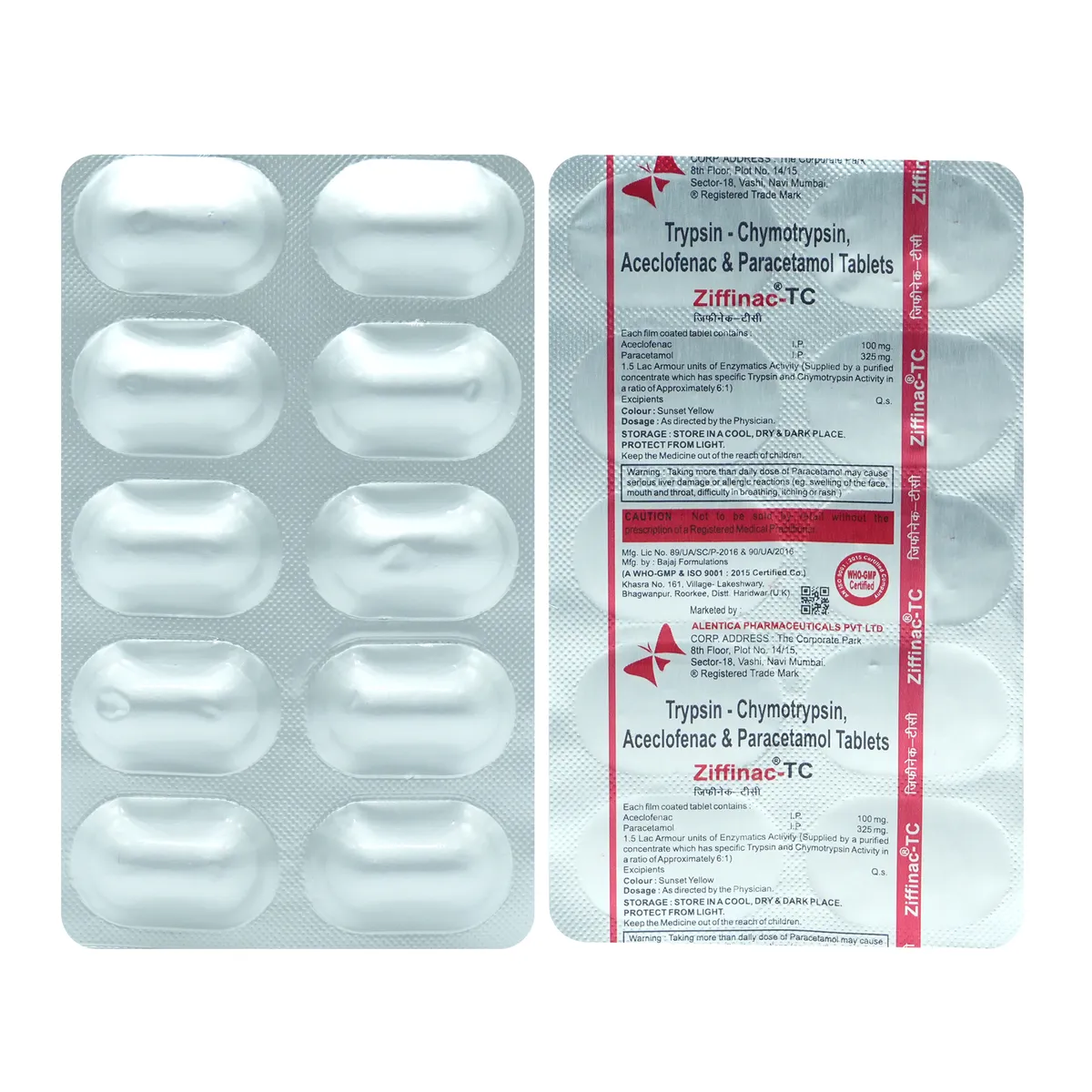
Ziffinac-TC Tablet is used to relieve pain and inflammation associated with osteoarthritis, rheumatoid arthritis, spondylosis, spondyloarthritis, and ortho-degenerative disorders. It works by blocking the action of chemical messengers that cause pain and inflammation. Besides this, it helps reduce swelling and inflammation by breaking down the abnormal proteins at the site of inflammation.

Read more
Written By Santoshini Reddy G , M Pharmacy
Reviewed By Dr Aneela Siddabathuni , MPharma., PhD
OffersOffers & Discounts

Get Free delivery (₹99) with circle icon

Join Circle
coupon
Get 18% Off with Coupons
coupon
Extra 10% Off with Bank Offers
bank offer
bank offer
bank offer

More about the Product

Manufacturer/Marketer :

Alentica Pharmaceuticals Pvt Ltd

Consume Type :

Oral

Expires on or after :

Jan-27

Return Policy :

Not Returnable

About Ziffinac-TC Tablet

Ziffinac-TC Tablet is a medicine prescribed to relieve pain, reduce swelling, and lower inflammation in various musculoskeletal conditions. It is commonly used to treat joint pain, muscle spasms, and swelling after surgeries or physical injuries. This medicine helps speed up your recovery by targeting both the sensation of pain and the underlying tissue swelling.

To get the best results, you must take Ziffinac-TC Tablet consistently at the intervals your doctor advises. It is highly recommended to take this medicine with food or a glass of milk to protect your stomach from irritation. Alongside taking your medicine, gentle stretching, getting adequate rest, and avoiding heavy lifting can help speed up your physical recovery.

While taking Ziffinac-TC Tablet , some people may experience mild side effects like nausea, mild stomach discomfort, or diarrhoea. Most of these symptoms go away as your body adjusts, but you must talk to your doctor immediately if you notice severe stomach pain, black stools, or yellowing of your skin or eyes.

Talk to your doctor before starting this medicine if you have high blood pressure, asthma, a history of bleeding disorders, or kidney, liver, or heart issues. Do not take this if you have active stomach ulcers, severe heart failure, or serious liver or kidney disease.NSAIDs like aceclofenac may slightly increase the risk of heart attack or stroke, especially with long-term use or in people with existing heart disease. Use this medicine at the lowest effective dose for the shortest duration recommended by your doctor.

This medicine can interact with alcohol, which significantly increases your risk of liver damage and stomach bleeding. If you are pregnant, planning a pregnancy, breastfeeding, or are an elderly individual, consult your doctor before using Ziffinac-TC Tablet , as special precautions or alternative treatments may be required.

Uses of Ziffinac-TC Tablet

Ziffinac-TC Tablet is used to treat the following conditions:

  • Post-operative pain and swelling: Ziffinac-TC Tablet helps reduce tissue swelling and pain after surgical procedures, supporting a smoother healing process.
  • Osteoarthritis: It eases the persistent joint pain, stiffness, and inflammation associated with the wear-and-tear of joint cartilage.
  • Rheumatoid arthritis: It relieves painful inflammation, swelling, and joint stiffness caused by this chronic autoimmune condition.
  • Muscle spasms and injuries: It targets localised muscle pain and swelling resulting from strains, sprains, or trauma.

Key Benefits

Ziffinac-TC Tablet provides relief from pain, inflammation, and swelling. When taken as prescribed, it offers the following benefits: 

  • Faster Recovery: By reducing swelling at the site of injury or surgery, it improves local blood circulation, which helps tissues heal more efficiently.
  • Restores Pain-Free Movement: It allows you to perform daily activities, attend physical therapy sessions, and maintain mobility without severe physical discomfort.
Side effects of Ziffinac-TC Tablet
  • Do not consume spicy foods, caffeine, and alcohol.
  • Choose low-acid fruits and vegetables like apples, melons, and carrots.
  • Include whole grains like whole-wheat bread, oatmeal, and brown rice.
  • Limit processed meats like hotdogs and sausages.
  • Avoid fatty, spicy, or acidic salad dressings.
  • Limit tomatoes and tomato-based products.
  • Quit smoking to promote ulcer healing.
  • Adopt a balanced diet and lifestyle to reduce the risk of peptic ulcers.
  • Follow a low-fiber, soft food diet with easily digestible liquids and pureed foods.
  • Begin with clear liquids like water, broth, and electrolyte drinks.
  • Progress to soft foods like mashed potatoes, applesauce, plain yogurt, scrambled eggs, and well-cooked rice.
  • Avoid high-fiber foods, raw vegetables, tough meats, spicy foods, and irritants to the digestive tract.
  • Eat smaller, frequent meals to reduce digestive strain.
  • Stay hydrated with plenty of fluids, avoiding sugary drinks.
  • Chew food thoroughly to aid digestion.
  • Avoid strenuous activities and rest when needed.
  • Before altering your diet, seek guidance from your healthcare provider.
  • Always follow your doctor's instructions on dietary restrictions and medical supervision.
Overcome Medication-Induced Nausea: A 9-Step Plan
  • Inform your doctor about the nausea and discuss possible alternatives to the medication or adjustments to the dosage.
  • Divide your daily food intake into smaller, more frequent meals to reduce nausea.
  • Opt for bland, easily digestible foods like crackers, toast, plain rice, bananas, and applesauce.
  • Avoid certain foods that can trigger nausea, such as fatty, greasy, spicy, and smelly foods.
  • Drink plenty of fluids, such as water, clear broth, or electrolyte-rich beverages like coconut water or sports drinks.
  • Use ginger (tea, ale, or candies) to help relieve nausea.
  • Get adequate rest and also avoid strenuous activities that can worsen nausea.
  • Talk to your doctor about taking anti-nausea medication if your nausea is severe.
  • Record when your nausea occurs, what triggers it, and what provides relief to help you identify patterns and manage your symptoms more effectively.
To prevent, manage, and treat Constipation caused by medication usage, follow these steps:
  • Preventing Vomiting (Before it Happens)
  • Take medication exactly as prescribed by your doctor. This can help minimize side effects, including vomiting.
  • Having a small meal before taking your medication can help reduce nausea and vomiting.
  • Talk to your doctor about taking anti-nausea medication along with your prescribed medication.
  • Managing Vomiting (If it Happens)
  • Try taking ginger in the form of tea, ale, or candy to help alleviate nausea and vomiting.
  • What to Do if Vomiting Persists
  • Consult your doctor if vomiting continues or worsens, consult the doctor for guidance on adjusting your medication or additional treatment.
Here are the steps to manage Gastrointestinal Air and Swelling (GAS) caused by medication:
  • Tell your doctor about your GAS symptoms. They may change your medication regimen or prescribe additional drugs to help you manage them.
  • To manage GAS symptoms, eat a balanced diet of fibre, vegetables, and fruits.
  • Drink enough water throughout the day to avoid constipation and treat GAS symptoms.
  • Regular exercise like yoga and walking may help stimulate digestion and alleviate GAS symptoms.
  • Take probiotics only if your doctor advises, as they may help alleviate GAS symptoms by promoting gut health.
  • Take medication for GAS symptoms only if your doctor advises, as certain medications can interact with your existing prescriptions or worsen symptoms.
  • If symptoms persist, worsen, or are accompanied by severe abdominal pain, vomiting, or bleeding, seek immediate medical attention.
Here are the steps to cope with constipation as a side effect of medication:
  • Inform your doctor about your constipation symptoms. They may adjust your medication or advise alternative treatments.
  • Stay hydrated by drinking sufficient of water (at least 8-10 glasses a day) to help soften stool and promote bowel movements.
  • Increase fibre intake by eating foods high in fibre, such as fruits, whole grains, vegetables and legumes, to help bulk up the stool.
  • Establish a bowel routine by trying to go to the bathroom at the same time each day to train your bowels.
  • Engaging in regular exercise, like walking or yoga, can support in bowel movement stimulation.
  • Consult your doctor if constipation persists, and discuss alternative treatments or adjustments to your medication.

Directions for Use

  • Ziffinac-TC Tablet can be taken with food to avoid stomach upset.
  • Follow your doctor's instructions on the dosage and timing of this medication.
  • Swallow Ziffinac-TC Tablet as a whole with a glass of water.
  • Do not break, chew, or crush it.

How Ziffinac-TC Tablet Works

Ziffinac-TC Tablet contains three active ingredients that work together to relieve pain, inflammation, and swelling. Aceclofenac belongs to a group of medicines called non-steroidal anti-inflammatory drugs (NSAIDs). It works by reducing the activity of cyclooxygenase (COX-1 and COX-2) enzymes, which produce substances called prostaglandins that trigger pain, inflammation, and swelling in the body. By reducing the production of these substances, aceclofenac helps relieve pain and inflammation. Paracetamol serves as a pain reliever and fever reducer. Although its exact mechanism is not fully understood, it is believed to act on pain-processing pathways in the brain and spinal cord to relieve pain while also helping to regulate body temperature in case of a fever. Trypsin chymotrypsin is a blend of proteolytic enzymes. These enzymes act like tiny scissors that break down proteins. When absorbed into the bloodstream, they help break down abnormal proteins that build up around injured tissues, helping reduce swelling. Clinical evidence supports its use as a supportive treatment alongside other therapies to help reduce post-operative and post-traumatic swelling, although research on its effectiveness is ongoing.
bannner image

Alcohol

Unsafe

Avoid consumption of alcohol while taking Ziffinac-TC Tablet as it may increase drowsiness. It may also increase the risk of stomach bleeding.

bannner image

Pregnancy

Caution

Please consult your doctor if you have any concerns; your doctor will prescribe only if the benefits outweigh the risks.

bannner image

Breast Feeding

Caution

Consult your doctor if you are breastfeeding; your doctor will decide whether Ziffinac-TC Tablet can be taken by breastfeeding mothers or not.

bannner image

Driving

Caution

Ziffinac-TC Tablet may cause dizziness and drowsiness. Do not drive or operate machinery unless you are alert.

bannner image

Liver

Caution

Dose adjustment may be needed in patients with liver impairment. Please consult your doctor if you have a liver impairment or any concerns regarding this. Ziffinac-TC Tablet is not recommended for patients with severe hepatic impairment.

bannner image

Kidney

Caution

Dose adjustment may be needed in patients with kidney impairment. Please consult your doctor if you have kidney impairment or any concerns regarding this. Ziffinac-TC Tablet is not recommended for patients with severe renal impairment.

bannner image

Children

Unsafe

Ziffinac-TC Tablet is not recommended for children as safety and effectiveness have not been established.

bannner image

Heart

Unsafe

Ziffinac-TC Tablet should not be taken if you have pre-existing heart disease. Consult your doctor before use if you have any medical conditions or concerns.

bannner image

Geriatrics

Caution

Ziffinac-TC Tablet should be given with caution in elderly patients due to an increased risk of side effects. Seek medical advice before using Ziffinac-TC Tablet .

What if I have taken an overdose of Ziffinac-TC Tablet

If you suspect an overdose, seek immediate medical attention. Symptoms of an overdose may include severe nausea, vomiting, dizziness, stomach pain, or extreme drowsiness.

Diet & Lifestyle Advise

  • Stay hydrated: Drink plenty of water throughout the day. Adequate hydration helps the enzymes in the medicine function optimally to clear inflammation.
  • Protect your stomach: Avoid eating highly spicy, greasy, or acidic foods while taking this medicine, as they can worsen mild stomach irritation.
  • Avoid alcohol: Do not consume alcohol during your treatment, as it increases the risk of stomach ulcers and places extra strain on your liver.
  • Incorporate gentle movement: Once your doctor approves, engage in gentle mobility exercises or physical therapy to keep joints flexible without overexerting yourself.
  • Apply temperature therapy: Use cold compresses for acute swelling within the first 48 hours, or warm compresses for chronic muscle stiffness, to complement the action of Ziffinac-TC Tablet .
health query

Have a query?

How Soon It Starts Working

The time required for Ziffinac-TC Tablet to start to work: The effect of Ziffinac-TC Tablet is observed within 1 hour of administration. The time for which the effects of Ziffinac-TC Tablet last: The duration of Ziffinac-TC Tablet ’s effect is clinically not established.

What if you forget to take Ziffinac-TC Tablet

If you miss a dose, take it as soon as you remember. However, if your next scheduled dose is only a few hours away, skip the missed dose and resume your regular schedule. Do not take a double dose to make up for a forgotten tablet.

Storage

•Store Ziffinac-TC Tablet tablets at room temperature, ideally below 30°C, in a cool, dry place. •Keep the tablets in their original blister packaging to protect them from direct light and moisture.

Drug Warnings

  • Avoid duplicate medicines: Check the labels of other over-the-counter cold, flu, or pain relief remedies before taking them; do not take any other product containing paracetamol while taking Ziffinac-TC Tablet to prevent accidental liver strain.
  • Monitor your stool: Watch for any dark or dark-red stools, which can be an early warning sign of gastrointestinal irritation or bleeding.
  • Inform your surgical team: If you are scheduled for any dental work, diagnostic procedures, or surgeries, inform your practitioner that you are taking Ziffinac-TC Tablet , as it may affect blood clotting.
  • Avoid driving if dizzy: This medicine can occasionally cause dizziness or drowsiness in some individuals. Avoid driving or operating machinery if you experience these symptoms.
  • Limit prolonged use: Use this medicine for the shortest duration possible as recommended by your doctor to minimise risks to your stomach, kidneys, and heart.
     

Drug-Drug Interactions

verifiedApollotooltip

Inform your doctor if you are taking any of the following medicines, as they may interact.

  • Blood thinners (such as warfarin): May increase the risk of internal bleeding when taken together with Ziffinac-TC Tablet .
  • Other NSAIDs (such as ibuprofen or aspirin): May raise the risk of stomach irritation, pain, and severe stomach ulcers.
  • Blood pressure or heart medicines: Ziffinac-TC Tablet may reduce the effectiveness of these medicines in controlling blood pressure.
  • Diuretics (water pills): May increase the risk of kidney damage when combined with this medicine.

Drug-Drug Interactions

Login/Sign Up

How does the drug interact with Ziffinac-TC Tablet:
Co-administration of Atenolol with Ziffinac-TC Tablet could decrease the action of Atenolol.

How to manage the interaction:
Although there is a possible interaction between Atenolol and Ziffinac-TC Tablet, you can take these medicines together if prescribed by a doctor. However, if you experience any unusual symptoms, consult the doctor. Do not discontinue any medications without a doctor's advice.
How does the drug interact with Ziffinac-TC Tablet:
Co-administration of Ziffinac-TC Tablet and Leflunomide may increase the risk of liver problems.

How to manage the interaction:
Although there is a possible interaction between Ziffinac-TC Tablet and Leflunomide, they can be taken together if prescribed by a doctor. However, if you experience symptoms such as fever, chills, swollen or painful joints, unexpected bleeding or bruises, skin rash, itching, vomiting, abdominal pain, light-colored stool, dark-colored urine, yellowing of the skin or eyes, decreased hunger, consult the doctor. Do not stop using any medications without talking to the doctor.
How does the drug interact with Ziffinac-TC Tablet:
Co-administration of Ziffinac-TC Tablet with Mipomersen may increase the risk or severity of liver injury.

How to manage the interaction:
There may be a possibility of interaction between Ziffinac-TC Tablet and Mipomersen, but it can be taken if prescribed by a doctor. However, if you experience symptoms such as fever, chills, swollen or painful joints, unexpected bleeding or bruises, skin rash, itching, vomiting, abdominal pain, light-colored stool, dark-colored urine, yellowing of the skin or eyes, decreased hunger, consult the doctor. Do not stop using any medications without talking to the doctor.
How does the drug interact with Ziffinac-TC Tablet:
Co-administration of Lomitapide and Ziffinac-TC Tablet may increase the risk of severity of liver injury.

How to manage the interaction:
Although there is a possible interaction between Ziffinac-TC Tablet and Lomitapide, you can take these medicines together if prescribed by a doctor. However, if you experience symptoms such as fever, chills, swollen or painful joints, unexpected bleeding or bruises, skin rash, itching, vomiting, abdominal pain, light-colored stool, dark-colored urine, yellowing of the skin or eyes, decreased hunger, consult the doctor. Do not stop using any medications without talking to the doctor.
How does the drug interact with Ziffinac-TC Tablet:
Co-administration of Ziffinac-TC Tablet with Ethanol can increase the risk of liver damage.

How to manage the interaction:
Although taking Ziffinac-TC Tablet with Ethanol can lead to an interaction, it can be taken if prescribed by the doctor. However, if you experience symptoms such as fever, chills, swollen or painful joints, unexpected bleeding or bruises, skin rash, itching, vomiting, abdominal pain, light-colored stool, dark-colored urine, yellowing of the skin or eyes, decreased hunger, consult the doctor. Do not stop using any medications without talking to the doctor.
How does the drug interact with Ziffinac-TC Tablet:
Co-administration of Teriflunomide with Ziffinac-TC Tablet may increase the risk or severity of Liver problems.

How to manage the interaction:
Taking Ziffinac-TC Tablet with Teriflunomide together can possibly result in an interaction, but it can be taken if a doctor has advised it. However, if you experience symptoms such as fever, chills, swollen or painful joints, unexpected bleeding or bruises, skin rash, itching, vomiting, abdominal pain, light-colored stool, dark-colored urine, yellowing of the skin or eyes, decreased hunger, consult the doctor. Do not stop using any medications without talking to the doctor.
How does the drug interact with Ziffinac-TC Tablet:
Co-administration of Ziffinac-TC Tablet and Ketoconazole may increase the risk of liver injury.

How to manage the interaction:
Although there is a possible interaction between Ziffinac-TC Tablet and Ketoconazole, you can take these medicines together if prescribed by a doctor. However, if you experience fever, chills, swollen or painful joints, unexpected bleeding or bruises, skin rash, itching, vomiting, abdominal pain, light-colored stool, dark-colored urine, yellowing of the skin or eyes, decreased hunger, consult the doctor. Do not stop using any medications without talking to the doctor.

Drug-Food Interactions

verifiedApollotooltip

Certain foods or drinks may affect the safety or tolerability of Ziffinac-TC Tablet . Important interactions include:

  • Alcohol: Significantly increases the risk of stomach bleeding and liver damage when consumed while taking Ziffinac-TC Tablet .
No Drug - Food interactions found in our database. Some may be unknown. Consult your doctor for what to avoid during medication.

Drug-Food Interactions

Login/Sign Up

Habit Forming

No

Therapeutic Class

[ANALGESICS]

FAQs

Ziffinac-TC Tablet is used to relieve pain and inflammation associated with musculoskeletal and joint disorders.
Ziffinac-TC Tablet contains Aceclofenac, Paracetamol, and Trypsin chymotrypsin. Aceclofenac and Paracetamol work by blocking the effect of chemical messengers that cause pain and inflammation. Trypsin chymotrypsin breaks down the abnormal proteins at the site of inflammation, thereby reducing swelling and inflammation.
Ziffinac-TC Tablet is used to reduce and relieve pain and inflammation associated with osteoarthritis, rheumatoid arthritis, spondylosis, spondyloarthritis, and ortho-degenerative disorders. Arthritis is tenderness and swelling in the joints.
Do not take any other medicines for pain relief such as NSAIDs along with Ziffinac-TC Tablet unless prescribed by the doctor as it might increase the risk of side effects.
Avoid exceeding the dose and duration advised by the doctor. Taking more than the daily dose of Ziffinac-TC Tablet might cause serious liver damage or allergic reactions like rash, difficulty in breathing, and swelling of the face, throat, and mouth. Therefore, Ziffinac-TC Tablet should not be taken for longer durations unless prescribed by the doctor.
Please consult your doctor if are pregnant or planning pregnancy before taking Ziffinac-TC Tablet . Your doctor will prescribe Ziffinac-TC Tablet only if the benefits outweigh the risks.
Ziffinac-TC Tablet should be taken as advised by the doctor. It is preferably taken with food to avoid stomach upset.
Yes, Ziffinac-TC Tablet is a painkiller as well as anti-inflammatory drug. It contains aceclofenac and paracetamol which possess pain relieving action.
Ziffinac-TC Tablet may cause side effects such as nausea, vomiting, stomach pain, diarrhoea, loss of appetite, indigestion and heartburn. If these side effects persist or worsen, please consult your doctor.
Ziffinac-TC Tablet may be used or recommended to provide relief from tooth pain and swelling after a tooth extraction. However, do not self-medicate as it may cause unwanted side effects.
No, there are no reports of Ziffinac-TC Tablet addiction in patients.
Ziffinac-TC Tablet should be continued for as long as it is advised by your doctor. It can be discontinued if you are using it for short-term when your pain is relieved.
Yes, the use of Ziffinac-TC Tablet can cause dizziness (feeling faint, lightheaded, weak, or unsteady) in some patients. If you experience dizziness or lightheadedness, it is best to take rest for some time and resume once you feel better.
Yes, the long-term use of Ziffinac-TC Tablet can cause damage to the kidneys. Normal kidneys produce prostaglandins, a chemical that protects them from damage. Long term use of painkillers lowers the prostaglandins levels in the body leading to kidney damage. Therefore, painkillers are not recommended to patients with underlying kidney disease.
Ziffinac-TC Tablet contains Paracetamol, which is known to harm the liver especially when taken in more than recommended doses. Also, avoid alcohol consumption while taking Ziffinac-TC Tablet , as it may further increase the risk of liver damage. Also, Ziffinac-TC Tablet is preferably avoided in patients with underlying liver disease. If you notice any early signs and symptoms of liver damage such as yellow skin or eyes, dark urine, fever, stomach pain, nausea, vomiting, loss of appetite, rash, fatigue (overtiredness) and abnormal liver enzymes, contact your doctor immediately.
It may take about an hour to experience the first benefit of pain relief after taking Ziffinac-TC Tablet .
If you forget to take a dose of Ziffinac-TC Tablet , take it as soon as you remember. However, if it is almost time for your next dose, skip the missed dose and take the next scheduled dose in the prescribed time. Do not double the dose to make up for the missed one as this may increase the risk of side effects.
No, taking a higher than the recommended dose may not be more effective, rather it may increase the risk of toxicity and serious side effects. If your symptoms are not relieved or there is an increased severity of your symptoms after using the recommended doses, please consult your doctor.
Ziffinac-TC Tablet is contraindicated in patients with known allergy to any of its ingredients. Patients with a history of stomach ulcers or active, recurrent stomach ulcer/bleeding should ideally avoid taking Ziffinac-TC Tablet . Additionally, patients with a history of high blood pressure, heart failure, and kidney or liver disease, should also avoid taking Ziffinac-TC Tablet .
No, you should avoid drinking alcohol while taking Ziffinac-TC Tablet . Alcohol increases the risk of severe stomach bleeding and places additional stress on your liver, which can lead to liver damage when combined with this medicine.
If you experience mild stomach upset, ensure you are taking the tablet with a full meal or a glass of milk. Avoid spicy or highly acidic foods. If the upset stomach is severe, persistent, or accompanied by dark stools, stop taking the medicine and talk to your doctor immediately.
You should exercise caution. Ziffinac-TC Tablet can sometimes cause fluid retention, which may raise blood pressure or reduce the effectiveness of blood pressure medicines. Talk to your doctor so they can monitor your blood pressure closely during treatment.

Disclaimer

While we strive to provide complete, accurate, and expert-reviewed content on our 'Platform', we make no warranties or representations and disclaim all responsibility and liability for the completeness, accuracy, or reliability of the aforementioned content. The content on our platform is for informative purposes only, and may not cover all clinical/non-clinical aspects. Reliance on any information and subsequent action or inaction is solely at the user's risk, and we do not assume any responsibility for the same. The content on the Platform should not be considered or used as a substitute for professional and qualified medical advice. Please consult your doctor for any query pertaining to medicines, tests and/or diseases, as we support, and do not replace the doctor-patient relationship.

Country of origin

India

Manufacturer/Marketer address

Affinity Life Sciences, Inc., 10 Columbia Drive, Amherst, Nh 03031
Other Info - ZIF0095
whatsapp Floating Button
Buy Now
Add to Cart