Apollo
logo
Select Delivery Location
prescription
Prescription Medicine
info
Best Price

₹120 with coupons & bank offers*

View

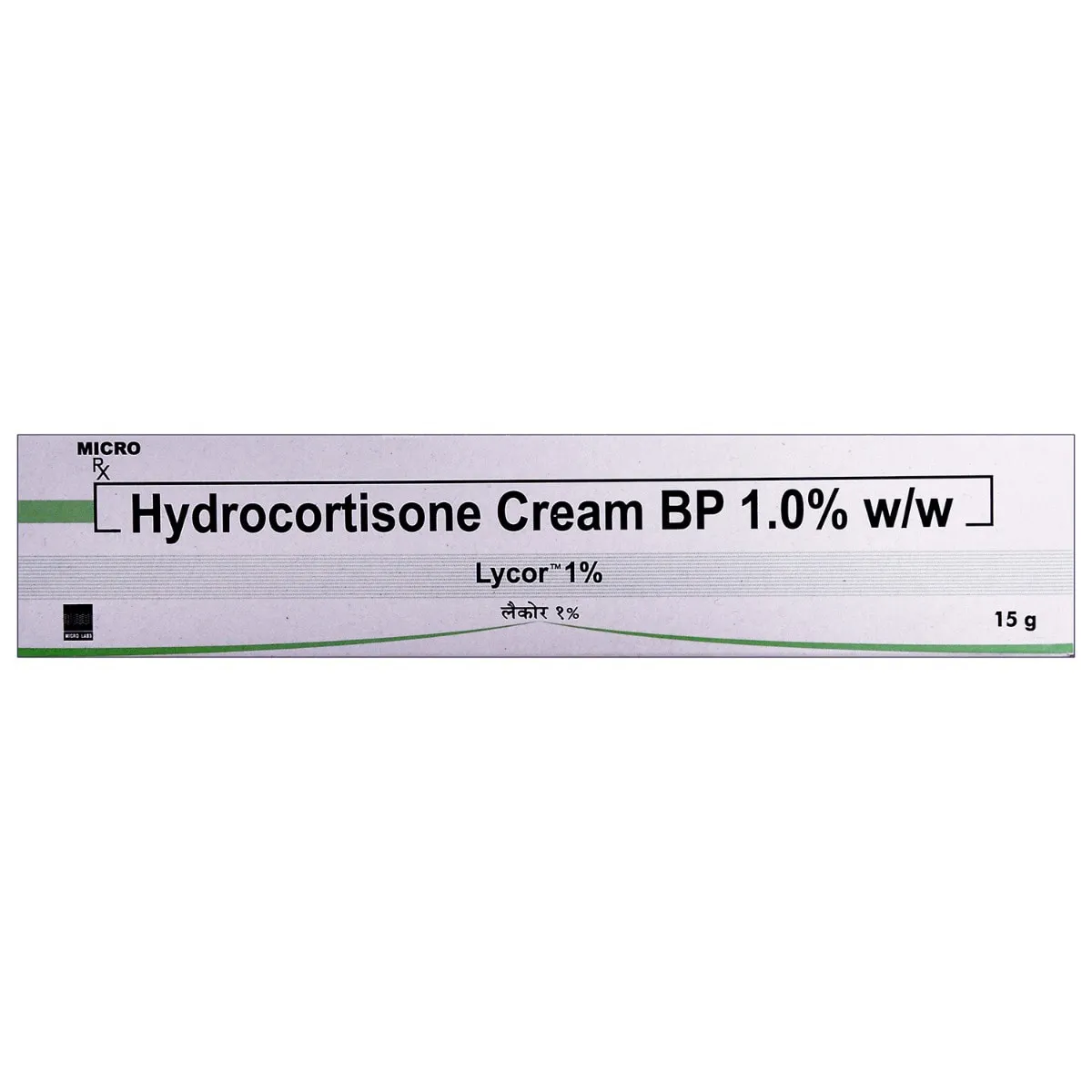
Lycor 1% Cream is used in the treatment of swelling, redness, and itching caused by certain skin problems such as dermatitis, eczema and insect bite reactions. It is also used to treat mild psoriasis, sunburn, and skin irritation, providing rapid symptomatic relief. It helps calm the skin and reduce discomfort when used for short durations.

Read more
Written By Veda Maddala , M Pharmacy
Reviewed By Dr Aneela Siddabathuni , MPharma., PhD
OffersOffers & Discounts

Get Free delivery (₹99) with circle icon

Join Circle
coupon
Get 18% Off with Coupons
coupon
Extra 10% Off with Bank Offers
bank offer
bank offer
bank offer
coupon
Buy 3, Get Extra 2% off

More about the Product

Manufacturer/Marketer :

Micro Labs Ltd

Consume Type :

Topical

Expires on or after :

Jul-27

Return Policy :

Not Returnable

About Lycor 1% Cream

Lycor 1% Cream is a topical corticosteroid medicine used to relieve itching, redness, swelling, and irritation caused by inflammatory skin conditions such as eczema, dermatitis, insect bites, and certain allergic skin reactions. It helps calm the skin's overactive immune response, providing relief from discomfort and reducing the urge to scratch.

Lycor 1% Cream is available in different strengths and formulations, including creams, ointments, and lotions. Lower-strength products (such as 0.5% or 1%) may be available over the counter in some countries, while stronger formulations require a doctor's prescription. Creams are generally preferred for moist or weeping skin, ointments for very dry or thickened skin, and lotions for hairy areas such as the scalp.

You should apply this medicine exactly as directed by your doctor, typically one to four times a day depending on the type and severity of your skin condition. Apply only a thin layer to the affected area. Using a gentle fragrance-free moisturizer regularly and taking short lukewarm showers instead of hot baths can also help improve your skin barrier and support recovery.

Most people tolerate Lycor 1% Cream well. Mild burning, stinging, dryness, or irritation at the application site may occur, especially during the first few days of treatment. Contact your doctor immediately if you develop severe skin thinning, persistent skin discoloration, worsening redness, pus, or signs of a new skin infection.

Before using this medicine, tell your doctor if you have bacterial, fungal, viral, or tuberculous skin infections, rosacea, perioral dermatitis, chickenpox, shingles, or open wounds. Lycor 1% Cream should not be applied to untreated skin infections unless appropriate anti-infective treatment has also been started.

Tell your doctor if you are using any other medicated skin products. If you are pregnant, breastfeeding, planning pregnancy, treating a young child, or using this medicine for a prolonged period, consult your doctor before starting treatment.
 

Uses of Lycor 1% Cream

Lycor 1% Cream is used in the treatment of swelling, redness, and itching caused by certain skin problems such as dermatitis, eczema and insect bite reactions. The detailed uses of Lycor 1% Cream are as follows:

  • Eczema and Dermatitis: Calms red, itchy, and irritated skin caused by atopic dermatitis and contact dermatitis.
  • Insect Bites and Stings: Relieves localized itching, swelling, and redness.
  • Psoriasis: Helps reduce itching and inflammation in selected cases of mild plaque psoriasis, as advised by a doctor.
  • Rashes and Skin Allergies: Reduces irritation caused by soaps, cosmetics, jewelry, poison ivy, and other skin irritants.
     

Key Benefits


Lycor 1% Cream directly reduces inflammation in the affected skin, helping relieve symptoms and improve comfort.

  • Breaks the itch-scratch cycle: Reduces itching, lowering the risk of skin damage and secondary infection.
  • Reduces swelling and redness: Helps calm inflamed skin and improves its appearance.
  • Restores skin comfort: Relieves burning, irritation, and discomfort, helping improve sleep and daily activities.
     

Directions for Use

  • Follow your doctor’s instructions regarding the dosage and duration.
  • Take a small amount of Lycor 1% Cream and apply it as a thin layer on the affected area of the skin as advised by the doctor.
  • Wash your hands before and after using Lycor 1% Cream if your hands are not the affected area.

How Lycor 1% Cream Works

Lycor 1% Cream belongs to a group of medicines called topical corticosteroids. After it is applied to the skin, it enters skin cells and reduces the production of inflammatory chemicals, including prostaglandins and leukotrienes, which are responsible for redness, swelling, itching, and irritation. It also stabilizes inflammatory cells and reduces leakage from small blood vessels, helping decrease swelling and redness. When used correctly, its action remains mainly within the treated skin area, minimizing effects on the rest of the body.
bannner image

Alcohol

Consult your doctor

The interaction of Lycor 1% Cream with alcohol is unknown. If you have any concerns regarding this, please discuss them with your doctor.

bannner image

Pregnancy

Consult your doctor

Lycor 1% Cream should not be used during pregnancy unless considered essential by the doctor. Therefore, if you are pregnant or planning pregnancy, please inform your doctor before using Lycor 1% Cream.

bannner image

Breast Feeding

Consult your doctor

If you are breastfeeding, please inform your doctor before using Lycor 1% Cream.

bannner image

Driving

Safe if prescribed

Lycor 1% Cream usually does not affect your ability to drive or operate machinery.

bannner image

Liver

Consult your doctor

If you have liver problems, please consult your doctor before using Lycor 1% Cream.

bannner image

Kidney

Consult your doctor

If you have kidney problems, please consult your doctor before using Lycor 1% Cream.

bannner image

Children

Unsafe

Lycor 1% Cream is not recommended for children below 12 years unless advised by a doctor.

bannner image

Heart

Consult your doctor

If you have any concerns regarding the use of Lycor 1% Cream in patients with heart problems, please consult a physician.

bannner image

Geriatrics

Consult your doctor

Limited information available about the use of Lycor 1% Cream in geriatric patients. Please consult your physician.

What if I have taken an overdose of Lycor 1% Cream

Accidental overdose is uncommon. However, prolonged excessive application over large areas or accidental swallowing requires immediate medical advice.

Diet & Lifestyle Advise

Managing inflammatory skin conditions works best when medicine is combined with healthy skincare habits.

  • Apply a fragrance-free moisturizer within three minutes after bathing.
  • Take short lukewarm showers instead of hot baths.
  • Wear loose cotton clothing.
  • Use mild fragrance-free soaps and detergents.
  • Keep fingernails short to reduce scratching.
  • Avoid repeatedly using topical steroids on the same area for prolonged periods without medical review, as continuous use may reduce their effectiveness
  • over time (tachyphylaxis) and increase the risk of side effects.
     
health query

Have a query?

How Soon It Starts Working

  • The time required for Lycor 1% Cream to start to work: The time required for Lycor 1% Cream to show its action is unknown.
  • The time for which the effects of Lycor 1% Cream last: The duration of action for Lycor 1% Cream is unknown.

What if you forget to take Lycor 1% Cream

Apply it as soon as you remember. If it is nearly time for your next application, skip the missed dose. Do not apply extra medicine.

Storage

• Store the tube or container at room temperature, ideally between 20°C and 25°C (68°F to 77°F).

Drug Warnings

  • Apply only a thin layer.
  • Avoid contact with the eyes, nose, and mouth.
  • Do not apply to untreated bacterial, fungal, or viral skin infections.
  • Avoid use on rosacea or perioral dermatitis unless specifically advised by your doctor.
  • Do not apply to open wounds or severe burns.
  • Do not cover with airtight dressings unless instructed.
  • If symptoms do not improve after about 7 days of self-treatment, or if they worsen at any time, consult your doctor. Prescription treatment may continue longer under medical supervision.
     

Drug-Drug Interactions

verifiedApollotooltip
  • Other topical corticosteroids may increase the risk of skin thinning and other steroid-related side effects.
  • Other medicated creams or ointments should be discussed with your healthcare provider before use.
     
No Drug - Drug interactions found in our data. We may lack specific data on this medicine and are actively working to update our database. Consult your doctor for personalized advice

Drug-Drug Interactions

Login/Sign Up

Drug-Food Interactions

verifiedApollotooltip

No clinically significant food interactions are known with Lycor 1% Cream when used as directed.

No Drug - Food interactions found in our database. Some may be unknown. Consult your doctor for what to avoid during medication.

Drug-Food Interactions

Login/Sign Up

Habit Forming

No

Therapeutic Class

[CORTICOSTEROIDS]

FAQs

Lycor 1% Cream is used to treat swelling, redness, and itching caused by certain skin problems such as dermatitis, eczema and insect bite reactions.
Lycor 1% Cream contains Hydrocortisone, a steroid that works by acting inside skin cells and inhibiting the production of certain chemical messengers in the body that cause redness, itching, and swelling.
You are recommended not to use Lycor 1% Cream on the face unless advised by your doctor, as the skin on the face is delicate. However, if advised by the doctor, follow the instructions and do not use it for more than 5 days on the face, as the skin on the face thins easily.
You are recommended to use Lycor 1% Cream for a maximum of 1 week or for as long as your doctor has prescribed it. However, if there is a recurrence of your condition within 2 weeks shortly after stopping treatment with Lycor 1% Cream, do not restart using it, and please consult a doctor.
Lycor 1% Cream is not recommended to treat psoriasis (scales and itchy, dry patches) as it may worsen the condition or could lead to recurring psoriasis after stopping the treatment. Therefore, if you have psoriasis, please consult a doctor so that appropriate medication is prescribed.
Lycor 1% Cream may be used to treat nappy rash only if advised by the doctor. In such cases, the treatment must not normally exceed more than 7 days.
You should only apply this medicine to your face if your doctor has specifically instructed you to do so. The skin on your face is thin and sensitive, making it more prone to side effects like skin thinning or color changes. Talk to your doctor for safe alternatives for facial skin issues.
Generally, you should use this medicine for the shortest time needed to clear your symptoms. Unless directed by your doctor, do not use it for more than seven consecutive days. Talk to your doctor if your symptoms do not improve.
It is best to let the cream absorb completely into your skin before applying any cosmetics, sunscreens, or moisturizers. Ensure the treated area is dry and the medicine is fully rubbed in first. Talk to your doctor or pharmacist about combining cosmetics with your treatment.
If you are pregnant or breastfeeding, you should consult your doctor before using this medicine. While topical application absorbs less than oral medicines, your doctor will weigh the benefits against any potential risks to your baby. Do not apply this cream to the breasts if you are breastfeeding.
Do not use this medicine on infants or young children, especially for diaper rash, unless a pediatrician has specifically prescribed it. Diapers and plastic pants can act like tight bandages, increasing how much medicine the baby's body absorbs. Talk to your doctor for safe pediatric treatments.
If the cream gets into your eyes, rinse them immediately and thoroughly with large amounts of cool, clean water. If you experience persistent eye irritation, pain, or changes in your vision, contact an eye specialist or seek medical help right away.
Covering the treated skin with airtight bandages or plastic wrap can trap the medicine, causing your skin to absorb too much of it. This increases the risk of local skin damage and systemic side effects. Talk to your doctor before bandaging any treated area.
Skin thinning may appear as fragile skin that bruises easily, visible tiny blood vessels close to the skin's surface, or stretch marks in the treated area. If you notice any of these signs, stop using the medicine and talk to your doctor.

Disclaimer

While we strive to provide complete, accurate, and expert-reviewed content on our 'Platform', we make no warranties or representations and disclaim all responsibility and liability for the completeness, accuracy, or reliability of the aforementioned content. The content on our platform is for informative purposes only, and may not cover all clinical/non-clinical aspects. Reliance on any information and subsequent action or inaction is solely at the user's risk, and we do not assume any responsibility for the same. The content on the Platform should not be considered or used as a substitute for professional and qualified medical advice. Please consult your doctor for any query pertaining to medicines, tests and/or diseases, as we support, and do not replace the doctor-patient relationship.

Country of origin

India

Manufacturer/Marketer address

27, RACE COURSE ROAD, BANGALORE-560 001, INDIA
Other Info - LYC0003
whatsapp Floating Button
Buy Now
Add to Cart