apollo
logo
0
Select Delivery Location
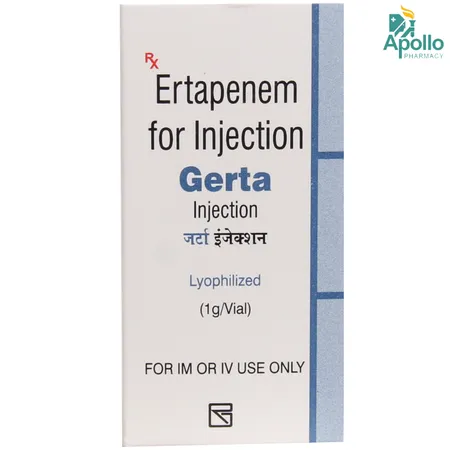
compositionComposition:ERTAPENEM-1GM
prescription
Prescription Medicine
info
Best Price

₹3330 with coupons & bank offers*

View

Gerta Injection is an antibiotic used to treat bacterial infections. It can be used to treat intra-abdominal (stomach) infections, skin infections such as diabetic foot infections, community-acquired pneumonia (lung infection), and acute (short-term) gynaecological infections such as urinary tract infections and pelvic infections. It is also used to prevent surgical site infections in patients who have undergone surgery on the colon or rectum.

Read more
Written By Veda Maddala , M Pharmacy
Reviewed By Bayyarapu Mahesh Kumar , M Pharmacy
OffersOffers & Discounts

Get Free delivery (₹99) with circle icon

Join Circle
Get Extra 18% Off with Coupons
Extra 10% Off with Bank Offers
bank offer
bank offer
bank offer

More about the Product

Composition :

ERTAPENEM-1GM

Manufacturer/Marketer :

German Remedies Ltd

Consume Type :

Parenteral

Expires on or after :

Jan-27

Return Policy :

Not Returnable

About Gerta Injection

Gerta Injection is an injectable antibiotic used to treat moderate to severe bacterial infections in various parts of the body. It is prescribed for serious conditions like complicated lung, skin, stomach, and urinary tract infections, as well as gynaecological infections. Doctors often use this medication in hospital settings or through home-infusion programs to clear hard-to-treat bacterial growth.

This medication is typically injected once daily, and it is crucial to use it at the same time every day to maintain a steady level of the medicine in your body. Because it is given as an injection or intravenous infusion, it bypasses your digestive system entirely, meaning it can be injected regardless of when you last ate. Eating a balanced diet and staying well-hydrated can help your body recover more quickly from the underlying infection.

While using Gerta Injection, you might experience mild side effects like diarrhoea, nausea, or redness at the injection site. However, if you develop severe watery or bloody diarrhoea, a high fever, or unusual muscle twitches, you must contact your healthcare provider immediately.

Before starting treatment, tell your doctor if you have a history of kidney disease, seizures, or allergies to penicillin and other antibiotics. You should not take this medicine if you have had a severe allergic reaction to similar antibiotics in the past.

This medicine can lower the levels of certain seizure medications in your blood, making them less effective, so your doctor must review all your current prescriptions before your first dose. If you are pregnant, breastfeeding, or an older adult, discuss the risks and benefits with your healthcare provider to ensure safe use.

Uses of Gerta Injection

Gerta Injection is used to treat certain moderate to severe bacterial infections caused by susceptible bacteria. Its uses include:

  • Complicated intra-abdominal infections: Gerta Injection helps by destroying harmful bacteria causing deep-seated infections inside the stomach and abdomen.
  • Complicated skin and skin structure infections: It clears deep tissue infections, including diabetic foot wounds, by stopping the growth of the invading bacteria.
  • Community-acquired pneumonia: It targets and eliminates the specific bacteria responsible for severe lung infections, helping you breathe easier.
  • Complicated urinary tract infections: It penetrates the urinary system to destroy bacteria that cause severe kidney or bladder infections.
  • Acute pelvic infections: It treats serious bacterial infections of the female reproductive organs, preventing further complications.
  • Prevention of surgical site infections: It is sometimes injected before colorectal surgery to prevent bacteria from causing infections after the procedure.
     

Key Benefits

When used as prescribed, Gerta Injection helps control serious bacterial infections and supports recovery. Its key benefits include:

  • Rapid relief from severe infections: Because this medicine is injected directly into your bloodstream or muscle, it starts fighting bacteria immediately. This helps reduce severe symptoms like fever and pain much faster than oral medications.
  • Convenient once-daily dosing: Unlike many other intravenous antibiotics that require multiple doses a day, Gerta Injection is typically given just once every 24 hours. This makes it easier to manage, especially for patients receiving therapy at home.
  • Broad-spectrum protection: It works against a wide variety of oxygen-loving and oxygen-avoiding bacteria. This ensures that complex infections caused by multiple types of bacteria are treated effectively with a single medication.
     
Side effects of Gerta Injection
Here are the precise steps to cope with diarrhoea caused by medication usage:
  • Inform Your Doctor: Notify your doctor immediately about your diarrhoea symptoms. This allows them to adjust your medication or provide guidance on managing side effects.
  • Stay Hydrated: Drink plenty of fluids to replace lost water and electrolytes. Choose water, clear broth, and electrolyte-rich drinks. Avoid carbonated or caffeinated beverages to effectively rehydrate your body.
  • Follow a Bland Diet: Eat easy-to-digest foods to help firm up your stool and settle your stomach. Try incorporating bananas, rice, applesauce, toast, plain crackers, and boiled vegetables into your diet.
  • Avoid Trigger Foods: Steer clear of foods that can worsen diarrhoea, such as spicy, fatty, or greasy foods, high-fibre foods, and dairy products (especially if you're lactose intolerant).
  • Practice Good Hygiene: Maintain good hygiene to prevent the spread of infection. To stay healthy, wash your hands frequently, clean and disinfect surfaces regularly, and avoid exchanging personal belongings with others.
  • Take Anti-Diarrheal Medications: If your doctor advises, anti-diarrheal medications such as loperamide might help manage diarrhoea symptoms. Always follow your doctor's directions.
  • Keep track of your diarrhoea symptoms. If they don't get better or worse or are accompanied by severe stomach pain, blood, or dehydration signs (like extreme thirst or dark urine), seek medical help.
Overcome Medication-Induced Nausea: A 9-Step Plan
  • Inform your doctor about the nausea and discuss possible alternatives to the medication or adjustments to the dosage.
  • Divide your daily food intake into smaller, more frequent meals to reduce nausea.
  • Opt for bland, easily digestible foods like crackers, toast, plain rice, bananas, and applesauce.
  • Avoid certain foods that can trigger nausea, such as fatty, greasy, spicy, and smelly foods.
  • Drink plenty of fluids, such as water, clear broth, or electrolyte-rich beverages like coconut water or sports drinks.
  • Use ginger (tea, ale, or candies) to help relieve nausea.
  • Get adequate rest and also avoid strenuous activities that can worsen nausea.
  • Talk to your doctor about taking anti-nausea medication if your nausea is severe.
  • Record when your nausea occurs, what triggers it, and what provides relief to help you identify patterns and manage your symptoms more effectively.
Dealing with Medication-Induced Headache:
  • Hydrate your body: Drink enough water to prevent dehydration and headaches.
  • Calm Your Mind: Deep breathing and meditation can help you relax and relieve stress.
  • Rest and Recharge: Sleep for 7-8 hours to reduce headache triggers.
  • Take rest: lie down in a quiet, dark environment.
  • Cold or warm compresses can help reduce tension.
  • Stay Upright: Maintain good posture to keep symptoms from getting worse.
  • To treat headaches naturally, try acupuncture or massage therapy.
  • Over-the-counter pain relievers include acetaminophen and ibuprofen.
  • Prescription Assistance: Speak with your doctor about more substantial drug alternatives.
  • Severe Headaches: Seek emergency medical assistance for sudden, severe headaches.
  • Frequent Headaches: If you get reoccurring headaches, consult your doctor.
  • Headaches with Symptoms: Seek medical attention if your headaches include fever, disorientation, or weakness.
  • Your doctor may recommend regular liver function tests (LFT) to monitor liver enzyme levels.
  • To support your liver, eat a healthy diet with lots of fruits, vegetables, lean proteins, and healthy fats.
  • Avoid eating processed meats, sugary foods, and unhealthy fats.
  • Limit your alcohol consumption, since too much can worsen liver function and contribute to high levels of Alkaline Phosphatase (ALP).
  • Stay active with regular exercise, drink plenty of water, and try to avoid harmful chemicals that can damage your liver.
  • Quit smoking to lower the risk of elevated ALP levels.
Here's a comprehensive approach to managing medication-triggered fever:
  • Inform your doctor immediately if you experience a fever after starting a new medication.
  • Your doctor may adjust your medication regimen or dosage as needed to minimize fever symptoms.
  • Monitor your body temperature to monitor fever progression.
  • Drink plenty of fluids, such as water or electrolyte-rich beverages, to help your body regulate temperature.
  • Get plenty of rest and engage in relaxation techniques, such as deep breathing or meditation, to help manage fever symptoms.
  • Under the guidance of your doctor, consider taking medication, such as acetaminophen or ibuprofen, to help reduce fever.
  • If your fever is extremely high (over 103°F), or if you experience severe symptoms such as confusion, seizures, or difficulty breathing, seek immediate medical attention.

Directions for Use

  • Follow your doctor’s recommendations on the dosage and timing of this medication to achieve optimal results.
  • Gerta Injection will be administered by a healthcare professional.
  • Do not self-administer.

How Gerta Injection Works

Gerta Injection contains ertapenem, which belongs to a class of medications known as carbapenem antibiotics. It works by interfering with the ability of bacteria to build their protective outer cell walls. Without a stable cell wall, the bacterial cells cannot survive the pressure within their own structures and eventually burst and die. By targeting specific proteins that bacteria need to build their cell walls, Gerta Injection effectively stops the infection from spreading deeper into your tissues. Since human cells do not have these specific bacterial cell wall structures, the medicine selectively destroys the bacteria without harming your body's healthy cells.
bannner image

Alcohol

Caution

Gerta Injection may not interact with alcohol. However, it is advised not to consume alcohol as it may interfere with your ability to fight infections.

bannner image

Pregnancy

Caution

Gerta Injection is a category B medicine and may not cause harmful effects on the unborn baby. However, your doctor may prescribe this medicine if the benefits outweigh the risks.

bannner image

Breast Feeding

Caution

Gerta Injection may get secreted in the breast milk. Your doctor may advise you to stop breastfeeding while using this medicine.

bannner image

Driving

Caution

Gerta Injection may cause dizziness in some cases. So, do not drive or operate heavy machinery if you feel dizzy.

bannner image

Liver

Safe if prescribed

Gerta Injection is probably safe when used in patients with liver diseases. However, if you have liver problems, inform your doctor before taking this medicine.

bannner image

Kidney

Caution

Gerta Injection should be used with caution if you have kidney problems. Your doctor may adjust the dose if necessary based on your condition.

bannner image

Children

Caution

Gerta Injection is not recommended for use in children below 2 years of age. Your doctor will decide the dose of Gerta Injection based on your child's age and condition.

bannner image

Heart

Consult your doctor

Limited information is available; please consult your doctor.

bannner image

Geriatrics

Caution

Gerta Injection can be given in elderly patients with caution and only if prescribed by the doctor.

What if I have taken an overdose of Gerta Injection

An overdose of this medicine is rare when given by a professional, but if you suspect an overdose at home, seek immediate medical attention or call emergency services. Symptoms may include extreme dizziness, confusion, or seizures.

Diet & Lifestyle Advise

  • Support your gut health: Take a high-quality probiotic supplement or eat fermented foods like yoghurt with active cultures a few hours after your injection to help restore the healthy bacteria in your gut.
  • Stay well-hydrated: Drink plenty of water and clear broths throughout the day, especially if you experience mild diarrhoea, to prevent dehydration.
  • Rest and recover: Avoid strenuous physical activities while your body is fighting off a severe infection; prioritise getting 7 to 9 hours of sleep each night.
  • Eat nutrient-rich meals: Focus on a diet high in lean proteins, vitamins, and minerals to provide your immune system with the energy it needs to repair tissues.
     
health query

Have a query?

How Soon It Starts Working

The time required for Gerta Injection to start to work: The time required for Gerta Injection to start to work is 2 to 3 hours after administration. The time for which the effects of Gerta Injection last: The duration of action for Gerta Injection is not clinically established.

What if you forget to take Gerta Injection

If you miss a dose, contact your doctor or healthcare provider immediately for instructions on when to inject your next dose. Do not take a double dose to make up for a missed one.

Storage

•Store the dry powder vials of Gerta Injection at a controlled room temperature, between 15°C and 25°C (59°F to 77°F), away from direct heat and moisture. Once the powder is mixed with a liquid diluent, it should generally be used immediately or stored in a refrige

Drug Warnings

  • Inspect the vial before mixing: Check for cracks in the glass vial and ensure the dry powder is not clumped or discoloured before adding the liquid.
  • Check the solution clarity: After mixing, make sure the liquid is completely clear without any visible floating specks before you inject it.
  • Never reuse needles or syringes: Use a brand-new sterile needle and syringe for every single injection to prevent dangerous blood infections.
  • Avoid mixing with other IV drugs: Do not mix Gerta Injection in the same IV line or bag with other medications unless your doctor or pharmacist has explicitly told you it is safe.
  • Monitor for injection site reactions: If you notice worsening warmth, severe swelling, or red streaks spreading from your injection site, contact your healthcare provider right away.
  • Complete the full course: Even if your fever is gone and you feel healthy, finish the entire prescribed treatment to ensure all bacteria are killed and to prevent the infection from returning.
     

Drug-Drug Interactions

verifiedApollotooltip
  • Valproic acid or divalproex sodium: Gerta Injection can significantly lower the levels of these seizure medicines in your blood, which increases your risk of experiencing a breakthrough seizure.
  • Probenecid: Taking this gout medication alongside Gerta Injection can prevent your kidneys from clearing the antibiotic, leading to abnormally high levels of the medicine in your body and increasing the risk of side effects.
     

Drug-Drug Interactions

Login/Sign Up

How does the drug interact with Gerta Injection:
The combined use of Gerta Injection and sodium valproate can reduce the blood levels of valproic acid.

How to manage the interaction:
Co-administration of Gerta Injection and sodium valproate can lead to an interaction, it can be taken if advised by your doctor. However, if you experience any symptoms like loss of seizure control or changes in behavior, consult your doctor immediately. Do not discontinue any medications without consulting the doctor.
How does the drug interact with Gerta Injection:
Coadministration of Gerta Injection with Divalproex may reduce the blood levels of Divalproex and increase the risk of developing seizures.

How to manage the interaction:
Although there is a possible interaction, Gerta Injection can be taken with Divalproex if prescribed by the doctor. Consult the doctor if you experience loss of seizure control or changes in behaviour. Do not stop using any medications without talking to your doctor.
How does the drug interact with Gerta Injection:
The combined use of tramadol with Gerta Injection can make tramadol less effective as a treatment.

How to manage the interaction:
Taking Gerta Injection with tramadol together can possibly result in an interaction, it can be taken if your doctor has advised it. However, if you experience any symptoms such as confusion, hallucination, seizure, increased heart rate, blurred vision, tremors, incoordination, stomach cramps, nausea, vomiting, and diarrhea, contact a doctor immediately. Do not discontinue any medications without consulting a doctor.
ErtapenemMetrizamide
Severe
How does the drug interact with Gerta Injection:
Co-administration of Metrizamide and Gerta Injection may increase the risk or severity of seizures.

How to manage the interaction:
Co-administration of Gerta Injection and Metrizamide can lead to an interaction, it can be taken if advised by a doctor. However, if you are elderly, undergoing alcohol or drug withdrawal, have a history of seizures, or have a condition affecting the central nervous system such as a brain tumor or head trauma, consult a doctor immediately. Do not stop using any medications without a doctor's advice.
ErtapenemIomeprol
Severe
How does the drug interact with Gerta Injection:
Co-administration of Iomeprol and Gerta Injection may increase the risk or severity of seizures.

How to manage the interaction:
Co-administration of Gerta Injection and Iomeprol can lead to an interaction, it can be taken if advised by a doctor. Do not stop using any medications without a doctor's advice.
ErtapenemBCG vaccine
Severe
How does the drug interact with Gerta Injection:
When BCG vaccine is used with Gerta Injection, its effectiveness may be reduced.

How to manage the interaction:
Although there is a possible interaction between Gerta Injection and BCG vaccine, you can take these medicines together if prescribed by your doctor. Do not stop using any medications without first talking to your doctor.
How does the drug interact with Gerta Injection:
Co-administration of Bupropion may rarely cause seizures and combining it with Gerta Injection may increase that risk.

How to manage the interaction:
Although there is a possible interaction, Gerta Injection can be taken with bupropion if prescribed by the doctor. Do not discontinue the medications without consulting a doctor.

Drug-Food Interactions

verifiedApollotooltip

No clinically significant food interactions are known with Gerta Injection when used as directed.     
 

No Drug - Food interactions found in our database. Some may be unknown. Consult your doctor for what to avoid during medication.

Drug-Food Interactions

Login/Sign Up

Habit Forming

No

Therapeutic Class

[ANTIBIOTICS]

FAQs

Gerta Injection is used to treat bacterial infections. It can be used to treat intra-abdominal (stomach) infections, skin infections such as diabetic foot infections, community-acquired pneumonia (lung infection), and acute (short-term) gynaecological infections such as urinary tract infections and pelvic infections. It is also used to prevent surgical site infections in patients who have undergone surgery on the colon or rectum.
Gerta Injection contains ‘Ertapenem’, which belongs to the class of ‘carbapenem antibiotics. It has bactericidal action and kills the bacteria that are causing the infection. It works by destroying the cell wall (outer layer of the bacteria), which is essential for its survival.
Gerta Injection may not cause anemia. However, it can lower platelet and white blood cell (WBC) count in some patients. Consult your doctor immediately.
Gerta Injection may cause side effects such as nausea, vomiting, diarrhea, headache, and injection site pain. These side effects are usually mild and temporary. However, if any of these side effects persist or get severe, consult a doctor immediately.
intra-abdominal infection is a broader term used to describe infections associated with the stomach, intestine, peritoneum (lining of the abdominal wall), or other parts present in the abdomen. It mostly occurs due to a complication of another condition, such as appendicitis, following surgery, or a trauma. Common symptoms include nausea, vomiting, abdominal pain, and change in bowel habits.Â
If Gerta Injection isn't suitable for you, don't hesitate to share any concerns or issues with Gerta Injection, and your doctor will guide you through the next steps. They will explore alternative treatments. They may recommend a different antibiotic or adjust the dosage to minimize side effects. Your doctor will work closely with you to find a personalized solution for your unique needs and medical history.
Drug resistance occurs when bacteria or other microbes adapt and stop reacting to the medications intended to kill them. This makes infections more difficult to treat. Yes, it is possible to become resistant to Gerta Injection. Bacteria can create enzymes called carbapenemases that break down Gerta Injection, rendering it useless.
Gerta Injection may cause a drop in blood sugar levels, although this is not very common. If you have diabetes and are prescribed Gerta Injection to treat foot infections, regular blood sugar monitoring is crucial. Consult your doctor if you notice significant changes.
Gerta Injection is not recommended for use in children below 2 years of age. Your doctor will decide the dose of Gerta Injection based on your child's age and condition.
Do not stop taking your Gerta Injection even if you are feeling better! It's important to have a complete recovery. Stopping too soon can cause incomplete recovery, recurrence of symptoms, and side effects. Instead, tell your doctor about your development and follow their instructions to ensure the best outcome for your health.
Gerta Injection is given parenterally, which means it is injected. It can be given as a slow drip into a vein (intravenous infusion) over 30 minutes, or as an injection deep into a large muscle. Talk to your doctor if you have questions about your specific injection method.
Some people who are allergic to penicillin may also have an allergic reaction to Gerta Injection. It is important to tell your healthcare provider about any past drug allergies before you start this medication. Talk to your doctor to see if this treatment is safe for you.
Alcohol does not directly stop this antibiotic from working, but drinking alcohol can dehydrate your body and weaken your immune system while you are recovering from a severe infection. It is best to avoid alcohol during your recovery. Talk to your doctor for specific advice.
This antibiotic remains active in your body's tissues and blood for a long time after a single dose. This long-lasting effect allows it to kill bacteria continuously with just one injection every 24 hours. Talk to your doctor if you want to understand more about your dosing schedule.
Seizures are a rare but recognised serious side effect of this class of antibiotics. They are more likely to occur in people who have pre-existing kidney problems or brain disorders. Talk to your doctor if you have a history of seizures or kidney disease.
This medicine should only be used during pregnancy if it is clearly needed and prescribed by a specialist. Small amounts of the medicine can pass into breast milk, so precautions may be necessary. Talk to your doctor if you are pregnant, planning to become pregnant, or breastfeeding.

Disclaimer

While we strive to provide complete, accurate, and expert-reviewed content on our 'Platform', we make no warranties or representations and disclaim all responsibility and liability for the completeness, accuracy, or reliability of the aforementioned content. The content on our platform is for informative purposes only, and may not cover all clinical/non-clinical aspects. Reliance on any information and subsequent action or inaction is solely at the user's risk, and we do not assume any responsibility for the same. The content on the Platform should not be considered or used as a substitute for professional and qualified medical advice. Please consult your doctor for any query pertaining to medicines, tests and/or diseases, as we support, and do not replace the doctor-patient relationship.

Country of origin

India

Manufacturer/Marketer address

Zydus Tower, Satellite Cross Roads,Ahmedabad – 380015 Gujarat, India
Other Info - GER0083
whatsapp Floating Button
Buy Now
Add to Cart