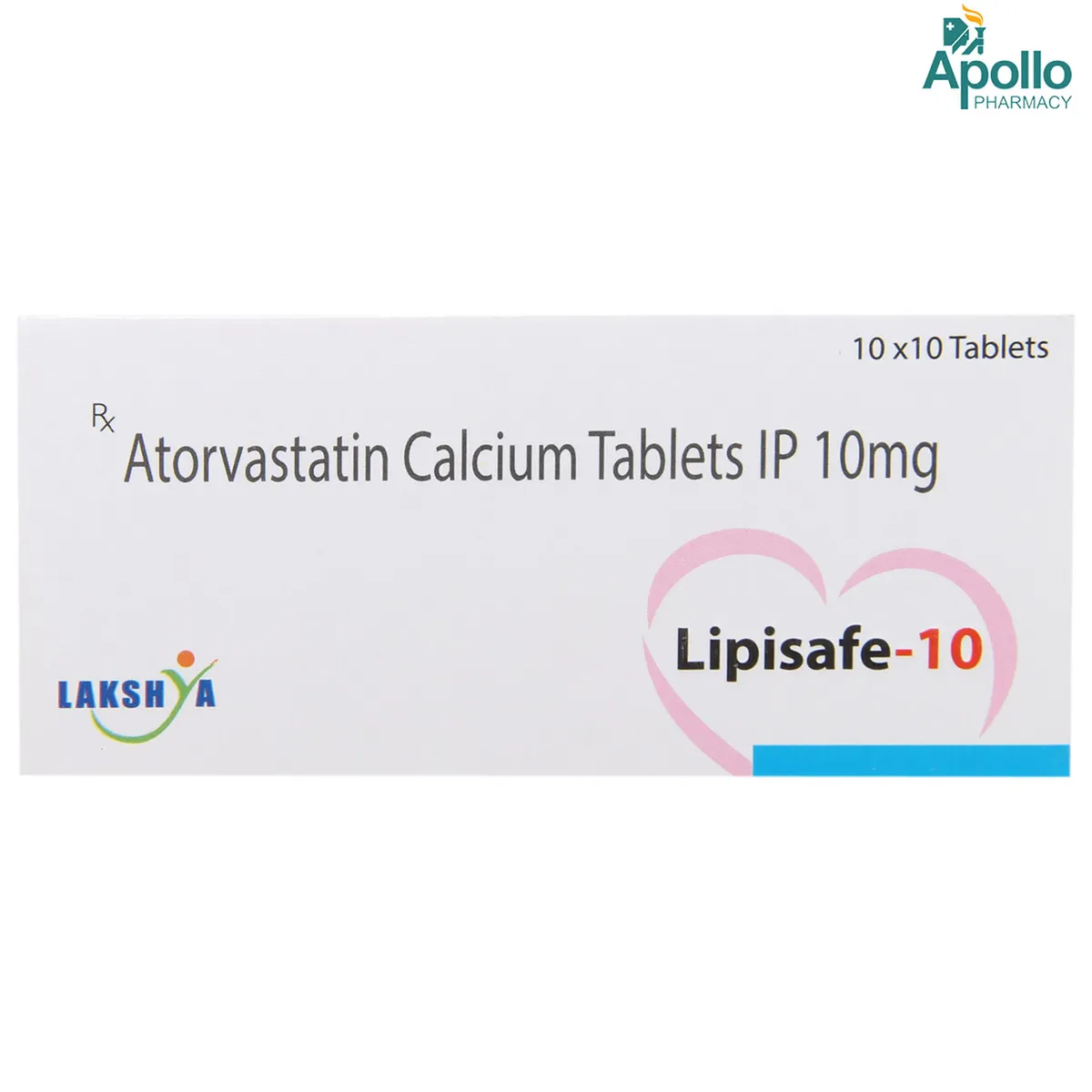
How does the drug interact with Lipisafe 10 Tablet:
Taking Lipisafe 10 Tablet with Posaconazole can increase the blood levels of Lipisafe 10 Tablet. This can increase the risk of side effects.
How to manage the interaction:
Although there is an interaction between posaconazole with Lipisafe 10 Tablet, they can be taken together if advised by your doctor. However, contact the doctor if you experience unexplained muscle pain, weakness, fever, chills, joint pain or swelling, unusual bleeding, skin rash, itching, loss of appetite, fatigue, nausea, vomiting, dark coloured urine, or yellowing of the skin or eyes. Do not discontinue any medications without consulting a doctor.
How does the drug interact with Lipisafe 10 Tablet:
Using conivaptan together with Lipisafe 10 Tablet may significantly increase the blood levels of Lipisafe 10 Tablet.
How to manage the interaction:
Taking Lipisafe 10 Tablet with Conivaptan together can result in an interaction, but it can be taken if a doctor has advised it. You should also seek immediate medical attention if you develop fever, chills, joint pain or swelling, unusual bleeding or bruising, skin rash, itching, loss of appetite, fatigue, nausea, vomiting, dark colored urine, and/or yellowing of the skin or eyes. Do not stop using any medications without a doctor's advice.
How does the drug interact with Lipisafe 10 Tablet:
Using Lipisafe 10 Tablet together with nefazodone may significantly increase the blood levels of Lipisafe 10 Tablet.
How to manage the interaction:
Taking Lipisafe 10 Tablet with Nefazodone together can result in an interaction, but it can be taken if a doctor has advised it. You should seek immediate medical attention if you develop fever, chills, joint pain or swelling, unusual bleeding or bruising, skin rash, itching, loss of appetite, fatigue, nausea, vomiting, dark colored urine, and/or yellowing of the skin or eyes. Do not stop using any medications without a doctor's advice.
How does the drug interact with Lipisafe 10 Tablet:
Coadministration of Lipisafe 10 Tablet with lenalidomide can increase the risk of rhabdomyolysis (a rare condition that results in skeletal muscle tissue damage).
How to manage the interaction:
Although there is an interaction between Lipisafe 10 Tablet and lenalidomide, it can be taken if a doctor has advised it. However, if you experience unexplained muscle pain, tenderness, or weakness accompanied by fever, dark-coloured urine, or light-coloured stools, consult a doctor immediately. breath. Do not discontinue any medications without consulting a doctor.
How does the drug interact with Lipisafe 10 Tablet:
Using Lipisafe 10 Tablet together with fosamprenavir may significantly increase the blood levels of Lipisafe 10 Tablet.
How to manage the interaction:
Although there is a possible interaction between Lipisafe 10 Tablet and Fosamprenavir, you can take these medicines together if prescribed by a doctor. You should seek immediate medical attention if you develop fever, chills, joint pain or swelling, unusual bleeding or bruising, skin rash, itching, loss of appetite, fatigue, nausea, vomiting, dark colored urine, light colored stools, and/or yellowing of the skin or eyes. Do not stop using any medications without talking to a doctor.
How does the drug interact with Lipisafe 10 Tablet:
When Lipisafe 10 Tablet and Fluconazole are taken together, the blood levels of Lipisafe 10 Tablet may be significantly elevated.
How to manage the interaction:
Taking Lipisafe 10 Tablet in conjunction with Fluconazole can result in an interaction, it can be taken if a doctor has advised it. However, if you experience muscle pain, tenderness, or weakness, accompanied by fever or dark-colored urine, chills, joint pain or swelling, unusual bleeding or bruising, skin rash, itching, loss of appetite, fatigue, nausea, vomiting, dark-colored urine, light-colored stools, and/or yellowing of the skin or eyes, you should consult the doctor. Do not stop using any medications without talking to a doctor.
How does the drug interact with Lipisafe 10 Tablet:
Using Lipisafe 10 Tablet together with boceprevir may significantly increase the blood levels of Lipisafe 10 Tablet.
How to manage the interaction:
Co-administration of Lipisafe 10 Tablet with Boceprevir can result in an interaction, but it can be taken if a doctor has advised it. You should also seek immediate medical attention if you develop fever, chills, joint pain or swelling, unusual bleeding or bruising, skin rash, itching, loss of appetite, fatigue, nausea, vomiting, dark colored urine, and/or yellowing of the skin or eyes. Do not stop using any medications without talking to a doctor.
How does the drug interact with Lipisafe 10 Tablet:
Coadministration of Lipisafe 10 Tablet with Lomitapide may increase the blood levels of lomitapide.
How to manage the interaction:
There may be a possibility of interaction between Lipisafe 10 Tablet and Lomitapide, but it can be taken if prescribed by a doctor. Seek immediate medical attention if you develop signs and symptoms of liver damage such as fever, chills, joint pain or swelling, unusual bleeding or bruising, skin rash, itching, loss of appetite, fatigue, nausea, vomiting, dark colored urine, light colored stools, and yellowing of the skin or eyes. Do not stop using any medications without a doctor's advice.
How does the drug interact with Lipisafe 10 Tablet:
Combining Lipisafe 10 Tablet with atazanavir may drastically elevate Lipisafe 10 Tablet levels in the blood. This can raise the chance of side effects (liver damage and rhabdomyolysis - an uncommon but serious illness that causes the breakdown of skeletal muscle tissue. Rhabdomyolysis occasionally results in kidney injury).
How to manage the interaction:
Taking Lipisafe 10 Tablet with atazanavir can result in an interaction, it can be taken if a doctor has advised it. However, if you experience muscle pain, tenderness, or weakness, accompanied by fever or dark colored urine, chills, joint pain or swelling, unusual bleeding or bruising, skin rash, itching, loss of appetite, fatigue, nausea, vomiting, dark colored urine, light colored stools, and/or yellowing of the skin or eyes, you should consult the doctor. Do not stop using any medications without talking to a doctor.
How does the drug interact with Lipisafe 10 Tablet:
Using Lipisafe 10 Tablet together with simeprevir may significantly increase the blood levels of Lipisafe 10 Tablet.
How to manage the interaction:
Although taking Lipisafe 10 Tablet and Simeprevir together can cause an interaction, it can be taken if a doctor has suggested it. You should seek immediate medical attention if you develop fever, chills, joint pain or swelling, unusual bleeding or bruising, skin rash, itching, loss of appetite, fatigue, nausea, vomiting, dark colored urine, and/or yellowing of the skin or eyes. Do not stop using any medications without a doctor's advice.