
0
Welcome User
Login/Sign Up

Login/Sign Up
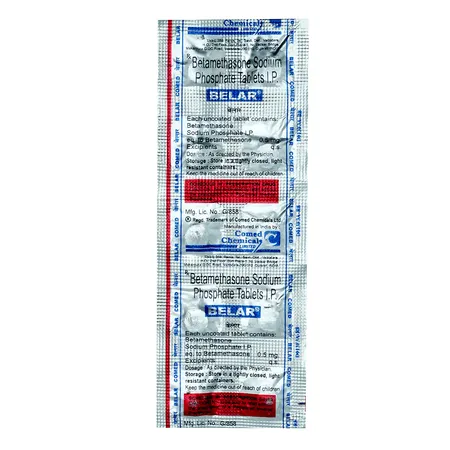
₹7
(Inclusive of all Taxes)
₹6 with coupons & bank offers*
Get Free delivery (₹99) with
Belar Tablet is used to reduce inflammation (swelling, redness, heat, and tenderness) in the body. Thus, it is used to improve different conditions such as rheumatoid arthritis, asthma, severe allergic reactions, systemic lupus erythematosus (SLS) and polyarteritis nodosa (swollen arteries), inflammatory conditions of the skin, heart, kidney (like minimal change nephrotic syndrome or acute interstitial nephritis) and bowels (like ulcerative colitis-inflammation in the digestive tract or Crohn’s disease), certain conditions of the blood, some connective tissues diseases and some types of cancer such as malignant lymphoma.
Belar Tablet contains Betamethasone, a steroid that works by acting inside skin cells and inhibits the release of certain chemical messengers in the body that cause redness, itching, and swelling. When the skin reacts to any type of allergens, such chemicals are released normally.
Take Belar Tablet as prescribed. Your doctor will advise you on how often you take Belar Tablet based on your medical condition. Some people may experience nausea, indigestion, irregular periods, weight gain, or increased susceptibility to infection. Most of these side effects of Belar Tablet do not require medical attention and gradually resolve over time. However, if the side effects persist or worsen, please consult your doctor.
If you are allergic to Betamethsone or other steroids or any other medicines, please tell your doctor. If you are pregnant or planning for pregnancy, please inform your doctor before taking Belar Tablet . If you have just been or are about to get vaccinated, inform your doctor before taking Belar Tablet . If you have an infection and have not yet started taking antibiotics to treat it, you are recommended to avoid taking Belar Tablet .
Belar Tablet is used in the treatment of inflammatory and allergic conditions. The detailed uses of Belar Tablet are as follows:
Belar Tablet is a steroid that is used to treat swelling, redness, heat and tenderness in the body. Thus, it is used to improve different conditions such as rheumatoid arthritis, asthma, severe allergic reactions, systemic lupus erythematosus (SLS) and polyarteritis nodosa (swollen arteries), inflammatory conditions of the skin, heart, kidney (like minimal change nephrotic syndrome or acute interstitial nephritis) and bowels (like ulcerative colitis-inflammation in the digestive tract or Crohn’s disease), certain conditions of the blood, some connective tissues diseases and some types of cancer such as malignant lymphoma. Betamethasone soluble tablets may be used as a mouthwash to treat conditions such as oral lichen planus (white, lacy patches, or open sores) and mouth ulcers. It helps to reduce pain and inflammation in the mouth and speeds up the healing process.
Consult your doctor
The interaction of Belar Tablet with alcohol is unknown. Please consult a doctor before consuming alcohol with Belar Tablet .
Consult your doctor
Inform your doctor if you are pregnant or planning pregnancy before taking Belar Tablet . If you become pregnant while taking Belar Tablet , please inform your doctor but do not stop taking Belar Tablet unless advised by the doctor.
Caution
If you are breastfeeding, take advice from your doctor before taking Belar Tablet . The steroid may lower the baby's hormone levels if you take high doses for a long time.
Safe if prescribed
Belar Tablet usually does not affect your ability to drive or operate machinery.
Caution
Take Belar Tablet with caution, especially if you have a history of Liver diseases/conditions. The dose may be adjusted by your doctor as required.
Caution
Inform your doctor if you have Kidney disease/condition. The dose may be adjusted by your doctor as required.
Safe if prescribed
Belar Tablet should be used in children in doses as advised by a doctor only.
Consult your doctor
Belar Tablet is generally safe for heart patients when used under medical supervision. However, it may cause fluid retention, elevated blood pressure, or worsen existing heart conditions if used long-term or at high doses. Always consult your doctor before starting this medication to ensure it's appropriate for your cardiac status.
Caution
Geriatric patients can take Belar Tablet , but it may be more prone to side effects like osteoporosis, fluid retention, or blood sugar changes. Regular monitoring and dose adjustments are important to ensure safe use.
Have a query?
If you are allergic to Betamethsone or other steroids or any other medicines, please tell your doctor. If you are pregnant or planning for pregnancy, please inform your doctor before taking Belar Tablet . If you have just been or are about to get vaccinated, inform your doctor before taking Belar Tablet . Some people may experience mood changes (feeling depressed or high), difficulty in thinking or being confused and losing their memory, feeling anxious, sleeping problems, feeling, hearing, or seeing things that do not exist, and having strange and frightening thoughts. If you experience any of these problems, please consult your doctor immediately. If you have an infection and have not yet started taking antibiotics to treat it, you are recommended to avoid taking Belar Tablet .
Drug-Drug Interaction: Inform your doctor if you are taking oral antidiabetic drugs or insulin, non-steroidal anti-inflammatory drugs (aspirin, ibuprofen), medicines for myasthenia gravis (anticholinesterases), blood thinners (warfarin), medicines for high blood pressure, cardiac glycosides, diuretics (water tablets), muscle relaxant (vecuronium), medicines used to treat glaucoma (acetazolamide), central nervous system stimulant (ephedrine), antituberculosis drugs (rifabutin, rifampicin), anticonvulsants (phenobarbitone, phenytoin, carbamazepine, aminoglutethimide, primidone), growth hormone (somatropin), antiacne (tretinoin), antipsychotics (quetiapine), fluoroquinolones antibiotics, oral contraceptive, anti-progesterone (mifepristone), antifungal (amphotericin B), anti-asthma drug (theophylline), an ulcer healing drug (carbenoxolone) and anti-HIV drugs (cobicistat, ritonavir).
Drug-Food Interaction: No interactions found.
Drug-Disease Interaction: If you have ever had severe depression or bipolar disorder, tuberculosis (TB), glaucoma (increased pressure in the eye), you have ever suffered from muscle wasting due to corticosteroids, or if you have recently had a heart attack or have high blood pressure, fits, severe mental illness, osteoporosis (thinning of bones), diabetes, underactive thyroid gland, stomach or duodenal ulcers, myasthenia gravis (muscle weakness), liver, kidney or heart disease, infection, inform your doctor before taking Belar Tablet .
Login/Sign Up
Login/Sign Up
Disclaimer


