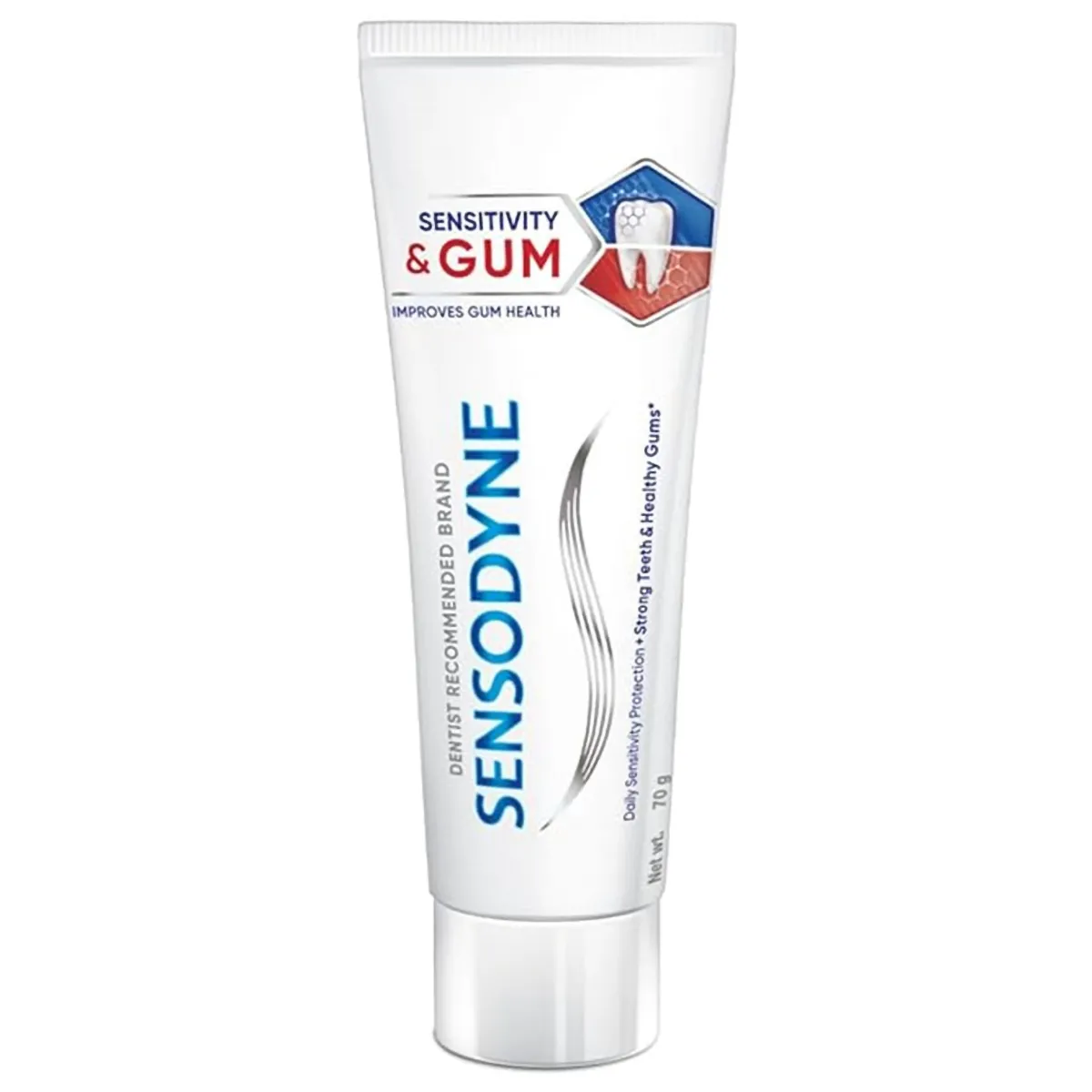
Sensodyne Sensitivity & Gum Toothpaste is formulated for oral care and contains stannous fluoride in a toothpaste base. The formulation includes stannous fluoride, glycerin, hydrated silica, PEG-8 and supporting ingredients that help support sensitivity care and oral hygiene during regular brushing. The smooth paste texture spreads evenly during brushing. The toothpaste comes in a 70 g squeeze tube designed for convenient daily use.
Features
Dual-action toothpaste
Contains stannous fluoride
Smooth paste texture
Mild mint flavour
Low-abrasion formula
Easy-squeeze tube
Suitable for daily use
Key Benefits
Clinically Proven Tooth Pain Relief: Targets the root cause of tooth sensitivity by building a robust protective layer over exposed dentin, preventing triggers like hot or cold foods from reaching the nerve.
Targeted Plaque Removal & Gum Care: Functions as an advanced Sensodyne gum care toothpaste by neutralising plaque bacteria buildup along the gumline, helping to reverse early signs of gingivitis and maintain healthy gums.
Dual Action Sensitivity Relief: Provides simultaneous, daily management for both sensitive teeth and gums, eliminating the need to buy separate speciality pastes for oral hygiene.
Advanced Cavity Protection: Fortified with stannous fluoride, this formula actively strengthens tooth structure, providing daily enamel protection and shielding your teeth from cavity-causing acid attacks.
Reduces Bleeding Gums: Acts as an effective toothpaste for bleeding gums by soothing gum inflammation and aggressively targeting the bacterial plaque that causes gum irritation.
Lasting Fresh Breath: Leaves your mouth feeling clean and refreshed with a mild mint flavour that combats bad breath without relying on harsh abrasives.
Key Ingredients
Stannous Fluoride (0.454% w/w)
Glycerin
PEG-8
Hydrated Silica
Pentasodium Triphosphate
Sodium Lauryl Sulfate
Titanium Dioxide
Carbomer
Cocamidopropyl Betaine
Sodium Saccharin
Vegetarian
Yes
From the Manufacturers
Directions for Use
Apply a small amount onto a toothbrush.
Brush gently over all tooth surfaces.
Continue brushing for 2 minutes.
Spit out after brushing.
Use twice daily.
Health Queries
How can I make my teeth less sensitive?
Y. Lakshmi Thulasi
Pharm-D (Post baccalaureate)
Enamel wear, cavities, gum recession, harsh brushing, teeth grinding, and repeated exposure to hot and cold meals are major causes of dental sensitivity. Over time, sensitivity may be lessened by using toothpaste designed specifically for sensitive teeth, brushing softly with a soft toothbrush, and avoiding extremely acidic meals and beverages. After consuming acidic foods, avoid brushing too hard or right away. See a dentist if the pain is severe, just affects one tooth, or is accompanied by cavities or swelling. You might require gum care, cleaning, or filling.
How my teeth are so sensitive I frequently feel both hot and chilly around them. What should I do because my jaw hurts too?
Y. Lakshmi Thulasi
Pharm-D (Post baccalaureate)
Tooth decay, gum disease, teeth grinding, enamel wear, wisdom tooth problems, or strained jaw joints can all cause sensitivity to heat and cold in addition to jaw pain. For sensitive teeth, use toothpaste, gently brush with a soft toothbrush, and stay away from extremely hot, cold, or acidic meals and beverages for a while. Steer clear of clenching or grinding your teeth, especially while under pressure. You should see a dentist for a thorough examination because you may need treatment for cavities, infections, or issues with your jaw joints if you also experience jaw pain.
I have tooth sensitivity to cold and sweet foods and have been using Sensodyne toothpaste. Is there a permanent cure for this problem?
Chandrakanta Jena
Pharm D
Tooth sensitivity to cold and sweet foods usually happens when the protective outer layer of the tooth (enamel) becomes weak or damaged, exposing the inner sensitive part of the tooth (dentine). This may be caused by worn enamel, tooth decay, receding gums, cracked teeth, hard brushing, or frequent consumption of acidic foods and drinks. Sensodyne toothpaste can help reduce discomfort by calming nerves inside the teeth, but it may not permanently cure the underlying cause. The best treatment depends on identifying and treating the specific cause of the sensitivity. If there are cavities, damaged fillings, or gum problems, a dentist may recommend treatments such as fillings, fluoride treatment, sealing exposed areas, or gum care. In more severe cases, a root canal may be needed to permanently relieve the pain. You should continue using a desensitising toothpaste twice daily and brush gently with a soft toothbrush. Try to avoid very acidic or sugary foods and drinks. It is important to see a dentist for a proper check-up, as sensitivity can sometimes be a sign of a deeper dental problem. Early treatment often provides better and longer-lasting relief.
I am suffering from tooth sensitivity. I have already used Sensodyne/Shy-NM toothpaste, mouthwash, creams, and tablets, but the problem still persists. What should I do next?
G.santoshini Reddy
M Pharmacy (Pharmaceutics)
Persistent tooth sensitivity even after using sensitivity toothpastes such as Sensodyne or Shy-NM may mean that there is an underlying dental problem that needs proper examination rather than only temporary relief products. Tooth sensitivity can happen due to enamel wear, cavities, gum recession, teeth grinding, cracked teeth, acidic foods, aggressive brushing, or gum disease. If the pain occurs while eating hot, cold, sweet, or sour foods and is continuing despite treatment, it is important to visit a dentist for a detailed dental check-up. The dentist may look for hidden cavities, exposed tooth roots, damaged fillings, or gum problems and may suggest treatments such as fluoride application, dental fillings, desensitising procedures, cleaning, or, in some cases, root canal treatment if the tooth nerve is affected. In the meantime, use a soft-bristled toothbrush and brush gently instead of scrubbing hard. Avoid very hot, cold, acidic, or sugary foods and drinks, and do not rinse immediately after brushing because the toothpaste needs time to work on the teeth. If you grind your teeth during sleep, stress control or a night guard may also help. Since the problem has persisted despite using multiple products, a professional dental evaluation is the best next step to identify and treat the exact cause properly, rather than continuing self-medication.
While we strive to provide complete, accurate, and expert-reviewed content on our 'Platform', we make no warranties or representations and disclaim all responsibility and liability for the completeness, accuracy, or reliability of the aforementioned content. The content on our platform is for informative purposes only, and may not cover all clinical/non-clinical aspects. Reliance on any information and subsequent action or inaction is solely at the user's risk, and we do not assume any responsibility for the same. The content on the Platform should not be considered or used as a substitute for professional and qualified medical advice. Please consult your doctor for any query pertaining to medicines, tests and/or diseases, as we support, and do not replace the doctor-patient relationship.
Country of origin
India
Manufacturer/Marketer address
24-25 Floor, One Horizon Center, Golf Course Road, Dlf Phase 5, Gurgaon 122002, India.