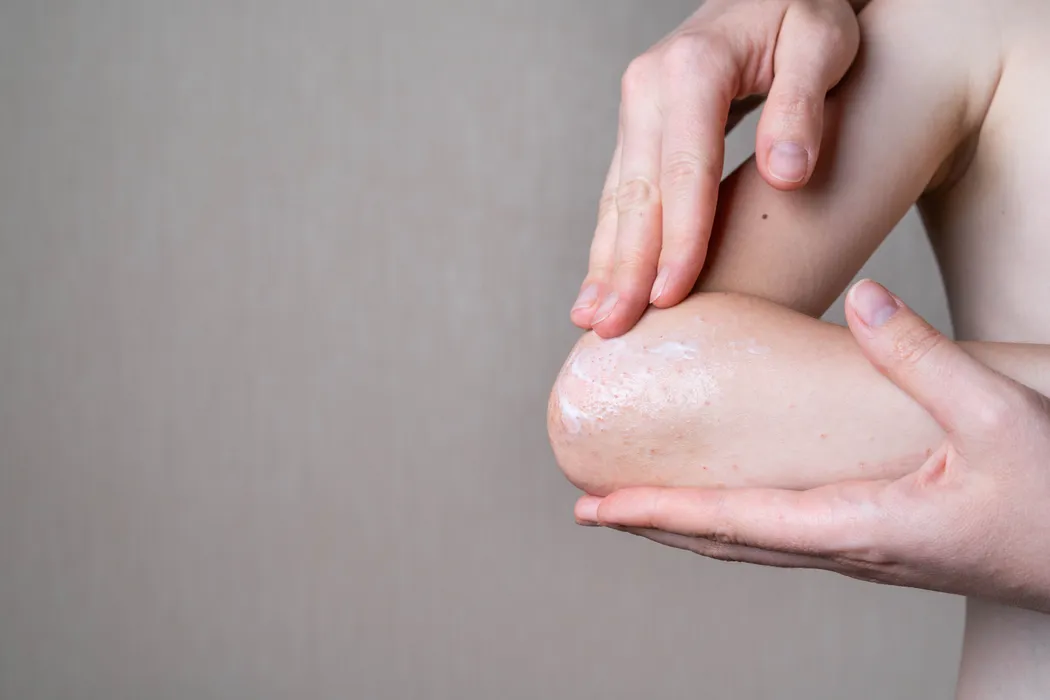
If you are dealing with a 1-month-old baby's dry skin on the face, the best approach is a gentle, consistent skincare routine. Here are highly effective, paediatrician-approved tips to heal your baby's skin barrier safely:
Choose the Right Moisturiser
Not all moisturisers are created equal. When shopping for products to treat baby's dry skin, always read the ingredient labels carefully.
- Ointments: Petroleum jelly-based ointments are the gold standard for infant dry skin. They contain no water, meaning they lock in the skin’s natural moisture without causing stinging or irritation.
- Creams: Thick creams containing ceramides or colloidal oatmeal are excellent choices for locking in hydration.
- Avoid Lotions: Lotions have a high water content. As the water evaporates from the baby's face, it can actually cause further drying. Always choose thick creams or ointments instead.
Optimise Bath Time
Keep baths short, around 5 to 10 minutes maximum. Use lukewarm water rather than hot water. You do not need to use soap on your baby's face; warm water and a soft cloth are usually enough to clean milk residue. If you do use a cleanser, ensure it is fragrance-free, dye-free, and specifically formulated for sensitive infant skin.
The "Soak and Seal" Method
The best time to apply moisturiser is within three minutes of taking your baby out of the bath. Gently pat your baby's face dry with a soft, 100% cotton towel; do not rub, as friction damages the skin barrier. While the skin is still slightly damp, apply a generous layer of ointment or cream to seal in the bathwater’s moisture.
Use a Cool-Mist Humidifier
If the air in your home is dry due to air conditioning or winter heating, run a cool-mist humidifier in the room where your baby sleeps. This adds moisture back into the air, preventing the skin from drying out overnight. Make sure to clean the humidifier regularly to prevent mould growth.
Clean Milk and Drool Gently
When your baby spits up or drools, avoid wiping their face with dry, scratchy tissues or rough wipes. Instead, dab the area gently with a soft cloth moistened with warm water. Afterwards, apply a thin barrier of petroleum jelly to protect the skin from future irritation.