Noticing dry, red, or irritated patches on your baby’s skin can be worrying. It is natural to feel concerned, especially when your baby seems uncomfortable or keeps rubbing or scratching the area.
Baby eczema is a common skin condition seen in many infants. It is not contagious and often appears in the early months of life. While it can look uncomfortable, in most cases it can be managed well with the right care and routine.
The condition tends to come and go, with periods where the skin looks better followed by flare-ups. Understanding what may trigger these changes and how to care for your baby’s skin can make a meaningful difference.
This guide explains the possible causes, different types of eczema, and simple ways to manage and protect your baby’s skin, helping keep them as comfortable as possible.
In this article
- What Are the Common Baby Eczema Symptoms?
- Understanding Baby Eczema Causes
- Types of Eczema in Babies
- How to Treat Baby Eczema: Medical Solutions
- Conclusion
Baby Eczema: Causes, Symptoms, Types & Treatment
Learn about baby eczema causes, symptoms, types, and effective treatments to soothe your baby’s skin and manage flare-ups safely.
Apollo Pharmacy
What Are the Common Baby Eczema Symptoms?
What Are the Common Baby Eczema Symptoms?
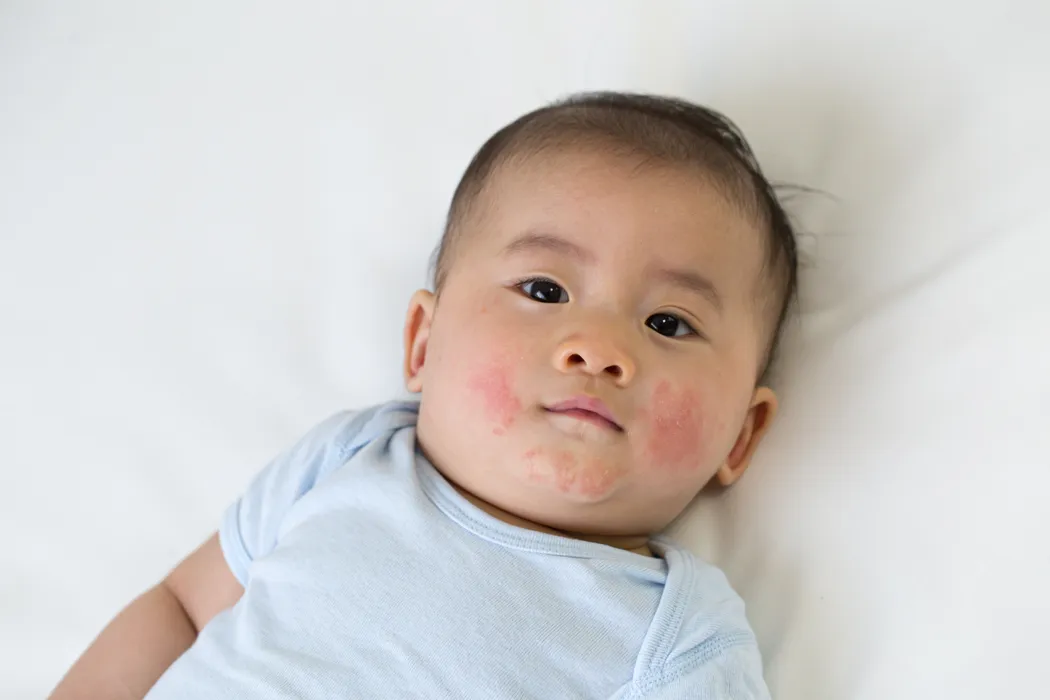
Eczema can appear differently from one baby to another. The way it looks may vary based on your baby’s age, skin tone, and how severe the flare-up is. In lighter skin tones, patches may appear red or pink, while in darker skin tones they may look darker, purplish, or slightly grey.
Recognising early signs can help you manage the condition more effectively and prevent it from worsening. Here are some common patterns to look out for:
- Face and scalp (0 to 6 months): In younger babies, eczema often appears on the cheeks, chin, and sometimes the scalp. The skin may look dry, slightly rough, or inflamed. In some cases, patches may appear moist or crusted. The area around the eyes can also be affected, which requires extra gentle care.
- Arms and legs (6 to 12 months): As babies start crawling and moving more, eczema may show up on areas that experience friction, such as the elbows, knees, and lower legs. The skin here may appear dry, slightly thickened, or irritated due to repeated contact with surfaces.
- General signs across all ages: Persistent dryness, visible patches of rough or thickened skin, and frequent rubbing or scratching are common. Babies may also seem more irritable or have disturbed sleep due to ongoing discomfort.
Even mild dryness or small rough patches can be early signs of eczema. Addressing these changes early with gentle skincare may help reduce the chances of a more intense flare-up.
Understanding Baby Eczema Causes
Understanding Baby Eczema Causes
Many parents worry that they may have done something to cause their baby’s skin condition. In reality, eczema is not caused by anything you did or did not do. It usually develops due to a mix of genetic and environmental factors.
- Genetics and skin barrier: Some babies are born with a naturally weaker skin barrier. This means their skin loses moisture more easily and is less effective at keeping out irritants. As a result, the skin can become dry, sensitive, and more prone to inflammation.
- Immune system sensitivity: A baby’s immune system is still developing. In some cases, it may react more strongly than expected to everyday triggers, leading to redness and irritation on the skin. Eczema is often seen alongside other sensitivities such as allergies or asthma later in life.
- Environmental triggers: Flare-ups are often linked to specific external factors. These may include harsh soaps, fragranced products, certain fabrics, changes in weather, dust, or even saliva staying on the skin for long periods. Identifying and reducing exposure to these triggers may help manage symptoms more effectively.
Eczema is usually the result of several factors working together rather than a single cause. Understanding these triggers can help you make small adjustments that support your baby’s skin over time.


Types of Eczema in Babies
Types of Eczema in Babies
The term “eczema” is often used broadly, but there are a few different types of skin conditions that fall under this category. Understanding the type can help guide how you care for your baby’s skin and choose the right approach for relief.
1. Atopic Dermatitis: The Most Common Form
This is the most frequently seen type of eczema in babies and young children. It is usually a long-term condition that tends to flare up and settle down in cycles.
The skin may appear dry, red, and inflamed, often accompanied by itching that can make babies irritable or disturb their sleep. It commonly appears on the cheeks, scalp, and later on the arms and legs. Regular moisturising and avoiding known triggers may help manage flare-ups and protect the skin barrier.
2. Contact Dermatitis: Reaction to Irritants
This type occurs when your baby’s skin reacts to something it has come into direct contact with. Common triggers include soaps, detergents, fragrances, certain fabrics, or even metal fasteners on clothing.
The rash usually appears only in the area of contact and may look red, slightly swollen, or irritated. Once the triggering substance is identified and removed, the skin often begins to improve. Using gentle, fragrance-free products may help prevent future reactions.
3. Seborrheic Dermatitis (Cradle Cap): Common in Early Months
In newborns and younger infants, flaky or crusty patches on the scalp are often due to cradle cap rather than typical eczema. It usually presents as yellowish, greasy scales on the scalp, and may also appear around the eyebrows, ears, or folds of the skin.
Unlike atopic eczema, it is usually not itchy or uncomfortable for the baby. With gentle washing and care, it often clears on its own over time without needing intensive treatment.
4. Dyshidrotic Eczema: Less Common but Noticeable
This type is less commonly seen in babies but may occasionally occur. It is characterised by small, fluid-filled blisters, usually on the hands or feet.
These blisters may cause itching or discomfort and can sometimes make the skin appear slightly swollen or irritated. Because it is less typical in infants, it is advisable to seek medical advice if you notice these symptoms, to ensure proper diagnosis and care.
Understanding these types can help you recognise patterns in your baby’s skin and take more targeted steps to manage and soothe flare-ups.
How to Treat Baby Eczema: Medical Solutions
How to Treat Baby Eczema: Medical Solutions
While eczema does not have a permanent cure, the right treatment plan may help keep symptoms well controlled. The focus is usually on repairing the skin barrier, calming inflammation, and preventing infection.
When medical treatment is needed, a paediatrician or dermatologist may suggest:
- Topical steroids: Mild steroid creams are often used for short periods during flare-ups. They may help reduce redness, swelling, and itching fairly quickly when applied as directed.
- Non-steroid treatments: In some cases, doctors may recommend alternatives that help control inflammation without steroids. These are usually considered when long-term management is needed or for sensitive areas.
- Treatment for infection: If the skin becomes infected, which may happen due to scratching, treatment may include medicated creams or oral medication. Signs such as yellow crusting, oozing, or increased redness should be evaluated promptly.
Any medicated treatment should only be used under medical guidance, especially on delicate areas such as the face or skin folds.
Baby Eczema Treatment at Home
Daily care plays a key role in managing eczema. A consistent routine may help reduce flare-ups and keep your baby’s skin more comfortable.
- Bath time routine: Keep baths short, around 5 to 10 minutes, using lukewarm water. Hot water may dry out the skin further. Use a gentle, fragrance-free cleanser and avoid scrubbing. Washing with your hands is usually sufficient.
- Moisturising after bathing: After the bath, gently pat the skin dry, leaving it slightly damp. Apply a thick moisturiser within a few minutes to help lock in moisture. Ointments and creams are generally more effective than lotions, as they provide better hydration.
- Choosing the right clothing: Dress your baby in soft, breathable fabrics such as cotton. Avoid rough materials or tight clothing, as these may irritate the skin. Washing clothes with mild, fragrance-free detergent may also help reduce irritation.
- Preventing scratching: Scratching can worsen eczema and damage the skin. Keeping your baby’s nails short and smooth may help reduce injury to the skin. At times, covering the hands with soft mittens during sleep may also be useful.
- Managing the environment: Dry air and overheating may trigger flare-ups. Using a humidifier in dry conditions and keeping your baby comfortably cool may help maintain skin balance.
With a combination of medical guidance and consistent daily care, many babies experience significant improvement in their symptoms over time.
Conclusion
Conclusion
Caring for your baby’s skin can feel challenging at times, especially when flare-ups appear suddenly. However, with a better understanding of triggers, early signs, and a consistent skincare routine, eczema can often be managed effectively.
Simple habits such as gentle cleansing, regular moisturising, and avoiding known irritants may help keep your baby’s skin more comfortable. Over time, you may begin to notice patterns and understand what works best for your child.
Every baby’s skin is different, so it may take a little time to find the right combination of products and routines. If symptoms persist or worsen, seeking guidance from a paediatrician can help ensure the right care.
With patience and consistent care, many babies experience improvement, making it easier to keep their skin healthy and comfortable.
Disclaimer: This article is for informational purposes only and does not substitute for professional medical advice. Always consult your paediatrician for any concerns about your baby’s health and medical needs.
FAQS
FAQS
Does baby eczema go away?
In many cases, yes. A large number of children see improvement as they grow older, with symptoms often becoming milder over time. Some may continue to have sensitive or dry skin, but frequent flare-ups usually reduce with age.
Are food allergies the cause of my baby’s eczema?
Food allergies may trigger flare-ups in some babies, but they are not always the main cause. Eczema is usually linked to a combination of factors. It is important not to remove foods or change your baby’s diet without medical advice, as this may affect nutrition.
How often should I moisturise my baby’s skin?
Regular moisturising is essential. Applying a suitable moisturiser at least twice a day, even when the skin looks clear, may help maintain the skin barrier and reduce the chances of flare-ups.
Can I use natural oils to treat baby eczema?
Some natural oils may help, while others may irritate the skin. Not all oils are suitable for sensitive skin, so it is best to be cautious. Using gentle, fragrance-free products recommended for babies may be a safer option.
When should I take my baby to the doctor for eczema?
You should seek medical advice if the skin is not improving with basic care, if the eczema is causing significant discomfort or sleep disturbance, or if you notice signs such as oozing, crusting, or increased redness that may suggest infection.


