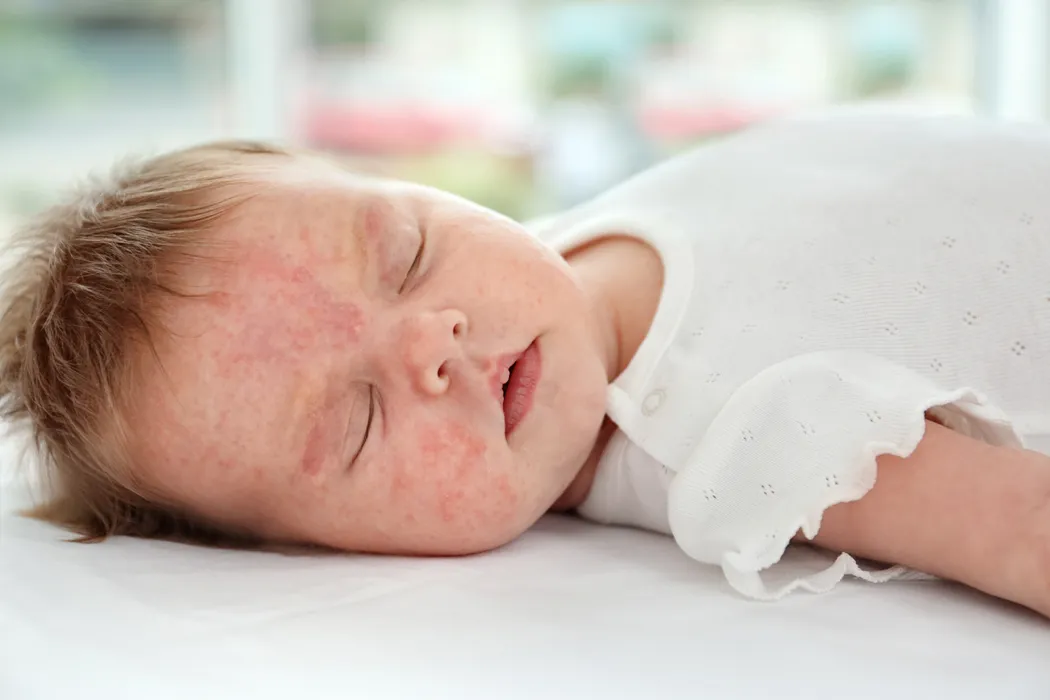
Unlike baby acne, which is temporary, infant eczema, also known as atopic dermatitis, is a longer-lasting skin condition. It causes the skin to become dry, red, inflamed, and itchy. Eczema usually appears a little later than acne, often between one and six months of age.
Signs of Infant Eczema
Eczema looks and behaves differently from acne. You may notice the following signs.
- Dry, rough, scaly patches: The skin may feel uneven, flaky, or slightly thickened in affected areas.
- Red or inflamed skin: The patches may look irritated and may become more noticeable during flare-ups.
- Intense itching: Your baby may seem restless and try to rub their face against surfaces like your shoulder or bedding to relieve the itch.
- Oozing or crusting: In some cases, scratched areas may release a small amount of clear fluid and form a crust as they heal.
- Colour variations: On lighter skin, eczema often appears red or pink. On darker skin tones, it may appear purple, grey, or dark brown.
Eczema commonly starts on the face, especially the cheeks and chin, and may also affect the folds of the arms and legs. As babies grow and begin crawling, it can appear on areas like the elbows and knees due to repeated friction.
Triggers and Causes of Baby Eczema
Eczema is primarily linked to a weakened skin barrier. In healthy skin, this barrier locks in moisture and protects against irritants. In babies with eczema, the barrier does not function as effectively, allowing moisture to escape while making the skin more vulnerable to environmental triggers. This is why the skin often appears dry, sensitive, and prone to flare-ups.
Eczema often runs in families, particularly where there is a history of asthma, allergies, or atopic dermatitis. In addition to genetic factors, certain everyday triggers may worsen symptoms or cause flare-ups.
- Fragrances and chemicals: Products such as soaps, lotions, wipes, or detergents with added fragrance or harsh ingredients may irritate delicate skin and disrupt the skin barrier further.
- Rough fabrics: Materials like wool or certain synthetics may cause friction against the skin, leading to redness, itching, and increased irritation.
- Dry air and weather changes: Cold weather, indoor heating, or sudden temperature shifts may strip moisture from the skin, making dryness and itching more noticeable.
- Allergens: Exposure to dust mites, pet dander, or other environmental allergens may trigger inflammation in sensitive babies.
- Saliva and drooling: Constant moisture around the mouth from drooling may irritate the skin, especially on the cheeks and chin, leading to flare-ups or worsening existing eczema.
Infant Eczema Treatment
Managing eczema requires a consistent and gentle skincare routine focused on restoring hydration and protecting the skin barrier. With the right care, symptoms may improve significantly over time.
- Short, lukewarm baths: Keep bath time brief, ideally under 10 minutes, and use lukewarm water. Long or hot baths may strip away natural oils, making the skin drier.
- Moisturise immediately: Apply a thick, fragrance-free cream or ointment within a few minutes after bathing while the skin is still slightly damp. This helps seal in moisture and supports skin repair.
- Identify and avoid triggers: Switch to mild, hypoallergenic products and dress your baby in soft, breathable fabrics like cotton. Avoid overheating, as sweat may also irritate the skin.
- Seek medical advice if needed: If eczema appears severe, persistent, or infected, a paediatrician may recommend medicated creams such as mild topical steroids to reduce inflammation safely.
With regular care and attention, eczema may become more manageable, and flare-ups may reduce in frequency and intensity as your baby grows.
Explore Moisturising Creams For Babies