0

Baby Fever with Cold Hands & Feet: What Does It Mean?

Is your baby burning up but has chilly fingers and toes? Learn why this happens, when to worry, and how to safely manage a fever with cold extremities.

article image

Dr. Kamran

Introduction

Nothing causes a parent's heart to race quite like feeling their little one's forehead and finding it burning up. Fever is one of the most common reasons parents seek medical care for their children. However, the symptoms that accompany a fever can sometimes be confusing. You might feel a blazing hot forehead, only to discover that your baby’s toes and fingers are icy cold. Conversely, you might experience a baby fever with hot hands and feet.

If you are feeling stressed, take a deep breath. Fevers are a normal, healthy sign that your child’s immune system is actively fighting off an infection. In this comprehensive guide, we will explore exactly why your baby’s extremities change temperature, how to spot the signs of illness in infants of different ages, and when it is time to call your paediatrician.
 

How to Know Baby Fever: The Basics?

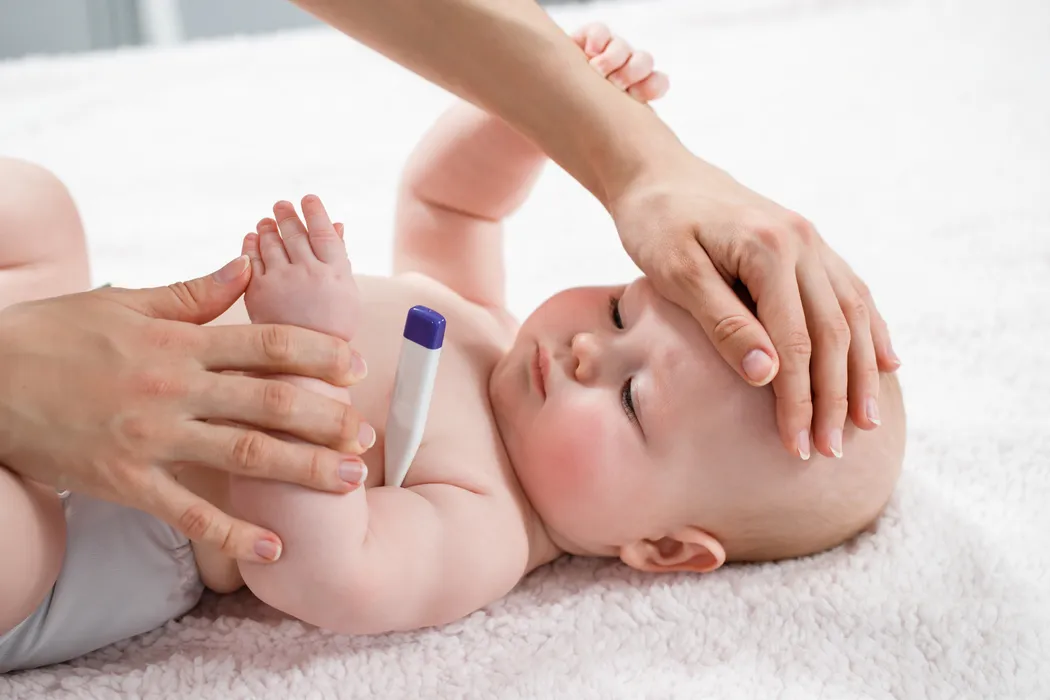
Before diving into temperature variations in the hands and feet, it is important to understand how to know if the baby's fever is actually present. Feeling your baby’s skin is a good starting point, but it is not entirely accurate. Room temperature, clothing, and even a recent nap can make your baby's skin feel warm to the touch.

According to the American Academy of Pediatrics (AAP), a true fever is defined as a core body temperature of 100.4°F (38°C) or higher.

To accurately determine if your baby has a fever, use a digital thermometer. For infants and toddlers, a rectal temperature provides the most accurate reading. If your baby’s rectal temperature is 100.4°F or higher, they officially have a fever. Other common signs that accompany a fever include:

  • Fussiness or irritability
  • Sleeping more or less than usual
  • A flushed face
  • Loss of appetite or refusing to nurse/bottle-feed
  • Sweating or shivering

Why Does My Baby Have Cold Hands and Feet During a Fever?

It is incredibly common for a baby to have a high temperature in their core (chest, back, and head) while their hands and feet feel like ice. But why does this happen?

When a virus or bacteria enters the body, the brain's internal thermostat, the hypothalamus, detects the invaders and raises the body's baseline temperature to burn them off. To achieve this higher core temperature quickly, the body restricts blood flow to the skin and extremities (a process called vasoconstriction). The body is intentionally keeping the warm blood close to vital organs like the heart, lungs, and brain.

This is why you might notice a 1-year-old baby's cold hands and feet with fever. The body is simply doing its job to fight the illness. It is worth noting that even without an illness, finding your 1-year-old baby's cold hands and feet is normal in cooler environments because a child's circulatory system is still developing and prioritises the core over the extremities.
 

Load more products

The Flip Side: Baby Fever with Hot Hands and Feet

While cold extremities are common during the initial rise of a fever, you might also experience the exact opposite. A baby with a fever, with hot hands and feet, is another very typical presentation of a childhood illness.

A baby's fever with hot hands and feet usually occurs when the fever has peaked or is starting to "break." Once the hypothalamus decides the body no longer needs to maintain such a high temperature, the blood vessels open up (vasodilation). Blood rushes back into the extremities to release excess heat through the skin.

If you notice a baby's fever with hot hands and feet, it is generally a positive sign. It indicates that your baby’s body is actively radiating heat to cool itself down. During this phase, you might also notice your baby sweating.

Whether your child is shivering with cold toes or experiencing a baby fever with hot hands and feet, both are natural physiological responses to the immune system doing its necessary work.
 

Fever in Newborns: Special Care for 1 and 2-Month-Olds

While fevers are a standard part of childhood, they are treated much differently in newborns. An infant's immune system is still highly immature, meaning an infection can spread rapidly.

1-Month-Old Infants

A 1-month-old baby's fever is always considered a medical emergency. If your baby is under 30 days old and has a rectal temperature of 100.4°F (38°C) or higher, you must contact your paediatrician or go to the emergency room immediately. Do not give them any fever-reducing medication before seeing a doctor, as this can mask critical symptoms.

When observing 1 month baby's fever symptoms, look out for:

  • Extreme lethargy or difficulty waking up to feed
  • Weak, continuous crying
  • Skin that looks pale, mottled, or bluish
  • Refusal to feed entirely
  • Fewer wet diapers than normal

2-Month-Old Infants

Similarly, a 2-month-old baby's fever requires prompt medical attention. While they are slightly older, babies under 90 days (3 months) still lack fully developed immune defences.

Common 2-month-old baby fever symptoms mirror those of younger newborns. You might see increased fussiness, poor sleep, or a rash. Just like with a one-month-old, if your two-month-old hits 100.4°F, call your healthcare provider right away for guidance.
 

How to Keep Your Baby Comfortable?

If your baby is over 3 months old and their doctor has given you the green light to treat them at home, your primary goal is comfort. Here is how you can help them feel better, whether they have cold toes or a baby fever with hot hands and feet:

  • Offer Plenty of Fluids: Fever causes the body to lose fluids rapidly, increasing the risk of dehydration. Offer breastmilk, formula, or an oral rehydration solution (if recommended by a doctor) frequently.
  • Dress Them Lightly: It is a common myth that you should bundle up a sick baby to "sweat out" the fever. This can actually cause their temperature to rise dangerously. Dress them in a single layer of lightweight, breathable cotton.
  • Keep the Room Cool: Keep the nursery or bedroom at a comfortable, slightly cool temperature (around 68-72°F).
  • Provide a Lukewarm Sponge Bath: If your baby is very uncomfortable, you can give them a lukewarm sponge bath. Never use cold water, ice baths, or rubbing alcohol, as these can cause severe shivering and drive the internal body temperature even higher.
  • Use Medication Safely: For babies over 6 months, infant acetaminophen or ibuprofen can be used to reduce a fever and relieve discomfort. Always consult your paediatrician for the exact dosage based on your baby's current weight. Never give aspirin to a child, as it is linked to a rare but fatal condition called Reye's syndrome.
     

When to Call the Paediatrician?

Fever is a symptom, not a disease. While a baby's fever with hot hands and feet is usually just a sign of a common viral infection, there are times when you should seek professional medical care.

Call your doctor if your baby:

  • Is under 3 months of age with a temperature of 100.4°F (38°C) or higher.
  • Is between 3 and 6 months old with a temperature of 102°F (38.9°C) or higher.
  • Has a fever that lasts more than 24 hours (for children under 2 years old) or more than 3 days (for children over 2).
  • Shows signs of dehydration (no wet diapers for 8 hours, crying without tears, sunken soft spot on the head).
  • Develops a rash, a stiff neck, or seems unusually sluggish and unresponsive.
  • Has difficulty breathing or is breathing much faster than normal.
     

FAQs

Is it normal for a baby to have a hot head but cold hands and feet?

Yes, it is entirely normal. When a baby's core body temperature rises due to a fever, blood vessels in the hands and feet constrict. This pushes warm blood toward vital organs like the heart and brain, leaving the forehead feeling hot and the extremities feeling cold.

What does it mean if my baby has baby fever with hot hands and feet?

A baby's fever with hot hands and feet typically means that the fever has peaked and the body is actively trying to cool itself down. The blood vessels in the extremities open up, pushing heat out through the skin to lower the core temperature.

Should I put socks on my baby with a fever and cold feet?

If your baby is shivering and their feet are freezing, you can put a light pair of cotton socks on them for comfort. However, avoid over-bundling them with heavy blankets or fleece pyjamas, as this can trap heat and cause their overall body temperature to rise to dangerous levels.

How accurate is feeling my baby’s forehead to check for fever?

Feeling your baby’s forehead with your hand or lips is not very accurate. It can only tell you that the skin feels warm, which could be due to a warm room or heavy clothing. To confirm a fever, you must use a reliable digital thermometer.

Can teething cause my baby to have a high fever?

While teething can cause a very slight elevation in body temperature (sometimes called a "low-grade" temperature), it does not cause true fevers of 100.4°F or higher. If your teething baby has a high fever, it is likely caused by an underlying viral or bacterial infection, and you should evaluate their symptoms accordingly.

Apollo 247 Floating Action Button