0

Baby Rash Types: A Complete Parent’s Guide

Learn about common baby rash types, their symptoms, causes, and safe treatments to help manage your baby’s skin and know when to seek care.

article image

Dr. Bhanu Prakash

As a new parent, there are few things more alarming than waking up, picking up your sweet baby, and discovering a sudden breakout of red spots, bumps, or dry patches on their delicate skin. Because a baby’s skin is incredibly sensitive, it is prone to a wide variety of irritations. While most of these skin conditions are completely harmless and resolve on their own, it is perfectly normal to feel anxious.

If you have found yourself searching for answers late at night, trying to understand what a particular rash might mean, you are certainly not alone. Learning to recognise common patterns and symptoms can go a long way in easing worry and helping you take the right next steps.

Rashes can sometimes be confusing. What may seem like a concerning allergic reaction might actually be a harmless condition like baby acne, while what appears to be a simple nappy rash could occasionally be linked to a fungal infection. Becoming familiar with different types of baby rashes may help you describe symptoms more clearly to your paediatrician and make informed decisions about your baby’s care, while also reducing unnecessary stress.

This guide breaks down the most common baby rash types, explaining how they may appear, what could cause them, and how you can safely manage them at home.

Common Baby Rash Types

Here is a breakdown of the most frequent causes behind your baby’s skin irritation, along with simple ways to manage them safely at home.

1. Diaper Rash (Irritant Contact Dermatitis)

This is one of the most common skin concerns in babies and is usually linked to prolonged moisture and friction in the nappy area, which can weaken the skin barrier over time.

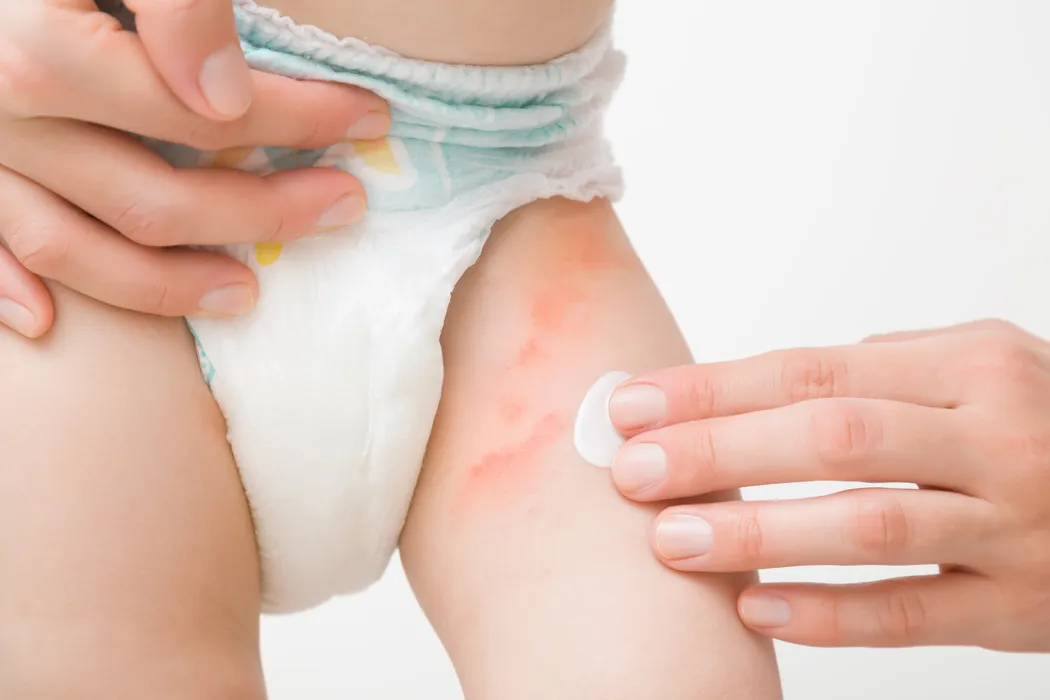
What it looks like: Diaper rash typically appears as bright red, inflamed patches on your baby’s bottom, thighs, and genital area. The skin may look slightly swollen, warm, and sensitive to touch. In more noticeable cases, the surface may appear shiny or mildly broken, especially if the irritation has been present for a while.

What causes it: It is usually caused by extended contact with wet or soiled nappies, which exposes the skin to moisture and irritants. Friction from tight-fitting nappies and reactions to certain wipes, creams, or detergents may also contribute.

How to care for it: A few simple steps may help soothe the irritation and support healing:

  • Change nappies frequently to keep the area clean and dry
  • Allow some nappy-free time to let the skin breathe and recover
  • Apply a thick barrier cream containing zinc oxide to protect the skin

Note: If the rash becomes very bright red, shiny, and starts spreading with small red bumps beyond the main area, it may suggest a yeast infection and may require antifungal treatment.

2. Baby Acne (Neonatal Acne)

This condition is quite common in the early weeks after birth and may look more concerning than it actually is, especially for first-time parents.

What it looks like: Small red or white bumps that resemble tiny pimples, usually appearing on the cheeks, nose, forehead, or chin. The skin around the bumps may look slightly flushed, and the spots can sometimes become more noticeable when the baby cries or becomes warm.

What causes it: It is linked to maternal hormones that remain in the baby’s system after birth. These hormones may temporarily stimulate oil glands in the skin, leading to clogged pores and breakouts.

How to care for it: In most cases, minimal intervention is needed as the condition resolves naturally:

  • Usually no treatment is needed, as it clears naturally over time
  • Gently cleanse the face with lukewarm water and a soft cloth
  • Avoid squeezing, scrubbing, or using heavy lotions or adult acne products

3. Eczema (Atopic Dermatitis)

Eczema tends to be a longer-term skin condition that may come and go in flare-ups, often influenced by environmental triggers and skin sensitivity.

What it looks like: Dry, rough, and red patches of skin that may feel slightly thickened or scaly. In infants, it often appears on the cheeks, scalp, and outer parts of the arms and legs. The affected areas may look irritated and, in some cases, may become cracked or slightly weepy if scratched.

What causes it: It is usually caused by a combination of genetic factors and environmental triggers such as dry air, harsh soaps, certain fabrics, or temperature changes. These factors can weaken the skin’s natural barrier, allowing moisture to escape.

How to care for it: Consistent skin care may help reduce flare-ups and keep the skin comfortable:

  • Keep baths short and use lukewarm water
  • Use mild, fragrance-free cleansers
  • Gently pat the skin dry instead of rubbing
  • Apply a thick  moisturiser immediately after bathing to lock in hydration
  • Dress your baby in soft, breathable cotton clothing

4. Cradle Cap (Seborrhoeic Dermatitis)

This is a harmless and common scalp condition that may look unusual but rarely causes discomfort or itching for your baby.

What it looks like: Thick, yellowish, greasy, or flaky patches that form scales on the scalp. The skin underneath may appear slightly red. In some cases, similar patches may appear on the eyebrows, eyelids, or behind the ears.

What causes it: It is linked to overactive oil glands and the presence of natural yeast on the skin. It is not caused by poor hygiene and does not spread from person to person.

How to care for it: Gentle daily care is usually enough to manage this condition:

  • Wash your baby’s scalp regularly with a gentle baby shampoo
  • Gently loosen scales using a soft brush or cloth
  • For stubborn areas, apply a small amount of baby oil, leave it briefly, then wash it out

5. Heat Rash (Miliaria)

Heat rash is often linked to warm weather or overdressing and tends to appear when sweat becomes trapped under the skin.

What it looks like: Tiny red or clear bumps that may appear in clusters, often giving the skin a slightly rough or prickly texture. These bumps commonly develop in skin folds such as the neck, chest, armpits, or nappy area, where sweat tends to accumulate.

What causes it: It occurs when immature sweat glands become blocked, trapping sweat beneath the skin. This is more likely in hot, humid conditions or when a baby is dressed in too many layers.

How to care for it: Simple cooling measures may help the rash settle quickly:

  • Keep your baby in a cool, well-ventilated environment
  • Dress them in light, loose, and breathable clothing
  • Gently cool the skin with a damp cloth if needed
  • Avoid heavy creams or ointments that may further block pores

Understanding these common rash types may help you respond calmly and choose the right care approach, while also recognising when medical advice may be needed.
Load more products

Rashes Caused by Illnesses and Allergies

Sometimes, a rash may be a sign of an underlying infection or an allergic reaction rather than simple skin irritation. Recognising these patterns early may help you take timely action and seek appropriate care.

Food Allergies and Hives (Urticaria)

This type of rash is often linked to allergic reactions, especially when new foods or substances are introduced.

What it looks like: Hives appear as raised, red, and often itchy welts on the skin. They may vary in size, merge together, or shift location across the body. The rash can come and go quickly, sometimes fading in one area and appearing in another within hours.

What causes it: Hives are commonly triggered by allergic reactions to foods such as cow’s milk, eggs, or peanuts. They may also occur due to medications, insect stings, or environmental factors like pet dander.

When to act: If hives are accompanied by swelling of the face, lips, or eyes, vomiting, or any difficulty breathing, this may indicate a severe allergic reaction. Immediate medical attention is required.

Fifth Disease (Slapped Cheek Syndrome)

This is a mild viral illness that often begins with general cold-like symptoms before the rash appears.

What it looks like: It typically starts with a low-grade fever and mild symptoms such as a runny nose. After a few days, the cheeks develop a bright red appearance, giving a “slapped” look. This may be followed by a light, lace-like rash spreading across the body, 
especially on the arms and legs.

What causes it: It is caused by a virus known as Parvovirus B19, which spreads through respiratory droplets.

How to care for it: The illness usually resolves on its own. Ensuring your baby stays well hydrated and comfortable may help during recovery.

Hand, Foot, and Mouth Disease (HFMD)

This is a common viral infection in young children that may spread easily, especially in group settings.

What it looks like: It often begins with fever, irritability, and a sore throat. Painful sores or blisters may develop inside the mouth, making feeding uncomfortable. Shortly after, small red spots or blisters may appear on the palms of the hands, soles of the feet, and sometimes the nappy area.

What causes it: HFMD is caused by viruses from the enterovirus group, most commonly the Coxsackievirus.

How to care for it: Supportive care is usually sufficient. Keeping your baby hydrated is essential, especially if mouth sores make feeding difficult. Your doctor may recommend fever-relieving medication if needed. Maintaining good hygiene may help reduce the spread of infection.

Understanding these types of rashes may help you distinguish between simple skin conditions and those linked to infections or allergies, ensuring your baby receives the right care at the right time.
 

Load more products

Understanding Baby Rashes Across Different Skin Tones

When identifying a rash, it is important to remember that it may appear differently depending on your baby’s skin tone.

On lighter skin, rashes such as eczema or heat rash often appear red or pink. On darker skin tones, the same rashes may look purple, dark brown, or grey, and redness may be less noticeable. Because of this, focusing only on colour may not always give the full picture.

Pay close attention to other features such as the texture of the rash. Notice whether it feels rough, bumpy, scaly, flat, or raised. Also observe your baby’s behaviour. Signs like excessive scratching, fussiness, or discomfort may indicate irritation, while a calm and active baby often suggests a milder condition.

When to See a Doctor Immediately?

While most baby rashes are harmless and settle with simple care, some situations require urgent medical attention. Contact your paediatrician or seek emergency care if you notice any of the following:

  • The glass test fails (petechiae or purpura): If you press a clear glass against the rash and the spots do not fade or lighten under pressure, this may indicate a serious condition and requires immediate evaluation.
  • Fever in a newborn: Any fever in a baby under 3 months of age should be treated as urgent, regardless of whether a rash is present.
  • Signs of infection: Look for yellow pus, crusting, spreading redness, warmth, or red streaks around the rash. These may suggest a bacterial infection that needs treatment.
  • Signs of a severe allergic reaction: Symptoms such as wheezing, difficulty breathing, swelling of the lips or tongue, or unusual drowsiness require immediate medical care.
  • Severe discomfort: If your baby is crying inconsolably, refusing feeds, or appears extremely distressed, the rash may be causing significant discomfort and should be assessed by a doctor.
Load more products

Conclusion

Understanding your baby’s skin can feel overwhelming at first, especially when new rashes appear without warning. However, most infant skin concerns are mild, manageable, and a natural part of early development. With the right knowledge, gentle care, and a consistent routine, you can help keep your baby’s skin comfortable and protected.

It is important to observe patterns, recognise common symptoms, and respond calmly rather than react with worry. Small changes in skincare, clothing, or hygiene habits may often bring noticeable improvement. At the same time, trusting your instincts as a parent 
remains just as important as any guideline.

If a rash seems unusual, persists longer than expected, or is accompanied by other symptoms, seeking timely medical advice is always the safest approach. With patience, awareness, and the right support, you can confidently navigate your baby’s skin health and ensure they remain comfortable, healthy, and well cared for.

Disclaimer: This article is for informational purposes only and does not substitute for professional medical advice. Always consult your paediatrician for any concerns about your baby’s health and medical needs.
 

FAQs

How can I tell if a baby rash is serious?

A simple way to assess a rash at home is the glass test. Press the side of a clear glass gently against the skin. If the rash fades or turns lighter under pressure, it is usually less concerning. If the spots remain red or purple and do not fade, this may indicate a more serious condition and requires immediate medical attention.

Can teething cause a rash on my baby’s face?

Yes, teething often leads to increased drooling. When saliva remains on the skin for long periods, it can irritate the area around the mouth, chin, and neck, resulting in what is commonly called a drool rash. Keeping the skin clean, gently dry, and protected with a mild barrier ointment may help prevent irritation.

Should I apply baby lotion on a rash?

This depends on the type of rash. For dry conditions such as eczema, thick, fragrance-free moisturisers may help soothe and protect the skin. However, for rashes like heat rash or baby acne, heavier lotions might block pores and worsen the condition. Identifying the type of rash before applying any product is important.

How long do baby rashes usually last?

The duration varies based on the cause. Mild rashes such as heat rash or drool rash may settle within a few days with proper care. Viral rashes can last one to two weeks, while baby acne may take several weeks or longer to clear. Conditions like eczema may flare up intermittently over time.

Is it safe to use over-the-counter hydrocortisone cream on a baby?

It is best to avoid using hydrocortisone or other steroid creams without medical advice. A baby’s skin absorbs medications more easily, which may lead to unwanted effects if used incorrectly. Always consult a paediatrician before applying any medicated cream to your baby’s skin.

Apollo 247 Floating Action Button