Bringing a new baby home is an exciting and joyful experience, though it can also feel overwhelming at times. As a parent, you quickly adapt to routines around feeding, bathing, and soothing your baby. However, one important aspect that is often overlooked in the early months is oral care.
Even before the first tooth appears, your baby’s gums and tongue benefit from gentle, regular cleaning. Using a tongue cleaner for a newborn baby may help maintain oral hygiene and support healthy development in the long term.
If you have noticed a milky coating on your baby’s tongue and wondered whether it needs attention, you are not alone. This is a common concern among new parents.
In this guide, we explore why early oral hygiene matters, how to choose appropriate tools, and safe, simple techniques to help keep your baby’s mouth clean and comfortable.
In this article
- Why Does Infant Oral Hygiene Matter?
- Understanding the "White Tongue" Phenomenon
- How to Clean Newborn Baby Tongue: A Step by Step Guide
- Choosing The Right Tools For Your Baby
- How Often Should You Clean Your Baby's Mouth?
- Cleaning and Sterilising Your Baby's Oral Care Tools
- Common Mistakes Parents Make: How to Avoid Them?
- When to Contact a Doctor?
- Conclusion
Baby Tongue Cleaner: How to Clean Newborn Baby's Tongue?
Learn how to clean your newborn’s tongue safely, choose the right tongue cleaner, distinguish milk residue from oral thrush, and maintain early oral hygiene for healthy gums and teeth.
Dr. Bhanu Prakash
Why Does Infant Oral Hygiene Matter?
It is natural to question the need for oral care before your baby’s first tooth appears. However, maintaining oral hygiene from the very beginning may play an important role in supporting long term dental and gum health. A baby’s mouth is not sterile, and bacteria can begin to accumulate within days of birth.
When babies feed on breast milk or formula, natural sugars and milk proteins can remain on the tongue, gums, and inner cheeks. Over time, this residue may encourage bacterial growth if not gently cleaned. Establishing a simple cleaning routine helps keep the oral environment balanced and comfortable for your baby.
- Helps prevent unpleasant odour: Milk residue left on the tongue can break down and lead to sour or stale breath. Regular cleaning may help keep your baby’s mouth feeling fresh.
- Supports reduced bacterial buildup: A clean oral environment may lower the chances of minor gum irritation or infections. This becomes especially important as your baby’s immune system is still developing.
- Encourages early routine building: Introducing a tongue cleaner for a newborn baby early in life may help your child become familiar with oral care. This can make the transition to brushing smoother once teeth begin to appear.
- Provides gentle gum comfort: Lightly cleaning and massaging the gums can have a soothing effect. As your baby approaches the teething phase, this gentle stimulation may help ease discomfort and promote healthy circulation in the gums.
By incorporating these simple practices into your daily routine, you may help lay a strong foundation for your baby’s oral health and overall hygiene as they grow.


Understanding the "White Tongue" Phenomenon
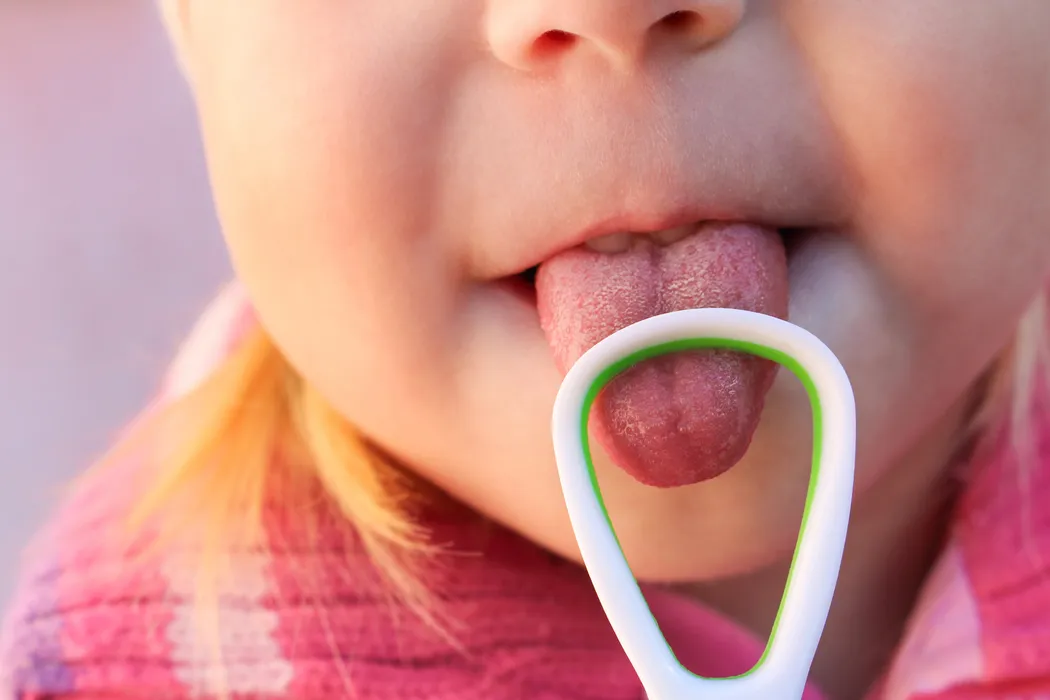
It is quite common for parents to notice a white coating on their newborn’s tongue and feel concerned. In most cases, a newborn baby tongue appearing white is completely normal and usually caused by leftover milk residue.
Since newborns consume only liquids and produce less saliva than older children or adults, milk can easily settle on the tongue and form a visible coating. This is typically harmless and may be managed with gentle oral cleaning.
However, it is important to distinguish between simple milk residue and a condition known as oral thrush, which may require medical attention.
Milk Residue vs Oral Thrush
Understanding the difference between these two conditions can help you decide whether simple cleaning is enough or if a doctor’s consultation is needed. While both may appear as white patches, their causes and characteristics are quite different.
- Milk residue: This appears as a thin, milky white coating on the tongue, usually after feeding. It may wipe away easily with a clean, damp cloth or a newborn baby mouth cleaner. Once removed, the tongue underneath looks healthy and pink. It may reappear after each feed and is generally harmless.
- Oral thrush: Oral thrush is a fungal infection caused by an overgrowth of Candida. It appears as thicker, patchy white spots that may resemble curd or cottage cheese. These patches can be present on the tongue, inner cheeks, and the roof of the mouth. Unlike milk residue, they do not wipe away easily. If you try to remove them, the skin underneath may look red, irritated, or slightly raw.
If you suspect oral thrush, avoid attempting to clean it aggressively. Consulting a paediatrician is the safest approach for proper diagnosis and treatment.
How to Clean Newborn Baby Tongue: A Step by Step Guide
Learning how to clean a newborn baby’s tongue safely is simple once you understand the right approach. You do not need toothpaste or any strong products at this stage. Clean hands, water, and a gentle technique are all that is required to support early oral hygiene.
Follow these steps to create a safe and comfortable routine for your baby:
Step 1: Wash Your Hands Thoroughly
Before starting, wash your hands with warm water and soap for at least 20 seconds, paying attention to fingertips and under the nails. Dry them using a clean towel. Since your baby’s immune system is still developing, maintaining proper hand hygiene may help reduce the risk of introducing bacteria into their mouth.
Step 2: Prepare Your Cleaning Tool
Choose a soft and safe option such as a clean washcloth, sterile gauze, or a silicone tongue cleaner designed for newborns. Wrap the cloth or gauze securely around your index finger so it does not slip during use. Moisten it with lukewarm, clean drinking water to ensure a gentle glide across the delicate tissues. Avoid using toothpaste, herbal powders, or any medicated solutions unless advised by a doctor.
Step 3: Position Your Baby Safely
Hold your baby in a semi upright position, similar to how you would during feeding. This position not only keeps your baby comfortable but also allows better control and visibility while cleaning. Make sure the head and neck are well supported, and choose a calm moment when your baby is relaxed, such as after a feed but not immediately when they are very full.
Step 4: Gently Encourage The Mouth To Open
Lightly touch your baby’s lower lip or the corner of their mouth. Most babies respond to this by opening their mouth due to the natural rooting reflex. If they are hesitant, gently lowering the lip with your finger may help, but avoid forcing the mouth open as this can cause discomfort or resistance.
Step 5: Clean The Tongue And Gums Gently
Carefully place your wrapped finger or tongue cleaner inside the mouth. Use slow, soft circular or sweeping motions to clean the surface of the tongue, focusing on removing any visible milk residue. Keep movements light and controlled to avoid irritation.
After cleaning the tongue, gently wipe along the upper and lower gums and the inner cheeks. This not only maintains cleanliness but may also help your baby get accustomed to oral care. Be mindful not to go too far back in the mouth to prevent triggering the gag reflex.
Step 6: Comfort And Reassure Your Baby
Throughout the process, speak in a calm and soothing voice to help your baby feel secure. Maintaining eye contact and a gentle tone may make the experience more reassuring. Once you are done, offer a cuddle or smile to create a positive association with oral care. Over time, this may help your baby accept brushing and dental routines more easily.
With consistency and a gentle approach, this simple routine can become a natural part of your baby’s daily care, supporting healthy oral habits from the very beginning.
Choosing The Right Tools For Your Baby
When it comes to infant oral care, there are several safe and effective options available. The right choice often depends on your baby’s age, comfort level, and how confident you feel during the cleaning process. Starting with simple tools and gradually transitioning to specialised ones may help create a smoother routine.
1. The Classic Washcloth Or Gauze
For the first few weeks, a soft, sterile cotton washcloth or medical gauze is often recommended. These options are gentle on delicate gums and provide excellent control, allowing you to feel exactly where you are cleaning inside your baby’s mouth.
Because of their softness and simplicity, they are ideal for beginners and for babies who are still adjusting to oral care. They can also be easily cleaned and reused, making them a practical choice for daily use.
2. Silicone Finger Brushes
As your baby grows, a silicone newborn baby mouth cleaner, commonly known as a finger brush, can be a useful addition. These slip over your index finger and typically feature soft silicone bristles on one side and textured bumps on the other.
The bristles help remove milk residue more effectively, while the textured side may gently massage the gums, which can be soothing as your baby approaches the teething stage. When choosing one, look for food grade, BPA free silicone to ensure safety and hygiene.
3. Dedicated Baby Tongue Cleaners
Specialised tools designed as a tongue cleaner for a newborn baby are also available. These often have a short handle with a soft, rounded silicone tip or ring.
Their design helps limit how far the cleaner can go into the baby’s mouth, which may reduce the risk of triggering the gag reflex. This can be particularly helpful for parents who are new to oral cleaning and want added reassurance while using the tool.
Choosing the right tool is about comfort and consistency. A gentle approach, combined with a tool that feels easy to handle, may help make oral care a calm and positive experience for both you and your baby.
How Often Should You Clean Your Baby's Mouth?
Consistency plays an important role in maintaining your baby’s oral hygiene. Most paediatricians and paediatric dentists suggest gently cleaning your baby’s tongue and gums at least twice a day to help keep the mouth fresh and reduce residue buildup.
The most suitable times to follow this routine are:
- In the morning: Cleaning after the first feed of the day may help remove any milk residue that has built up overnight and keep the mouth feeling fresh.
- In the evening: Cleaning after the final feed before bedtime is especially important, as it may help prevent milk sugars from remaining on the tongue and gums for long periods during sleep.
Establishing this habit early helps your baby become familiar with oral care as part of their daily routine. Over time, this familiarity may make the transition to brushing easier once the first tooth appears, usually around six months of age. At that stage, introducing a soft infant toothbrush and a very small amount of baby safe toothpaste can become a natural next step.
Cleaning and Sterilising Your Baby's Oral Care Tools
If you choose to use a reusable tongue cleaner for new born baby, such as a silicone finger brush, keeping the tool itself clean is incredibly important. If the cleaner is not properly sanitised, it can harbour bacteria and introduce germs directly into your baby's mouth.
- After every use: Rinse the silicone cleaner thoroughly under hot, running water. Wash it with a mild, baby-safe washing liquid, ensuring all milk residue is removed from between the bristles. This step helps prevent buildup and keeps the tool safe for repeated use.
- Daily sterilisation: Just like pacifiers and bottle nipples, silicone mouth cleaners should be sterilised daily. You can do this by boiling the tool in water for 3 to 5 minutes, using a microwave steam steriliser bag, or placing it in an electric baby bottle steriliser. Regular sterilisation may help eliminate bacteria that simple washing might not remove.
- Drying: Always allow the tool to air dry completely in a clean, well-ventilated area before storing it in a closed container to prevent moisture buildup and potential mould growth. Storing a damp tool can increase the risk of contamination.
- Washcloths: If using washcloths, use a fresh, clean cloth for every single cleaning session. Wash used cloths in hot water with a gentle, baby-safe detergent, and dry them thoroughly before reuse to maintain hygiene.
Common Mistakes Parents Make: How to Avoid Them?
Even with the best intentions, it is easy to make small mistakes when caring for a newborn. Being aware of these common missteps may help you create a safer and more comfortable oral care routine for your baby.
- Using toothpaste too early: Newborns are not able to spit, which means they will swallow anything placed in their mouth. Fluoride toothpaste, and even most training pastes, are not recommended at this stage unless advised by a paediatrician or paediatric dentist. For the first few months, plain, lukewarm water is sufficient for cleaning.
- Pushing too far back: A baby’s gag reflex is more sensitive and positioned further forward on the tongue compared to adults. Inserting a tongue cleaner for new born baby too deeply may cause gagging or discomfort. Focus on gently cleaning the front and middle portions of the tongue only.
- Ignoring the gums: While milk residue is more visible on the tongue, bacteria can also collect along the gum line. Gently wiping the upper and lower gums as part of the routine may help maintain better overall oral hygiene.
- Scrubbing too hard: A newborn’s oral tissues are extremely delicate. Applying pressure is unnecessary and may cause irritation. Soft, light sweeping motions are usually enough to remove residue while keeping your baby comfortable.
By avoiding these common mistakes and following a gentle approach, you can make oral care a safe and reassuring experience for your baby.
When to Contact a Doctor?
While basic oral hygiene can be managed at home, certain signs may indicate that your baby requires medical attention. Paying close attention to changes in your baby’s mouth, feeding behaviour, and comfort levels may help you identify concerns early. Consult your paediatrician if you notice any of the following:
- Persistent white coating: If the newborn baby tongue appears white and the coating does not wipe away easily, especially if it looks thick, patchy, or resembles cottage cheese, it may be a sign of oral thrush. Unlike simple milk residue, this type of coating tends to remain even after gentle cleaning and may require medical treatment.
- Discomfort during feeding or cleaning: If your baby becomes unusually fussy during feeding, pulls away frequently, or reacts with discomfort when you attempt to clean their mouth, it could indicate irritation, sensitivity, or infection. Changes in feeding behaviour are often one of the earliest signs that something may be wrong.
- Visible sores or redness The presence of red patches, small sores, or any signs of bleeding inside the mouth or on the lips should not be ignored. These may suggest inflammation, minor injury, or an underlying infection that needs professional evaluation.
- Feeding difficulties: If your baby refuses to feed, feeds less than usual, or appears unsettled throughout feeding sessions, oral discomfort may be a contributing factor. Prolonged feeding issues can also affect nutrition and hydration, making timely assessment important.
Seeking medical advice when these signs appear may help ensure early diagnosis and appropriate care, supporting your baby’s comfort and healthy development.

Conclusion
Caring for a newborn comes with many responsibilities, and establishing simple hygiene habits early may make a meaningful difference over time. Incorporating a tongue cleaner for new born baby into your daily routine takes only a few minutes, yet it may support long term oral health and comfort.
By understanding the difference between normal milk residue and conditions such as oral thrush, choosing safe and appropriate cleaning tools, and following a gentle, consistent approach, you can help maintain a clean and healthy oral environment for your baby.
It is also important to remember that every baby adapts at their own pace. With patience, consistency, and a calm approach, this routine can become a natural part of your daily care, supporting your baby’s wellbeing as they grow.
Disclaimer: This article is for informational purposes only and does not substitute for professional medical advice. Always consult your paediatrician for any concerns about your baby’s health and medical needs.
FAQS
FAQS
How often should I clean my newborn's tongue?
You should aim to clean your baby’s tongue and gums twice a day. The most suitable times are usually in the morning after the first feed and in the evening after the final feed before bedtime, as this may help reduce milk residue buildup.
Can I use toothpaste on a newborn baby?
No. Toothpaste is not recommended for newborns because they are unable to spit it out. Using plain, lukewarm drinking water with a soft washcloth, gauze, or silicone finger brush is sufficient until the first teeth begin to appear.
Why is my newborn's tongue white?
A white tongue is very common in newborns and is usually caused by milk residue from breastfeeding or formula feeding. However, if the patches appear thick, resemble cottage cheese, and do not wipe away easily, it may indicate oral thrush, which should be evaluated by a paediatrician.
What happens if my baby bites down on my finger while cleaning?
It is normal for babies to clamp down due to their natural bite reflex. Avoid pulling your finger out forcefully, as this may cause discomfort. Instead, gently slide your finger towards the corner of the mouth to release the pressure and remove it safely.
Are silicone finger brushes safe for newborns?
Yes, silicone finger brushes are generally safe when made from 100% food grade, BPA free silicone. Ensure the product is specifically designed for infants and is cleaned and sterilised regularly to maintain proper hygiene.


