0

In this article

  • What to Expect from the Newborn Baby Cord?
  • The Standard Umbilical Cord Care Procedure
  • Normal Healing vs. Warning Signs
  • Educational Resources for New Parents
  • Conclusion

Umbilical Cord Care for Newborn: Cleaning & Healing Guide

Learn how to safely clean and care for your newborn's umbilical cord stump. Our expert guide covers healing stages, cleaning tips, and signs of infection.

article image

Dr. Kamran

Bringing a new baby home is an incredibly joyful experience, but it also comes with many new responsibilities and questions. For many first-time parents, one of the most common sources of anxiety is the newborn baby's umbilical cord. During pregnancy, the umbilical cord acts as a vital lifeline, delivering oxygen and essential nutrients from the mother to the growing baby. Immediately after birth, this cord is clamped and cut, leaving behind a small, fleshy stump.

Understanding the proper definition of umbilical cord care is essential. Simply put, it means practising standard hygiene to keep the remaining stump clean, dry, and free from infection until it naturally heals and detaches. While the stump may look a bit intimidating, caring for it is actually quite straightforward.

In this comprehensive guide, we will walk you through exactly how to care for your newborn baby's umbilical cord, what a normal healing timeline looks like, and the warning signs that indicate it is time to call your paediatrician.

What to Expect from the Newborn Baby Cord?

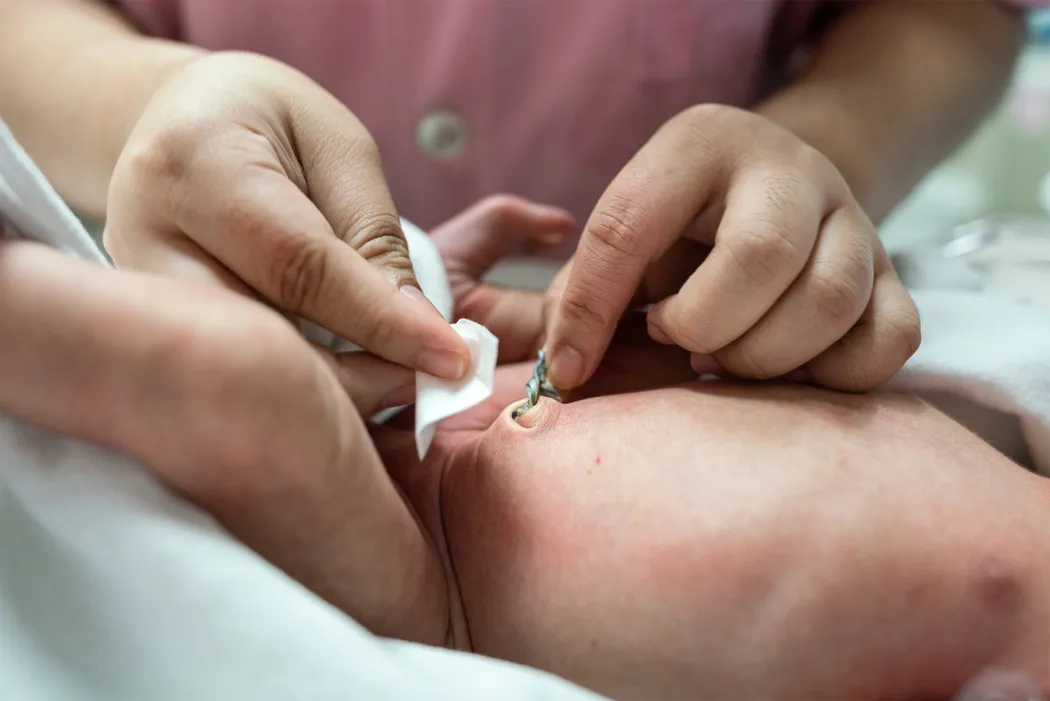
When your baby is first born, the remaining piece of the umbilical cord will look plump, yellowish-green, and slightly glossy. Over the next few days and weeks, the newborn baby's cord goes through a natural drying and healing process.

Typically, the umbilical cord stump takes anywhere from one to three weeks to completely dry up and fall off. During this time, you will notice several natural changes:

  • Colour changes: The stump will gradually change from a yellowish hue to brown, and eventually to a dark black or dark grey colour.
  • Texture changes: The plump tissue will shrivel up, becoming hard and dry.
  • Detachment: Eventually, the dried scab will safely detach from the newborn baby’s belly button on its own.

It is incredibly important to let this process happen naturally. Even if the stump looks like it is hanging by a single thread, you should never pull, twist, or attempt to cut it off. Pulling it off prematurely can cause unnecessary pain, bleeding, and significantly increase the risk of infection.

The Standard Umbilical Cord Care Procedure

For decades, hospitals recommended cleaning the umbilical stump with rubbing alcohol with every diaper change. However, modern medical research has updated these guidelines. Today, organisations like the World Health Organisation (WHO) and the American Academy of Paediatrics strongly advocate for "dry cord care."

Dry cord care is exactly what it sounds like: leaving the stump alone to dry naturally while exposing it to air. Studies show that when you avoid using alcohol or mild antiseptics, the stump actually heals and falls off faster.

Here is the safest and most effective umbilical cord care procedure to follow at home:

1. Keep the Area Clean and Dry

The golden rule of umbilical cord care in newborn babies is to keep the area as dry as possible. If the stump becomes soiled with urine or stool, gently wash it using a soft washcloth, plain water, and a mild, baby-safe soap. Once clean, gently pat the area completely dry with an absorbent cloth. Do not rub, as friction can irritate the delicate skin.

2. Stick to Sponge Baths

Until the stump falls off and the newborn baby's navel is entirely healed, you should avoid submerging your baby in a bathtub. Instead, give your infant regular sponge baths. Lay your baby on a warm, soft towel and use a damp washcloth to clean their face, body, and diaper area, being careful to avoid getting the umbilical cord soaking wet. Once the stump falls off and the area is healed, you can transition to traditional tub baths.

3. Fold the Diaper Down

To promote air circulation, make sure the baby’s diaper does not cover the umbilical stump. When diapering your baby, fold the top edge of the diaper down in the front so it rests below the belly button. Many modern newborn diapers even come with a convenient "umbilical cord cutout" designed specifically for umbilical cord care during the newborn stages. Keeping the diaper folded down not only lets the stump breathe but also prevents urine from soaking the cord.

4. Dress Your Baby in Loose Clothing

Avoid tight-fitting onesies or elastic waistbands that might press against or rub the umbilical stump. Opt for loose, breathable cotton clothing that allows air to flow freely around the healing area. Special kimono-style tops are an excellent choice during the first few weeks of life.

Buy Diaper Pants
Normal Healing vs. Warning Signs

As a parent, it is completely normal to closely monitor your baby’s healing process. Knowing the difference between normal healing and potential medical issues will give you peace of mind.

Normal Things You Might Notice

  • A slight odour: As the tissue dries out and separates from the body, it may have a mild smell. As long as it is not accompanied by pus or redness, this is usually part of the natural process.
  • A small amount of fluid: You might notice a tiny amount of clear or slightly brown fluid at the base of the stump right before it detaches.
  • Minor spotting: A very small amount of newborn baby navel bleeding is entirely normal. You might see a tiny spot of blood on your baby’s onesie or diaper when the cord finally falls off.

When to Call the Paediatrician?

While true umbilical cord infections (known medically as omphalitis) are rare, they are incredibly serious and require prompt medical attention. Contact your paediatrician or seek immediate medical care if you observe any of the following warning signs:

  • Pus: Thick, yellowish, or green discharge oozing from the base of the cord.
  • Foul smell: A noticeably strong, rotting, or foul odour coming from the belly button.
  • Redness and warmth: Red, inflamed skin spreading outward from the navel onto the baby's abdomen.
  • Newborn baby umbilical cord swelling: If you notice sudden newborn baby umbilical cord swelling or bulging around the base of the stump.
  • Heavy bleeding: While a drop or two of blood is normal, active or continuous bleeding from the navel is a medical emergency.
  • Signs of pain: If your baby cries out in pain when you gently touch the skin around the cord.
  • Fever: Any fever in a newborn under two months of age requires immediate medical evaluation.

Educational Resources for New Parents

Learning how to care for a newborn can feel overwhelming, but you do not have to do it alone. Many hospitals, birth centres, and paediatricians offer extensive discharge packets.

If you prefer digital reading, you can easily find peer-reviewed umbilical cord care articles through reputable sites like the Mayo Clinic or the Centres for Disease Control and Prevention. Hospitals will often provide parents with an easy-to-read, printable umbilical cord care PDF that you can stick on your fridge as a quick reference guide.

If you are attending prenatal classes, your instructor will likely walk you through an umbilical cord care procedure PowerPoint presentation to visually explain the steps. For visual learners trying to distinguish between a healthy stump and an infected one, searching for verified medical umbilical cord care images online can help ease your anxieties. Furthermore, if you are trying to explain the healing process to an older sibling, finding simple, friendly umbilical cord care cartoon images can be a great way to make the topic less scary and easier for a child to understand.

Conclusion

Proper umbilical cord care is a straightforward but essential part of newborn hygiene. The primary goal is to keep the stump clean and dry until it naturally detaches, which typically occurs within one to three weeks after birth.

By practising "watchful waiting" and keeping the area dry, parents can ensure the umbilical site heals safely, leading to a healthy belly button for the baby.

FAQs

How long does it take for the newborn baby's umbilical cord to fall off?

For most newborns, the umbilical cord stump will naturally dry up, turn black, and fall off within 1 to 3 weeks after birth. Every baby is slightly different, so do not worry if it takes a few days longer, provided there are no signs of infection.

Is a little bit of newborn baby navel bleeding normal?

Yes. Just like a standard scab falling off your knee, it is very common to see a few tiny drops of blood when the cord detaches. If the bleeding is heavy or continues to drip, however, you should contact your doctor immediately.

Should I use rubbing alcohol to clean the stump?

No. While it used to be standard practice, medical experts now strongly recommend dry cord care. Using rubbing alcohol can actually kill the natural, helpful bacteria that aid the cord in drying out and separating, ultimately prolonging the time it takes for the stump to fall off.

What should I do if the stump gets dirty from a diaper blowout?

If the stump accidentally gets covered in urine or baby stool, do not panic. Simply wash the area gently with a mild, baby-safe soap and lukewarm water. Afterwards, pat it completely dry with a soft, clean towel and leave it exposed to the air.

What is an umbilical granuloma?

Sometimes, after the newborn baby's umbilical cord falls off, a small, pink, fleshy lump remains in the belly button. This is called an umbilical granuloma. It is not dangerous and does not contain nerve endings (so it doesn't hurt your baby), but it can leak a clear or yellowish fluid. If you notice this, your paediatrician can easily treat it during a routine check-up, usually by applying a tiny amount of silver nitrate to safely shrink the tissue.

Apollo 247 Floating Action Button