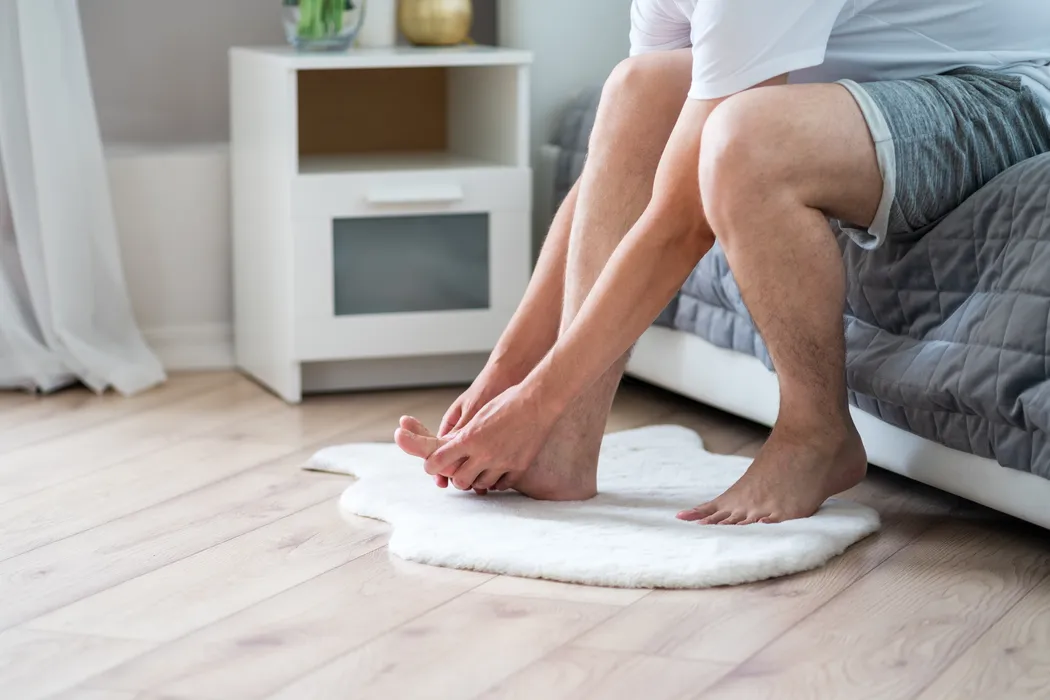
Simple Home Practices to Minimise Gout Flare-Ups
Managing winter gout in aging parents doesn't require complicated treatments. Often, simple, consistent home practices can make a significant difference in reducing flare-ups and supporting gout pain relief naturally.
While seeking out some of the best Ayurvedic creams for gout pain, such as AyurVAID’s Pinda Thailam Cream, is an ideal solution, you can also try these DIY rituals to minimise pain and improve comfort for your ageing parents:
Warm Foot Soaks
Warmth helps improve circulation and ease joint stiffness during winter. Prepare a lukewarm foot soak with Epsom salts or a pinch of turmeric, and let your parents soak their feet for 15-20 minutes in the evening. Dry gently and apply a joint pain cream afterward. This routine can complement daily care alongside the best Ayurvedic creams for gout pain.
Turmeric and Cumin-Infused Water
Internal care supports joint comfort from within. Encourage warm water infused with turmeric and cumin twice daily, morning and before bed. Both spices have anti-inflammatory properties that may support uric acid balance over time. This simple habit can help those learning how to reduce gout pain naturally, while external remedies like the best Ayurvedic creams for gout pain can offer added comfort.
Anti-Inflammatory Diet Tips
Diet plays a key role in managing gout flare-ups. Ensure that your parents limit the consumption of red meat, shellfish, sugary drinks, and alcohol. Encourage vegetables, fruits like cherries, whole grains, low-fat dairy, and adequate hydration. Drinking 8-10 glasses of water daily helps flush uric acid, supporting long-term joint comfort along with the use of some of the best Ayurvedic creams for gout pain, such as AyurVAID’s Pinda Thailam Cream.
Keeping Extremities Warm
Cold exposure can trigger winter gout flare-ups, making warmth essential. Ensure that your parents wear warm socks, slippers, and gloves as needed, and avoid sudden temperature changes. Layered clothing and blankets help maintain circulation in hands and feet. These small habits can reduce flare frequency and work well with topical comfort measures.