0

Best Baby Bath Towel for Newborn: Hooded & Cotton

 Keep your newborn warm and dry with the best baby bath towels. Explore top-rated organic cotton, bamboo, and hooded towels designed for sensitive infant skin.
 

article image

Dr. Rohini priyanaka

Welcome to parenthood! Bringing a new baby home is an exciting journey filled with beautiful milestones. One of the most memorable, and sometimes nerve-wracking, experiences for new parents is giving their baby their first bath. While choosing the right baby wash and perfect bathtub is important, what happens immediately after. The bath is equally critical. Finding the right baby bath towel for a newborn is essential for keeping your little one warm, dry, and comfortable.

Because infants have incredibly delicate skin and unique physical needs, a standard adult towel simply will not do. In this comprehensive guide, we will explore why choosing the best baby bath towel for newborns matters, the health science behind infant skin, and why hooded and cotton varieties are the top choices recommended by pediatric health experts.

Why Choosing the Right Baby Bath Towel Matters for Newborns?

You might wonder why you cannot just use a smaller version of your own bath towel for your baby. The answer lies in the biology of newborn skin and their developing bodies.

The Sensitivity of Infant Skin

According to the Cleveland Clinic, a newborn’s skin is 20% to 30% thinner than an adult's skin. The outermost layer of the skin, known as the stratum corneum, is not fully developed at birth. This means a baby's skin loses moisture much faster than ours and is highly susceptible to irritation, friction, and chafing.

Using a rough, heavily textured adult towel can cause micro-abrasions on your baby’s delicate skin. A dedicated newborn baby bath towel is specifically woven to be ultra-plush, reducing friction while quickly wicking away moisture.

The Importance of Thermoregulation

Newborns cannot regulate their body temperature the way adults can. The World Health Organisation (WHO) notes that infants are at a high risk for rapid heat loss, especially when they are wet. Unlike adults, babies cannot shiver to generate heat. Instead, they rely on a limited supply of "brown fat" to keep warm.

When your baby steps out of a warm bath into the cooler air of your bathroom, the water on their skin begins to evaporate, rapidly dropping their body temperature. Having a highly absorbent, warm newborn bath towel ready to wrap them in immediately is a crucial step in preventing infant cold stress.

Load more products

Top Features to Look for in a Newborn Towel

When shopping for the perfect post-bath wrap, you will quickly notice that the market is flooded with options. Here are the most important health and safety features to look for:

1. The Right Material: Cotton

When it comes to your baby's skin, natural fibres reign supreme. A cotton baby bath towel is highly recommended by pediatric dermatologists. Cotton is naturally hypoallergenic, meaning it is very unlikely to cause an allergic reaction. It is also highly breathable and incredibly absorbent.

When comparing different baby bath towels, cotton consistently ranks as the safest and most effective material. It soaks up water without requiring you to vigorously rub your baby’s skin. Instead, you can simply gently pat them dry.

2. The Hooded Design

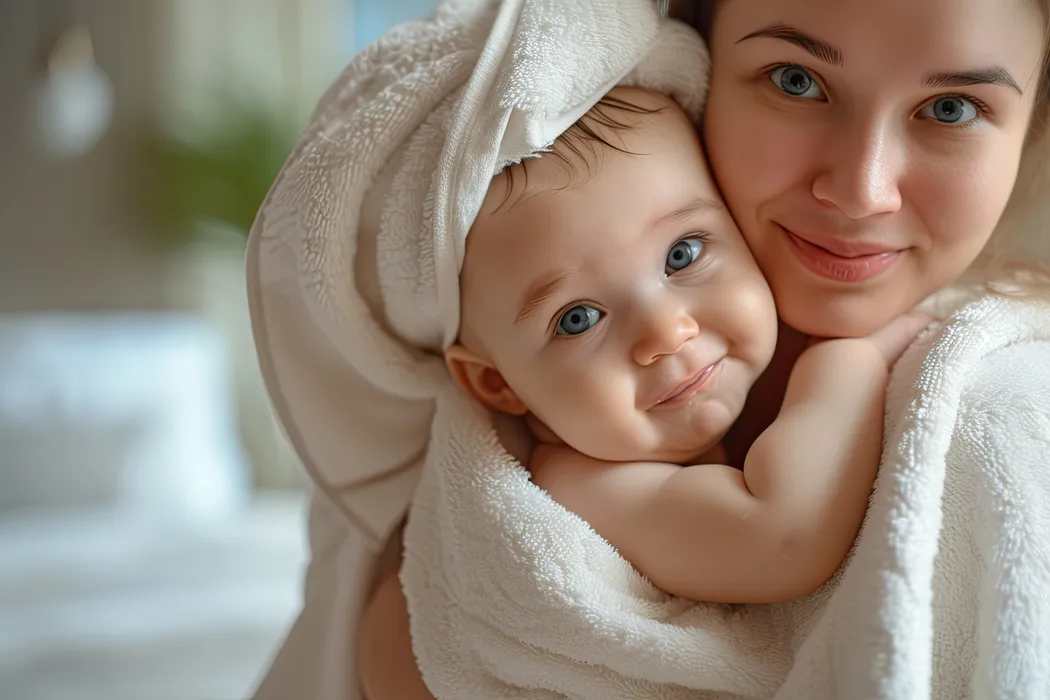
A baby bath towel with a hood is not just an adorable photo opportunity; it serves a vital medical purpose. A baby’s head makes up a large percentage of their total body surface area. Consequently, a significant amount of body heat escapes through their head. By placing a hood over your baby’s wet hair immediately after the bath, you trap that heat and stabilise their core temperature.

3. Consider Muslim Fabrics

If you live in a warmer climate or want something incredibly lightweight, a muslin baby bath towel is an excellent alternative to thick terry cloth. Muslin is a finely woven, breathable cotton fabric. A muslin towel usually features multiple layers that absorb water instantly. Best of all, muslin gets softer with every single trip through the washing machine, making it perfect for sensitive skin.

Cotton vs. Synthetic Blends: Making the Healthy Choice

Many baby towels on the market are made from synthetic fibres like polyester or microfiber. While these might feel soft to the touch in the store, they are not always the best choice for infant health.

Synthetic fibres are derived from plastics and treated with chemicals during manufacturing. They are less breathable than natural fibres, which can trap heat and moisture against the skin, a common trigger for infantile eczema and heat rash.

For the highest standard of care, always check the care label when purchasing a newborn bath towel. Look for 100% cotton, organic cotton, or pure muslin. A true cotton baby bath towel ensures that your baby is wrapped in a fabric free from harsh synthetic processing.

How to Wash and Care for Your Baby Bath Towel Newborn?

Taking care of your baby's bath linens is just as important as choosing them. Improper washing can leave behind chemical residues that disrupt the skin barrier. Here is how to keep your towels safe, soft, and hygienic:

  • Always Wash Before First Use: New linens can carry dust and chemical residues from the factory. Wash any new baby bath towel newborn before it touches your baby’s skin.
  • Use a Hypoallergenic Detergent: Choose a liquid laundry detergent that is free of dyes, perfumes, and optical brighteners. Fragrances are a leading cause of contact dermatitis in infants.
  • Skip the Fabric Softener: Liquid fabric softeners and dryer sheets coat fibres in a waxy residue. Not only does this introduce harsh chemicals to your baby's skin, but it also ruins the absorbency of the towel.
  • Wash in Warm Water: Wash your baby's towels in warm water to effectively kill germs and remove bodily oils without breaking down the natural cotton fibres too quickly.

Safe Bathing Tips for Newborns

Having the right towel is just one piece of the puzzle. The American Academy of Paediatrics (AAP) and the Mayo Clinic offer clear guidelines on how to keep your baby safe and healthy during bath time.

1. Start with Sponge Baths

Until your baby's umbilical cord stump falls off and heals (usually between 1 and 3 weeks of age), you should only give them sponge baths. Lay your baby down on a soft, flat surface. Keep them warmly wrapped in your baby bath towel, newborn, exposing only the part of the body you are actively washing.

2. Perfect the Water Temperature

Baby bathwater should be comfortably warm, not hot. Aim for a temperature around 100°F (38°C). You can use a bath thermometer to be precise, or test the water with the inside of your wrist or elbow, as these areas are more sensitive to heat than your hands.

3. Keep the Room Warm

To prevent chills, ensure the room temperature is comfortably warm, ideally around 75°F (24°C). Turn off any ceiling fans or air conditioning vents that might blow cold air directly onto your wet baby.

4. Gather Supplies First

Never leave a baby unattended in or near water, even for a single second. Before you undress your baby, ensure everything you need is within arm's reach. This includes a mild baby wash, a clean diaper, fresh clothes, and, of course, your trusty baby bath towel.

5. Pat, Don’t Rub

When bath time is over, lift your baby carefully (wet babies are incredibly slippery!) and immediately place them in their towel. Put the hood on their head first, then wrap the sides around their body. Gently pat their skin dry. Avoid vigorous rubbing, which can strip the skin of its natural, protective oils.

Load more products

Conclusion

Bath time is a wonderful opportunity to bond, play, and soothe your little one before bedtime. By understanding the unique needs of infant skin and thermoregulation, you can make informed, healthy choices for your nursery.

Investing in a high-quality baby bath towel for newborns, specifically one made of breathable cotton with a warming hood, ensures that every bath ends in a cosy, safe, and comforting snuggle. When you prioritise natural materials like a pure cotton or muslin towel, you are actively protecting your baby's delicate skin barrier, keeping them happy and healthy from head to tiny toes.

FAQS

How many towels do I need for a newborn?

Most paediatricians and veteran parents recommend having 3 to 5 baby towels on hand. This allows you to rotate them comfortably without having to do laundry every single day.

Can I use a regular adult towel for my baby?

It is highly recommended to avoid standard adult towels. They are often woven with rougher loops that can be too harsh for a newborn's fragile skin. A specific newborn baby bath towel is designed with ultra-fine, soft loops that protect their delicate skin barrier while drying them efficiently.

Why is a baby bath towel with a hood better than a standard flat towel?

A baby bath towel with a hood is superior because babies lose a disproportionate amount of their body heat through their heads. Covering their wet head immediately after a bath helps lock in warmth and prevents dangerous drops in core body temperature.

How often should I wash my baby's bath towel?

To prevent the buildup of dead skin cells, dampness, and potential mildew, it is best to wash your baby’s towel after every use, or at most, after every second use. Make sure the towel is hung up to dry completely between baths.

Is a muslin baby bath towel warm enough for the winter?

Yes! A muslin baby bath towel is typically constructed with several layers of fabric (often 4 to 6 layers). These layers trap air between them, creating excellent insulation that keeps your baby wonderfully warm without feeling heavy or bulky.

Apollo 247 Floating Action Button