0

In this article

  • Why You Need the Best Powder for Newborn Baby?
  • Ingredients to Look For in the Best Newborn Baby Powder
  • Evaluating Popular Baby Talcum Powder Brands
  • How to Safely Apply Powder to Your Baby?
  • Conclusion

Best Baby Powder for Newborn: Talc-Free & Safe Options

Discover the safest baby powder for newborns. Explore talc-free, plant-based options like cornstarch, arrowroot, and tapioca starch to keep your baby’s skin dry, soft, and irritation-free.

article image

Dr. Yusuf

Welcoming a newborn into the world is an incredible journey filled with joy, love, and plenty of questions. One of the most common concerns for new parents is how to properly care for their baby’s delicate skin. Because an infant's skin is much thinner and more sensitive than an adult's, it is highly prone to irritation, chafing, and diaper rash. This makes finding the best powder for newborn baby an important part of your early care routine.
For many families, baby powder has long been associated with freshness and comfort after diaper changes. However, as understanding of infant skin health has evolved, so has the approach to using powders. Today, parents are more mindful about ingredient safety, application methods, and whether powder is even necessary in certain situations.

If you are considering using a safe newborn powder, it is helpful to look beyond tradition and focus on gentle, well-researched options. Modern recommendations lean towards talc-free, skin-friendly formulations that prioritise safety without compromising on effectiveness.
In this guide, we will walk you through how to choose the right product, what ingredients to prefer or avoid, and how to use baby powder safely so your little one stays comfortable, dry, and well cared for.
 

Why You Need the Best Powder for Newborn Baby?

Newborn skin absorbs moisture quickly but also loses it just as fast. When your baby sits in a damp diaper, that trapped moisture can create constant friction against their delicate skin. Over time, this combination of wetness and irritation may lead to redness, discomfort, and diaper rash.


Using a high-quality baby powder may help manage this by absorbing excess moisture, reducing friction, and keeping the skin feeling dry and comfortable. It can also add a light protective layer that minimises rubbing, especially in areas where the diaper fits snugly.
However, not every powder is suitable for newborn care. Choosing the best powder for newborn baby is less about fragrance or texture and more about safety, gentleness, and how well it supports your baby’s sensitive skin without causing harm.


The Shift Away from Traditional Talc

In the past, many parents relied on talc-based powders as a go-to solution for keeping babies dry. Talc, a naturally occurring mineral, is known for its strong moisture-absorbing properties. However, with growing medical awareness, recommendations have shifted significantly.

Health authorities such as the American Academy of Pediatrics (AAP) and the Centers for Disease Control and Prevention (CDC) now advise avoiding traditional talc-based powders for infants. The concern lies in how easily fine talc particles can become airborne during use. If inhaled, these particles may irritate a baby’s delicate airways and potentially lead to breathing difficulties.

Because of this, modern baby care focuses on safer, talc-free alternatives. When looking for the best newborn baby powder today, it is important to prioritise formulations that minimise inhalation risks while still keeping your baby dry, comfortable, and protected.
 

Ingredients to Look For in the Best Newborn Baby Powder

When choosing the newborn baby best powder, taking a moment to read the ingredient label can make a meaningful difference. The safest options today are designed with gentle, skin-friendly ingredients that support your baby’s natural skin barrier without introducing unnecessary risks.


Modern formulations often rely on natural, plant-based powders that are effective yet mild on delicate skin. Here are some of the most trusted ingredients to look for:
Cornstarch: One of the most widely used alternatives to talc, cornstarch has larger particles that are less likely to become airborne. It absorbs moisture effectively and may help reduce friction, making diaper changes more comfortable.

  • Arrowroot Powder: A lightweight, plant-derived ingredient that feels soft on the skin. It is known for its soothing properties and is especially suitable for babies with sensitive or easily irritated skin.
  • Tapioca Starch: Extracted from the cassava root, this ingredient offers excellent moisture absorption while leaving the skin feeling smooth and non-greasy. It is often used in gentle, natural formulations.
  • Kaolin Clay: A mild, naturally occurring clay that helps absorb excess moisture without over-drying the skin. It may also help calm mild irritation, making it a good addition for babies prone to rashes.
  • Oat Flour (Colloidal Oatmeal): Known for its calming and anti-inflammatory properties, finely milled oatmeal may help soothe redness and irritation, especially in babies with sensitive or reactive skin.


By choosing powders with these gentle ingredients, you can support your baby’s comfort while reducing the risk of irritation, keeping their skin soft, dry, and well cared for.


Explore Baby Powders Here
 

Evaluating Popular Baby Talcum Powder Brands

As pediatric guidelines have evolved, so have baby talcum powder brands. Today, most trusted companies have moved away from traditional talc and now offer safer, plant-based alternatives that are better suited for delicate newborn skin. This shift reflects a growing focus on safety, gentleness, and everyday practicality for parents.

When exploring options, it helps to look beyond the brand name and understand what each product truly offers in terms of formulation and skin compatibility.

  • Chicco: A globally trusted baby care brand, Chicco has adapted its formulations to meet modern safety standards. Many of their powders now use rice starch instead of talc, which is lightweight, breathable, and gentle on sensitive skin. These formulations may help keep the skin dry while reducing the risk of irritation, making them a reassuring choice for daily use.
  • Johnson’s Baby: A widely trusted name among parents, Johnson’s Baby (by Johnson & Johnson) is known for its gentle, clinically tested formulations designed specifically for delicate infant skin. Their baby powders are typically mild, hypoallergenic, and dermatologically tested, helping to keep the skin dry and comfortable without causing irritation. Many of their newer formulations also focus on being free from harmful ingredients, making them suitable for everyday use on sensitive newborn skin.

If you are searching for the best baby powder for newborn care, it is always worth turning the bottle around and reading the ingredient list carefully. Look specifically for Zea Mays (cornstarch) or other plant-based starches listed as the primary ingredient, rather than talc.

Making this small but important check can give you added confidence that you are choosing a product that keeps your baby’s skin dry, comfortable, and protected without unnecessary risks.
 

How to Safely Apply Powder to Your Baby?

Even when you are using the safest baby powder for newborn baby, how you apply it matters just as much as what you choose. A gentle, mindful approach helps minimise airborne particles and keeps your baby comfortable and protected. To get the newborn baby powder best results, follow these simple safety steps:

Never shake directly on the baby: Sprinkling powder straight from the bottle onto your baby can release a fine cloud into the air, which may be inhaled. Keeping the powder away from your baby’s face during application is essential.

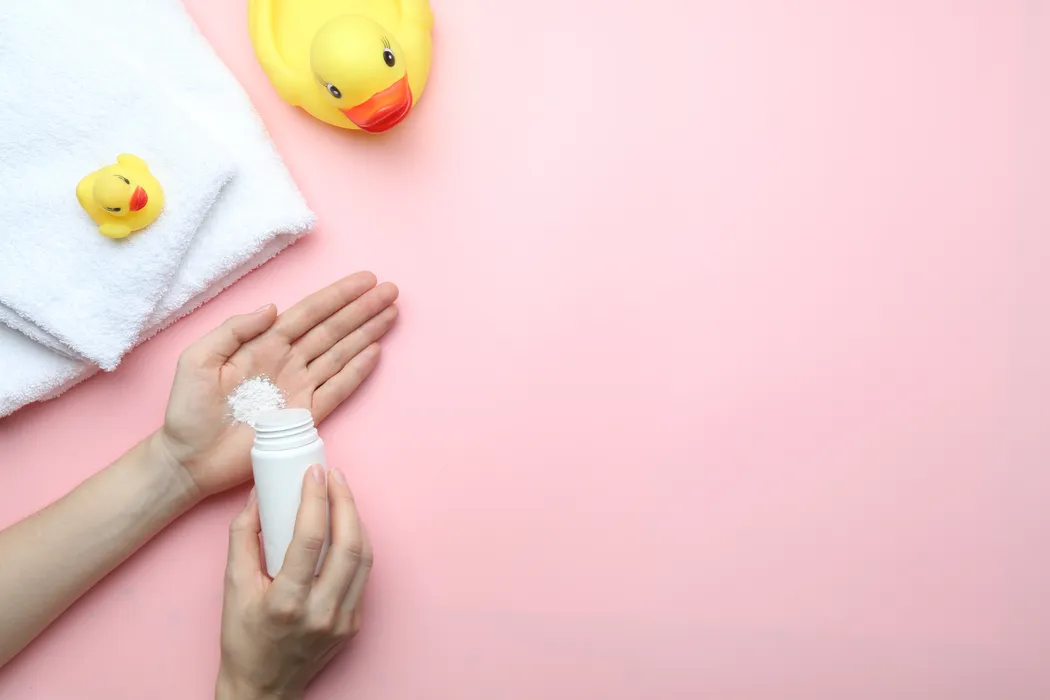
  • Use the “hand-to-baby” method: Take a small amount of the best powder for newborn baby into your palm, away from your baby. Rub your hands together first, then gently pat a thin layer onto the skin. This helps control the amount used and reduces dust.
  • Be careful with applicators: If you are using a powder puff or applicator, use a very light touch. Press gently onto the skin rather than patting forcefully, as this prevents powder from dispersing into the air.
  • Avoid the face: Keep powder completely away from your baby’s eyes, nose, and mouth.These areas are especially sensitive and more prone to irritation from fine particles.
  • Clean the skin before reapplying: Always wipe away any old powder during diaper changes. Residue mixed with moisture can form clumps and may irritate the skin if left in place.

Using powder in a careful, controlled way ensures it remains a helpful addition to your baby’s routine rather than a source of discomfort, keeping their skin fresh, dry, and well cared for.
 

Conclusion

Caring for your baby’s delicate skin does not need to feel overwhelming. With the right information and a gentle approach, you can confidently create a routine that keeps your little one comfortable and protected every day. Choosing the best powder for newborn baby is less about tradition and more about safety, simplicity, and skin-friendly ingredients.

Talc-free, hypoallergenic powders made from natural starches offer a safer alternative, helping to manage moisture while being kind to sensitive skin. When paired with careful application and good hygiene practices, they may help reduce irritation and keep your baby feeling fresh and at ease.

As you go through your daily routine, these small, thoughtful choices can make a meaningful difference. Stay attentive to your baby’s skin, keep things gentle, and do not hesitate to seek medical advice if any concerns arise. Over time, you will find what works best for your baby, making care feel more natural and reassuring with each passing day.
Disclaimer: This article is for informational purposes only and does not substitute for professional medical advice. Always consult your paediatrician for any concerns about your baby’s health and medical needs.
 

FAQS

Which powder is best for newborn baby?

The answer is simple: choose a powder that is completely talc-free, fragrance-free, and made from gentle, plant-based ingredients such as cornstarch, arrowroot, or tapioca starch. These options are less likely to irritate delicate skin and may help keep your baby dry and comfortable during diaper changes.

Is candid powder safe for newborn baby?

Candid powder contains clotrimazole, an antifungal medication. It is not meant for routine use. It should only be used if a pediatrician has diagnosed a fungal diaper rash and specifically recommended it. For everyday care, it is best to stick to a mild, non-medicated powder.

How do dusting powders differ from feeding powders?

Dusting powders are strictly for external use on the skin, while feeding powders such as infant formula are designed for consumption. Keeping them stored separately is important to avoid confusion, especially during busy or late-night routines when mistakes can happen more easily.

Does baby powder treat diaper rash?

Baby powder is more useful for prevention than treatment. It may help reduce moisture and friction, but it is not ideal for active rashes. If your baby has a red or irritated rash, a barrier cream with ingredients like zinc oxide or petroleum jelly is usually more appropriate until the skin heals.

Do I need to use baby powder every day?

Not necessarily. Many babies do well without daily use. Powder can be used when needed, such as during hot weather or if your baby tends to sweat in skin folds. The goal is to support comfort, not to make it a compulsory step in every diaper change.

Apollo 247 Floating Action Button