0

In this article

  • Why Do You Need a Newborn Baby Weight Machine at Home?
  • Key Features to Look for in a Newborn Weight Machine
  • Top Types of Baby Scales for Home Use
  • Step-by-Step: How to Accurately Use a Newborn Baby Weight Machine?
  • Understanding Your Baby's Growth Chart
  • How Often Should You Weigh Your Baby at Home?
  • Conclusion

Best Baby Weighing Machines & Scales for Home

Ensure your little one is growing healthy. Compare the top-rated baby weighing scales for home use, featuring high precision, comfortable designs, and easy-to-read displays.
 

article image

Dr. Kamran

Welcoming a new baby into the world is a beautiful, exciting journey filled with endless love, joy, and, naturally, a few parental worries. One of the most common questions new parents ask themselves is, "Is my baby growing well and eating enough?" Tracking your little one's growth is essential for ensuring they are healthy, thriving, and getting the proper nutrition they need. Having a reliable newborn baby weight machine at home can give you incredible peace of mind between doctor visits.

Instead of anxiously waiting for the next paediatrician appointment to see if your baby is on track, you can comfortably and safely monitor their progress right in your own nursery. In this comprehensive guide, we will walk you through everything you need to know about choosing the best baby scales for your home, understanding healthy growth patterns, and making weight tracking a stress-free experience for both you and your baby.
 

Why Do You Need a Newborn Baby Weight Machine at Home?

Monitoring a baby’s weight isn't just about obsessing over numbers; it is a vital indicator of their overall health, development, and nutritional intake. While your paediatrician will closely check your baby's weight during routine wellness visits, having a newborn baby weight machine at home offers several distinct and helpful advantages for parents.

  • Peace of mind for breastfeeding mothers: It can be very difficult to know exactly how much breast milk a baby is consuming during a nursing session. Weighing your baby right before and immediately after a feed (a practice known as a weighted feed) can provide reassurance that your little one is drinking enough milk.
  • Tracking rapid growth spurts: Babies grow incredibly fast during their first year of life. Weekly or bi-weekly weigh-ins help you ensure that they are following their expected growth curve without interruption.
  • Early detection of health issues: If a baby starts losing weight or suddenly stops gaining, catching it early allows you to consult your paediatrician promptly.
  • Ultimate convenience: Packing up a newborn and travelling to the clinic just for a routine weight check can be exhausting. A home scale saves you valuable time and keeps your baby comfortable and away from crowded clinic waiting rooms.


Key Features to Look for in a Newborn Weight Machine

Not all scales are created equal, and adult scales simply will not work for an infant. When shopping for a newborn weight machine, you want to ensure the device is safe, highly accurate, and easy for sleep-deprived parents to use. Here are the top features to consider before making a purchase:

High Accuracy and Precision

Newborns only gain a few ounces a week, so your scale needs to be highly sensitive. Look for a scale that measures in tiny increments of 0.5 ounces (or 10 grams) or less. Precision is key when you are tracking small but crucial growth milestones.

The "Tare" Function

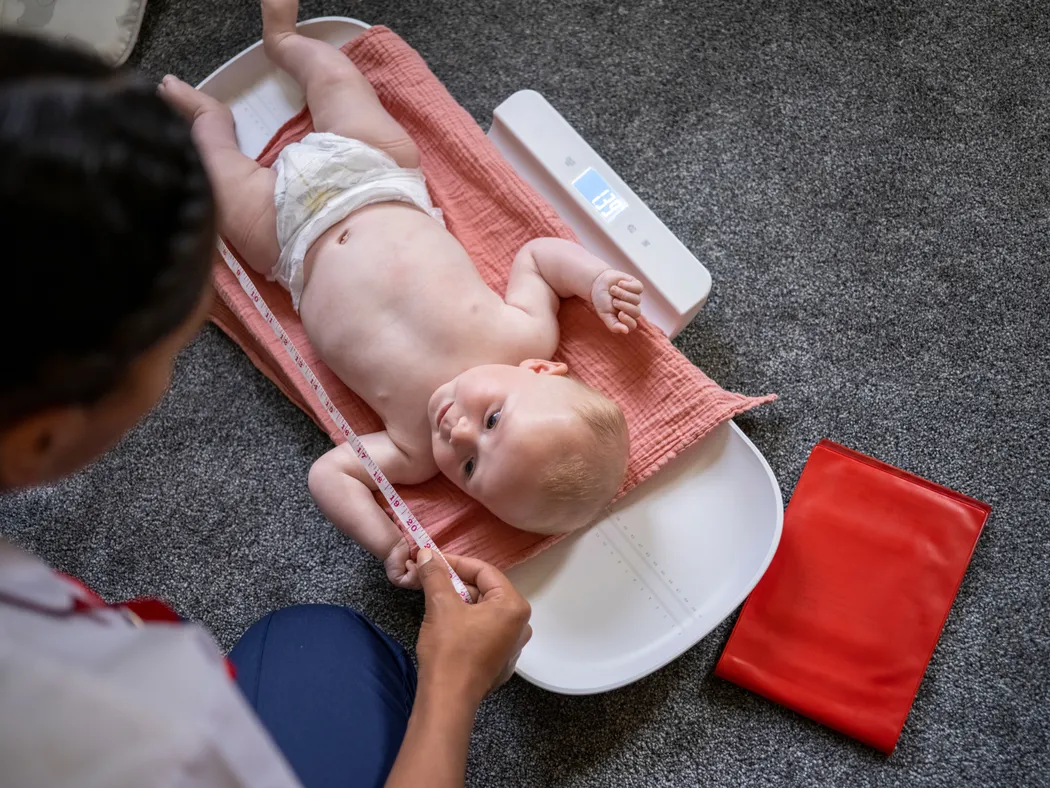
This is an absolute must-have feature for any baby scale. The tare button allows you to place a cosy, warm blanket or a soft towel on the cold plastic scale tray and reset the weight to zero before placing your baby on it. This keeps your baby comfortable and happy without throwing off the measurement.

Hold (or Weight Lock) Function

Babies are wiggly! A hold function automatically calculates the baby's average weight even if they are moving, squirming, or crying. This feature gives you a quick and accurate reading without the frustration of watching numbers jump up and down.

Curved and Ergonomic Safety Design

The weighing tray should be ergonomically curved with slightly raised edges to prevent your baby from rolling off. Always prioritise safety over aesthetics when choosing a scale.

Easy-to-Read Digital Display

A large, brightly backlit LCD screen makes it incredibly easy to read the numbers, even during late-night or early-morning weigh-ins when the lights in the nursery are dim.
 

Top Types of Baby Scales for Home Use

When looking to buy a newborn baby weight machine, you will generally encounter three main types on the market. Understanding the differences will help you pick the best fit for your family's needs and budget.

  • Standard Digital Baby Scales: These are the most common, affordable, and practical choices for home use. They feature a flat or curved tray, run on batteries, and feature simple digital displays. They are highly accurate and perfect for regular, straightforward check-ins.
  • Smart Baby Scales: For the tech-savvy parent, smart scales connect directly to your smartphone via Bluetooth or Wi-Fi. They automatically sync your baby’s weight to an app, securely plotting the data on a digital growth chart. This makes it incredibly easy to share accurate information with your paediatrician.
  • Multi-Purpose (Convertible) Scales: Babies grow fast, and they won't fit on a small infant tray forever. Multi-purpose scales feature a removable top tray. Once your child is old enough to stand on their own, you can take the tray off and use it as a standard toddler or adult step-on scale. This provides excellent long-term value.

Buy Weighing Scale
 

Step-by-Step: How to Accurately Use a Newborn Baby Weight Machine?

To get the most reliable and helpful results from your newborn baby weight machine, consistency is the key. Follow these simple steps for a safe and accurate reading every time:

1. Place the scale on a hard, flat surface: Avoid placing the scale on carpets, plush rugs, or soft beds, as uneven surfaces can severely affect the scale's accuracy. A sturdy table, a wide countertop, or a hard floor is best.
2. Use the Tare feature: Place a clean, soft receiving blanket on the tray. Press the "Tare" or "Zero" button so the scale ignores the weight of the blanket.
3. Undress your baby: For the most accurate baseline reading, weigh your baby completely naked. Even a dry diaper or a lightweight onesie can add extra ounces to the reading, which can cause unnecessary confusion.
4. Weigh at the same time of day: A baby's weight fluctuates throughout the day based on feeding times and bowel movements. Try to weigh your baby at the same time of day (for example, right before their first morning feed).
5. Log the weight safely: Write down the date and the exact weight in a notebook, or log it directly into a baby growth tracking app on your phone.

Safety Warning: Never leave your baby unattended on a scale, even for a second. Always keep one hand hovering just an inch above them to prevent any accidental falls.


Understanding Your Baby's Growth Chart

Once you have your readings from your newborn weight machine, you might wonder what the numbers actually mean. Paediatricians rely on standardised, research-backed growth charts developed by the World Health Organisation (WHO) and the Centres for Disease Control and Prevention (CDC).

According to the WHO and the Mayo Clinic, it is completely normal for a newborn to lose up to 10% of their birth weight in the first few days of life as they shed excess fluid. However, with proper feeding, they should regain this weight by the time they are 10 to 14 days old.

After the initial two weeks, healthy babies generally gain about 5 to 7 ounces (140 to 200 grams) per week for the first four to six months.

It is important to remember that every single baby is unique. Whether your baby is in the 15th weight percentile or the 85th percentile, what matters most is that they are following a consistent, upward curve on their chart. Percentiles are simply a way to compare your baby's size to other healthy babies; they are not a "grade" of your baby's health.
 

How Often Should You Weigh Your Baby at Home?

While having a newborn baby, a weight machine is wonderful, it is incredibly important not to become overly anxious about daily fluctuations. Unless instructed otherwise by your healthcare provider due to a specific medical concern, you do not need to weigh a healthy, full-term baby every single day.

For the first few weeks, weighing your baby once or twice a week is usually sufficient to ensure they are on the right track. Once your baby is steadily gaining weight and feeding well, checking their weight every two weeks to a month is plenty. Obsessing over daily ounces can cause unnecessary stress and anxiety. Use your scale as a helpful tool for reassurance, not as a source of worry.
 

Conclusion

Choosing the right baby scale involves balancing accuracy with long-term utility. Modern options now range from simple digital trays to "smart" changing pads that sync with health apps to track growth trends automatically.

For most parents, the Hatch Grow is the premier choice because it integrates into a daily routine as a changing pad, reducing the "clutter" of extra medical devices. However, if you are strictly looking for medical-grade precision on a budget, the Beurer BY80 or Greater Goods models provide the best accuracy for the price.
 

FAQS

Is a home baby scale as accurate as the doctor’s clinic scale?

High-quality digital home scales are very accurate, often measuring within half an ounce of your baby's true weight. However, clinical scales used by paediatricians are calibrated regularly for absolute medical precision. Always use your home scale for tracking general trends, but rely on your doctor's scale for official medical records and diagnoses.

How much weight should a healthy newborn gain each week?

According to the Mayo Clinic, a healthy newborn generally gains about 5 to 7 ounces (140 to 200 grams) a week during the first few months of life. If you notice your baby is consistently gaining significantly less than this, it is a good idea to consult your paediatrician.

Can I just step on a normal adult scale while holding my baby?

While this method (weighing yourself, holding the baby, then subtracting your own weight) gives a rough estimate, it is not accurate enough for newborns. Normal adult scales usually only measure in 0.2-pound increments and cannot detect the tiny ounce fluctuations that are critical for tracking a newborn's healthy development.

What exactly is the "tare" button on a baby scale?

The tare button is a highly useful feature that allows you to subtract the weight of an object (like a thick blanket or a diaper) before weighing your baby. This ensures the scale only measures the baby's actual body weight, allowing you to keep them warm and comfortable during the weigh-in.

At what age should I stop using a baby scale for my child?

Most dedicated baby scales can safely accommodate infants up to 44 pounds (20 kg). However, once your baby is a confident walker and can stand still on their own (usually around 2 years of age), you can easily transition to using a standard digital floor scale.

Apollo 247 Floating Action Button